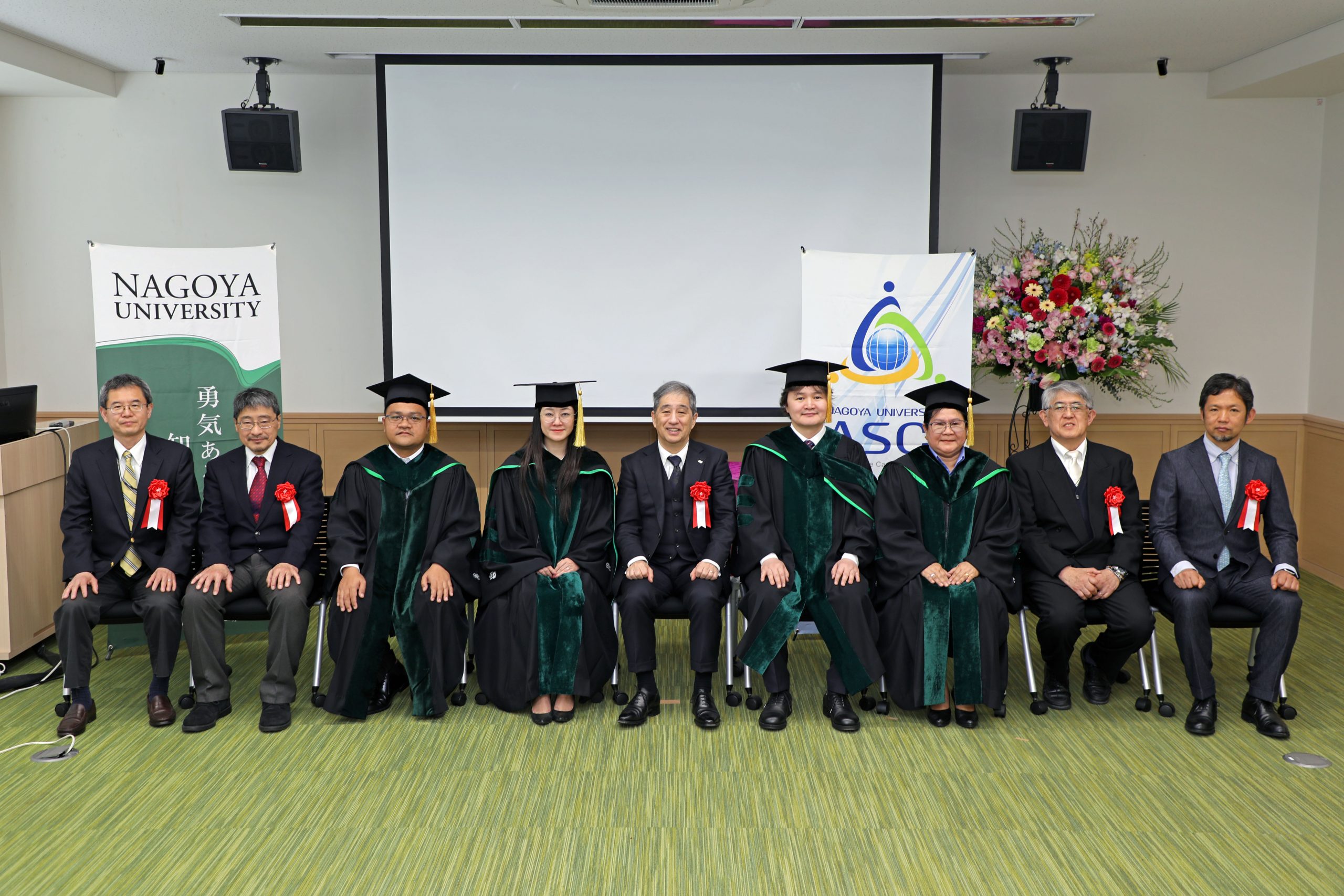
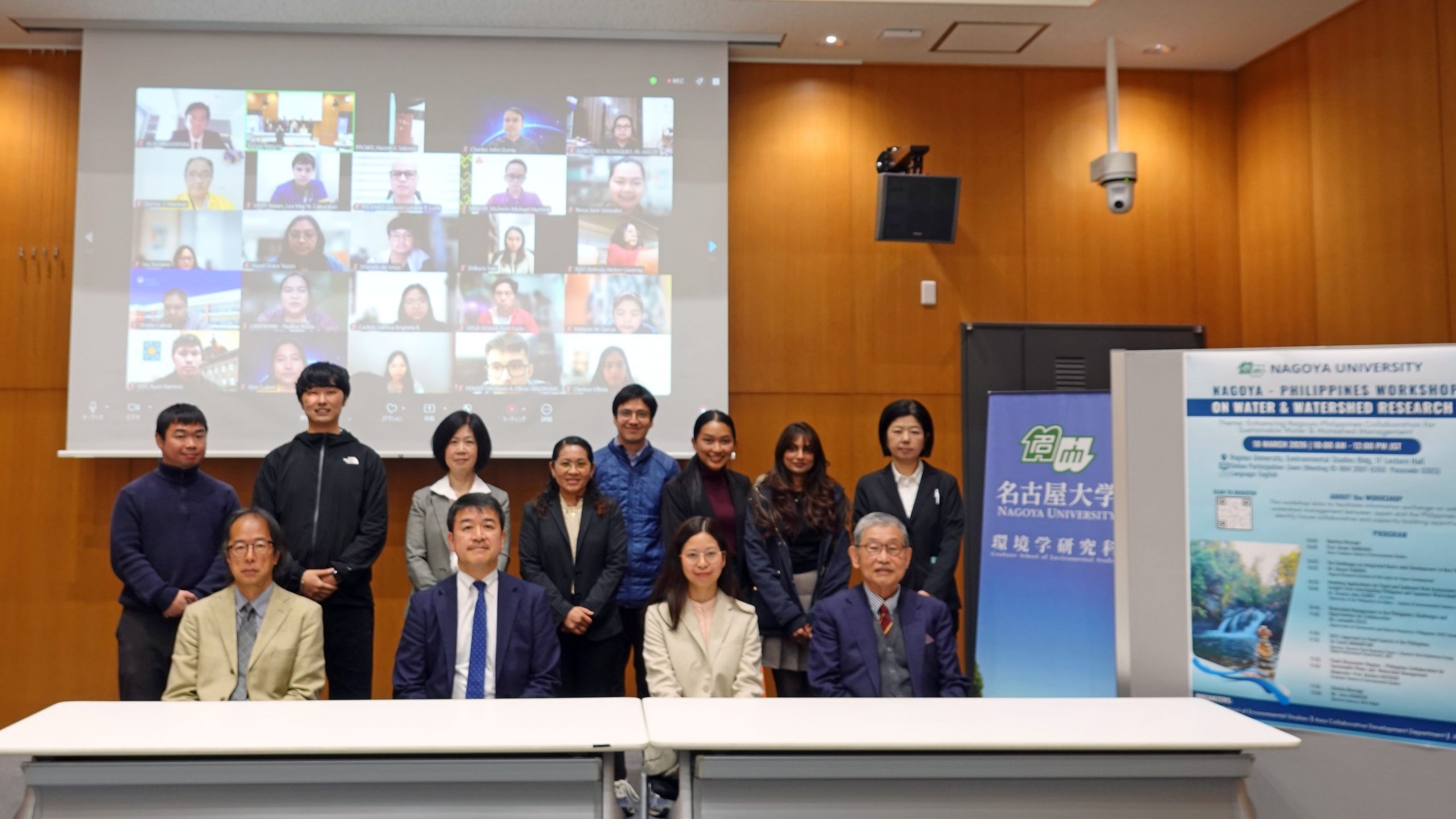
For more than 50 years, Filipino scholars have trained at Nagoya University in Japan and taken what they learned back to Philippine universities, government agencies and companies, where many now teach the next generation. As a record nine Filipino professionals began Nagoya doctorates this October, the people behind the partnership explained why they treat international research and the Philippines’ development as one task.
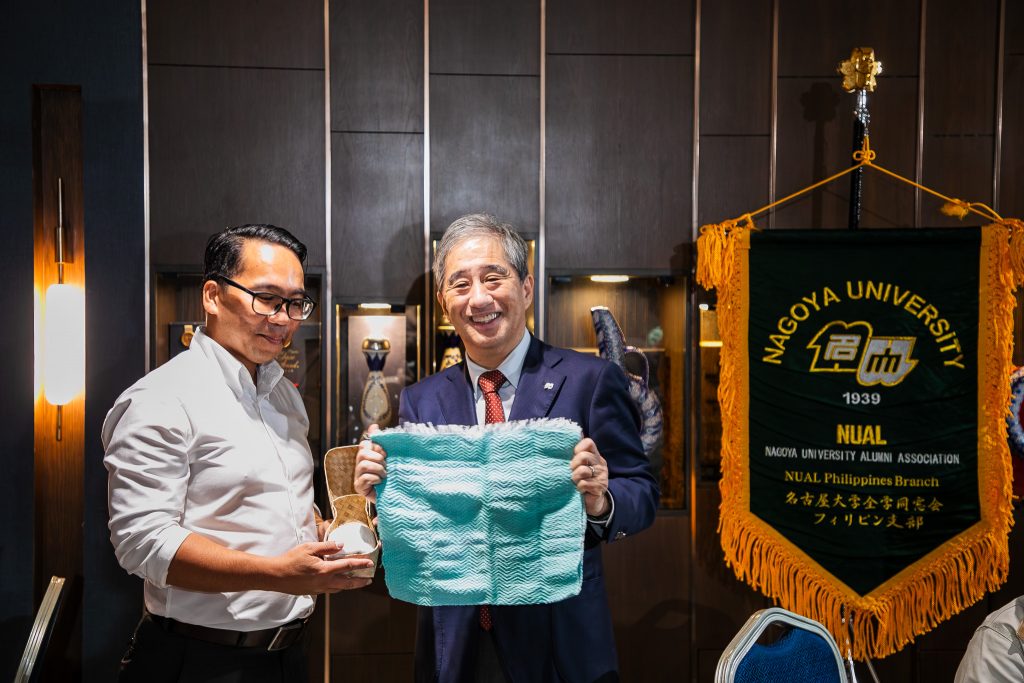
On Oct. 11 in Manila, Philippine alums of Nagoya University in Japan presented the university’s president, Naoshi Sugiyama, with a traditional handwoven textile named Inabel. Just as individual threads are woven into fabric, host Maria Kristina Alinsunurin said, the alums’ ties to their alma mater had grown through years of shared learning and collaboration.
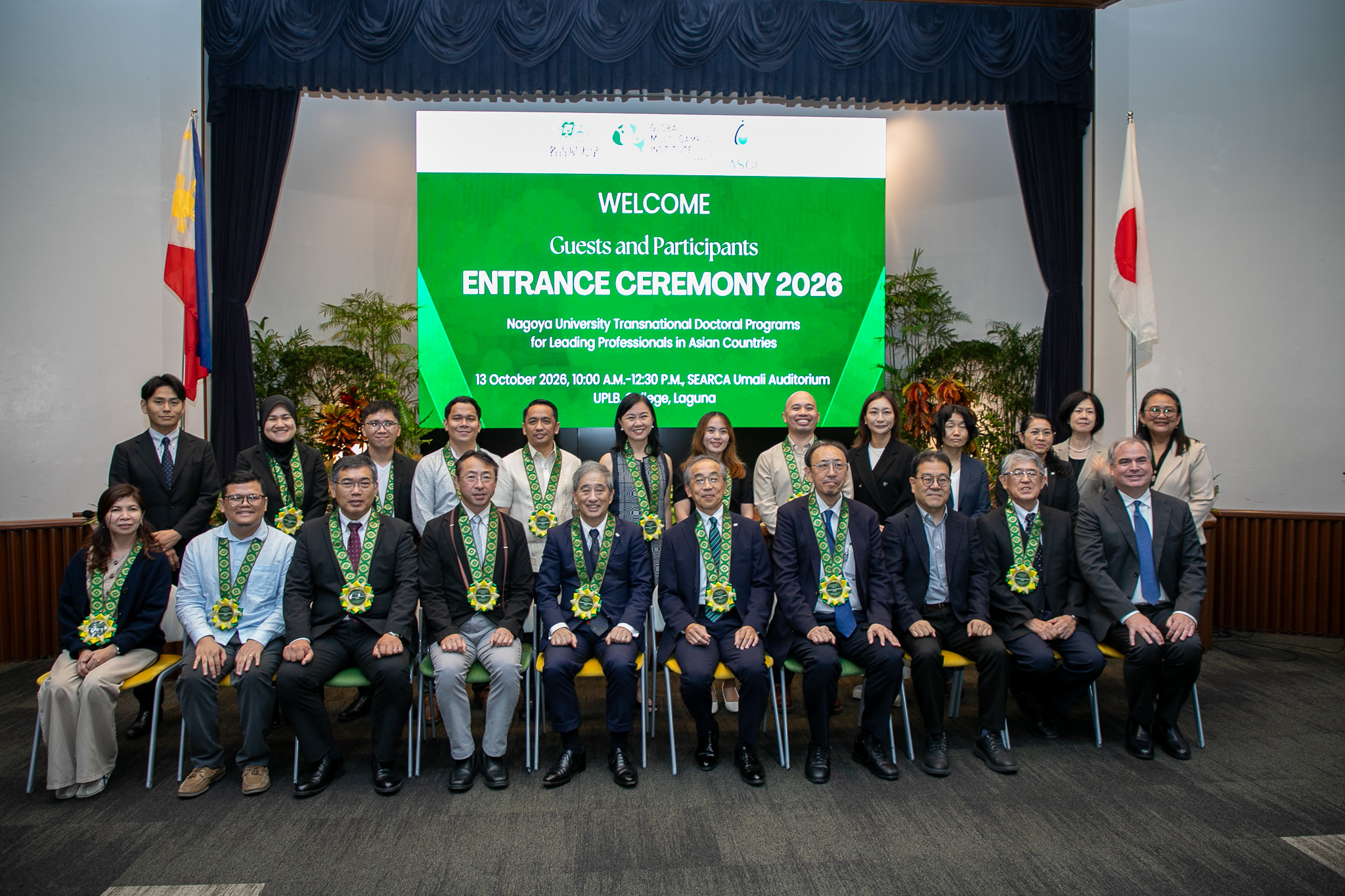
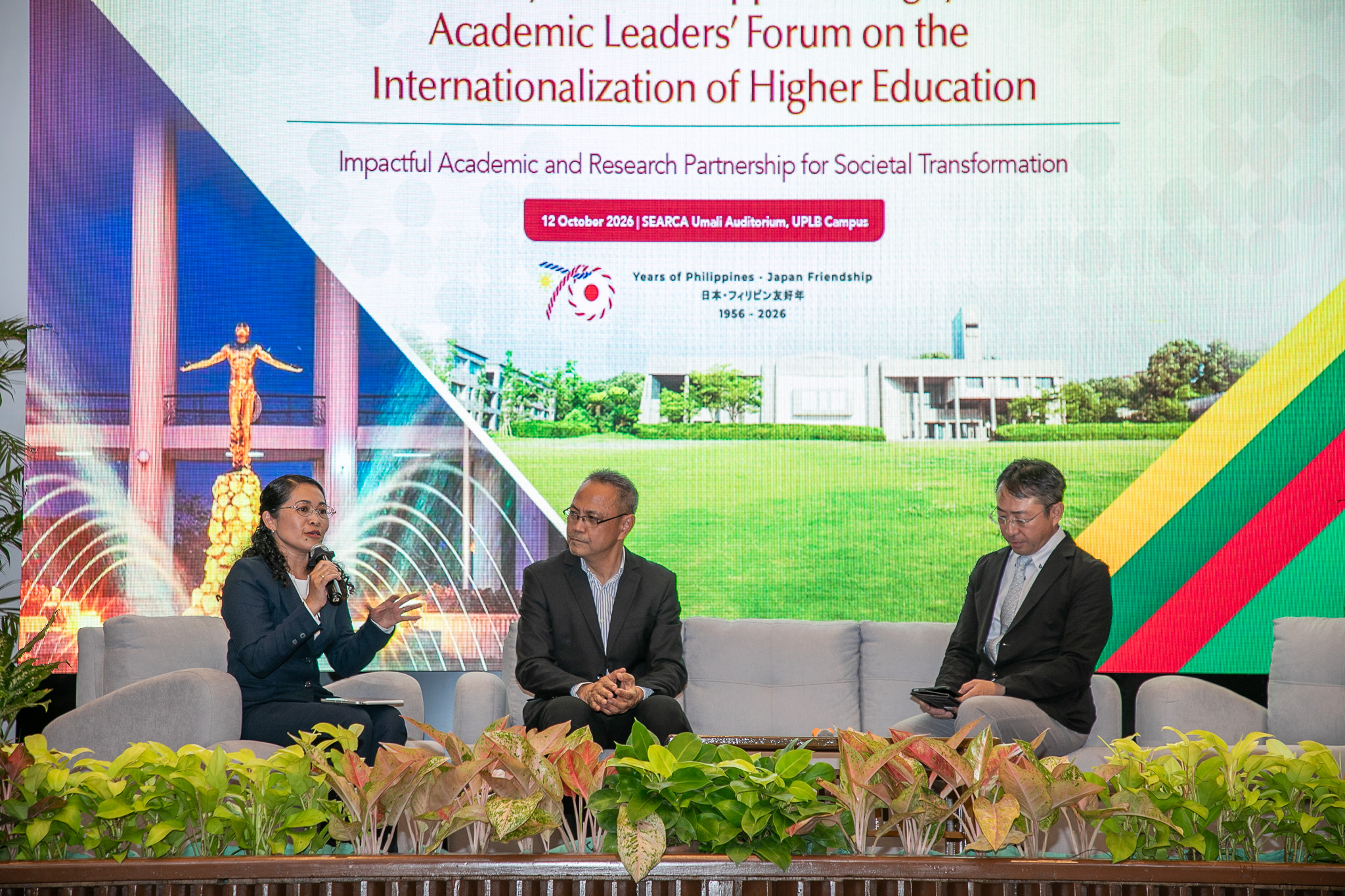
The Nagoya University delegation had come to the University of the Philippines Los Baños (UPLB) for an academic leaders’ forum on Oct. 12 and, a day later, to welcome nine new Filipino students to the university’s transnational doctoral program, more than in any previous year.
UPLB Chancellor Jose Camacho Jr. traces the relationship back more than 50 years. Speakers at the events described it less as a set of agreements than as the work of individuals who chose to cross borders, and who see international research and development at home as one effort.
One generation teaches the next
Joseph Masangkay, professor emeritus at UPLB’s College of Veterinary Medicine, arrived in Nagoya as a student in 1974. Scholarships to the United States, Canada and Europe were available at the time, he recalled, “but I chose Japan.”
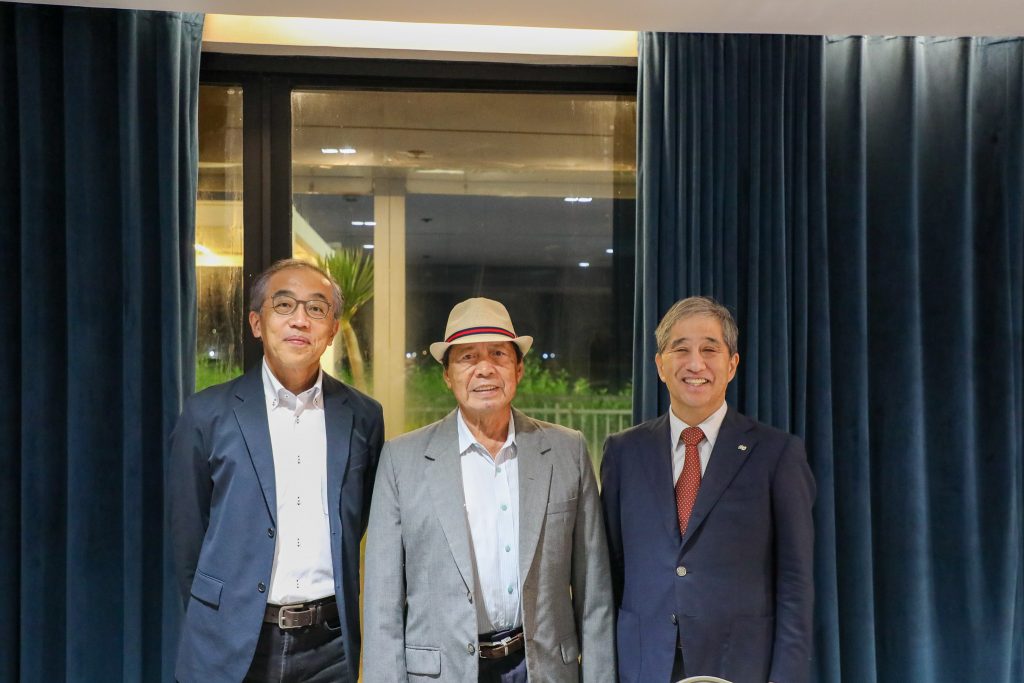
Mentoring, he said, is a Japanese trait. After finishing his doctorate, he decided it was his turn to teach the next generation. His research collaboration with Nagoya University continues today. He is also a founding member of the alum association’s Philippine branch, which he said grew from an online group of Japanese government scholarship alums in 2014, largely through the tireless work of previous generations.
Rodolfo Mendoza Jr., president of the alum association’s Philippine branch, trained in the concrete laboratory of civil engineering professor Hikaru Nakamura and now works with Japanese engineering firms in the Philippines. “In our own ways, we believe that we are contributing to the nation-building of the Philippines while keeping our connections with Japan alive,” he said. Mendoza still meets with Nakamura yearly, and Nakamura’s research group still supervises Filipino doctoral students.
At UPLB alone, Nagoya University President Sugiyama said, more than 20 professors have earned graduate degrees from Nagoya University. Higher education “not only spans generations, but it also multiplies and compounds,” National Scientist and former University of the Philippines President Emil Javier said at the forum.
A doctorate without leaving home
Since 2015, Nagoya University’s Asian Satellite Campuses Institute (ASCI) has given these exchanges a permanent base at UPLB. This program lets university and government professionals earn a Nagoya University doctorate without leaving their jobs. They are supervised by Nagoya-based faculty members and local advisers in the Philippines, with short stays in Japan.
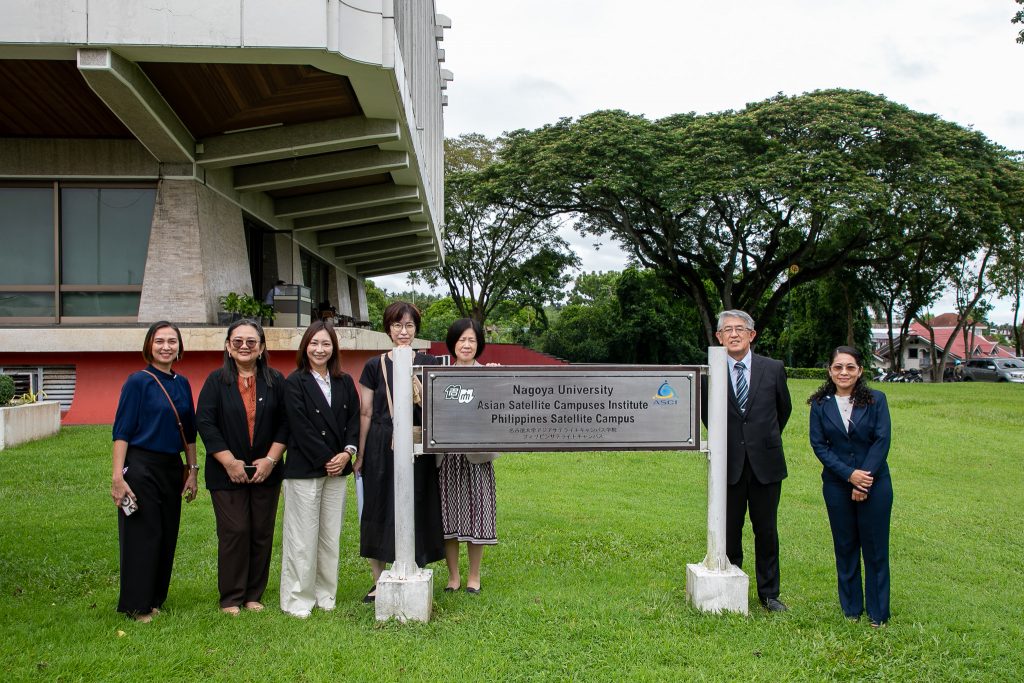
Camacho, dean of the UPLB Graduate School when the campus was founded, recalled: “I thought it was impossible to proceed.” Ten years on, the program has 13 Filipino graduates and 17 students enrolled. This year’s nine newcomers include students from as far away as Mindanao.
Sugiyama reminded the new students that Nagoya University aims to nurture courageous intellectuals. “Courage means having the heart to take on challenges,” he said. “In that respect, you have already demonstrated that you have what it takes.”
Graduate Maria Christina Campita said the degree helped her become research division chief at the Department of Agriculture’s Bicol regional office.
Research rooted at home
The new students bring several questions derived from their work:
- Lynith Datukon, chair of civil engineering at Ateneo de Davao University, will study public transport integration as her home city of Davao modernizes its transit.
- Jefferson Vallente Jr., an assistant dean at Xavier University-Ateneo de Cagayan and a flood survivor, will study flood risk under climate change.
- Carolyn Zalameda-Castro, a gynecologic oncologist at the University of the Philippines Manila, wants to make health care more equitable because, she said, “the biggest barriers to good health care are not medical at all.”
- Sofonias Gabonada Jr., deputy secretary general of the House of Representatives, will research the chamber’s legislative governance.
“For what good is knowledge if it does not improve institutions?” Gabonada asked. “And what good are institutions if they do not improve people’s lives?”
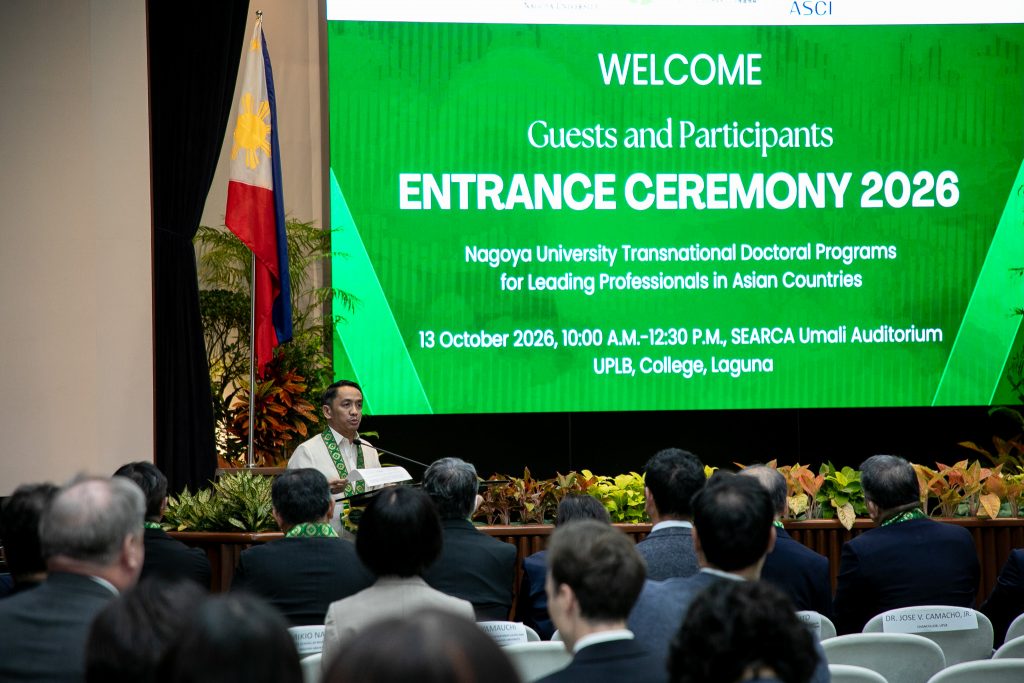
ASCI Director Akira Yamauchi has described the program as a loop in which local issues become academic knowledge that flows back into policy and practice. Hiroki Tanikawa, dean of the Graduate School of Environmental Studies, also told the new students that “environmental challenges cannot be solved by one discipline, or one country, or one generation”.
The benefits run both ways: a potential dual degree program, UPLB Vice Chancellor Agham Cuevas said, would give UPLB access to advanced facilities and give Nagoya University field sites, regional knowledge and Southeast Asian networks.
From personal ties to lasting structures
The partnership now rests on formal commitments: a roadmap through 2030 agreed with the University of the Philippines, a renewed scholarship agreement with the Philippine Department of Science and Technology, and an Oct. 12 letter of intent with UPLB and the Commission on Higher Education to develop a dual doctoral degree. “These developments reflect how important the Philippines has become as one of Nagoya University’s most valued partners,” Sugiyama told alums at a shared dinner event.
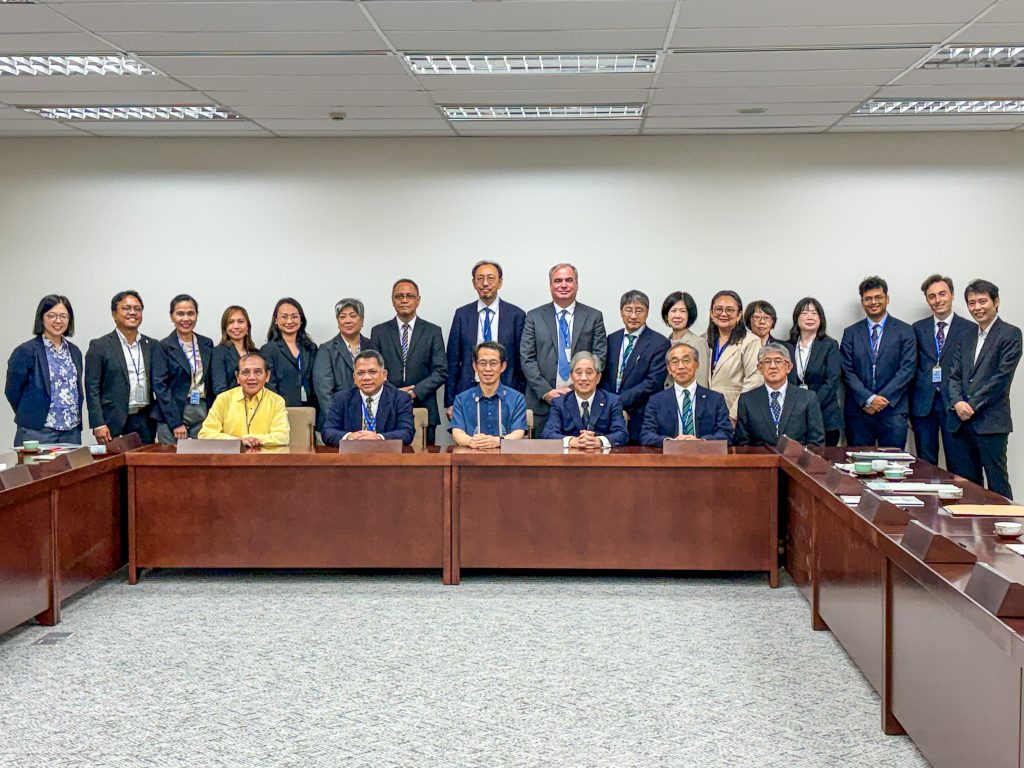
At the forum, Alinsunurin, a Nagoya University alum and secretary of the UPLB Graduate School, named the risk of a partnership built on people alone. Much of it, she said, “has been achieved through individual efforts — people who trusted each other and who chose to work with each other. That is a strength, but it can also be a vulnerability.” Success, she added, “should be measured not only by the degrees completed, but by the research capacity that stays and grows in the institution.” To build official and institutional support for these initiatives, the Nagoya University delegation also visited the Embassy of Japan in the Philippines.
So, for alum association president Mendoza, the shift is already underway: “What began as a student-professor relationship has now grown into collaboration between institutions, between companies and between the two countries.”
Researchers
-
 SUGIYAMA NaoshiTokai National Higher Education and Research System
-
 SUTO YoshiyukiGraduate School of Humanities, Research Center for Cultural Heritage and Texts
-
 NAKAMURA HikaruGraduate School of Engineering, Civil and Environmental Engineering, 1
-
 TANIKAWA HirokiGraduate School of Environmental Studies, Department of Environmental Engineering and Architecture, Material-Systems Science in Environment
-
 NAKAZONO MikioGraduate School of Bioagricultural Sciences, Department of Plant Production Sciences
-
SHIMADA YuzuruGraduate School of International Development, Department of International Development and Cooperation
-
IDO AyakoGlobal Multi-Campus Institute
-
 MICHIBAYASHI KatsuyoshiGraduate School of Environmental Studies, Department of Earth and Environmental Sciences, Geology and Geobiology
-
TAKAI JiroGraduate School of Education and Human Development, Department of Psychology and Human Developmental Sciences, Psychological Sciences
-
LINLEY MatthewGlobal Multi-Campus Institute
-
 OHKURA SatoshiGraduate School of Bioagricultural Sciences, Field Science Center, Division
-
SHIMIZUTANI SatoshiGraduate School of International Development, Department of International Development and Cooperation
Related organizations
- Asian Satellite Campuses Institute
- Graduate School of Bioagricultural Sciences
- Graduate School of Engineering
- Graduate School of Environmental Studies
- Graduate School of International Development
Related tags
- Agricultural sciences
- Biology
- Engineering
- Environmental science
- International collaborative research
- PhD students
- Social sciences