Science communicators from across Japan and abroad gathered on campus for the 8th Japan SciCom Forum, giving the university community a seat in discussions shaping how science reaches the public as AI transforms communication.
Every year, the Japan SciCom Forum (JSF) gives people who communicate research to international audiences a place to share practical experience, sharpen their skills and build connections. The forum was founded in 2018 to bring together a field that was still small and scattered and address the growing need for English-language science communication in Japan and Asia. Today, it is a community that holds online meetups and shares job postings and events through a mailing list with more than 300 members.
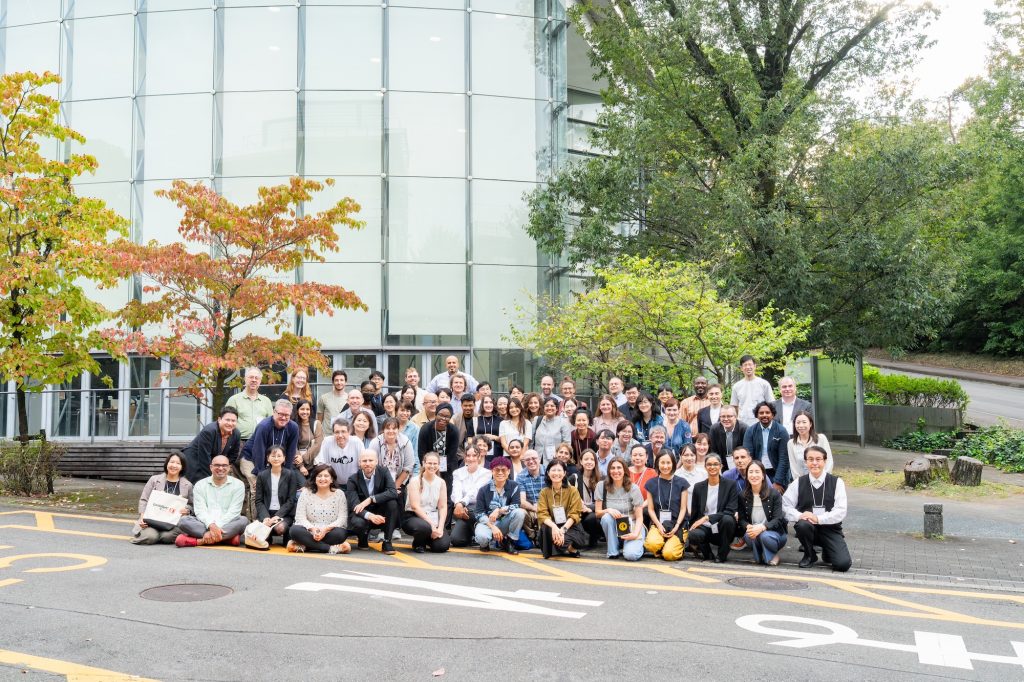
Since 2018, the forum has been hosted by institutions in Tokyo, Okinawa, and Fukuoka. On October 20 and 21, 2026, Nagoya University hosted and supported the 8th JSF, marking its first visit to Nagoya. About 100 participants, including science communicators, press officers, managers, journalists, and researchers from Japan and abroad, attended the event. The forum took place in the Noyori Conference Hall, named after Nobel laureate Ryoji Noyori, a Nagoya University chemist who shared the 2001 Nobel Prize in Chemistry.
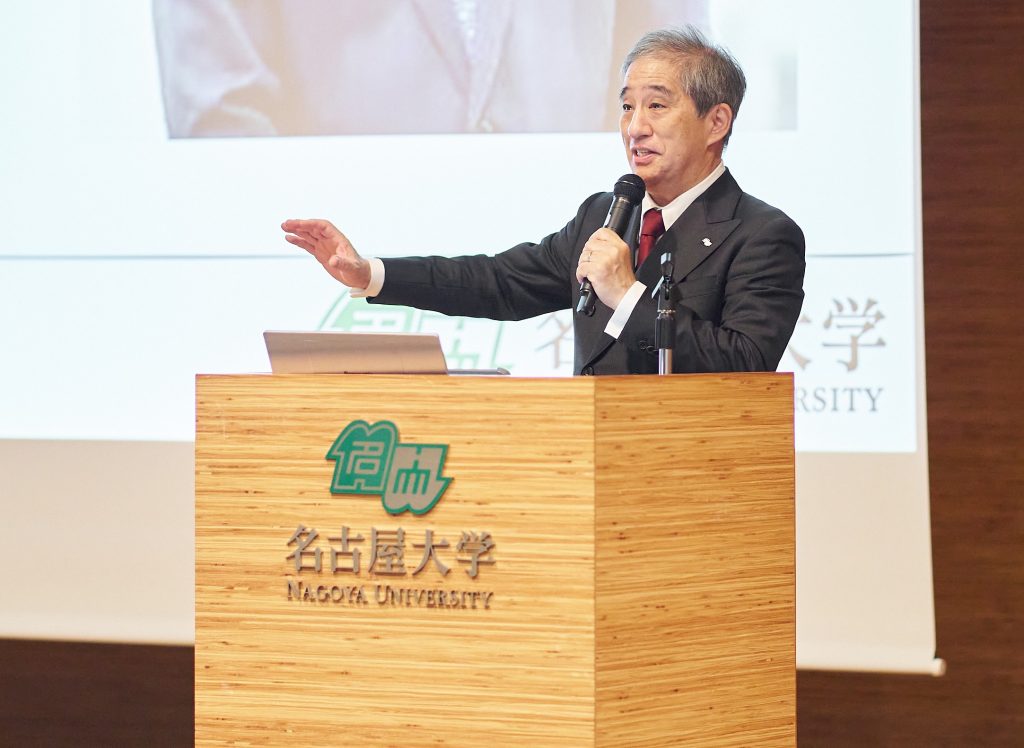
Naoshi Sugiyama, president of Nagoya University, opened the forum with a welcome address. “It is no exaggeration to say that science communication has become a lifeline for basic science,” he said. He also highlighted new questions communicators face: “In the age of AI, how should we address the ethical issues that are becoming increasingly important? These challenges call for new approaches that go beyond our traditional ones.”
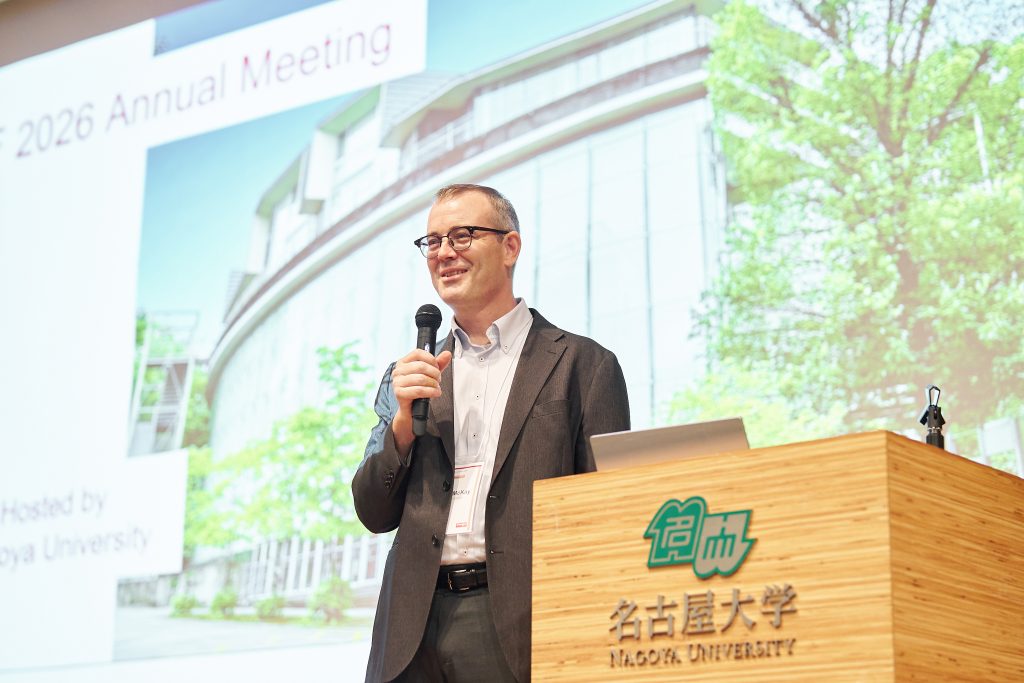
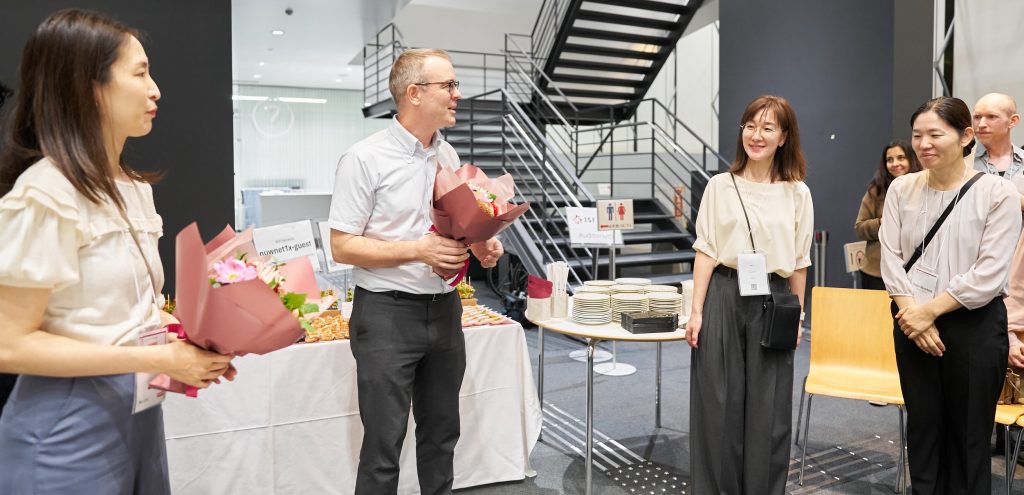
Euan McKay, head of Nagoya University’s International Strategy Office, played a key role in bringing the forum to the university and led its planning and management. He has co-organized JSF since 2022 and also built and runs its new website, which drew a lot of positive feedback this year. McKay was supported by administrative staff Yuka Shirota from the International Communications Office and Kayo Humblet from the International Strategy Office, whose work behind the scenes made the event possible.
“People who communicate science in English in Japan usually work alone or in small teams at many different institutions, so meeting in person once a year matters,” McKay said. “Hosting the forum brought that community to our campus and gave Nagoya University staff and researchers the chance to engage with peers from Japan and abroad. I am grateful to the organizing committee and to my colleagues here for making it possible, and to our sponsors and collaborating institutions for their continued support.”
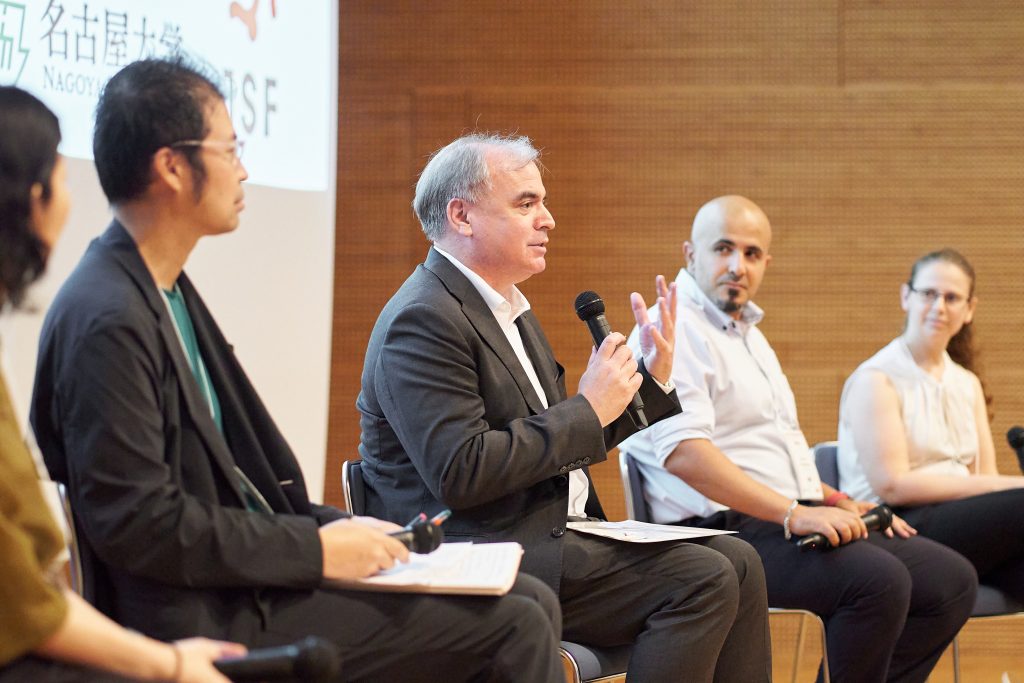
This year’s theme was “Communicating Science in the Age of AI: The University and the Media in Japan and Asia.” AI tools now help write news stories, design images, and analyze media coverage. They can save time, but they also raise hard questions about accuracy, transparency and public trust in science. The opening panel, with speakers from news media, university communications, podcasting, and science illustration, looked at how the science media landscape has changed in recent years and how AI has affected it.
Matthew Linley, vice-director of the Global Multi-Campus Institute and head of the university’s International Communications Office, was one of the panelists. “The general public’s decline in time spent reading, and growing preference for watching short-form video, should be of great concern not only to those in the science communication community but to everyone,” he said. “Science writers must now compete with influencers, many of whom are using AI, to promote their ideas in videos that appeal to emotions rather than logic. How will this influence the public’s understanding of scientific ideas?”
Two keynote speakers looked at trust from different sides: one from the institutions that communicate science, and the other from the public that receives it. On the first day, Kathryn Darcus from the University of Edinburgh asked whether AI gives public relations professionals a new role in building trust. On the second morning, Mikihito Tanaka from Waseda University looked at the current state of trust in science in Japan and where it may be heading. He also presented new survey results on the topic.
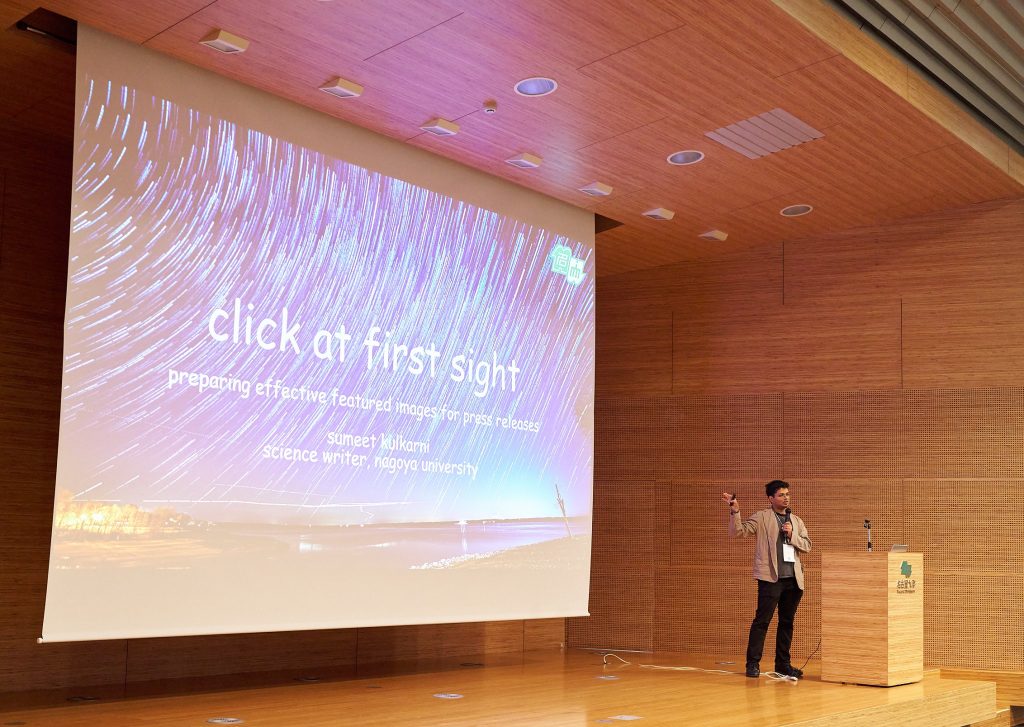
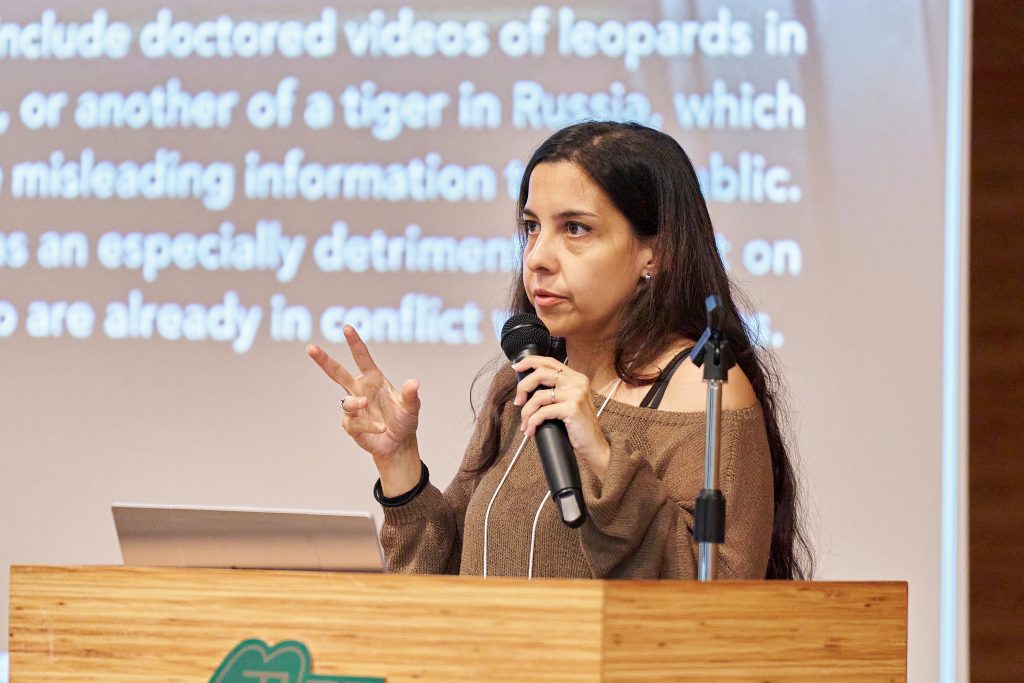
Nagoya University staff were part of the program throughout both days. Sumeet Kulkarni from the International Communications Office explained how to create clean, eye-catching images that draw readers to an article. Raquel Costa, head of the Evolution and Coexistence Lab, explained how “cute” animal content online, including AI-made images, can harm wildlife conservation efforts.
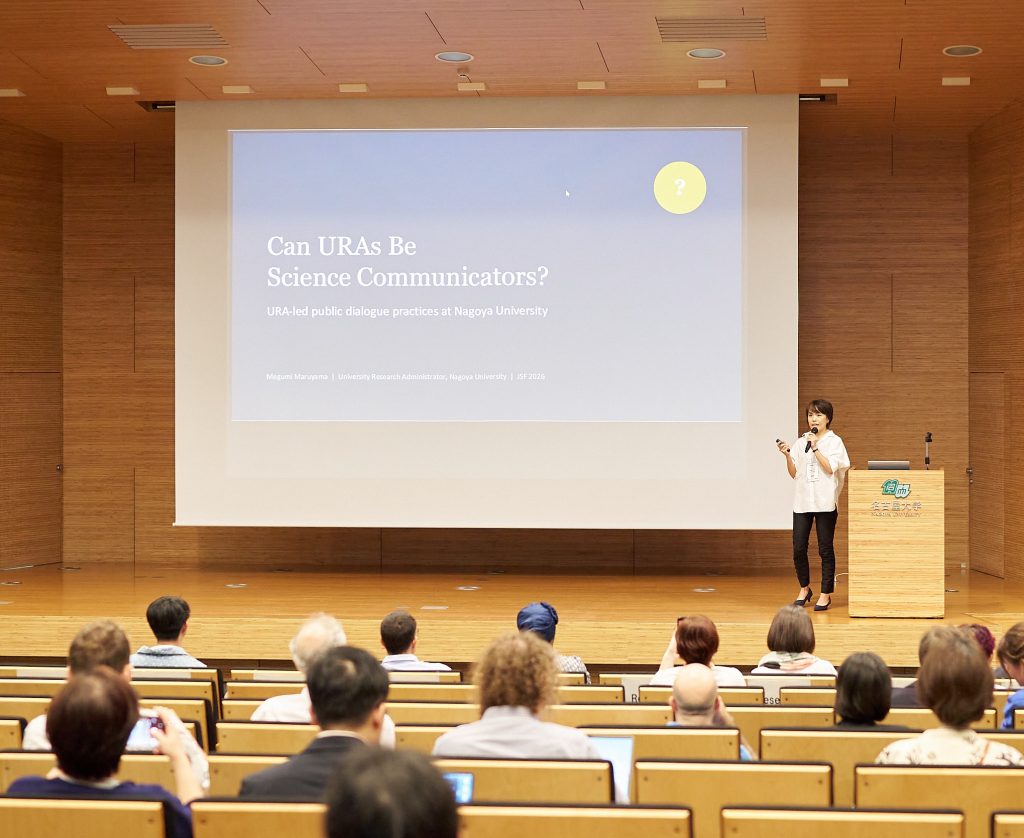
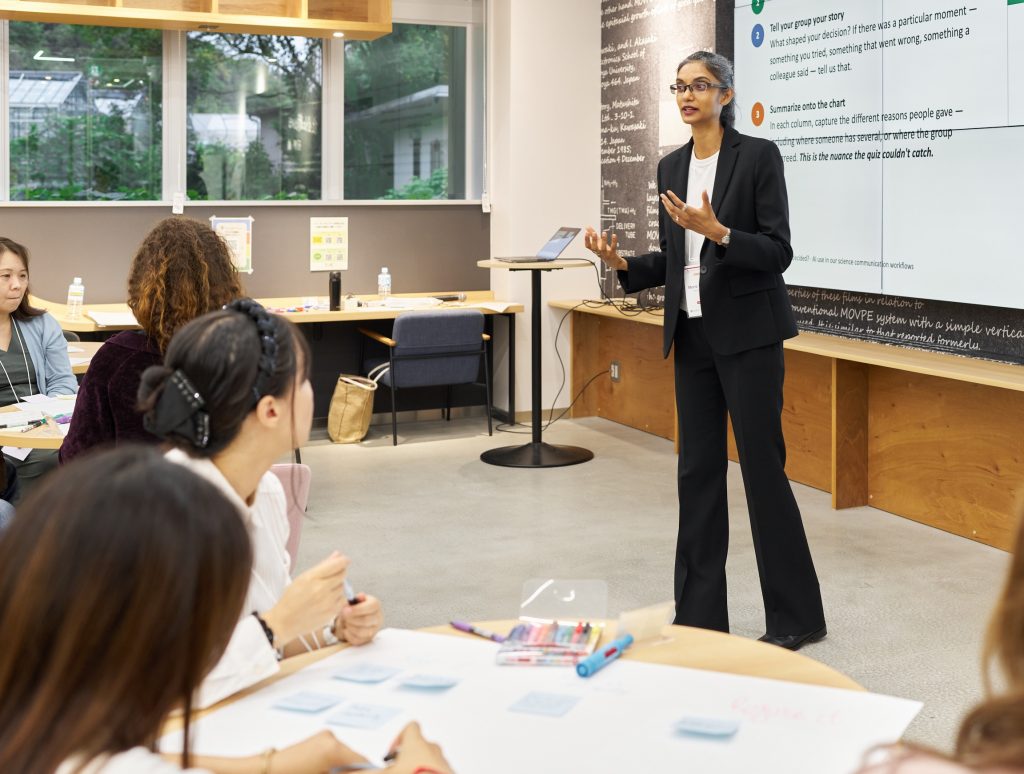
Megumi Maruyama, a university research administrator from the Academic Research & Industry-Academia-Government Collaboration, showed how people in her role can work as science communicators, drawing on her team’s work running Meidai Café, the university’s public science café. Merle Naidoo from the International Communications Office led a workshop where participants shared their own AI stories, including what they use AI for, what they avoid, and why.
Over the two days, a clearer picture emerged of how AI is changing the daily work of science communicators. Some speakers shared cautionary tales about what can go wrong when AI-generated content is involved, from viewers objecting to AI in science videos to errors in AI-made illustrations in medical journals. Others showed how AI can be used to assist with time-consuming tasks and leave more space for pursuing other creative projects.
In hands-on workshops, participants began scripting short science videos for social media, designed outreach activities to connect research with local communities, saw how vibecoding can be used to prototype a tool for tracking communication impact, and shared what they use and do not use AI for in their own work. Throughout the forum, discussions kept returning to one question: How can communicators use AI while keeping the public’s trust in science?
The closing panel brought together perspectives from science, education, community engagement and journalism. Panelists discussed the questions AI raises about trust, transparency, skills and responsibility, and who should decide how it is governed. Takeaways included developing guidelines collaboratively rather than imposing them from above and recognizing that AI cannot replace the thinking behind good science communication.
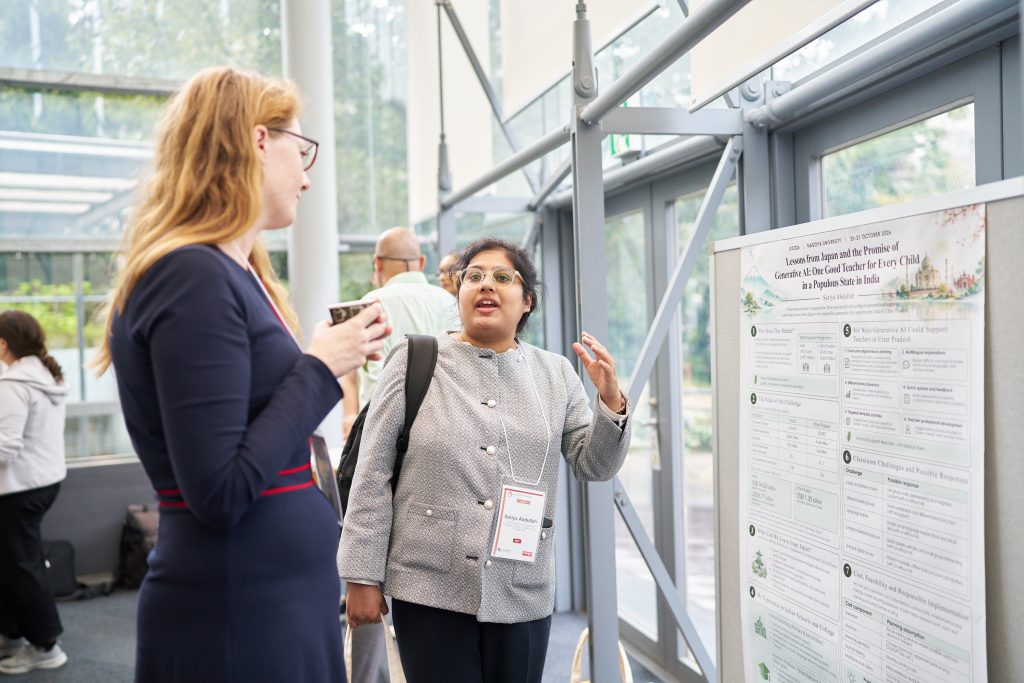
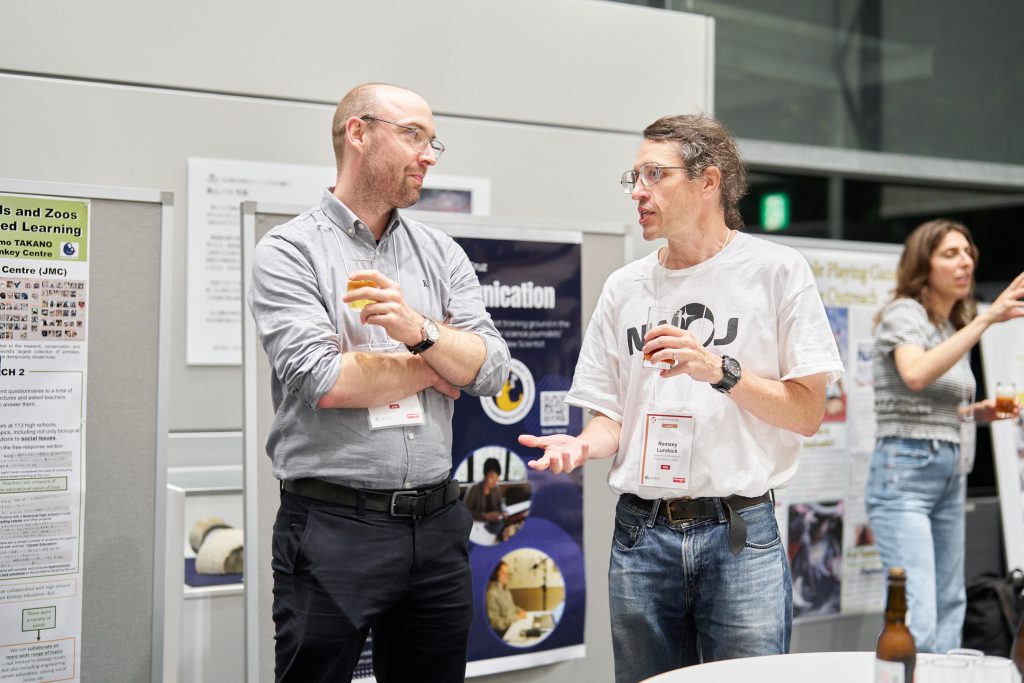
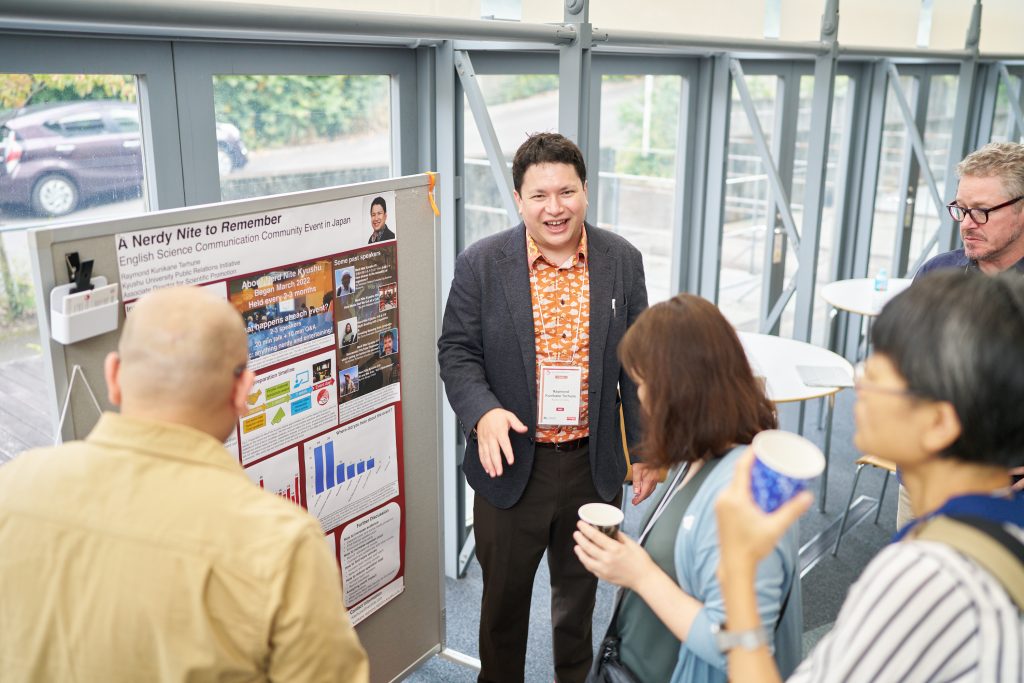
This year, for the first time, posters were on display throughout the event, and presenters discussed their work with participants during coffee and lunch breaks.
The forum ended with a EurekAlert! user group meeting for public information officers (PIOs) from universities and research institutions, led by Brian Lin, director of editorial content strategy at EurekAlert!, a global platform for distributing science news releases to journalists and the public. The International Communications Office shares Nagoya University’s English-language press releases through the platform, which has supported the forum since its inception.
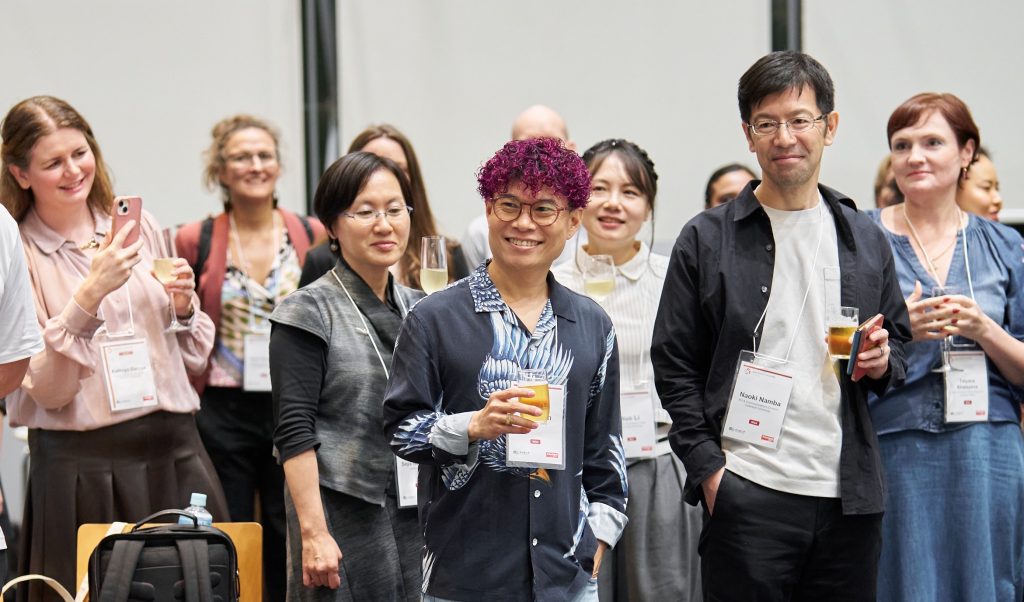
Throughout the forum, much of the energy came from people reconnecting with old colleagues and meeting new faces in science communication. Those informal conversations are a big part of why people attend JSF: it is one of the few chances for English-language science communicators in Japan to meet in person, share ideas and build working relationships.
For Nagoya University, hosting JSF for the first time was a chance to welcome the Japan science communication community to our campus and to join a conversation that will shape how science reaches the public in the years ahead.