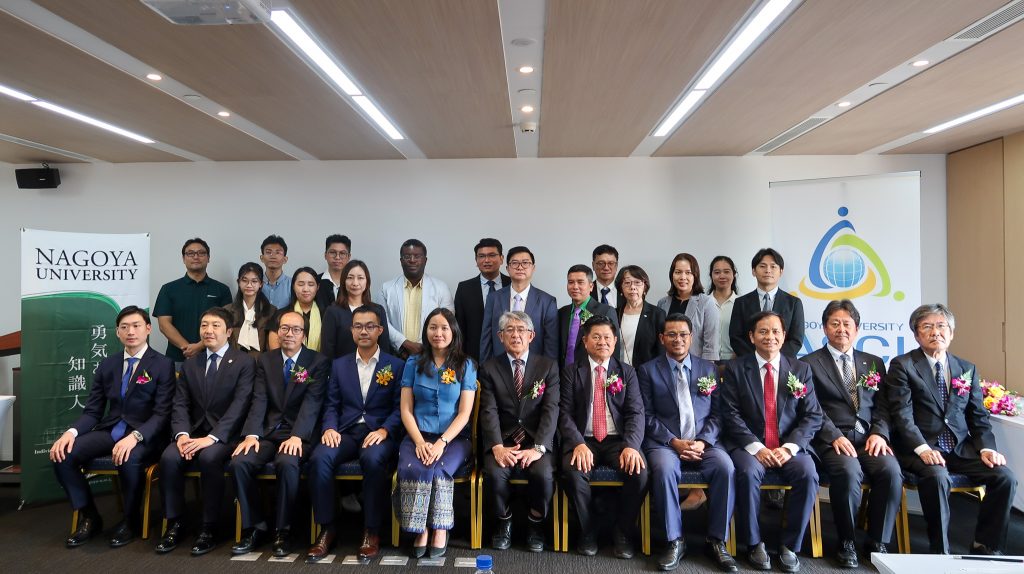
More than a decade of transnational doctoral education is fostering new opportunities for research and academic collaboration in Cambodia.
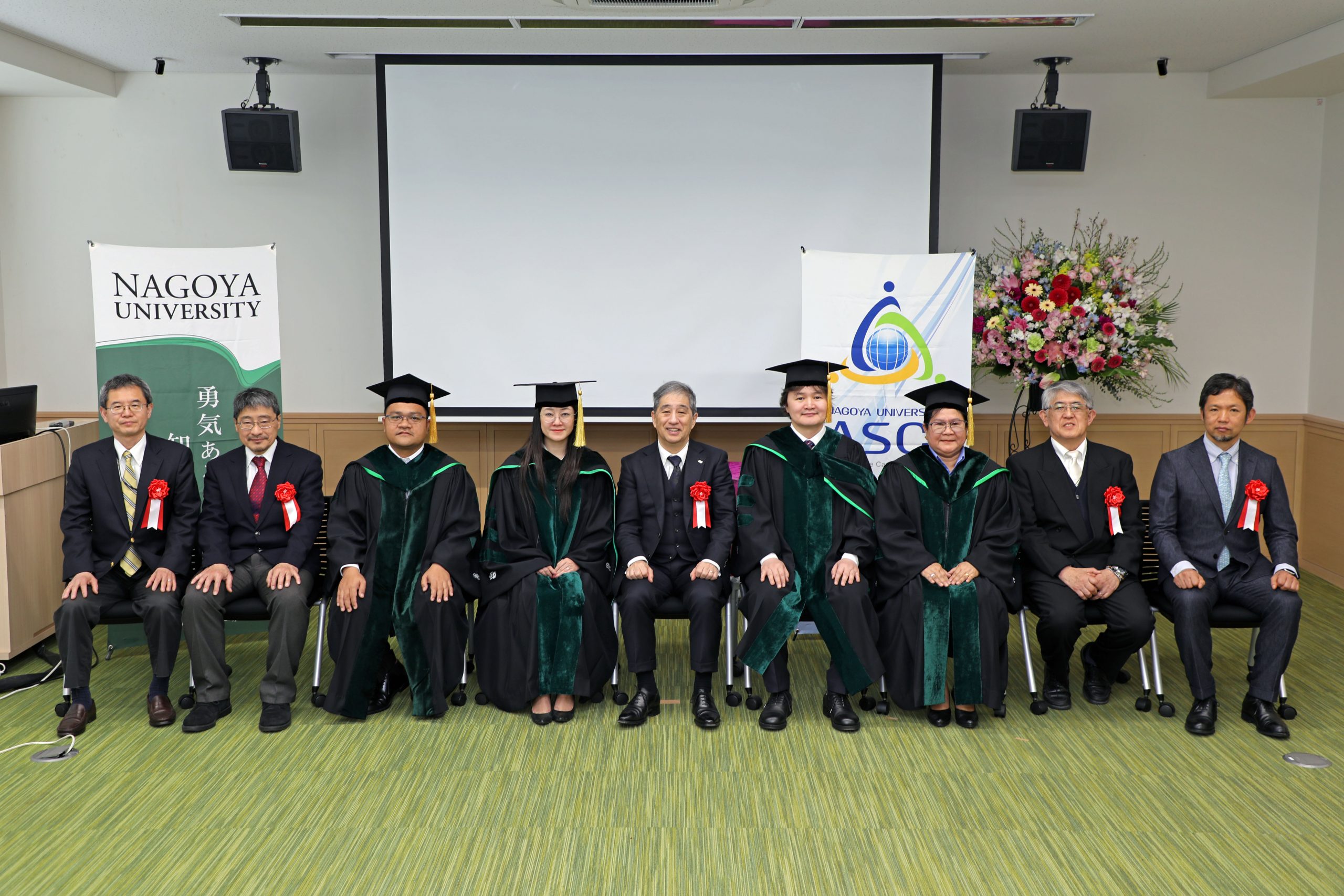
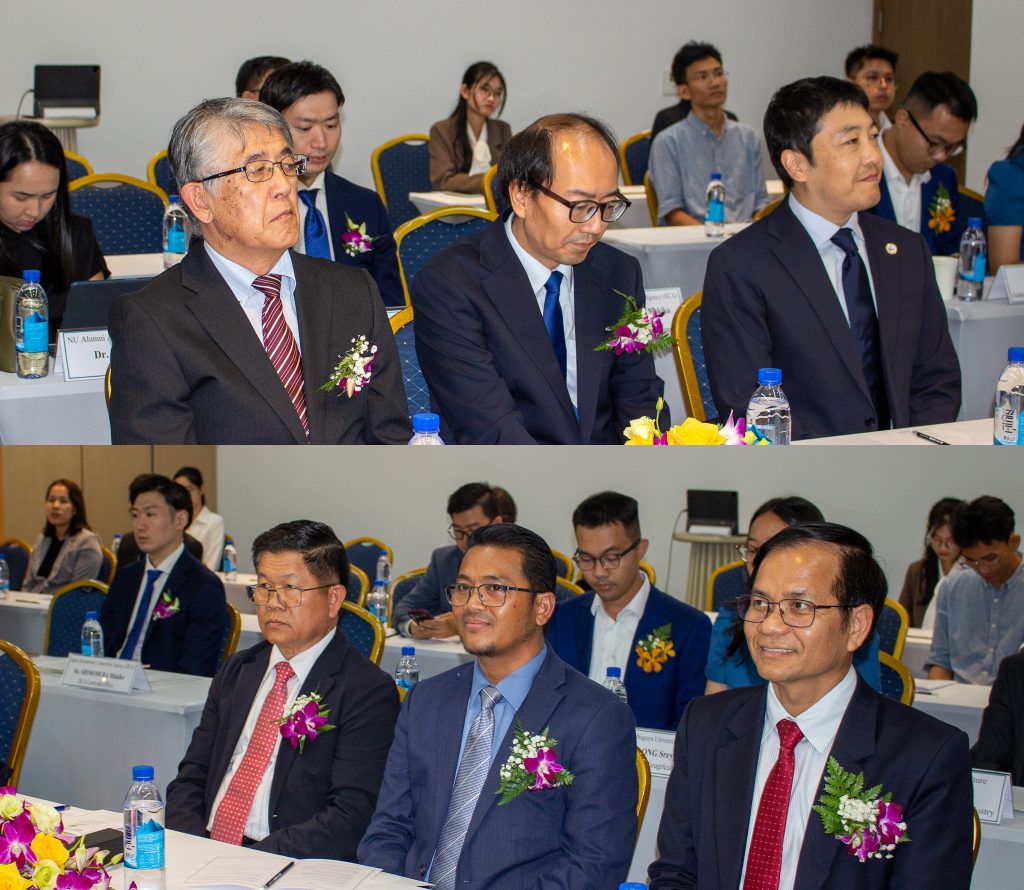
Nagoya University held the 2026 Entrance Ceremony of its Asian Satellite Campuses Institute (ASCI) at Hotel Emion in Phnom Penh, Cambodia, on November 12, 2026. Approximately 40 people attended, including representatives of the Embassy of Japan in Cambodia, the Japan International Cooperation Agency (JICA), Cambodian universities, Nagoya University faculty members, students, and alumni.
The ceremony welcomed two Cambodian working professionals beginning doctoral studies: Long Sreypov, associate lecturer at the Royal University of Agriculture, who joins the Graduate School of Bioagricultural Sciences; and Sean Monorith, a senior economist at Cambodia’s Ministry of Economy and Finance, who joins the Graduate School of International Development. Both delivered statements affirming their commitment to their doctoral studies.
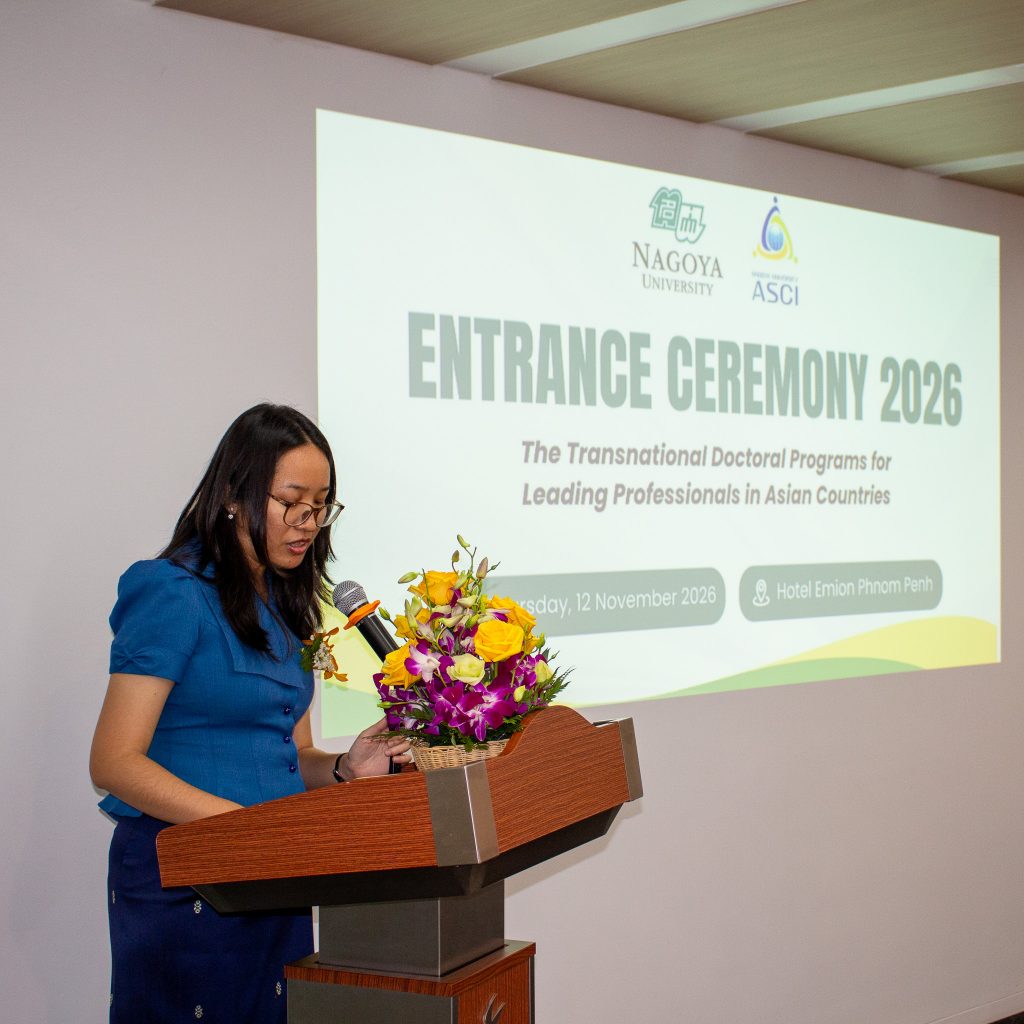
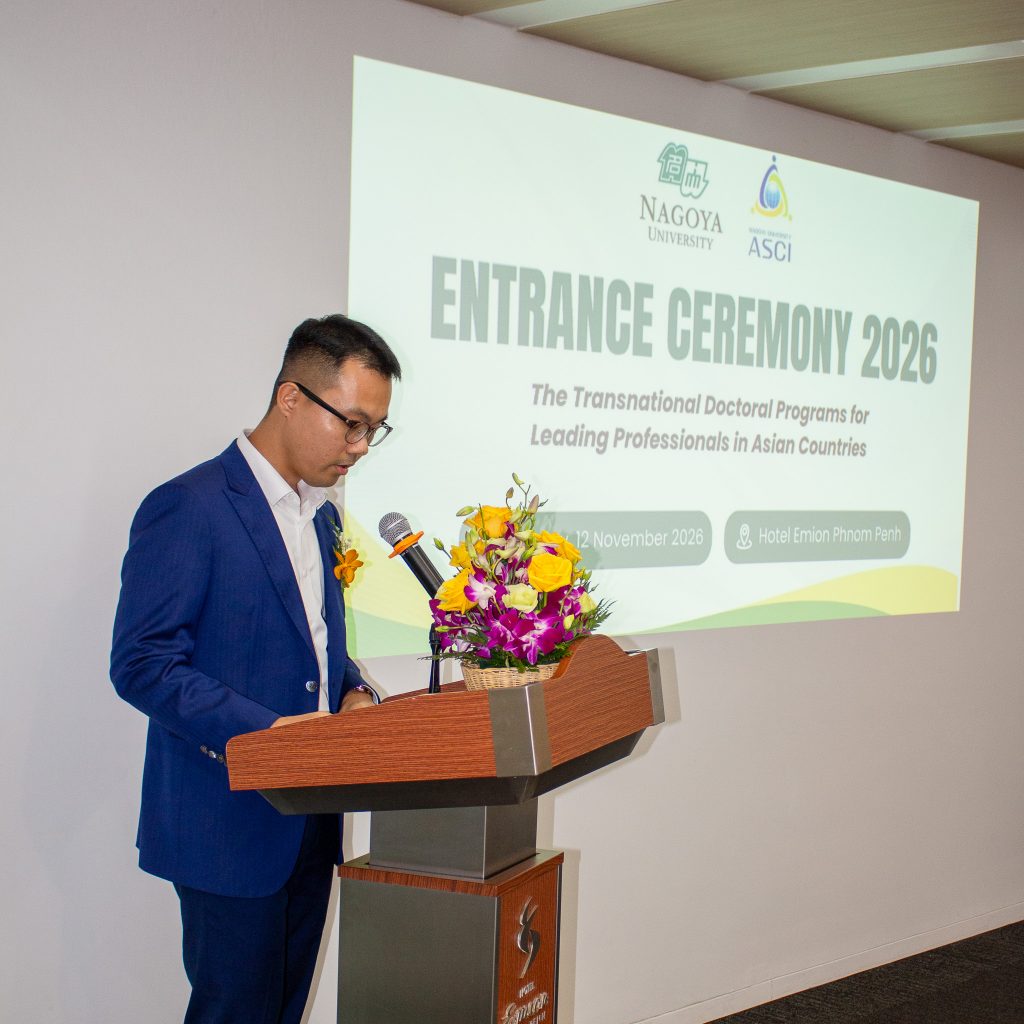
New doctoral students Long Sreypov and Sean Monorith deliver their commitment statements. Credit: Eun Sokhorn and Sreng Chanlida, Nagoya University Cambodia Center
Support from Japanese and Cambodian partner institutions
Professor Akira Yamauchi, Director of ASCI, opened the ceremony. Chinket Metta, Director of the Nagoya University Cambodia Center, introduced the distinguished guests and served as master of ceremonies.
Congratulatory speeches were delivered by Matsuda Junsaku, Counsellor of the Embassy of Japan in Cambodia; Yako Yoshito, senior representative of the JICA Cambodia Office; Professor Ngo Bunthan, rector of the Royal University of Agriculture; Assistant Professor Kean Tak, vice rector of the Royal University of Phnom Penh; and Professor Hap Phalthy, vice rector of the Royal University of Law and Economics.
Representing Nagoya University, Professor Nakazono Mikio, dean of the Graduate School of Bioagricultural Sciences, sent a video message, and Professor Shimizutani Satoshi, vice dean of the Graduate School of International Development, spoke in person. Kuoch Somean, secretary of state at the Ministry of Labour and Vocational Training, offered advice by video message, while Theng Dyna, dean of the Faculty of Agro-Industry at the Royal University of Agriculture, also addressed the new students. Professor Ohkura Satoshi, vice dean of the Graduate School of Bioagricultural Sciences, delivered the closing remarks.
Doctoral research addressing Cambodia’s development challenges
Established in 2014, ASCI provides transnational doctoral programs for leading professionals in Asian countries. Participants pursue original research under the supervision of Nagoya University faculty while continuing to work in their home countries, with opportunities for research and training in Japan. As of Nov. 1, 2026, the program had admitted 45 doctoral students from Cambodia, 20 of whom had earned doctoral degrees.
The doctoral dissertations completed by Cambodian graduates illustrate the breadth and practical relevance of their research. In agriculture, topics have included sustainable integrated pest management in rice, biological control of rice pests and diseases, fertilizer management to improve rice productivity, and the productivity and health of dairy cattle under tropical conditions. Other dissertations have examined the relationship between in-service teacher training and the quality of secondary education, local government accountability and decentralization, exchange-rate policy, labour-market skills mismatches, poverty and social protection, and factors associated with HIV testing. These studies address questions closely connected to Cambodia’s agricultural, economic, educational, administrative, and public-health priorities.
From doctoral training to lasting collaboration
In his opening remarks, Yamauchi noted that ASCI is entering a new stage of development. While helping students complete their doctoral degrees within the prescribed period remains essential, the institute is placing greater emphasis on sustained collaborative research and the development and implementation of joint academic programs with graduates and their institutions. A doctoral degree, he emphasized, should mark not the end of the relationship with Nagoya University but the beginning of new academic collaboration.
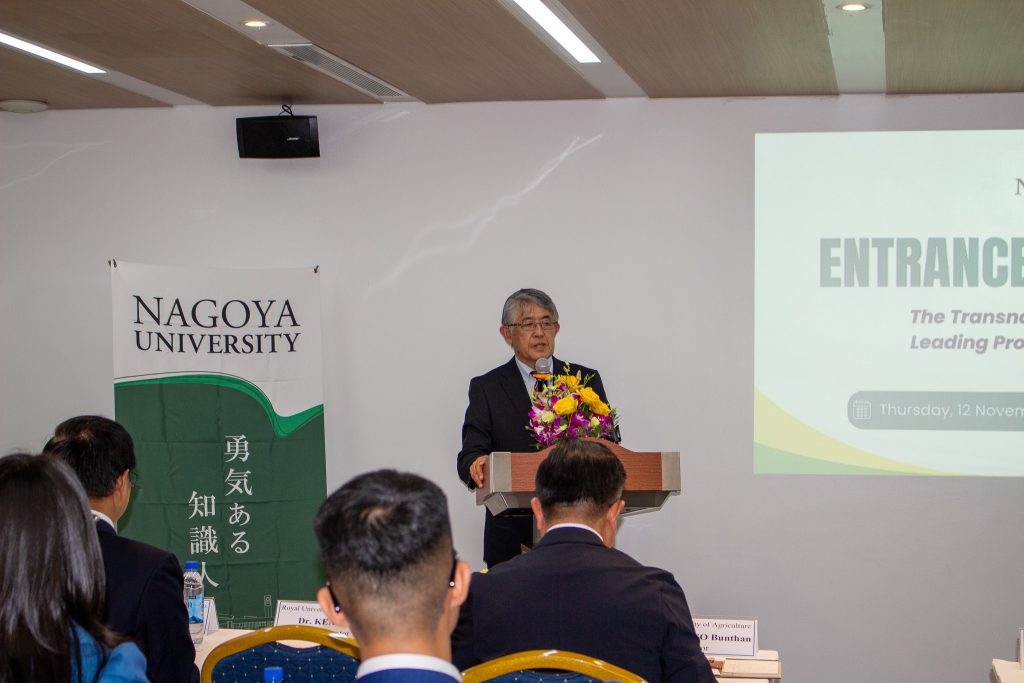
Yamauchi also stressed the importance of support from students’ workplaces, supervisors, and families as they balance doctoral research with professional responsibilities. He expressed appreciation for scholarships and financial assistance from JICA, the UFJ International Foundation, and the Nagoya University Fund, and welcomed the recent resumption of scholarship support through the Southeast Asian Regional Center for Graduate Study and Research in Agriculture (SEARCA).
Building on its growing network of graduates, students, supervisors, and partner institutions, ASCI seeks to advance long-term academic partnerships and collaborative initiatives that contribute to Cambodia’s sustainable development.
Researchers
-
 NAKAZONO MikioGraduate School of Bioagricultural Sciences, Department of Plant Production Sciences
-
SHIMIZUTANI SatoshiGraduate School of International Development, Department of International Development and Cooperation
-
 OHKURA SatoshiGraduate School of Bioagricultural Sciences, Field Science Center, Division