The target compound, PF-04457845, has already passed safety testing in humans and may offer a new therapeutic option for ALS.
Amyotrophic lateral sclerosis (ALS) is a severe neurological disease that destroys nerve cells responsible for muscle movement. The disease typically begins with limb or bulbar weakness and progresses to respiratory failure. Current treatments only modestly slow progression, underscoring the urgent need for more effective therapies.
A team led by researchers at Nagoya University in Japan showed that blood levels of the metabolic substance N-acyl taurines (NATs) correlate with ALS progression. They also demonstrated that PF-04457845, a compound already proven to be safe in humans, slows motor decline in ALS mouse models. These findings were published in the journal JCI Insight.
ALS causes not only muscle weakness but also widespread metabolic changes, including abnormal lipid metabolism and weight loss. However, the relationship between these metabolic changes and disease progression remains unclear.
To investigate this connection, Professor Masahisa Katsuno, Assistant Professor Daisuke Ito, and colleagues at Nagoya University Graduate School of Medicine, together with researchers from Aichi Medical University and Juntendo University, analyzed metabolic changes in ALS patients.
Previous studies usually used mouse models or patient-derived induced pluripotent stem (iPS) cells, but both approaches have limitations. Mouse models reflect genetic forms of ALS, while most patients have sporadic, non-inherited ALS. Patient-derived iPS cells primarily represent nerve cells, although ALS affects multiple cell types.
“We therefore began by analyzing patient blood samples to map metabolic changes and identify treatments suggested by the results,” Katsuno said.
Researchers analyzed blood samples from individuals with fast- and slow-progressing ALS, as well as healthy volunteers. Screening 867 metabolites, they identified NATs as a marker for rapidly progressive ALS. NAT is part of the extended endocannabinoid system. Further tests revealed that those with fast-progressing ALS had higher NAT levels, and individuals with the highest levels had shorter survival times.
The researchers believe that increased NAT levels reflect the body’s attempt to protect itself, although this response alone is insufficient. They suggest that boosting NAT levels with medication could help protect nerve cells.
To identify potential treatments, the team tested 29 compounds on motor neurons derived from ALS patients’ iPS cells. Results showed that PF-04457845 — which blocks an enzyme that breaks down NATs — reduced degenerative changes in motor neurons, limited cellular damage, and preserved neurites.
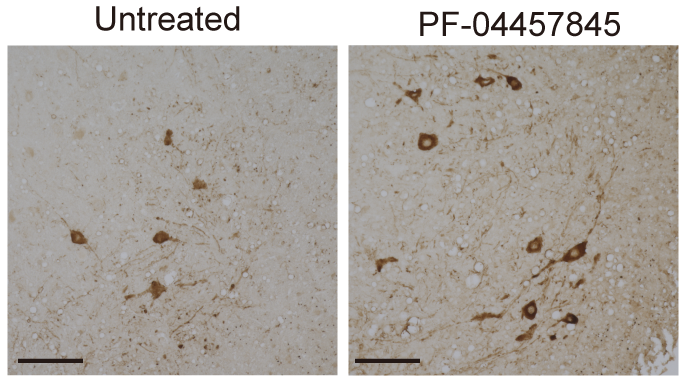
Researchers treated eight-week-old ALS mice with PF-04457845, which extended their lifespans (138 days compared to 129.5 days without treatment), improved strength and movement, and better preserved nerve cells in the spinal cord. Healthy mice showed no effects, suggesting the benefits are specific to ALS.
Gene expression analysis showed that the drug shifts spinal cord immune cells (microglia) to a more supportive, anti-inflammatory state and directly alters genes related to nerve cell growth and function.
“Through our reverse translational approach, beginning with patient blood analysis, we identified metabolic changes throughout the body,” Katsuno said. “Based on these findings, we explored new treatments and demonstrated that the potential drug is effective in both patient-derived iPS cells and animal models.”
The researchers plan to study larger patient groups to assess whether NAT is a practical biomarker for disease severity and treatment response. They will also continue evaluating PF-04457845 and other medications as potential therapies targeting NATs and the endocannabinoid system.
Publication information
Daisuke Ito, Madoka Iida, Yohei Iguchi, Atsushi Hashizume, Shinichiro Yamada, Yoshiyuki Kishimoto, Shota Komori, Kazuki Obara, Shuto Nishisaki, Satoshi Yokoi, Teppei Shimamura, Yuto Takemoto, Masahiro Nakatochi, Tomohiro Akashi, Kunihiko Hinohara, Hyeon-Cheol Lee-Okada, Yohei Okada, Junichi Niwa, Gen Sobue, Shinji Tanaka, Ken Takashina, Takehiko Yokomizo, and Masahisa Katsuno, 2026;11(15):e198842. Fatty acid amide hydrolase inhibition for treatment of amyotrophic lateral sclerosis, JCI Insight .
DOI: 10.1172/jci.insight.198842
Expert contact
Masahisa Katsuno
Nagoya University Graduate School of Medicine
Email: katsuno.masahisa.i1@f.mail.nagoya-u.ac.jp
Media contact
Naomi Inoue
Nagoya University International Communications Office
Email: icomm_research@t.mail.nagoya-u.ac.jp
Top image
Microscope images comparing motor neurons (stained brown) in mouse spinal cord tissue. The mouse treated with PF-04457845 (right) retains more motor neurons than the untreated mouse (left).
Credit: Daisuke Ito (modified from Ito et al., JCI Insight, 2026, CC BY 4.0)
Researchers
-
KATSUNO MasahisaGraduate School of Medicine, Program in Integrated Medicine, Clinical Neurosciences
-
ITO DaisukeGraduate School of Humanities, Department of Humanities
-
IIDA MadokaNagoya University Hospital, Neurology
-
IGUCHI YoheiNagoya University Hospital, Neurology
-
 HASHIZUME AtsushiNagoya University Hospital
 -
YAMADA ShinichiroNagoya University Hospital, Neurology
-
YOKOI SatoshiGraduate School of Medicine
Related organizations
Related tags
- ALS
- Induced pluripotent stem cells
- Lipid metabolism
- Medicine, Dentistry, and Pharmacy
- Motor neurons
- muscle movement
- Neurological disorders
- Neurology
- Neuron
- Neuroscience