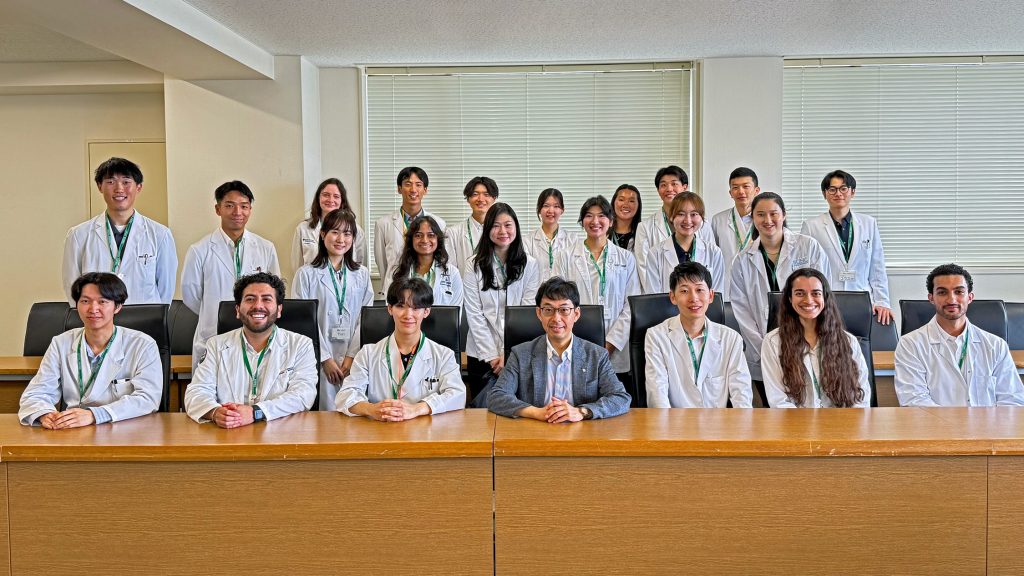
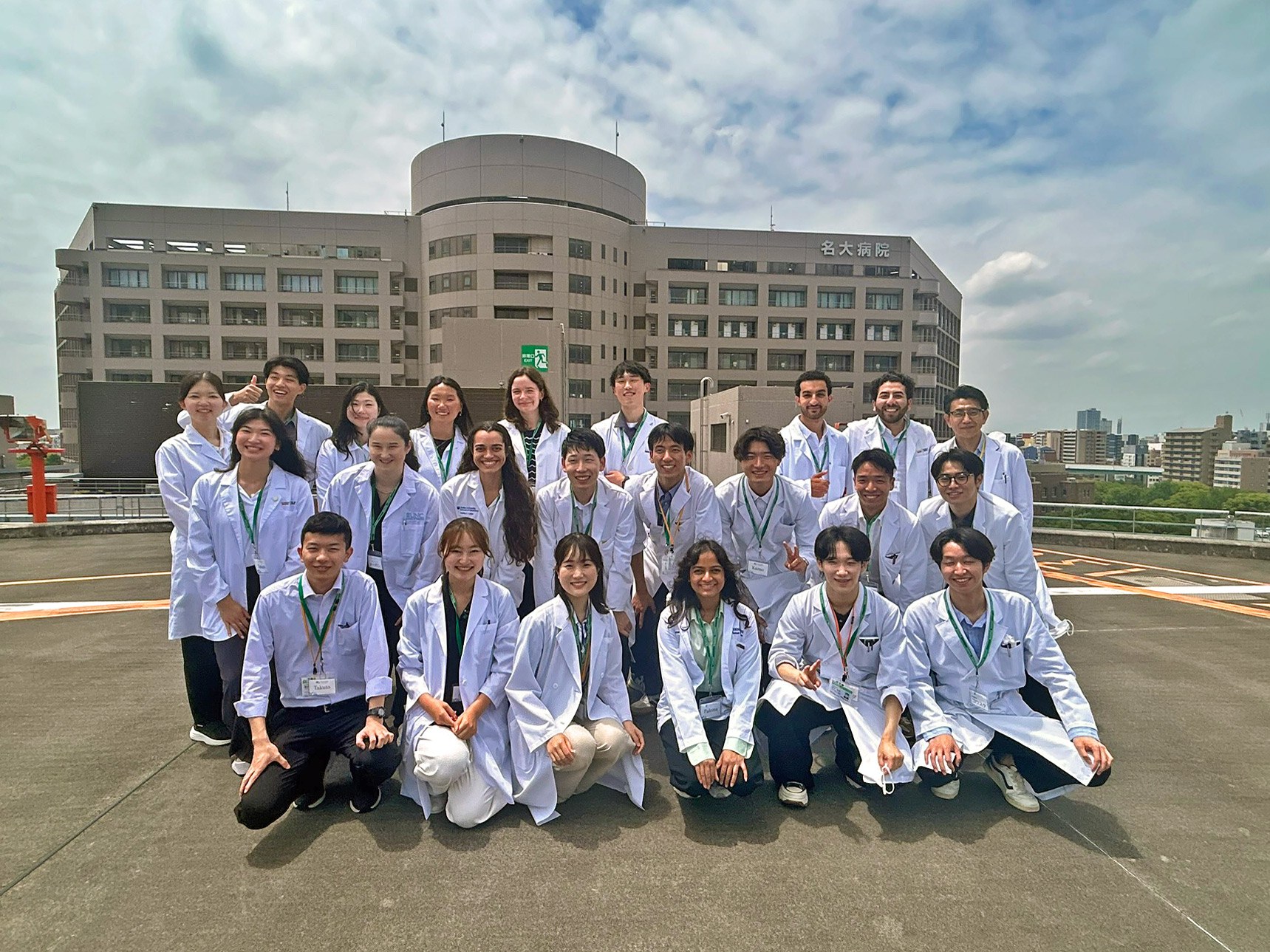
Nine medical students from five universities in the United States and the United Kingdom spent a week in July learning that good medicine sometimes happens far from a hospital bed. It can happen in a patient’s living room, at a community cafe, or on a mat while listening to what makes someone’s life worth living.
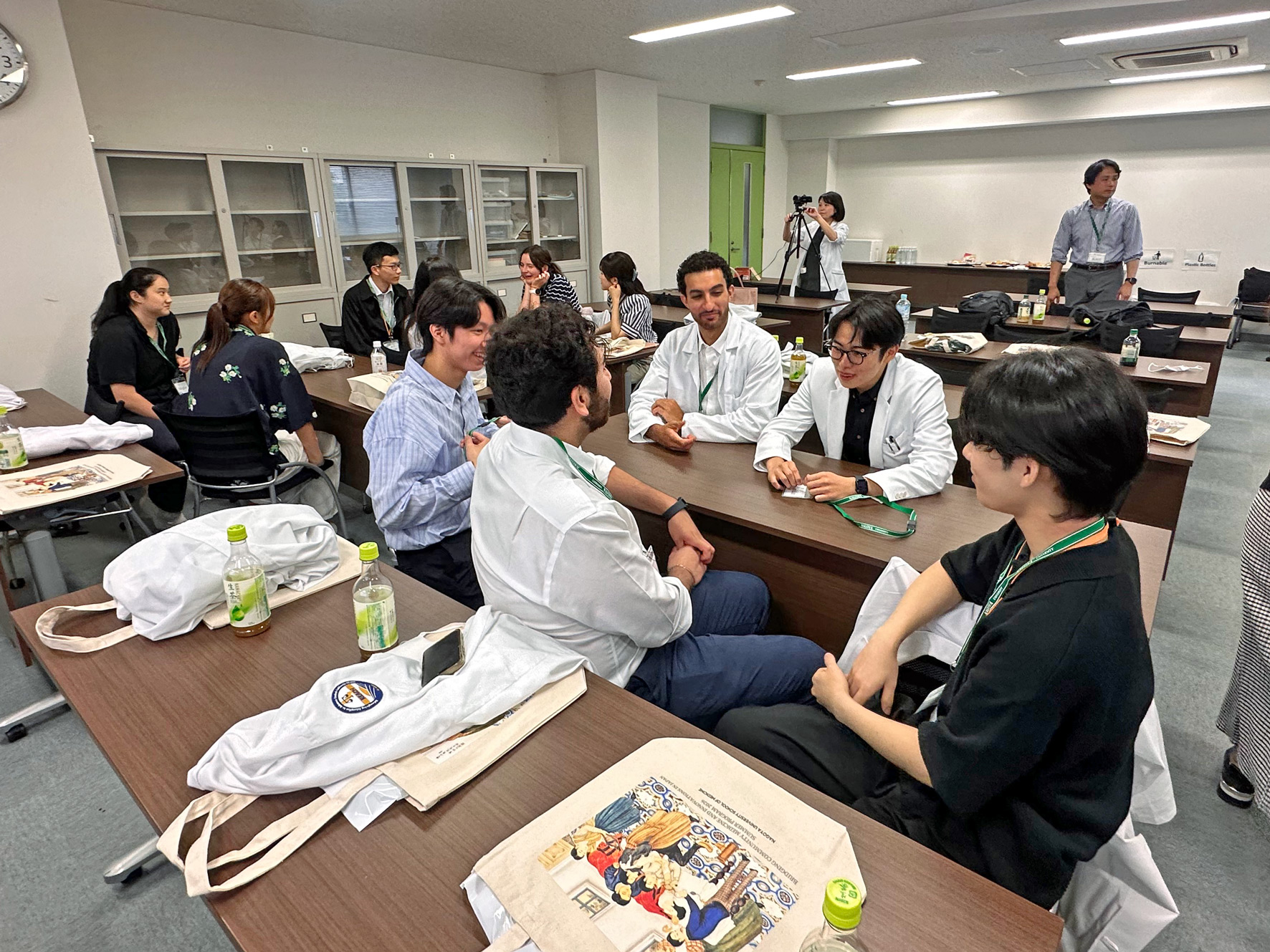
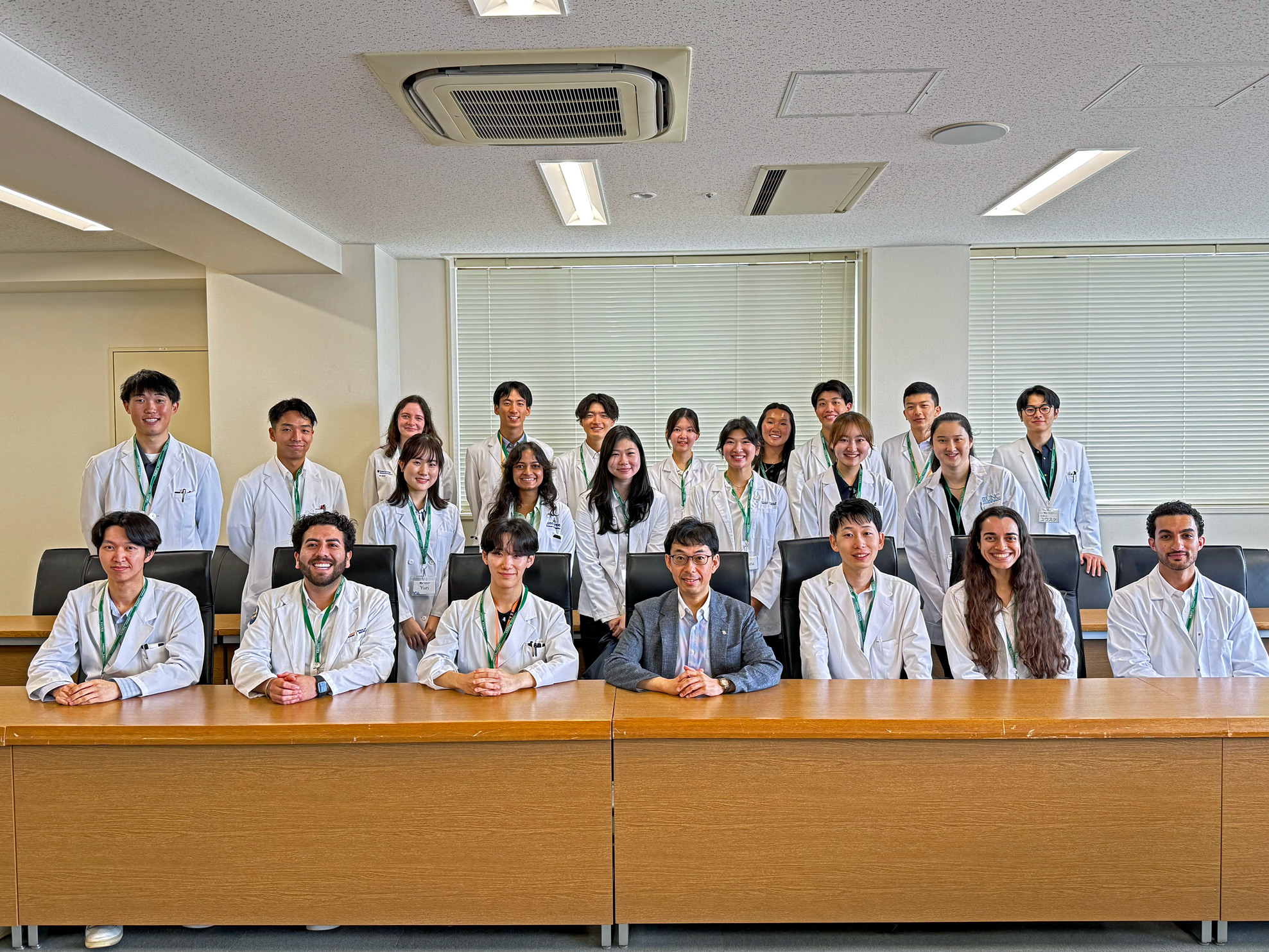
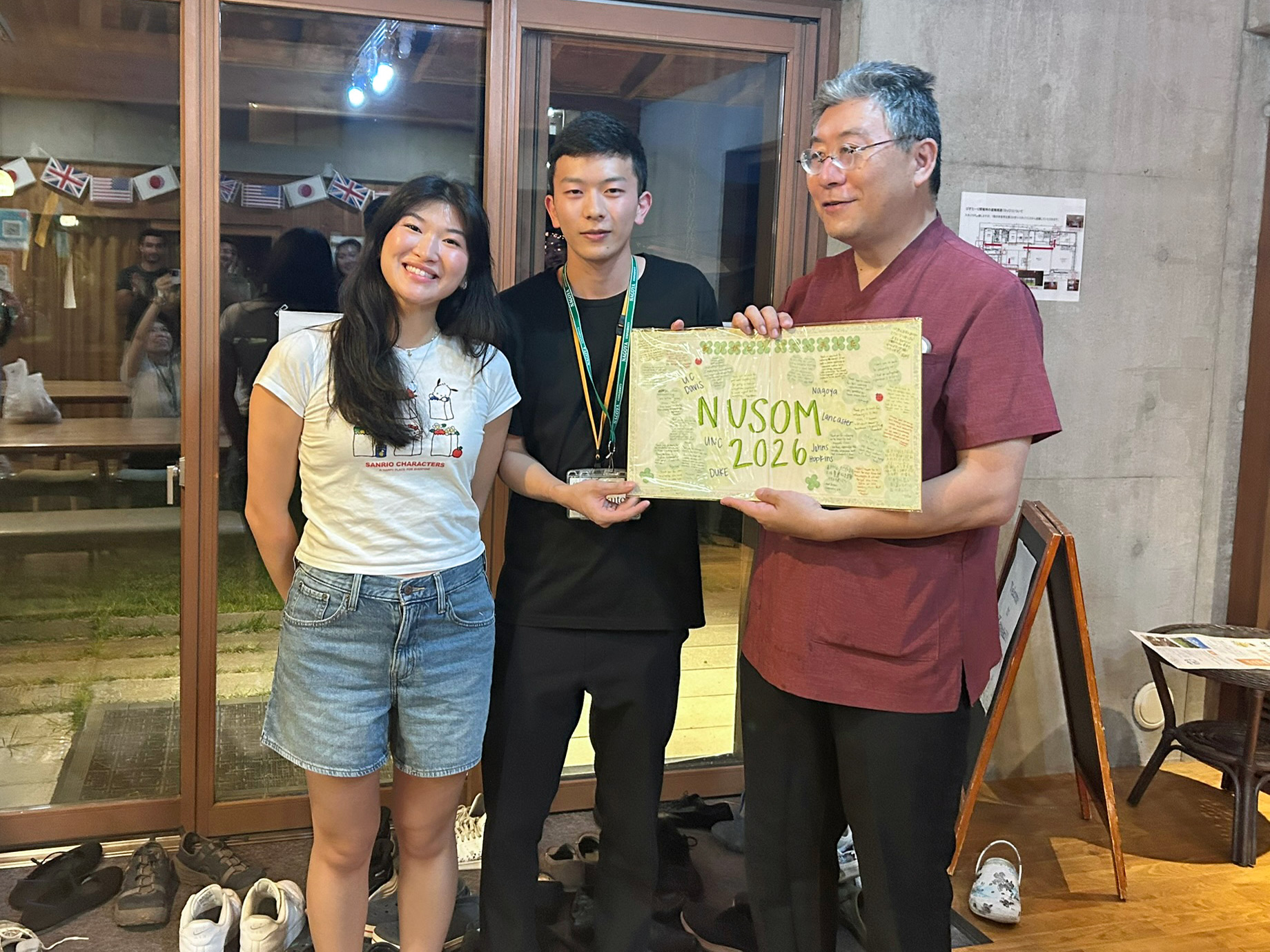
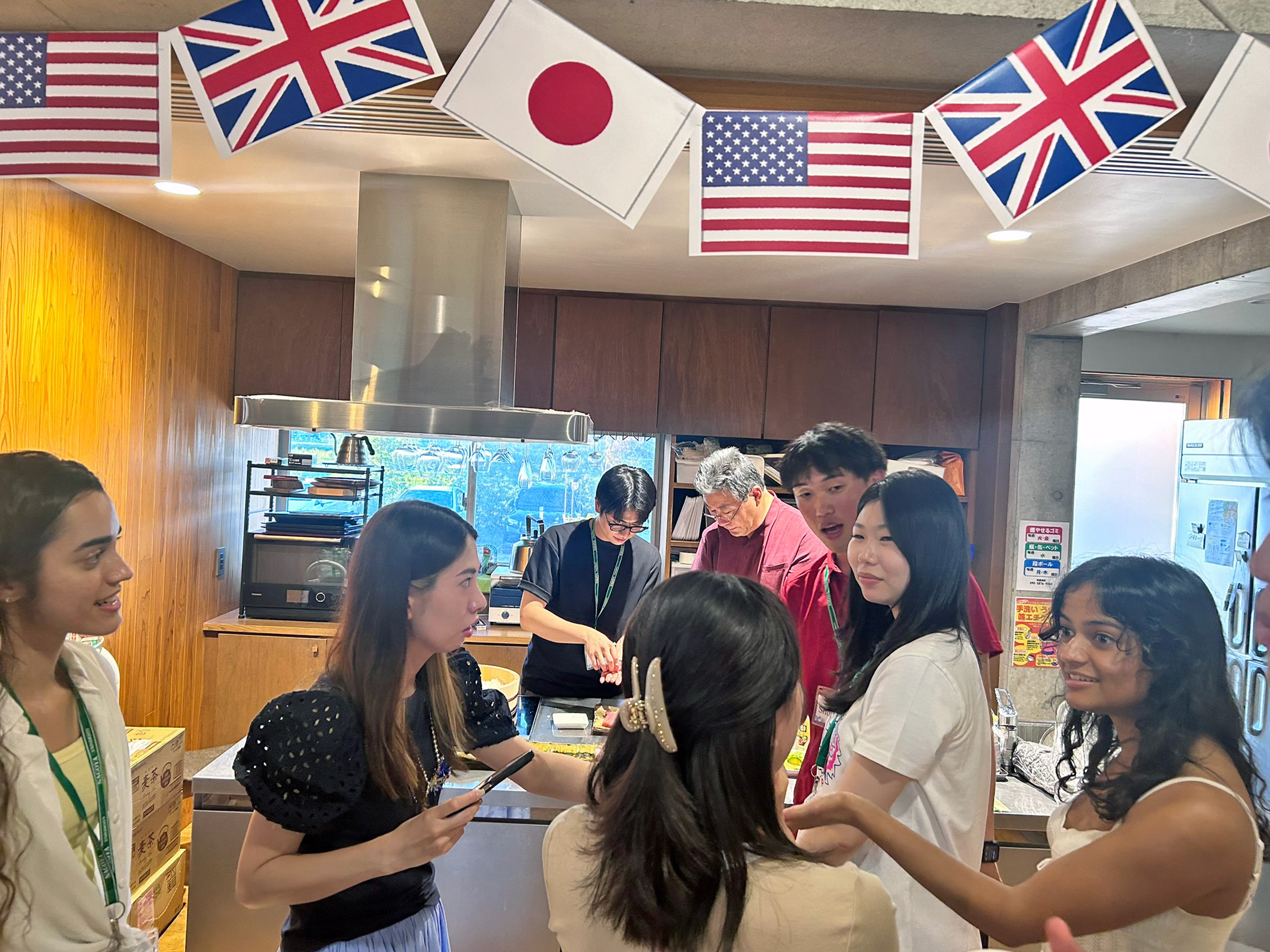
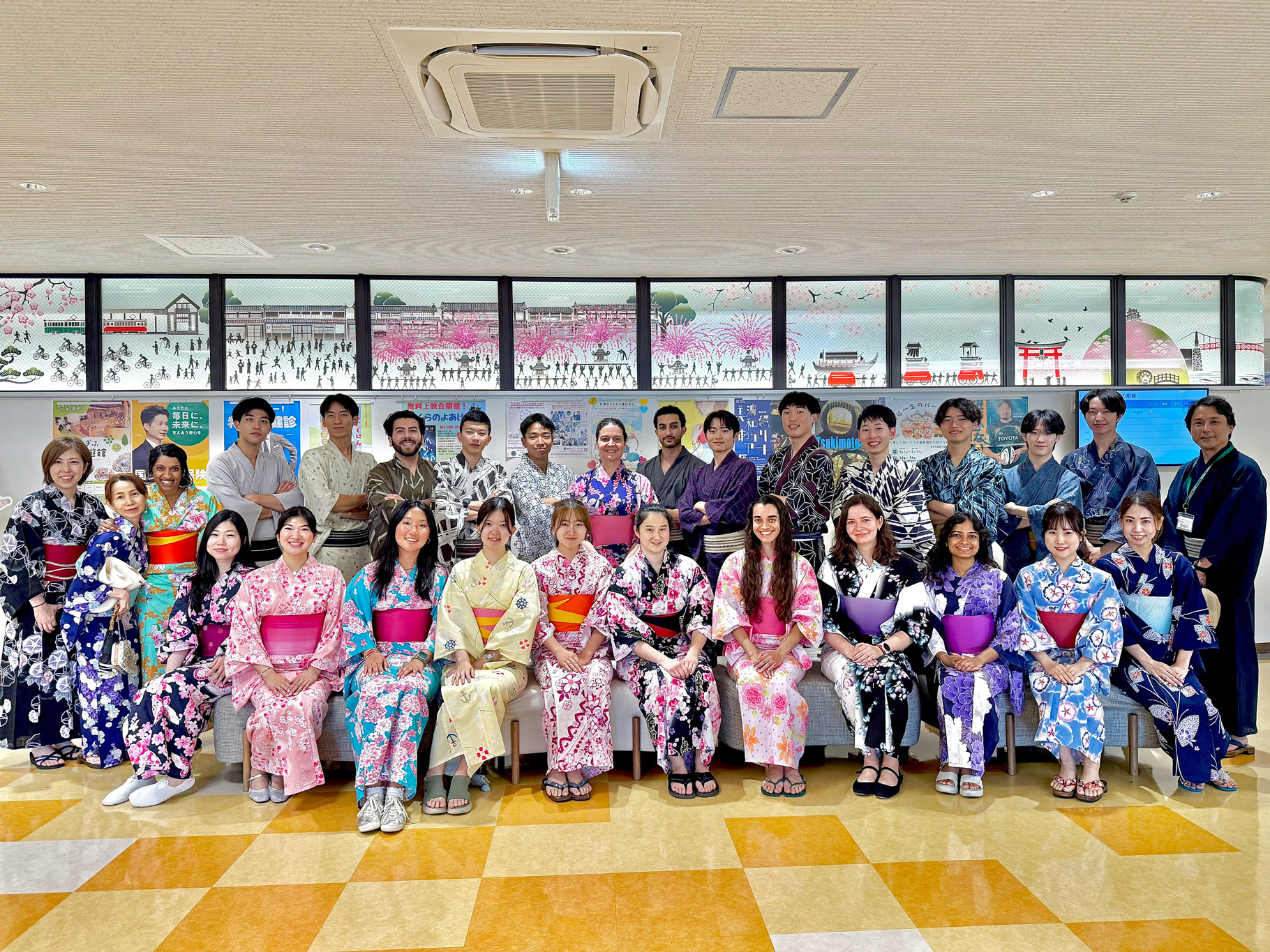
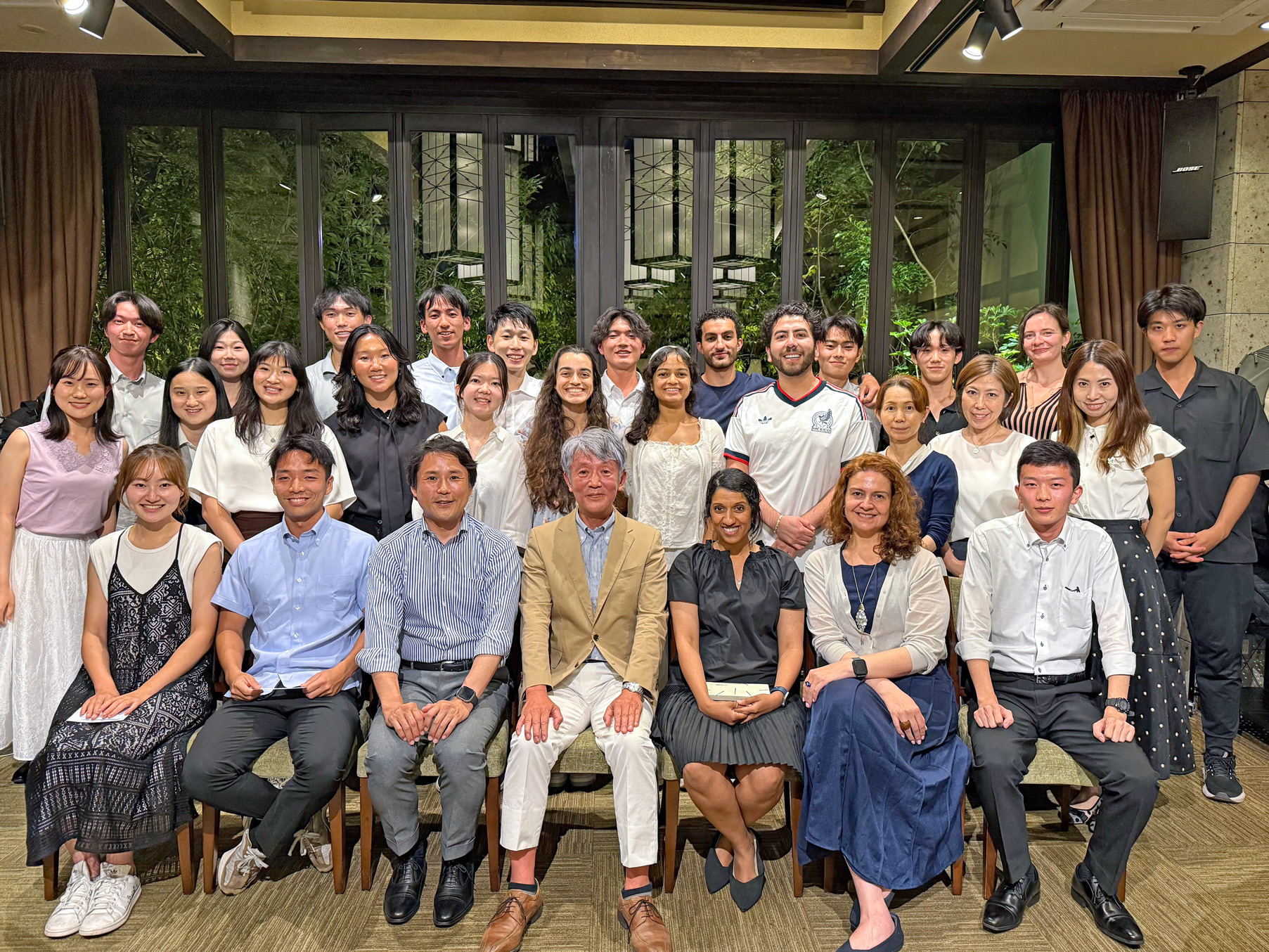
The visiting students, from Johns Hopkins University, Duke University, the University of North Carolina at Chapel Hill, the University of California, Davis, and Lancaster University, joined 13 students from the Nagoya University School of Medicine for a summer program titled “Bridging Community Medicine and Innovations in Japan,” now in its third year. Running from July 6 to 14, the program paired each visiting student with one or two Japanese “buddies” who stayed with them throughout the week. The buddies translated not just language, but the everyday workings of Japanese healthcare and culture.
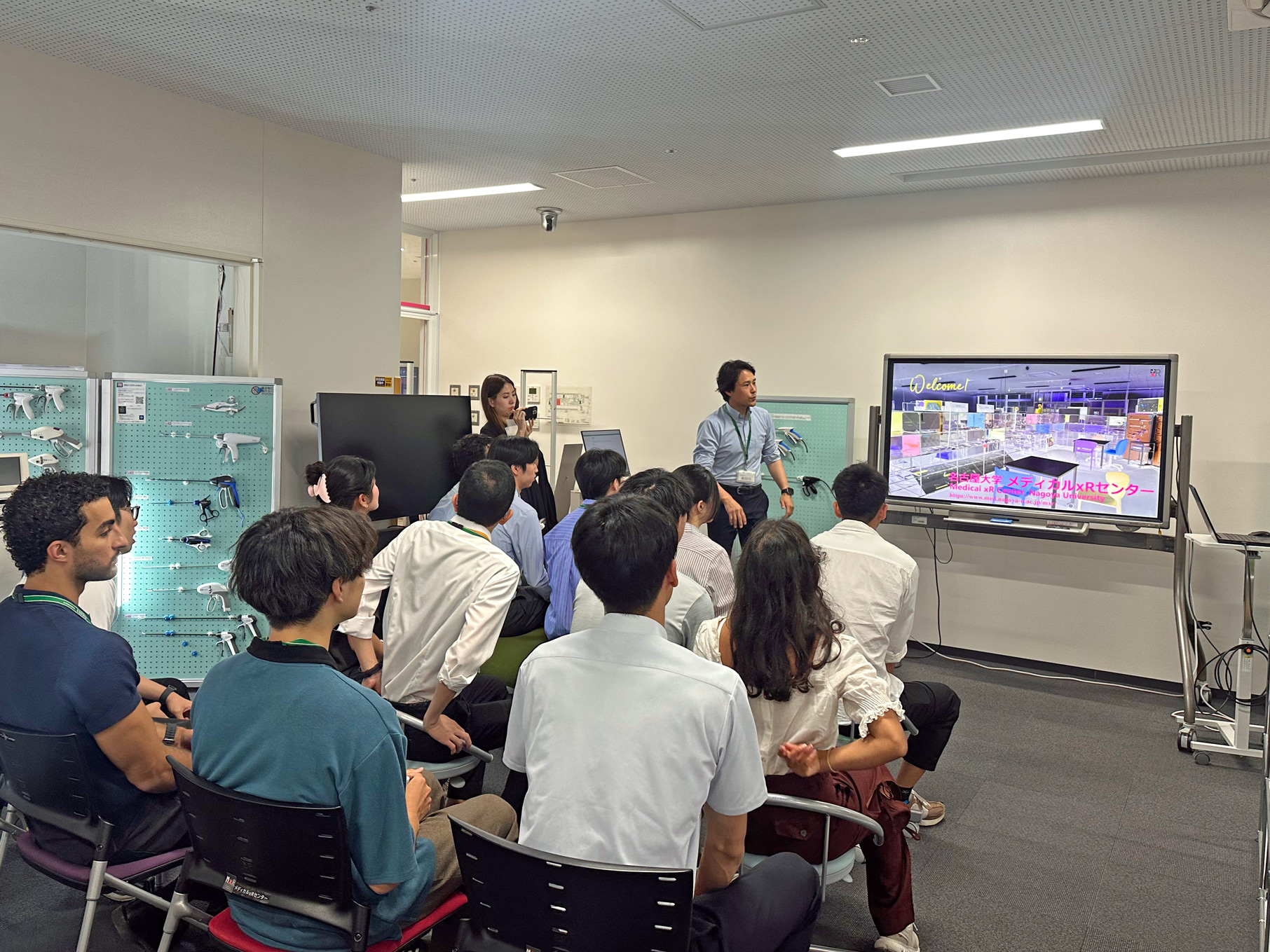
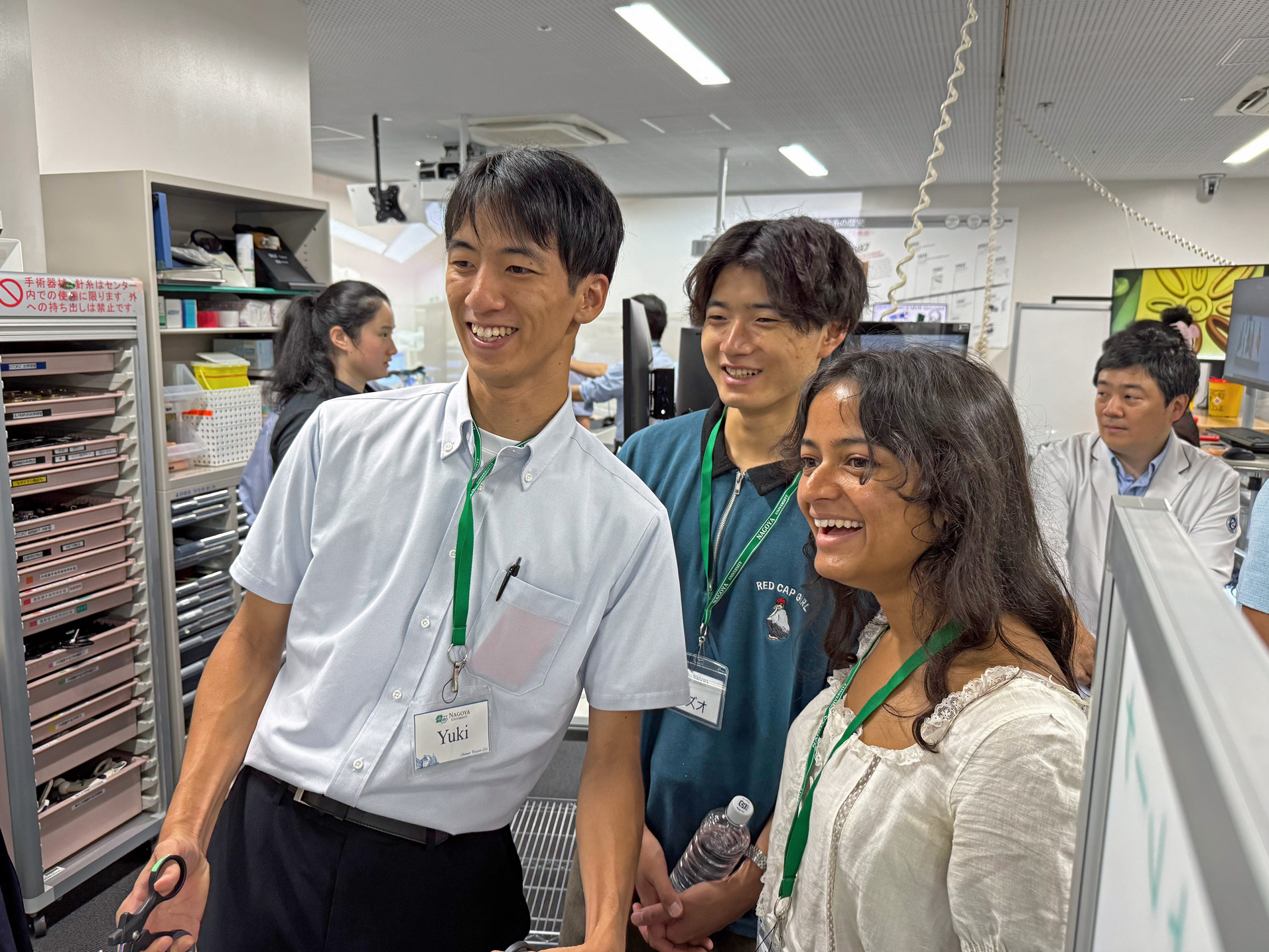
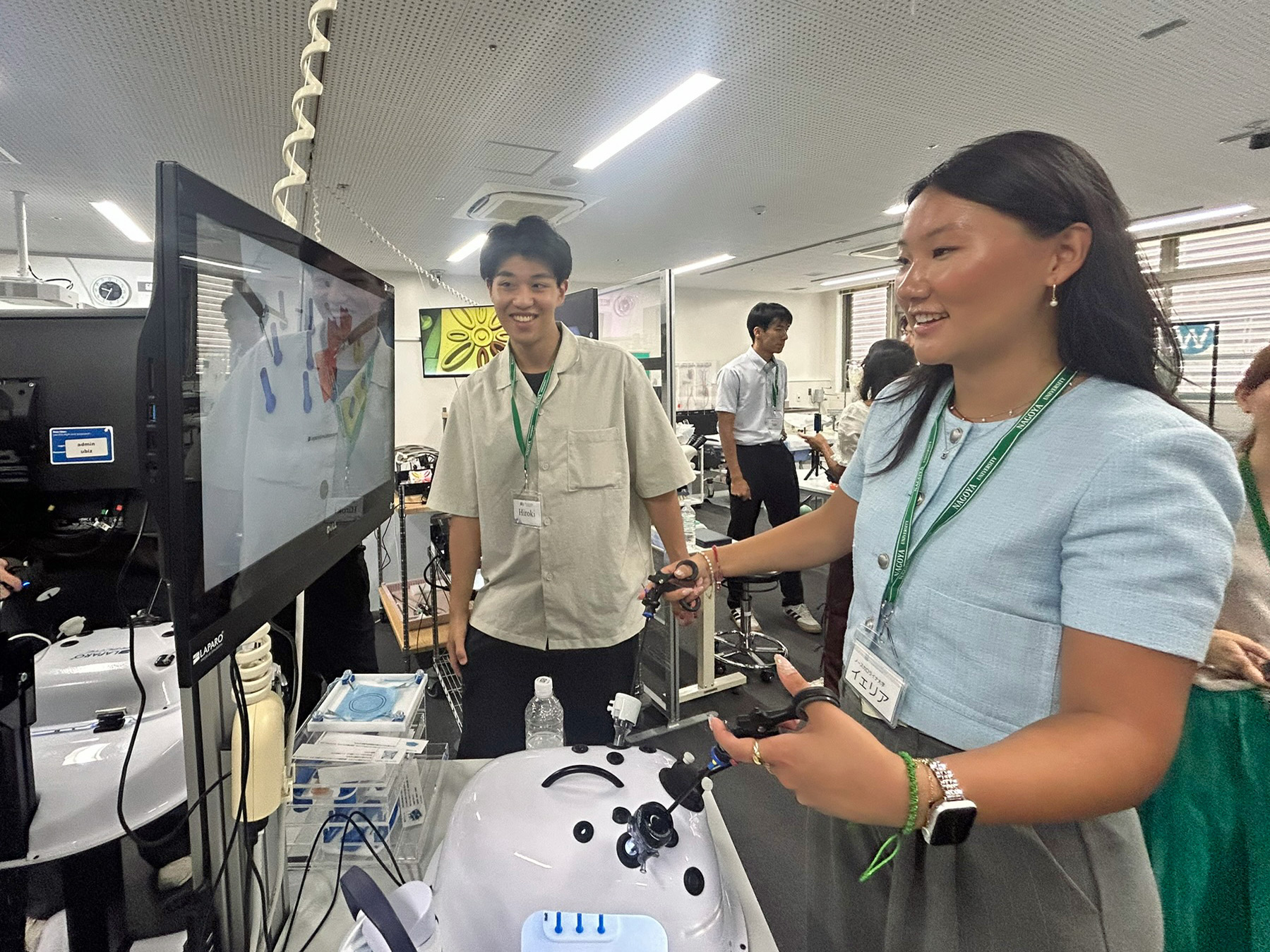
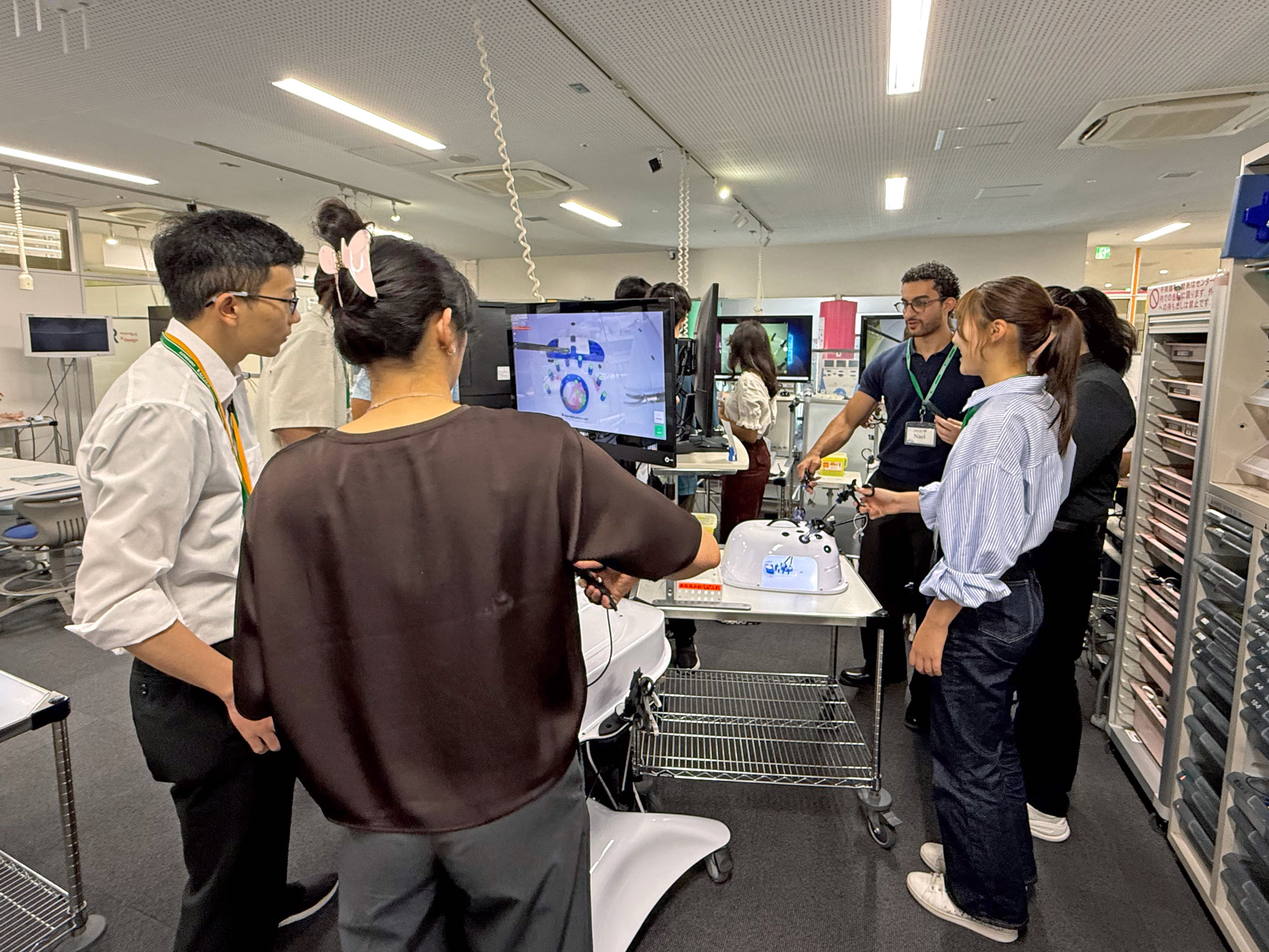
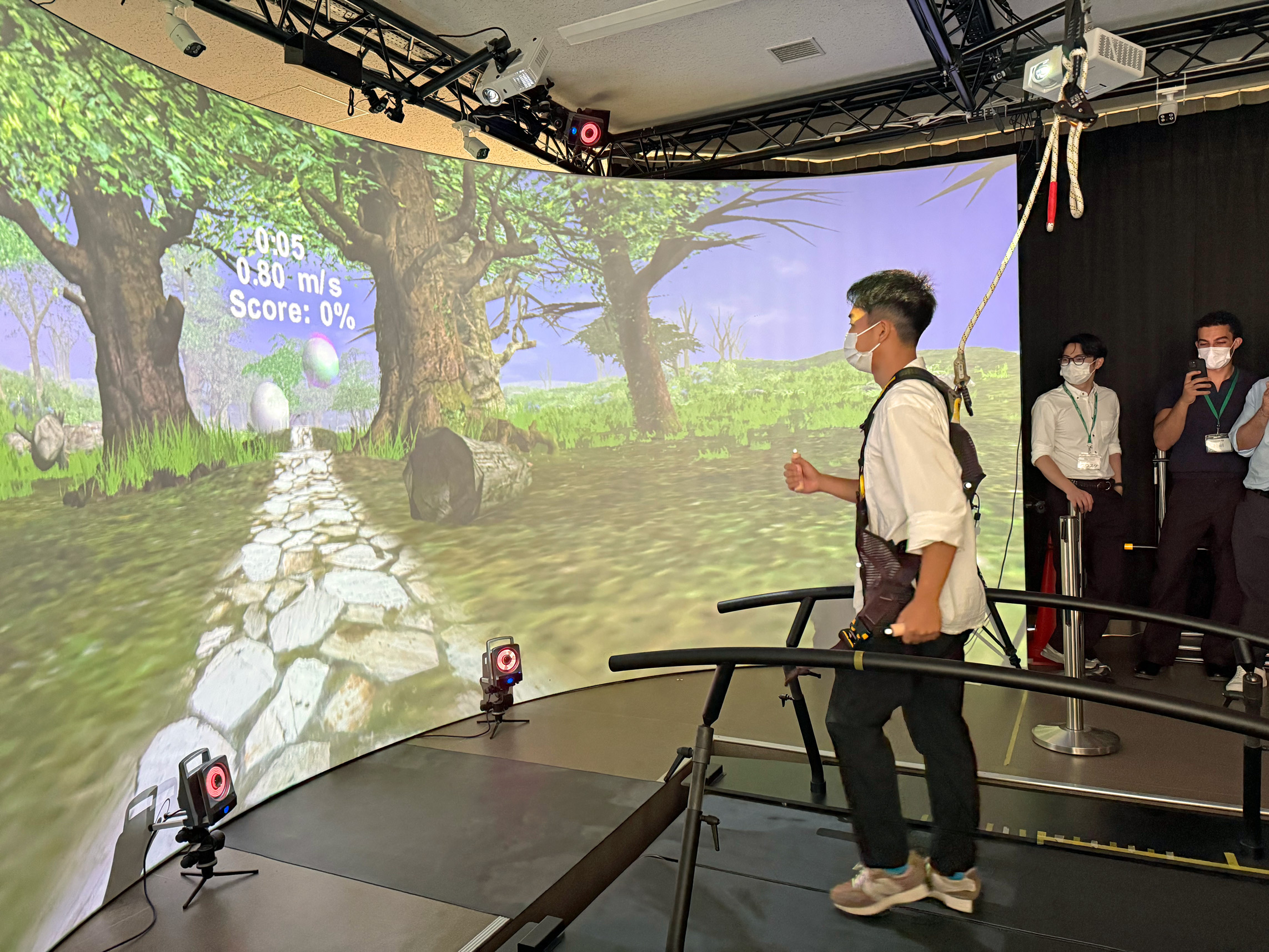
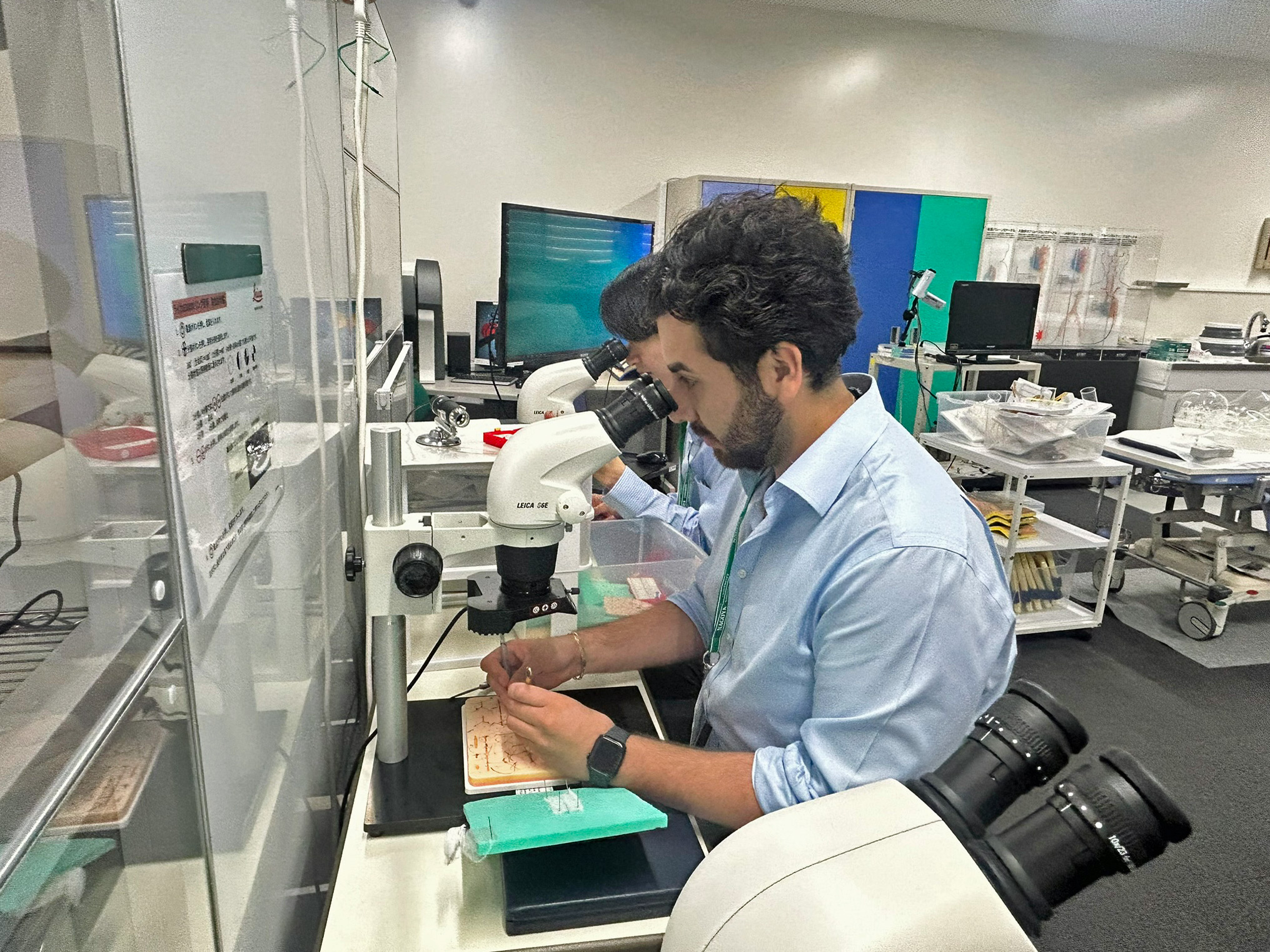
The program combined lectures, lab visits, and technical training. At Nagoya University’s Medical xR Center, students practiced laparoscopic surgery and suturing techniques side by side with their Japanese counterparts. Alfredo Lopez Aguirre, a third-year medical student at UC Davis, said the exchange of hand-suturing methods there was as valuable as any simulator. “That interaction represented genuine cultural and professional exchange,” he said. “Innovation came not only from the machines around us but from our willingness to share what we had been taught.”
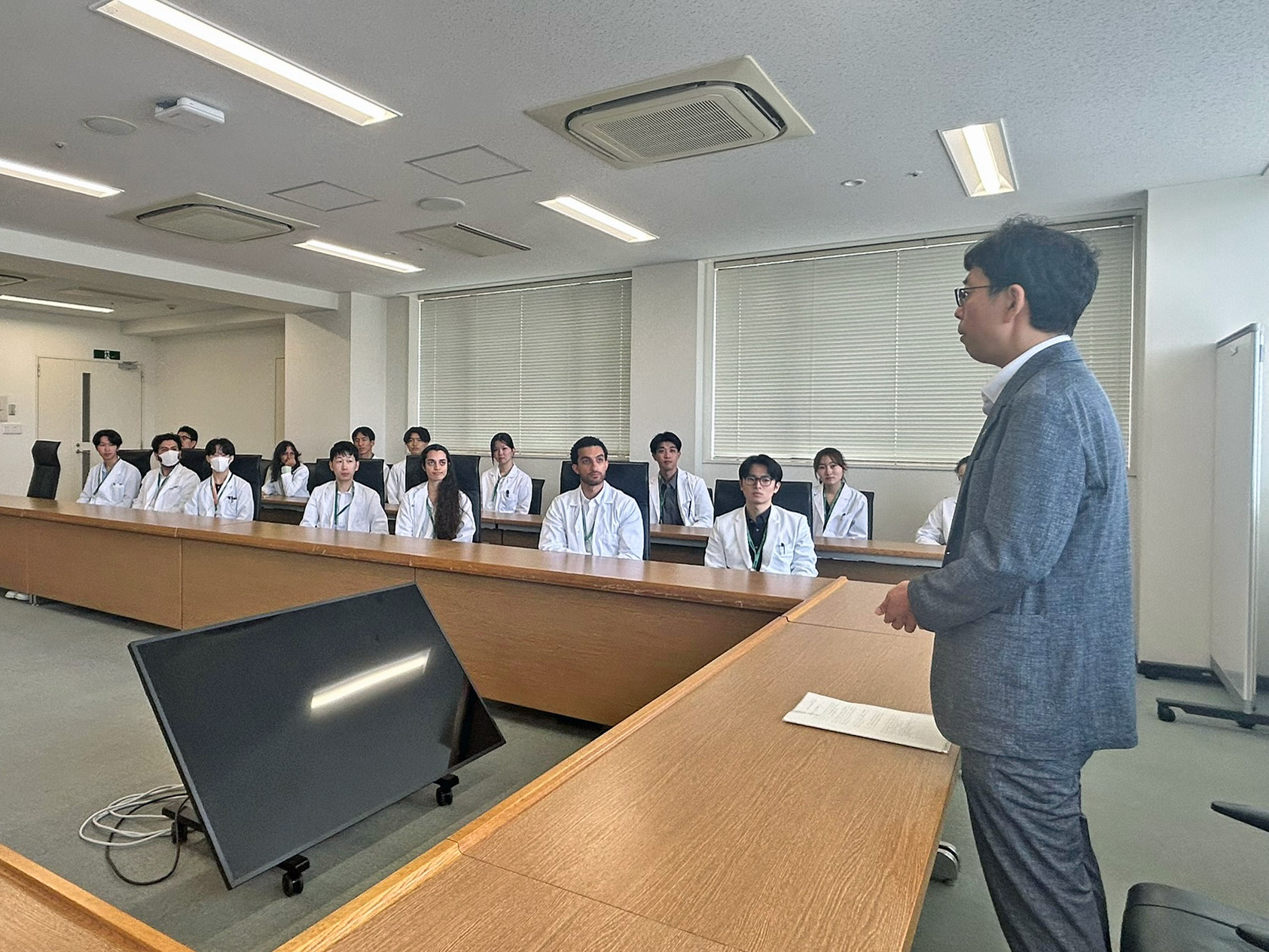
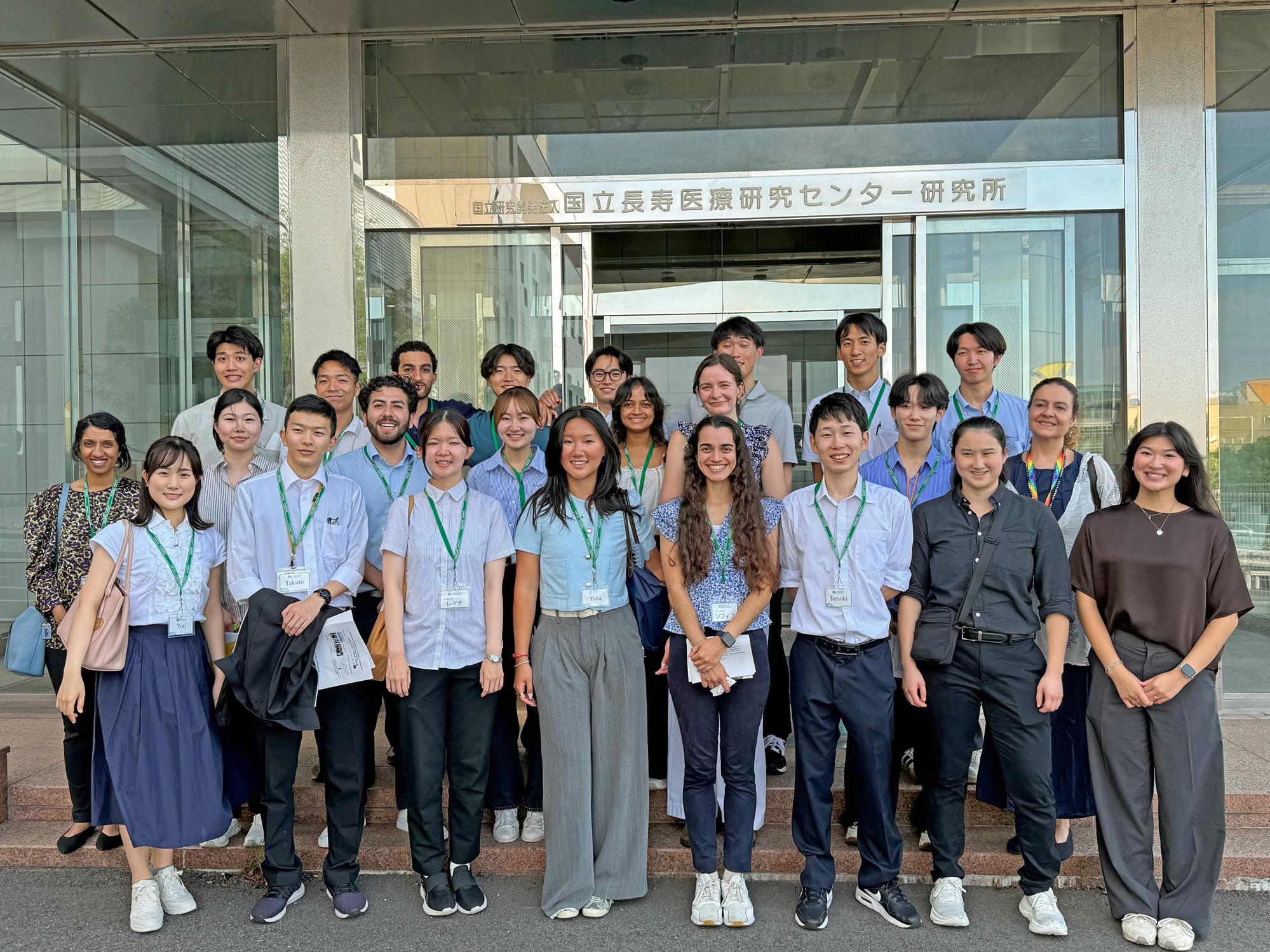
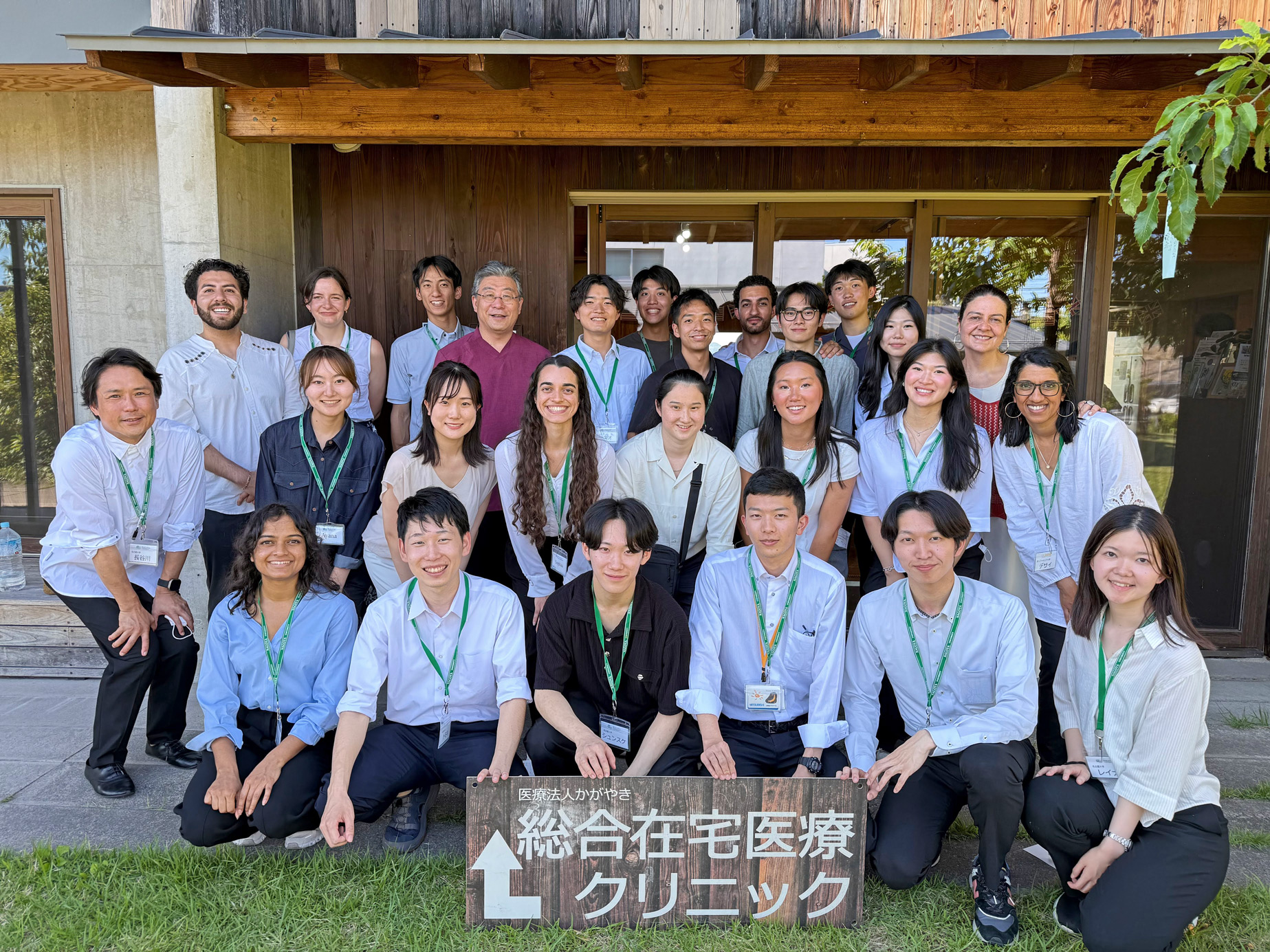
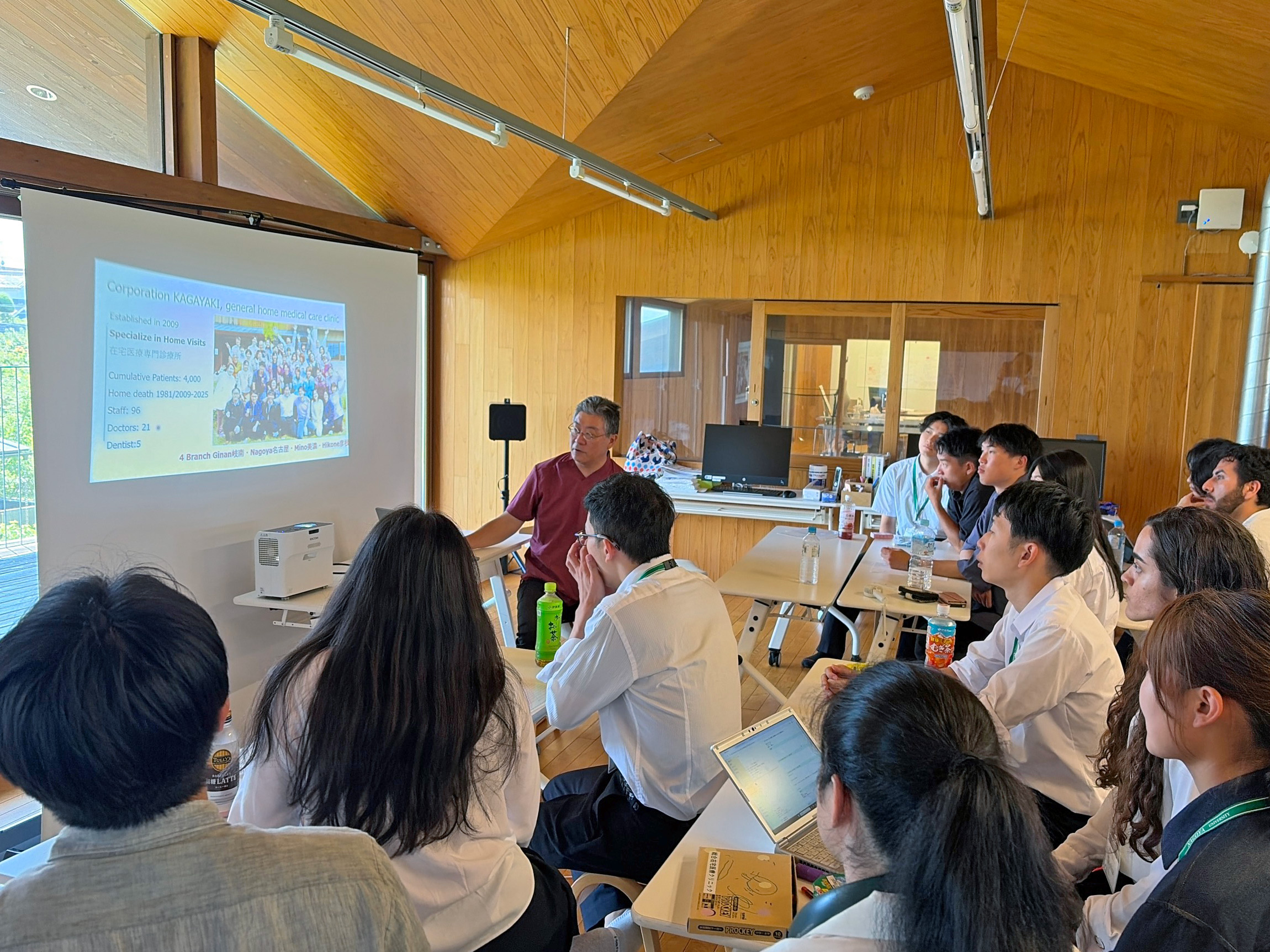
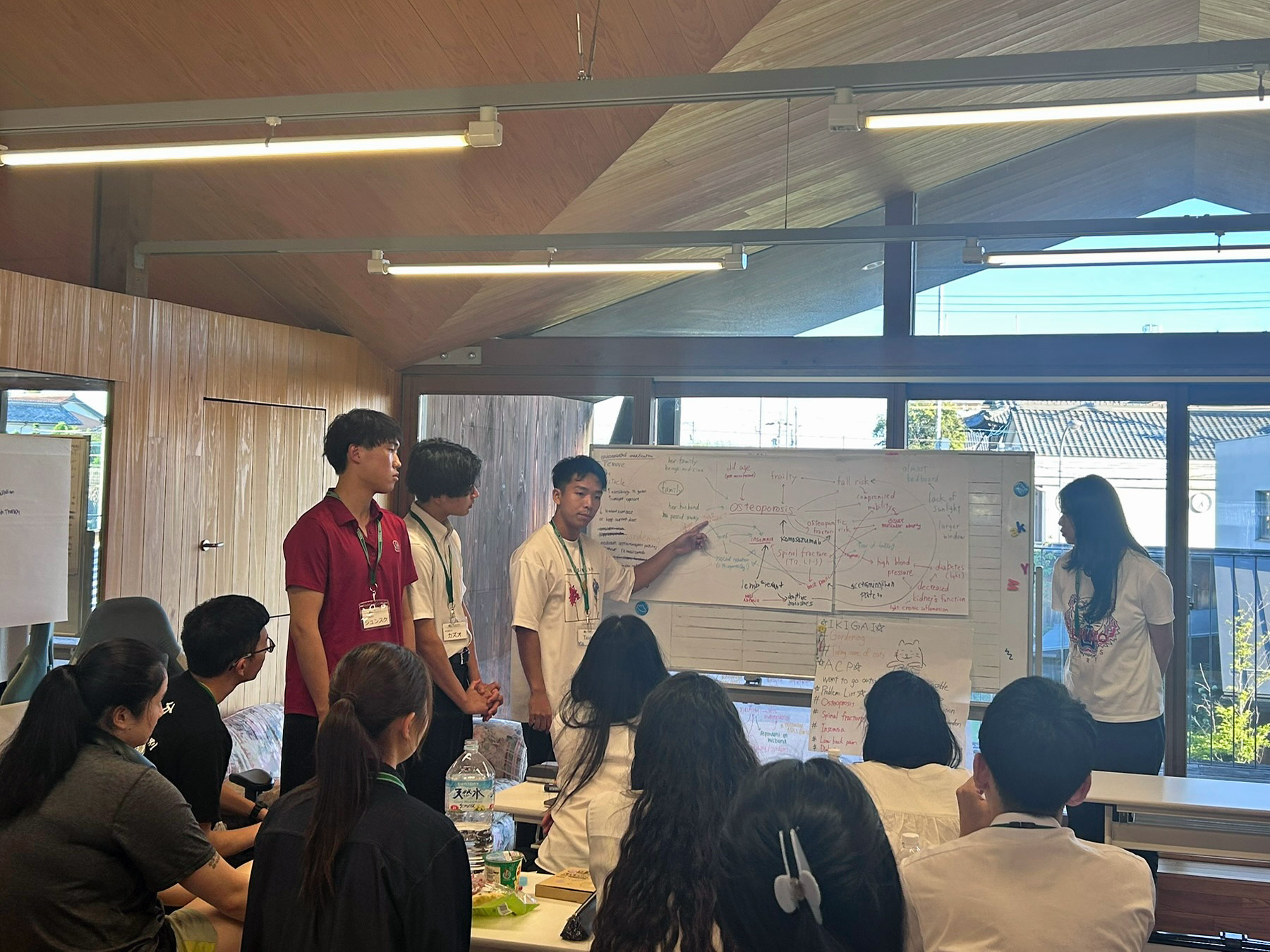
A visit to the National Center for Geriatrics and Gerontology introduced students to Japan’s approach to an aging population, before the group traveled to Ginan (Gifu Prefecture) for two days of home-care visits arranged through Kagayaki Clinic. Students met patients in their own homes and were introduced to the concept of “ikigai,” a sense of purpose or what makes life worth living, as a factor in treatment planning. Working in their buddy groups, students built “mind maps” connecting a patient’s diagnosis, home environment, family relationships, and personal sources of meaning.
For Hiroki Katsumata, a fifth-year Nagoya University medical student, one case stayed with him: an older patient recovering from a hip fracture whose goal was not simply to walk again, but to keep visiting places that mattered to her and preserve memories with her son. “I learned that a patient’s sense of purpose can shape their very will to live, sometimes enough to be a matter of life and death,” he said, reflecting on a perspective he had not considered before.
Yelia Yu, a second-year medical student at UNC Chapel Hill, said the home visits in Mino (Gifu Prefecture) reflected a broader sense of community responsibility she observed during the program, describing it as an example of “meeting people where they are at.” She also pointed to a visit to Dr. Hiroshi Yatsuya’s public health lab, where graduate students from Bangladesh, countries in Africa, Sri Lanka, Japan, and China shared research and firsthand accounts of healthcare systems in their home countries, perspectives she said she planned to bring back to UNC.
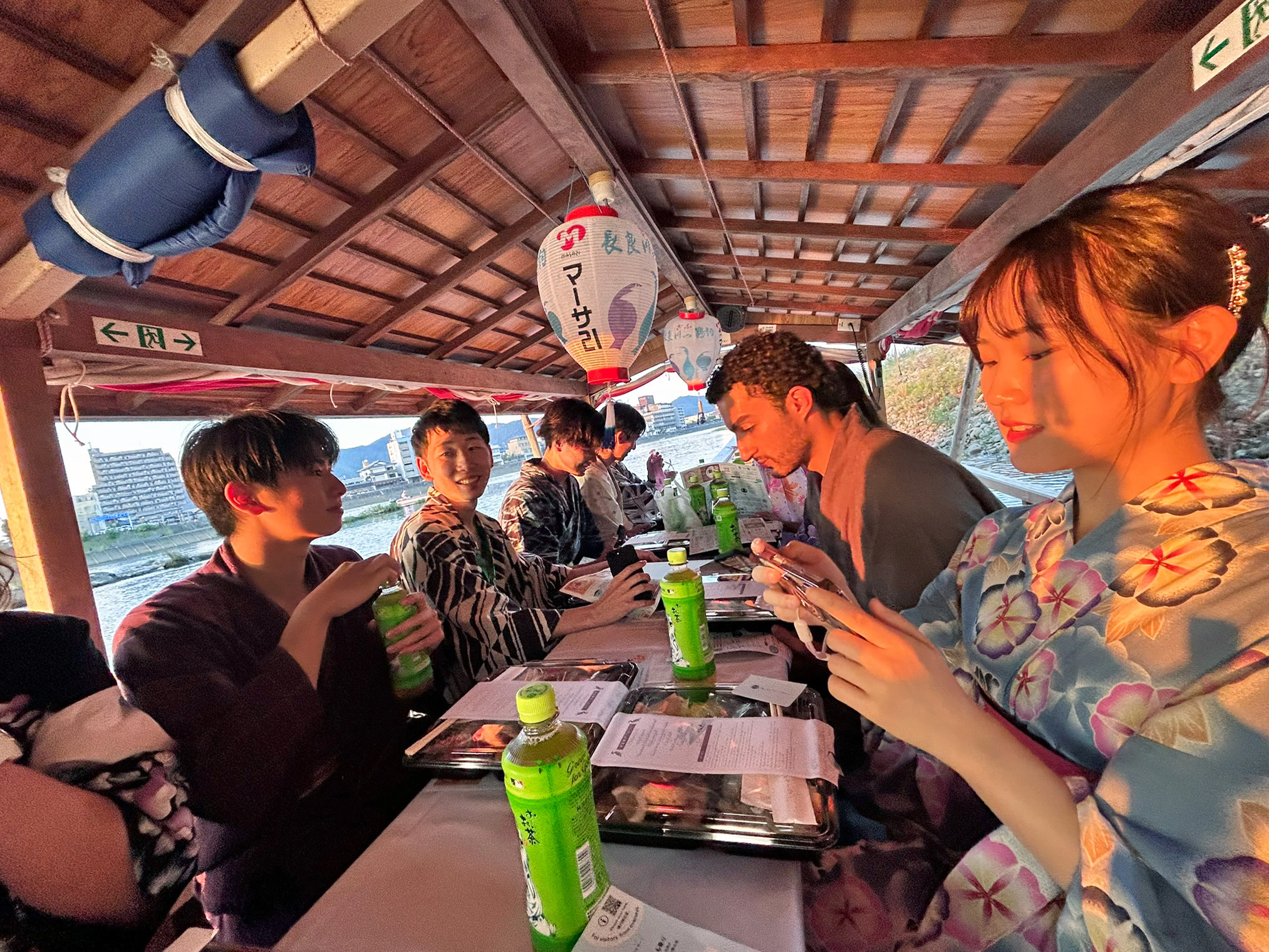
The trip also included a stop at Come Come Swallow, a cafe that prepares meals for people with dysphagia, a swallowing difficulty common among older and recovering patients, prepared for easier swallowing without sacrificing appearance or flavor. Cultural excursions in Gifu Prefecture rounded out the week, including a night watching traditional cormorant fishing.
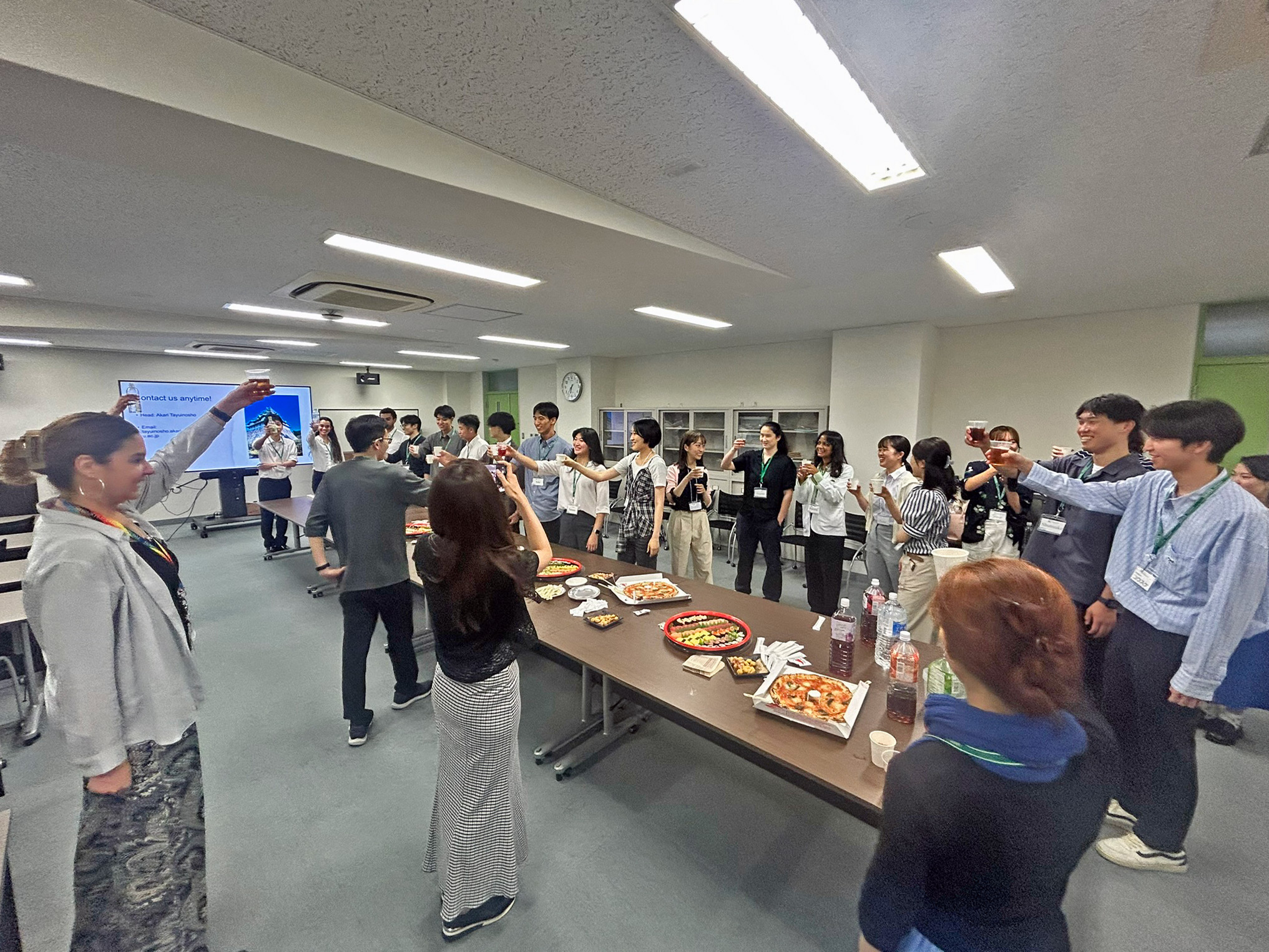
The program closed with joint presentations in which buddy groups shared what they had learned about community medicine, aging societies, and sustainable healthcare systems across Japan, the United States, and the United Kingdom.
“In medical education, understanding a patient’s life, values, and what matters most to them is just as important as understanding the disease itself,” said Hitoki Hasegawa of the Nagoya University School of Medicine. “During this year’s program, students discussed topics such as ‘what is patient-centered care’ and ‘what kind of approaches are needed for super-aging societies,’ while bringing perspectives from their own cultural backgrounds and the medical systems in their home countries. We hope that this experience will help students become physicians who respect diverse values and provide patient-centered care.”