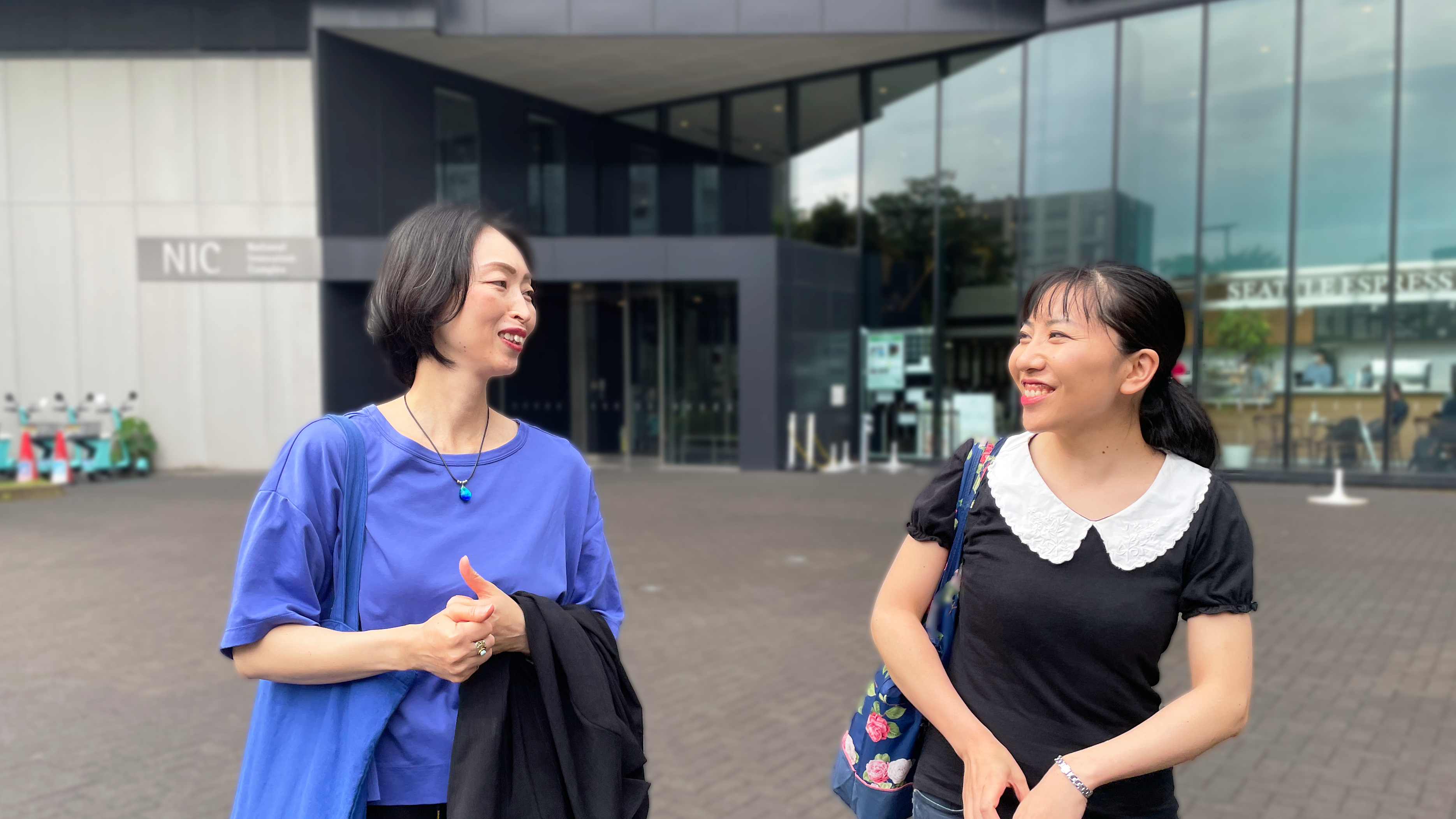
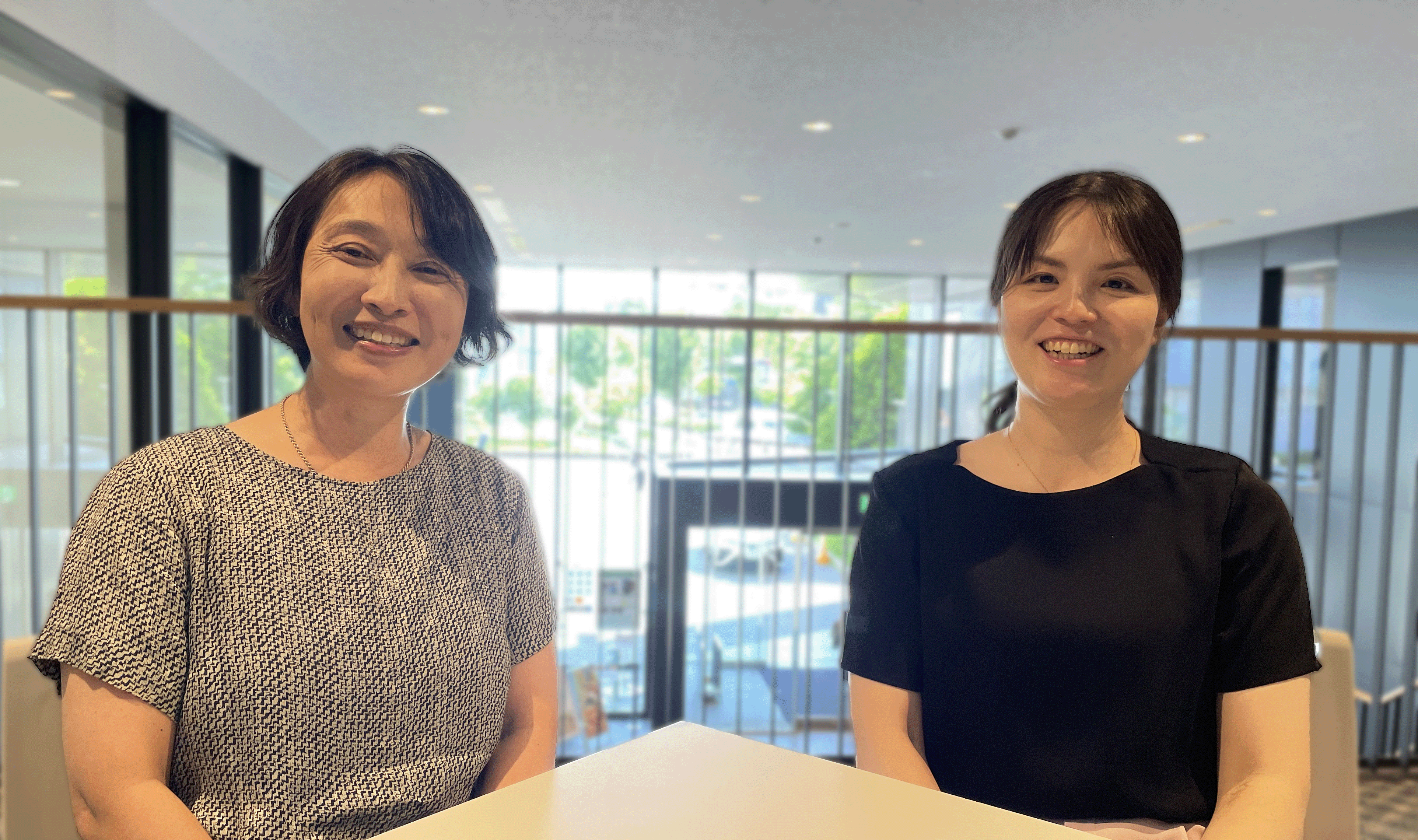
Interview and text: Megumi Maruyama (URA, Planning and Project Development Division, Academic Research & Industry-Academia-Government Collaboration)
As space exploration advances, solar flares pose a serious radiation risk to astronauts. With the success of Artemis II and the prospect of long-term lunar stays becoming reality, research to address these risks continues to accumulate — and a joint project between Nagoya University and Fujitsu Limited is one such effort.
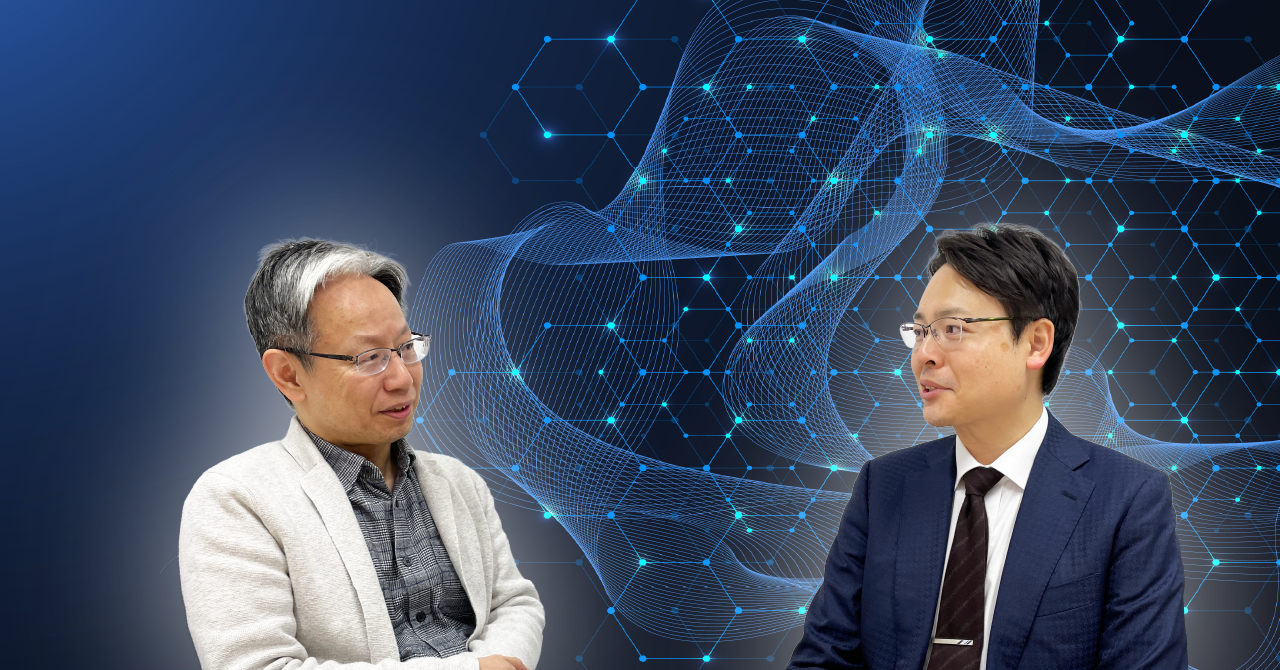
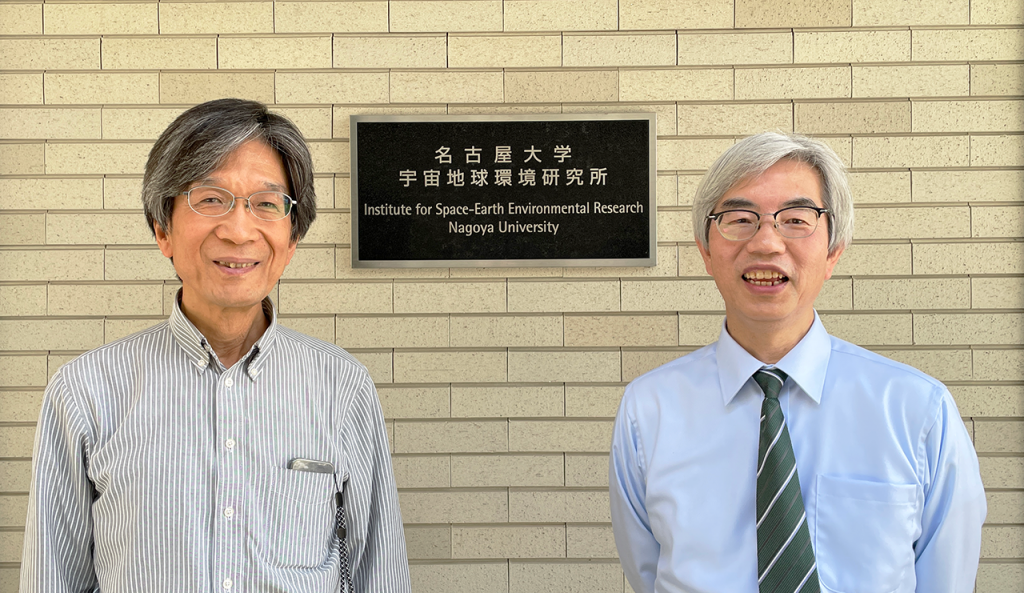
Launched under Nagoya University’s own framework for industry–academia collaboration, the project brings together Dr. Kanya Kusano, whose research focuses on solar flare prediction, and Supervising Research Administrator Yukikazu Ohchi, who has supported the project on the ground for three years.
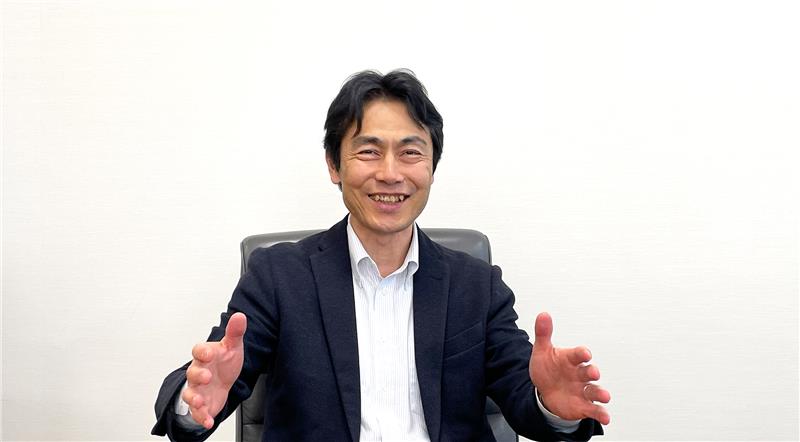
Supervising Research Administrator, Industry-Academia Collaboration & International Strategy Division, Academic Research & Industry–Academia–Government Collaboration
After many years in materials and product development at a private company, Ohchi joined Nagoya University in 2023. “Development and collaboration support feel like the same thing to me,” — a perspective that shapes his distinctive approach. A previous interview is available in Japanese here.
Dr. Kanya Kusano (Right)
Professor Emeritus, Nagoya University / Designated Professor, Institute for Space–Earth Environmental Research (ISEE)
A specialist in space weather, particularly physics-based prediction of solar flares. “Space weather is where my personal interests and social mission overlap.” A former Director of ISEE (until 2023) and avid science fiction reader, he brings both scientific rigor and personal passion to his work.
⸻ How did the two of you first connect?
Ohchi: It was in 2023, shortly after I joined Nagoya University. Having spent 30 years in industry, I was honestly a bit nervous about working with “a university professor.” It took me right back to my student days.
Kusano: It was around the time Fujitsu and Tokai National Higher Education and Research System had just signed a comprehensive partnership agreement. A designated joint research project with Fujitsu came my way, and Mr. Ohchi came on board to support it.
Ohchi: I had no idea where to start. It took about six months to develop the research plan.
Comprehensive Partnership Agreement An agreement in which a company and a university commit to collaboration across a broad range of fields. This project originated from an agreement signed in February 2023.
Designated Joint Research Nagoya University’s own framework for organization-to-organization joint research between industry and academia. Multiple corporate divisions and university laboratories work together, with research administrators providing consistent support. Launched in 2017, five to ten or more projects run concurrently within the university.
⸻ What is the project with Fujitsu about?
Kusano: We’re working on advance prediction of solar flares. When solar flares occur, they emit cosmic radiation. In environments like the moon, which has no magnetic field to deflect it, the radiation poses a serious risk to astronauts. As lunar development progresses, systems to “predict and evacuate in advance” are essential.
Ohchi: Fujitsu has been engaged in space-related business for over 60 years. Their AI technology aligns very well with Dr. Kusano’s research on space weather.
Kusano: One approach is to train models on historical data — but large flares are rare, so the data is limited. Instead, we take a physics-based approach: working from first principles to understand why flares occur. However, to bring this into practical use in society, advanced AI technologies are indispensable.
⸻ Three years in — how is the project progressing?
Kusano: The research itself is moving along quite solidly. I used to be a bit skeptical about AI-based prediction, but my view has changed. At one point, the AI’s prediction turned out to be wrong — but when we investigated, we found that the input observational data itself was wrong. That experience made me realize that working with AI can actually deepen our own understanding of the research.
⸻ How does this “designated joint research” differ from conventional collaboration?
Kusano: In fact, both I and ISEE had very little prior experience working with companies.
Ohchi: In typical joint research, a single laboratory and a company department work together individually. But in this project, multiple divisions at Fujitsu and multiple laboratories at ISEE collaborate as organizations.
⸻ So your first major collaboration with industry was this large-scale project?
Kusano: Yes. We had tried various ways to bring space weather into society, but low public awareness made it hard to turn into something commercially viable. So I was genuinely surprised when we heard that there was demand from the company side.
Ohchi: When we started, Fujitsu had three people involved. Now it’s more than ten. We are truly grateful to Fujitsu for growing the project to this scale under challenging circumstances.
⸻ Sustaining such a project must not be easy.
Ohchi: It’s not. Each year, we need to align the perspectives of both the company and the researchers. Rather than settling for compromises, I propose multiple options — like Plan A and Plan B — and explore the best direction together.
Kusano: I leave all contractual matters to Mr. Ohchi. Without someone like him, we would have had to spend much more time on administrative work, and the research would not have progressed as it has. Recently, as the three-year comprehensive agreement ended, we were relieved that the project could continue under the designated joint research framework.
Ohchi: It feels like we’ve passed a major milestone. The biannual steering committee — where senior leaders from both the company and the university gather — is also important for sustaining the relationship between the two organizations. Just the logistics alone involve a significant amount of work…
⸻ You made quite a shift, Mr. Ohchi, coming from materials development in industry.
Ohchi: Not really. The mindset is the same — finding the strengths of materials, creating value, and combining them. In materials development, you identify good materials and deliver them as products. Now, I combine the strengths of “research as a material” and deliver it to companies in the form of collaborative research. It doesn’t feel like a big transition.
⸻ It’s fascinating to hear how you conceptualize your role. Where is this project heading?
Ohchi: The next phase is about “people moving between organizations.” Nagoya University researchers going into industry, and industry researchers coming into the university. Future collaborations aim to increase human mobility and build long-term research systems through industry–academia fusion.
Kusano: Soon, a Fujitsu researcher will join ISEE for an extended stay. When industry researchers enter the laboratory, students can directly experience what corporate research and development is like.
Ohchi: On the other hand, it’s still rare for university researchers to go and conduct research at a company — and building the structures to make that happen is something we’re actively working on as well.
⸻ What does each of you ultimately hope to achieve through this project?
Ohchi: My goal is to keep building bridges—connecting different worlds. I want to help create a future where space weather forecasts become as commonplace as everyday weather forecasts, by bringing together researchers and companies.
Kusano: I want to be a “shield of the sun.” There’s a physicist in an Arthur C. Clarke science fiction story, “Sunstorm,” who predicts solar flares and saves humanity. If I can play even a small part in such a role, I would be very happy.
This issue highlighted one example of Nagoya University’s designated joint research framework. Dr. Kusano aims to deliver a new predictive system for the space age within the next few years. Supporting that future, the Industry-Academia Collaboration and International Strategy Division — represented by Ohchi — is steadily advancing new forms of relationships between universities and the private sector.