Interview and text: Megumi Maruyama (URA, Planning and Project Development Division, Academic Research & Industry-Academia-Government Collaboration)
In the course of research, there are moments when the question “Is this okay?” comes up. It might be about a prospective research partner, a relationship with a company, or how research equipment or data are handled. If the response to every risk were simply “stop,” research would stall.
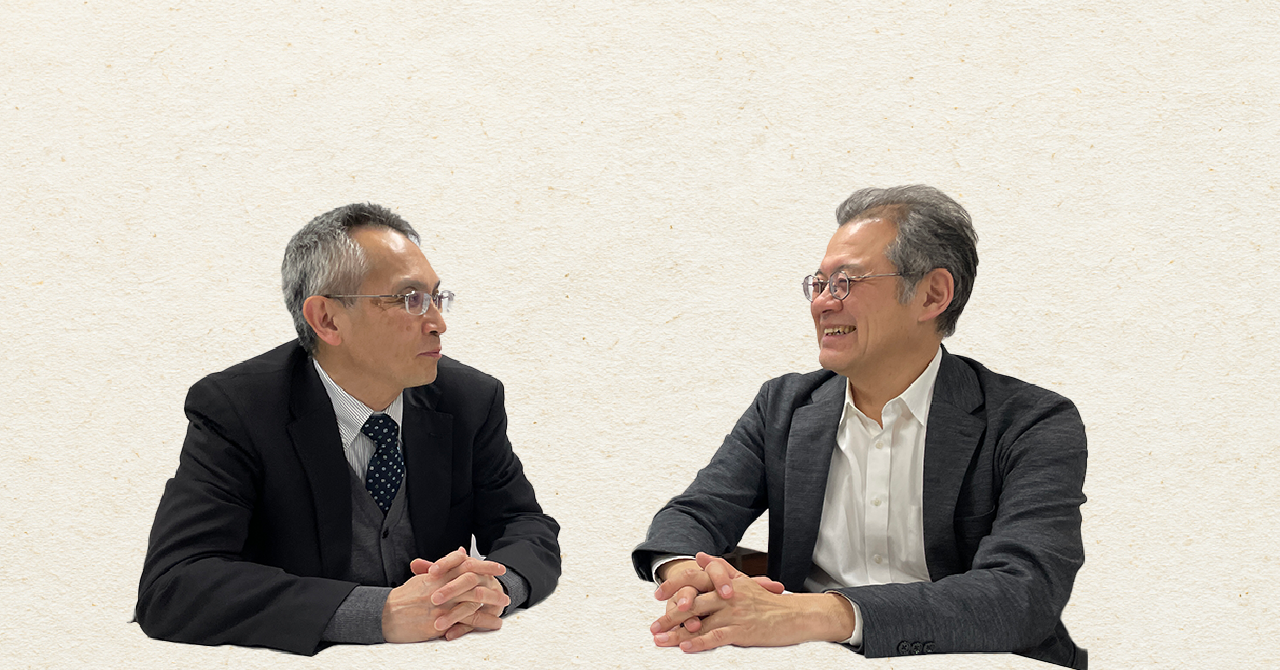
At Nagoya University, the Research Security Unit is responsible for navigating this boundary. In this column, we spoke with Manabu Suto, Designated Professor and head of the unit.
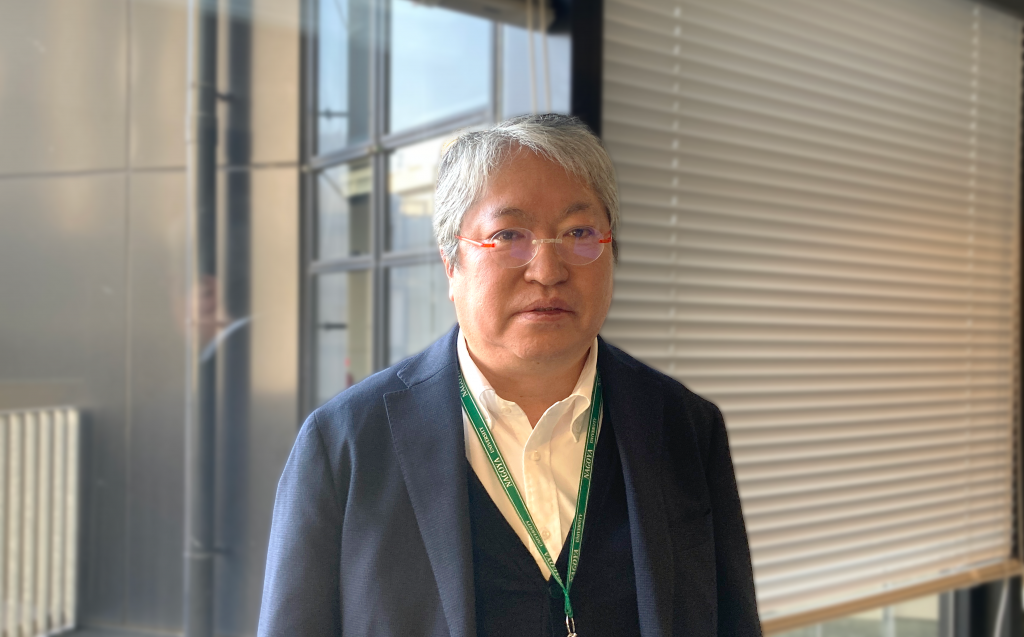
Research Security Unit, Research Support and Human Resource Development Division, Academic Research & Industry-Academia-Government Collaboration
Trained as a life sciences researcher at Hokkaido University, Suto went on to spend more than 20 years at National Institute of Technology and Evaluation (NITE). He joined Nagoya University in 2024 and now oversees research-related risk management, particularly export control and conflicts of interest. New to Nagoya, he enjoys his time off exploring the city.
⸻ You began your career as a researcher, is that right?
Yes. I started out in the life sciences. At university, I worked as a research associate (a junior academic position under the former Japanese system), studying microorganisms that produce enzymes for breaking down or converting sugars. In 2002, I joined NITE, when a new research facility was being built in Kisarazu, Chiba Prefecture, and I was assigned there.
⸻ What kind of work were you doing there?
It wasn’t the kind of research I had done at university. My work involved collecting microorganisms overseas and linking them to industrial use, in line with the Convention on Biological Diversity.
⸻ Could you give a more concrete example? What kinds of microorganisms, from where, and for what purpose?
We worked with partners around the world, particularly in Southeast Asia. After concluding agreements with local institutions, we collected microorganisms on site — such as actinomycetes, fungi, or strains isolated from fermented foods. While the objectives varied by companies, applications in the food industry were especially common, all carried out under international rules.
⸻ After so many years at NITE, what made you choose to work at a university?
My experience with genetic resources and access and benefit sharing (ABS) could be directly applied to research security work at Nagoya University. It also felt like the right time in my career.
⸻ What kinds of work are you responsible for at Nagoya University?
On a day-to-day basis, I mainly deal with export control and conflict-of-interest checks. In addition, I am involved in matters related to genetic resources, drawing on my previous experience.
⸻ “Export control” often brings to mind sending equipment or samples overseas. What does the work actually involve?
Recently, there has been increasing concern about how research results and technologies might be transferred inappropriately, especially in terms of economic security. In particular, international joint research and hosting overseas researchers now require checks in advance. To address this, we use specialized search tools to review potential research security risks based on the names of partner organizations or host institutions.
⸻ You also mentioned that you handle many conflict of interest cases. What do those look like?
Many cases involve cross-appointments, where a researcher holds positions at multiple institutions. Cross-appointments between universities are generally not problematic if roles and responsibilities are clearly separated. However, arrangements involving companies require more careful review. For example, we need to confirm that company-related work — which should be kept separate from university duties — is not being carried out using university facilities or resources.
⸻ Do these cases usually come directly from researchers?
In practice, most inquiries come from administrative staff. As part of routine procedures, they may decide that a case should be checked by a specialized risk management unit and then pass it on to us.
⸻ From the perspective of research support, how do you stay motivated when so much of the work involves checking and reviewing?
I don’t want to act like the police. Instead of saying, “You can’t do this,” I’d rather say, “Here’s how we can reduce the risk.” That approach makes more sense in a research setting.
⸻ So it’s not about eliminating risk, but about reducing it?
Exactly. Zero risk doesn’t exist in reality. If we say, “There’s a risk, so let’s stop everything,” research can’t move forward. Risk is the product of hazard and probability. What matters is thinking together about how to reduce that probability.
In this article, we have introduced one aspect of Nagoya University’s research security work — an area that usually remains behind the scenes.
As the importance of research security grows, Suto emphasizes that there is no single, universal system that works for all universities. Research environments differ, and so do the risks that need to be addressed.
That is why people who work close to the research process — those involved in day-to-day research support — need to be directly involved in shaping how research security is implemented.
A seminar, titled 研究セキュリティ・インテグリティの最前線~スタートアップ・インテグリティの取組みもふまえて~, related to these issues was held recently and is currently available to internal audiences. Those interested may find it useful as a reference.
https://www.aip.nagoya-u.ac.jp/headquarters/seminar
(Note that the video is available in Japanese only until March 31, 2027.)
Top photo: Getty Images on Unsplash