Researchers from Nagoya University in Japan have developed a durable fuel-cell catalyst by wrapping platinum nanoparticles in nitrogen-containing graphene and placing them on carbon nanotubes. This design retained 96.9% of its active surface after 30,000 durability cycles, pointing towards fuel cells with longer lifespans and lower platinum demand.
Fuel cells turn the chemical energy of hydrogen directly into electricity. Hydrogen is fed to one side of the cell, where it separates into protons and electrons. The electrons travel through an external circuit to provide power, while the protons cross a membrane. On the other side, they reunite with the electrons and oxygen from air, producing water.
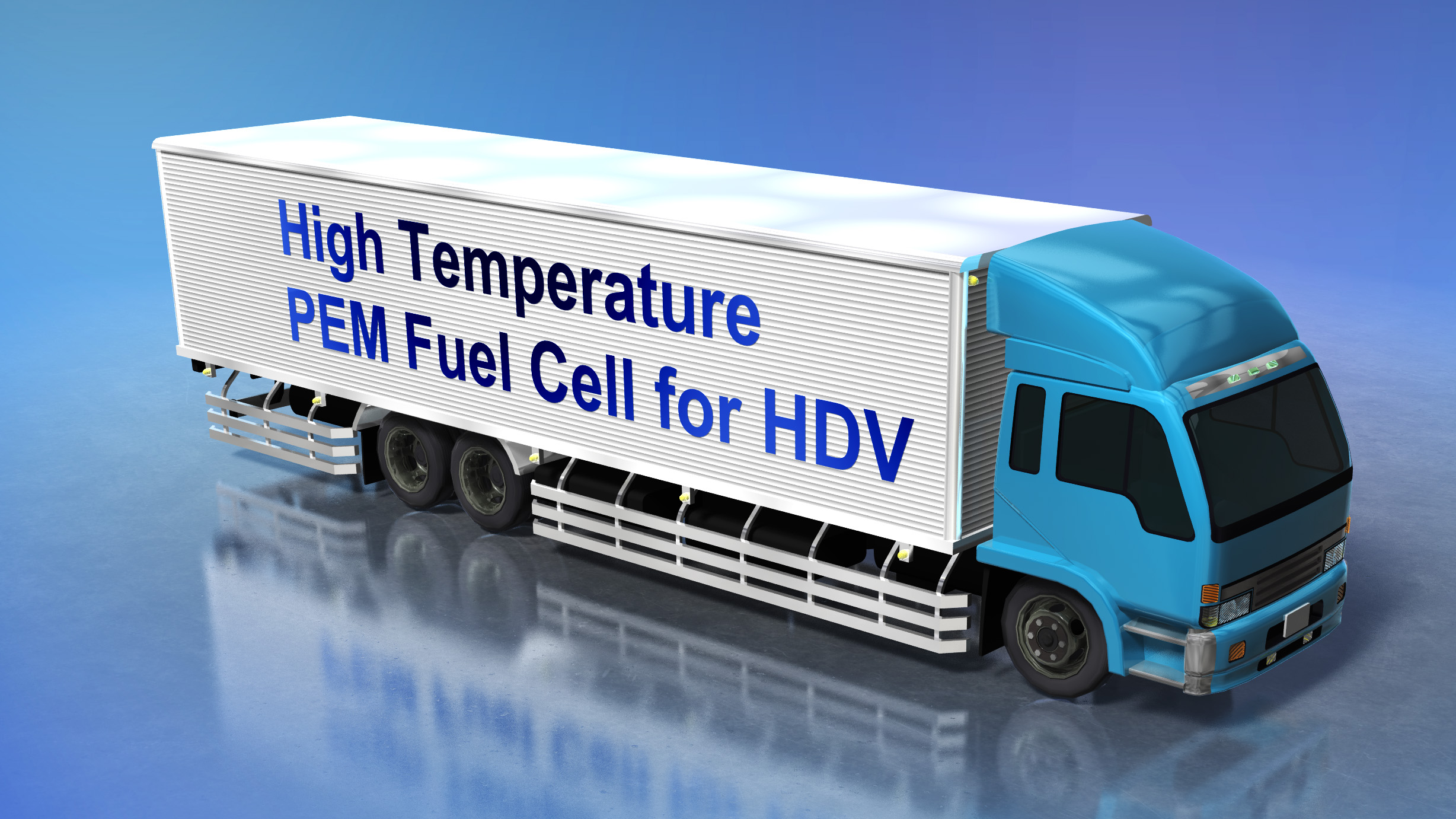
Water is the only by-product here; no carbon dioxide is emitted at any point during this process. This makes fuel cells promising sources of clean energy that can be used to power vehicles and other applications. Fuel cells are particularly useful for heavy-duty vehicles and public transport since they require much larger conventional EV batteries.
However, broader commercial use of fuel cells is limited by cost. The reaction between oxygen, protons and electrons is slow. To speed it up, platinum, a scarce and expensive precious metal, is used as a catalyst.
To save costs, research fuel cell catalyst technology is currently targeting two fronts: increasing its performance and durability. “Durability is a critical problem especially for use in heavy-duty vehicles,” said Miftakhul Huda, a Designated Lecturer working in the Matsuo Lab at Nagoya University’s Department of Chemical Systems Engineering and a lead investigator of this study along with Professor Yutaka Matsuo. “In this work, we have increased the durability of both platinum and its carbon support in fuel cells,” he added.
Platinum’s protective shell: an accidental discovery
Platinum works by offering active sites that hold oxygen molecules, help break them apart and combine quickly with protons and electrons to form water. Making platinum particles smaller to the nano-scale exposes more surface for this reaction, allowing less platinum to do more work.
Current commercially available electrocatalsys typically consist of bare platinum nanoparticles supported on amorphous carbon materials. But these nanoparticles tend to clump into larger particles during operation, slowly degrading performance over time. Meanwhile, conventional carbon supports can still corrode during the repeated voltage changes experienced when a fuel-cell system starts and stops.
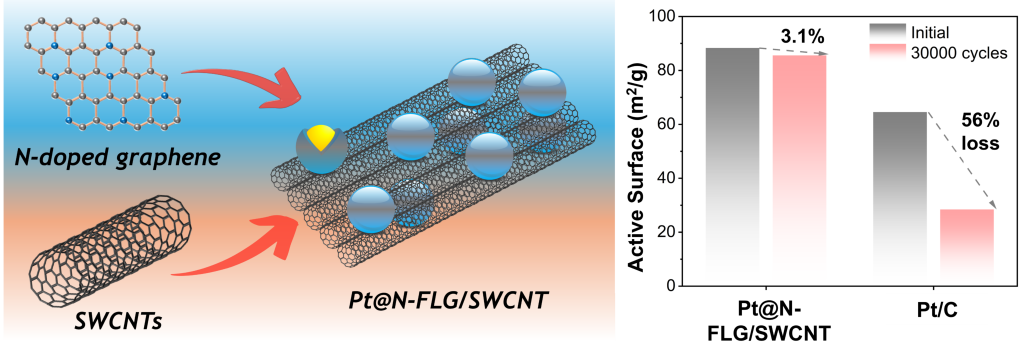
To solve this problem, the researchers encapsulated each platinum nanoparticle into a graphene shell. Normally, encapsulated nanoparticles do not make great catalysts because they offer fewer active sites for the reaction to occur. But by doping the graphene shell with nitrogen, the researchers found that the number of active sites actually exceeded their theoretical estimates. The nitrogen in the shell interacted with the platinum. This changed how the metal handled oxygen-containing molecules, helping the reaction proceed more efficiently rather than simply shielding the platinum from its surroundings.
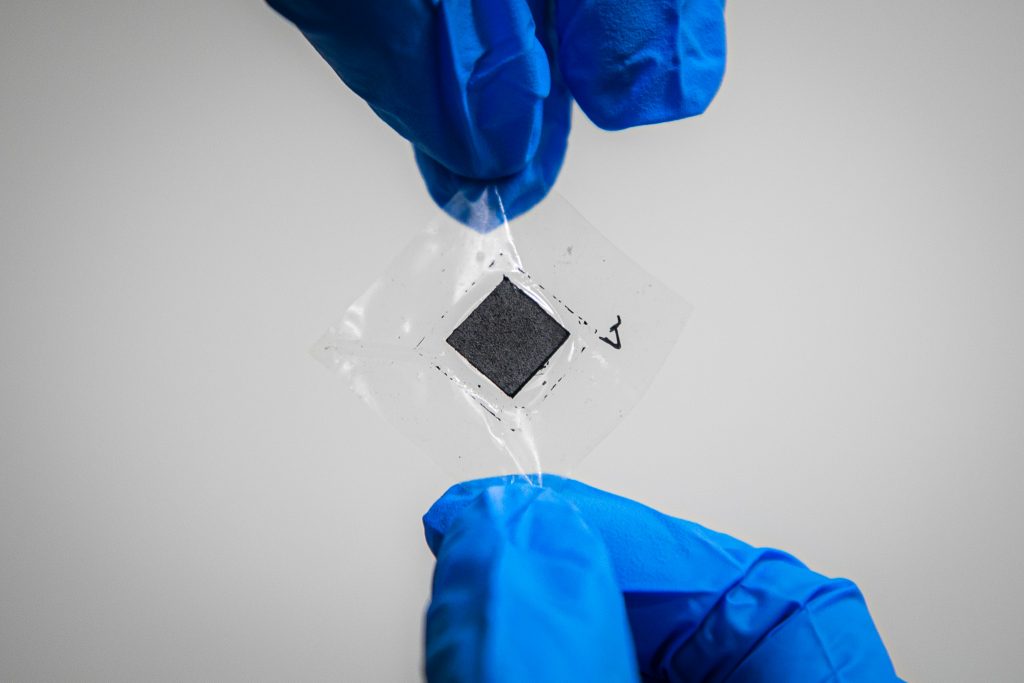
Next, they needed something to load the particles on, for which Matsuo, Huda and their team obtained corrosion-resistant single-walled carbon nanotubes from Meijo Nano Carbon Co., Ltd., based in Nagoya, Japan. But something strange happened when they tried to attach platinum nanoparticles on it: they realized no linkers were needed!
“It was actually very accidental, we just decided to try directly loading the graphene-encapsulated platinum first and it attached well,” said Huda about the discovery, for which he credits his materials engineering background for not following the conventional chemistry approach of always using an intermediary to form metal-carbon bonds.
The new catalyst, named “Pt@N-FLG/SWCNT” for nitrogen-doped few-layer graphene-shell-encapsulated platinum electrocatalysts supported by single-walled carbon nanotubes, has been reported in the journal ACS Catalysis.
Built to endure
In laboratory measurements, Pt@N-FLG/SWCNT provided 96.3 square metres of active platinum surface per gram, compared to 60.6 square meters for a commercial catalyst.
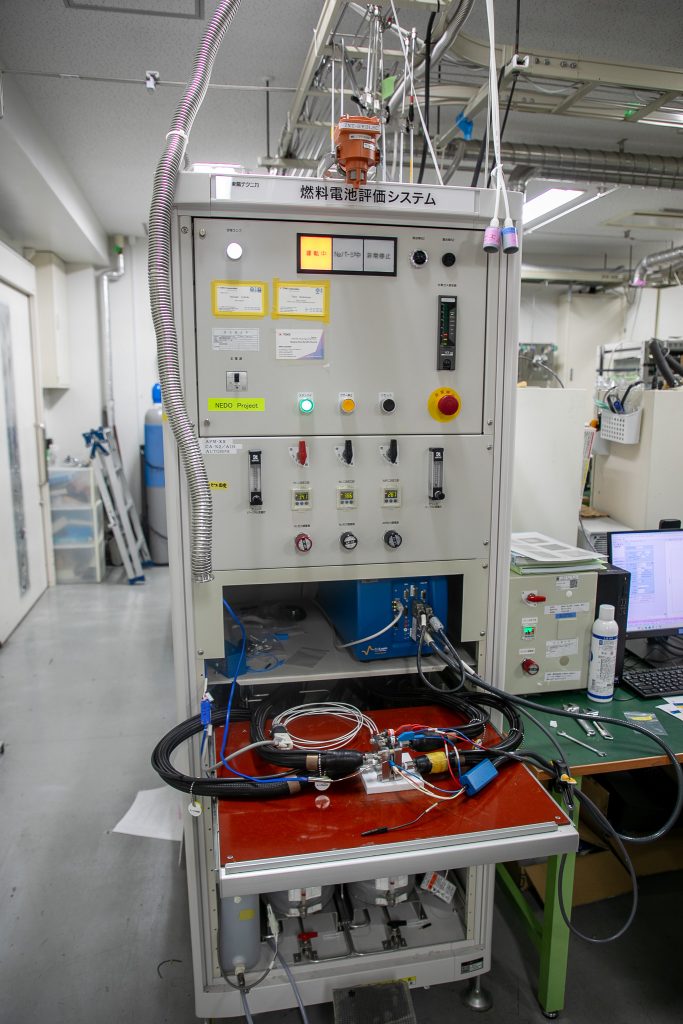
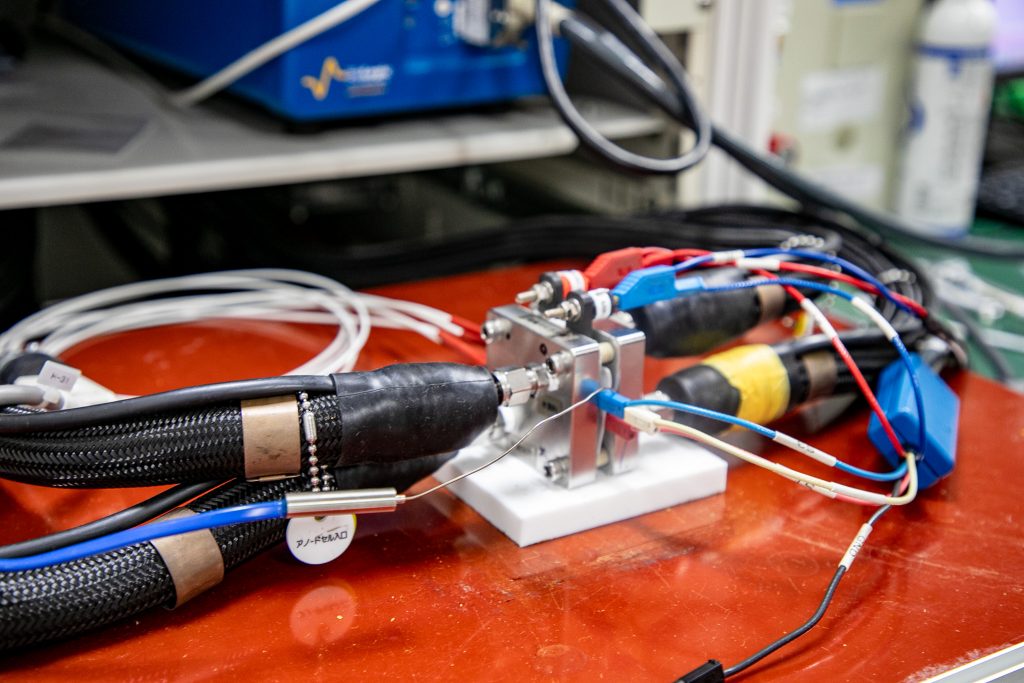
The team next assembled the catalyst into a working fuel cell and subjected it to repeated voltage cycles designed to accelerate aging. After 30,000 cycles, it had lost only 3.1% of its active platinum surface and its voltage had dropped by 22.8 millivolts. In addition, no voltage loss was observed at 1.5 amperes after 5000 cycles of rigorous high-voltage triangular-wave cycling to simulate carbon corrosion. Both results surpassed the US Department of Energy’s 2025 targets for electrocatalysts.
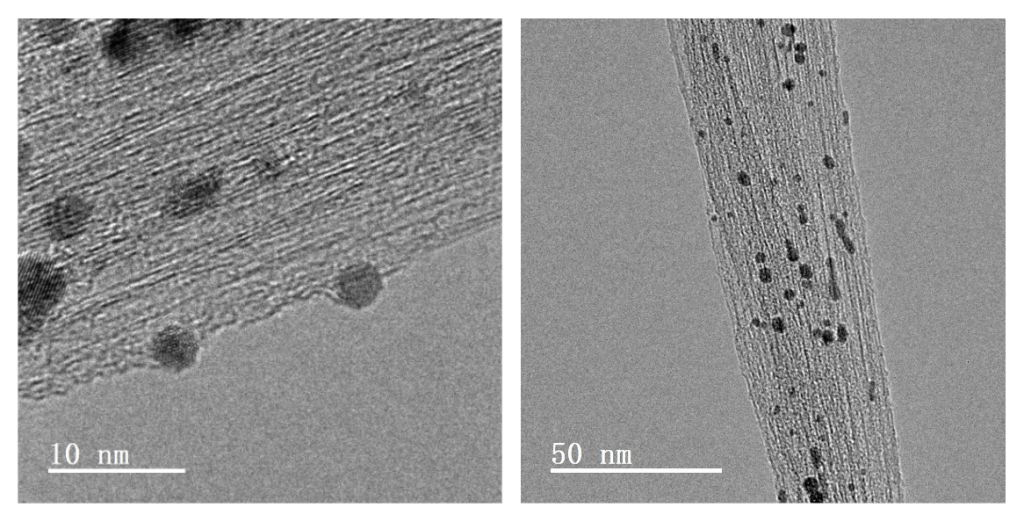
Further imaging suggested that the nanotubes restricted how far the platinum could move. Instead of growing into the large clumps usually seen in aged catalysts, the particles aligned into slender wire-like structures, which may help preserve useful surface area.
Having achieved a desired level of durability, the Matsuo Lab wants to turn to the efficiency problem next. “We not only want to increase the performance, but also decrease the amount of platinum needed in fuel cells in order to scale up,” Huda said.
Publication information:
Chu-Yang Yu, Qiao Chen, Xue-Lin Zheng, Kiho Yamada, Takeshi Hashimoto, Nagahiro Saito, Masaya Kawasumi, Miftakhul Huda, Yutaka Matsuo, 2026. Pt–N Interactions and Nitrogen-Doped Graphene-Shell Encapsulation in Platinum Electrocatalysts Supported by SWCNTs for Enhanced ORR Activity and Durability. ACS Catalysis. DOI: https://doi.org/10.1021/acscatal.6c03908
Funding information:
This study was supported by the New Energy and Industrial Technology Development Organization (NEDO), Japan (JPNP20003) and the“Knowledge Hub Aichi”, the Priority Research Project V from Aichi Prefectural Government.
Expert contact:
Miftakhul Huda
Department of Chemical Systems Engineering,
Graduate School of Engineering,
Nagoya University
Email: miftakhul.huda.j7@f.mail.nagoya-u.ac.jp
Yutaka Matsuo
Department of Chemical Systems Engineering,
Graduate School of Engineering,
Nagoya University
Email: matsuo.yutaka.h7@f.mail.nagoya-u.ac.jp
Media contact:
Sumeet Kulkarni
International Communications Office
Nagoya University
Email: icomm_research@t.mail.nagoya-u.ac.jp