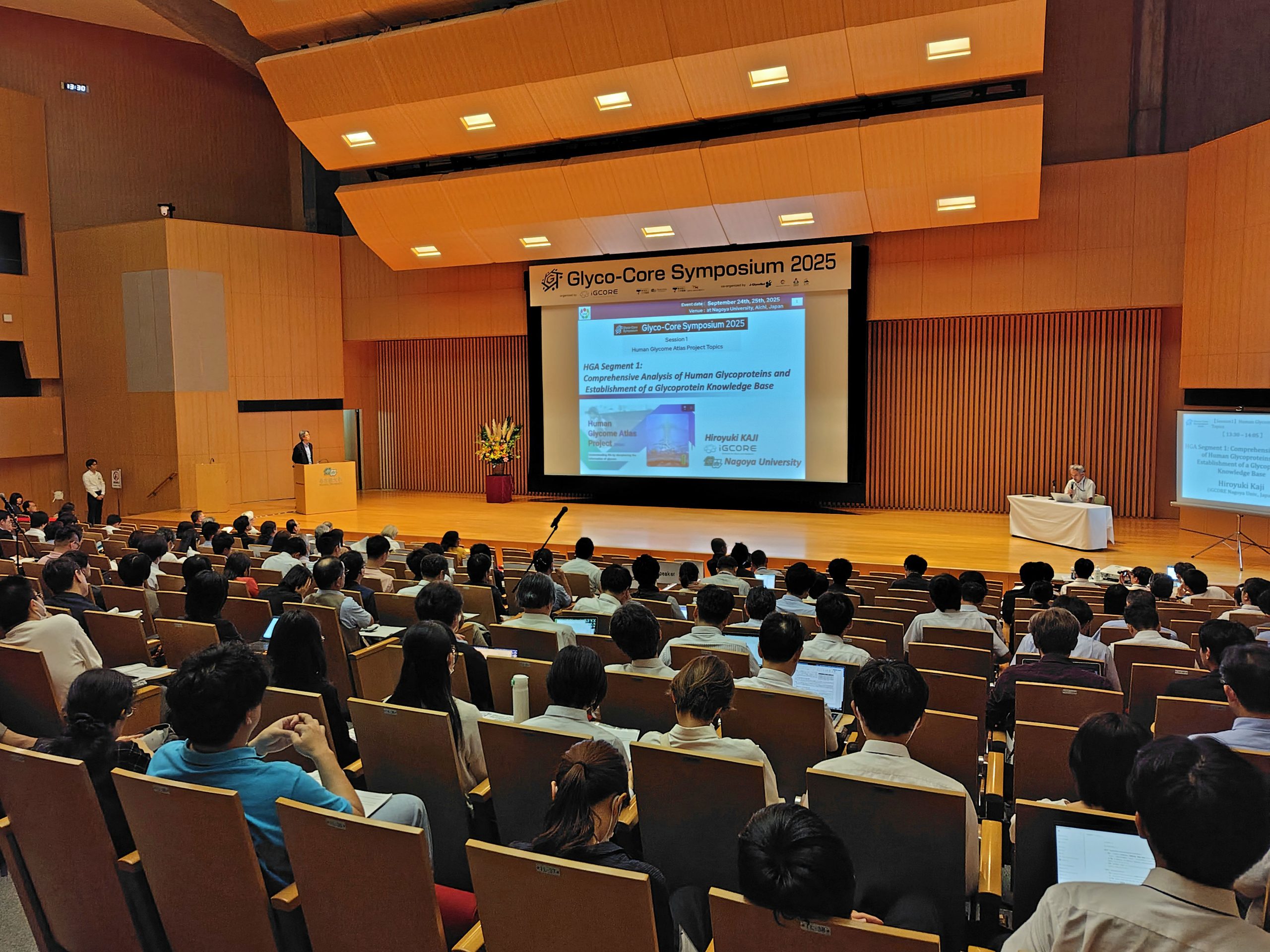
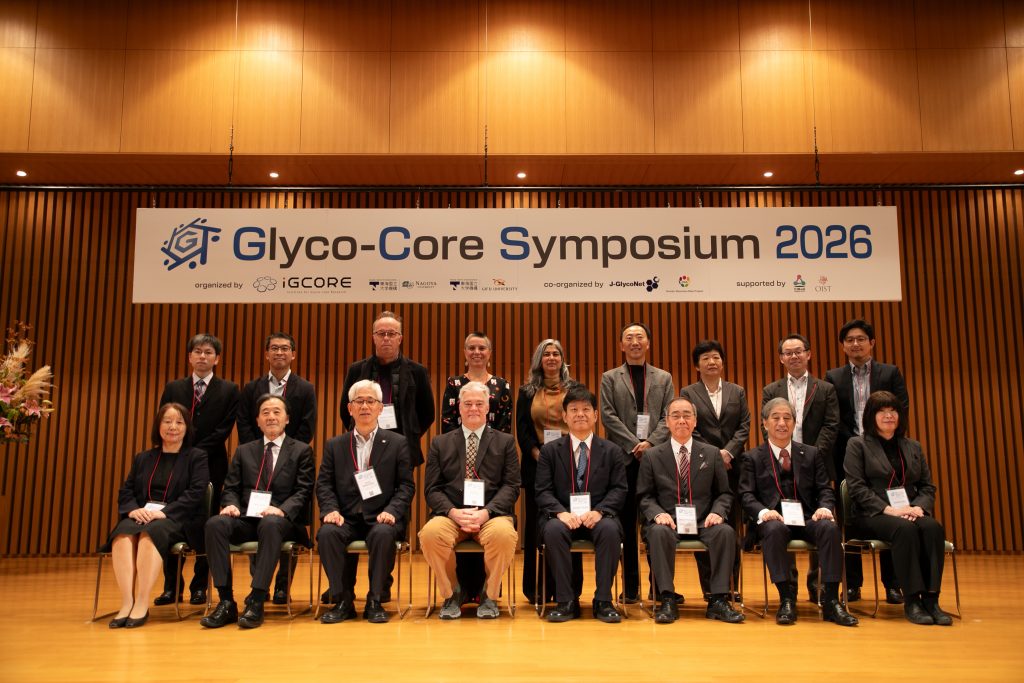
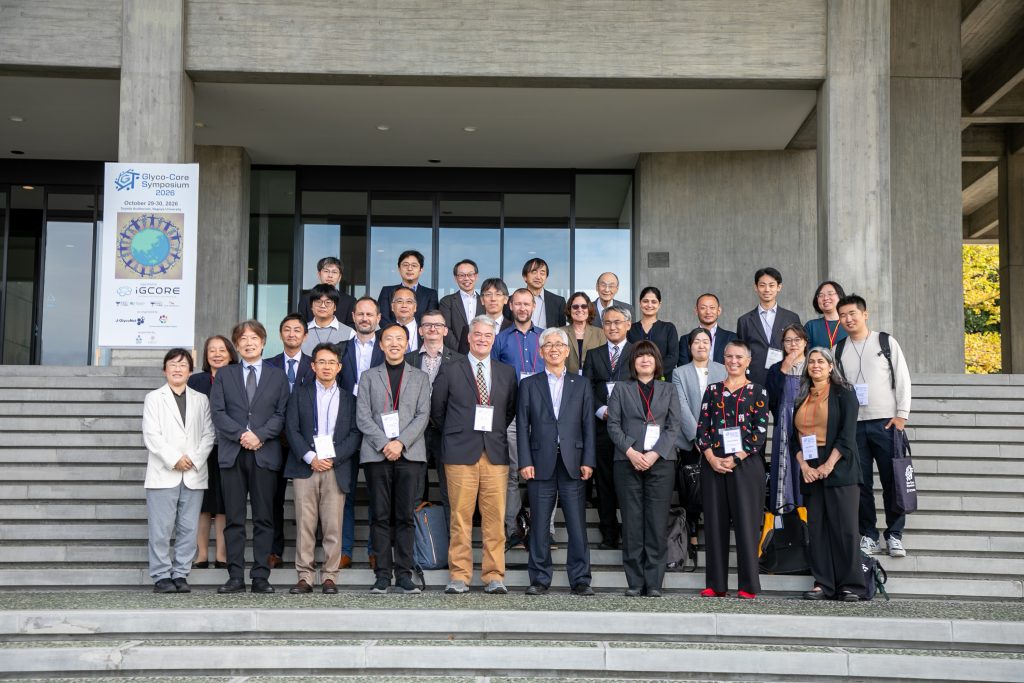
Researchers from Japan and abroad gathered at Nagoya University for the Glyco-Core Symposium 2026 on Oct. 29 and 30. The meeting came as a national project to map the glycans of the human body enters its next phase and the university’s glycoscience institute adds international partners.
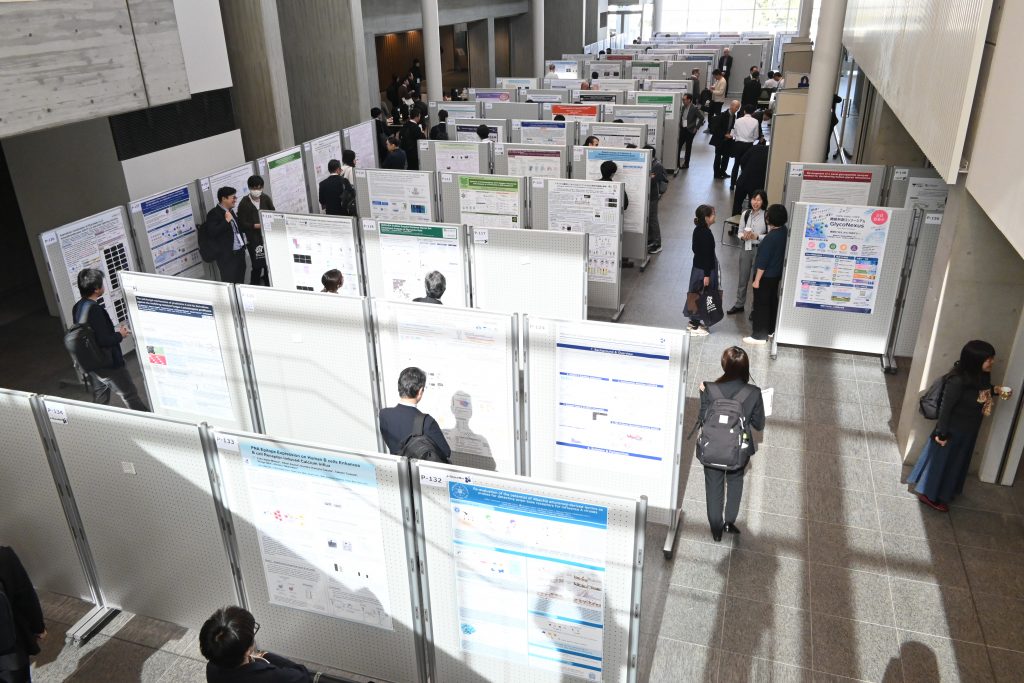
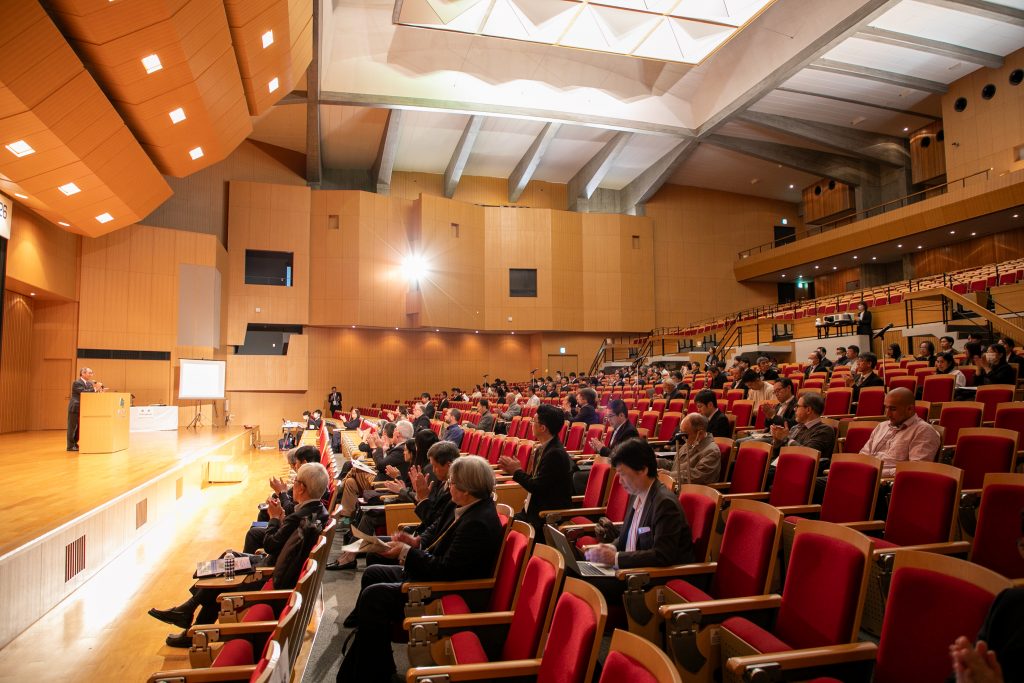
The Glyco-Core Symposium 2026 opened on Oct. 29 at Toyoda Auditorium on Nagoya University’s Higashiyama Campus in Japan. Hosted by the Institute for Glyco-core Research (iGCORE) under the theme “Transforming glycoscience through interdisciplinary approaches,” the two-day meeting brought glycoscientists together with experts in fields from machine learning and molecular simulation to chemical and plant biology. Speakers from Canada, South Korea, the U.K., the U.S. and France joined colleagues from across Japan.
“The purpose of this symposium is to promote dialogue between glycoscience and other fields,” said Kenji Kadomatsu, executive director of iGCORE, in his opening presentation.
Sugars that shape how cells behave
Glycans are chains of sugar molecules that cover the surface of the cells in our bodies. They help give each cell its distinctive character, let cells communicate with one another and allow them to recognize neighboring cells and pathogens. That makes glycans important in immunity, brain function, aging, infection, cancer and dementia.
Glycan research has already contributed to medicine, from the influenza drug Tamiflu to antibody-based cancer treatments. Yet glycans remain far less studied than DNA or proteins, because their complex, varied structures require highly specialized techniques to make and analyze.
Kadomatsu framed the challenge in terms of the “central dogma,” the principle that genetic information flows from DNA to RNA to proteins. “Our life is more than its blueprint,” he said. “The central dogma gives us the blueprint of life, but life is also controlled by mechanisms beyond it.” Glycans are a leading example, he said. Unlike DNA, RNA and proteins, glycans are not built from a genetic template; they are assembled by enzymes, so their structures cannot be read directly from the genome. As a result, their data are “truly uncharted big data.”
From clownfish to pollen
Invited speakers illustrated this point from various angles.
- Vincent Laudet of the Okinawa Institute of Science and Technology and CNRS IRL EARLY tackled a century-old puzzle: how anemonefish live unharmed among the stinging tentacles of sea anemones. His team found that the fish’s skin mucus contains remarkably low levels of sialic acids, a family of sugars found on glycans, and that the fish’s resistance to stings, acquired as larvae transform into young fish, coincides with a drop in those levels.
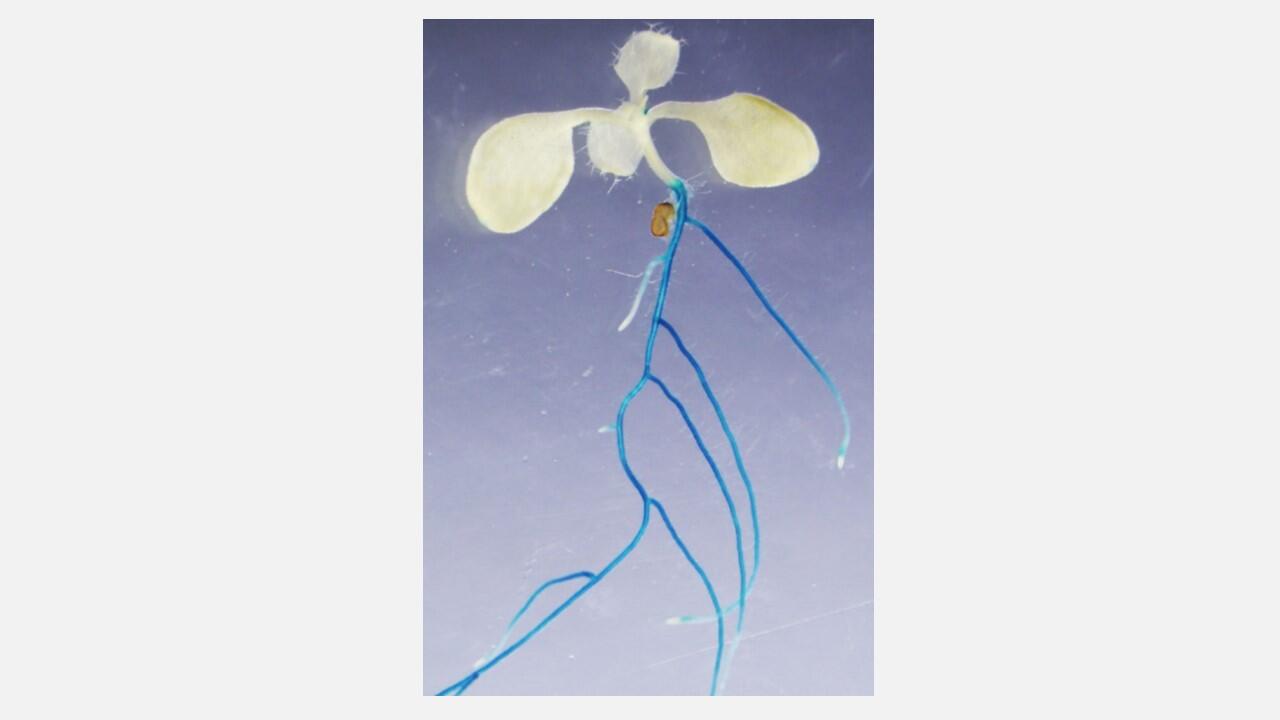
- Tetsuya Higashiyama of the University of Tokyo presented AMOR, a small glycan from a flower’s ovule that pollen tubes need before they can respond to the signals guiding them toward the egg cell.
- Young-Tae Chang of Pohang University of Science and Technology in South Korea described a fluorescent probe that recognizes glycans typical of cancer cells and distinguished tumors from healthy tissue in mouse livers, an approach he called promising for cancer diagnosis and surgery.
- The plenary lecture, by Michael Tiemeyer of the University of Georgia in the U.S., surveyed how changes in glycans affect almost every aspect of human health from fertilization to death. He described how model organisms such as fruit flies, combined with genetic screens, can show how cells control which glycans they make, and how knowing how glycans are built can help identify potential targets in pancreatic cancer. He also argued that databases on disease, which focus mainly on DNA, RNA and proteins, need to capture what glycans do, and presented early efforts to describe glycan functions in a structured form that such databases can use.
Mapping the human glycome
The Human Glycome Atlas Project (HGA) sets out to chart glycans in the human body. Launched in 2023, the 10-year national project is led by the Tokai National Higher Education and Research System (THERS), which oversees Nagoya University and Gifu University, together with the National Institutes of Natural Sciences and Soka University. Yoshiaki Ishida of Japan’s Ministry of Education, Culture, Sports, Science and Technology (MEXT) described it as the first attempt anywhere to obtain data on all forms of glycans in the human body.
In its first five years, the project is developing core technology while analyzing 20,000 blood samples related to dementia and aging. In the second five years, it plans to analyze 200,000 blood and tissue samples related to cancer and other diseases. All data will be stored in TOHSA, HGA’s glycan knowledge base, with a restricted release planned for 2028 and a fully public version to follow.
A growing international network
On Oct. 28, iGCORE, founded in 2021 by Nagoya University and Gifu University, signed a memorandum of understanding with two University of Georgia centers in the U.S.: the Complex Carbohydrate Research Center, a leading glycoscience institute, and the Center for Molecular Medicine. Tiemeyer, joint director of both centers, attended the signing.
The agreement follows another milestone. In January, Nagoya University and the French National Centre for Scientific Research (CNRS) established GlycoMIRAI, the world’s first CNRS International Research Laboratory dedicated to glycoscience.
Nagoya University President Naoshi Sugiyama told participants that a new facility, the Lykeion Research Building, was almost complete. It will house iGCORE and GlycoMIRAI, as well as early-career researchers working on AI for science. As HGA moves into large-scale cohort studies, he said, “the effective use of AI will be essential to this endeavor.”
Kadomatsu closed by asking the audience to use TOHSA once it opens, join the J-GlycoNet research network and take part in a new platform for academia-industry collaboration, which launched on Oct. 30. “I especially ask people from industry to join us,” he said.
THERS Chancellor Seiichi Matsuo pointed to Japan’s world-leading technologies for glycan analysis. “By strengthening cooperation among researchers in Japan and worldwide, we aim to make our country a global hub for glycoscience,” he said.
Researchers
-
 SUGIYAMA NaoshiTokai National Higher Education and Research System
-
KADOMATSU KenjiTokai National Higher Education and Research System
-
MATSUO SeiichiTokai National Higher Education and Research System
-
MATSUI YusukeInstitute for Glyco-core Research
-
TAKEUCHI IchiroGraduate School of Engineering, Mechanical Systems Engineering, 2