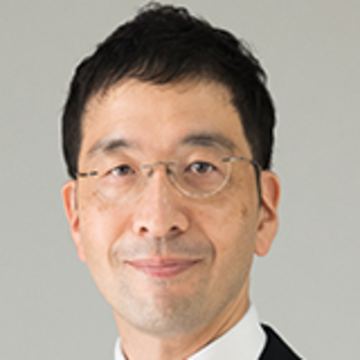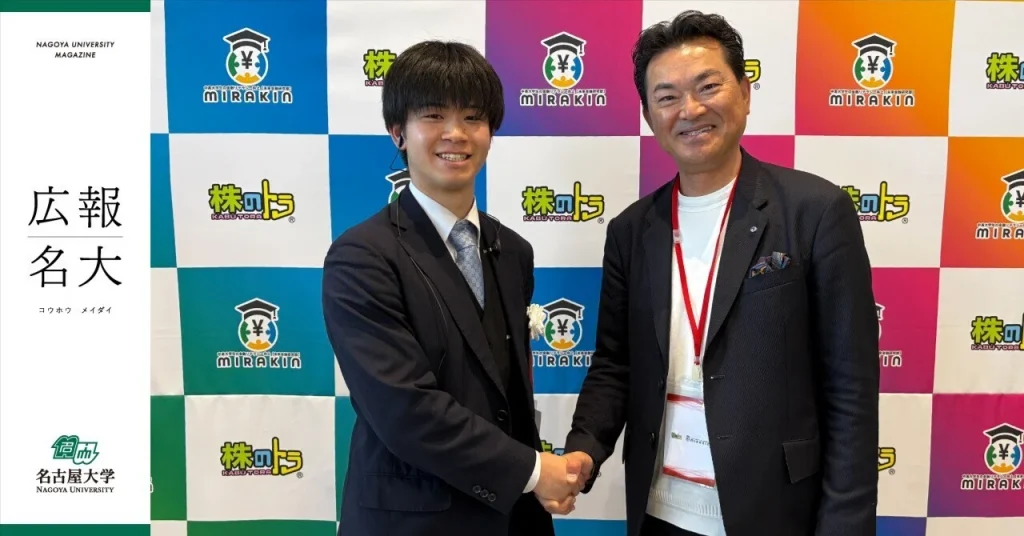
Ryuto Inaba is a fourth-year undergraduate who researches fluid mechanics in the School of Engineering. Outside of his studies, he chairs Kabutora (literally “Stock Tiger”), a club engaged in finance and economics-related educational outreach. He also works part-time at a financial school, teaching elementary through to high school level. Last academic year, Inaba received the President’s Award for his various achievements.
Kabutora seeks to improve students’ financial literacy
Kabutora was founded by Haruhide Kanda, a former student of Nagoya University’s School of Engineering, with the aim of improving students’ financial literacy. Inaba joined the club when he was a first-year student. At first, he wasn’t particularly interested in stocks, but he was curious about other finance-related issues, for example, the so-called 20 million yen problem (named for the projected amount that a retired couples’ expenditures will exceed their income) and so decided to join.
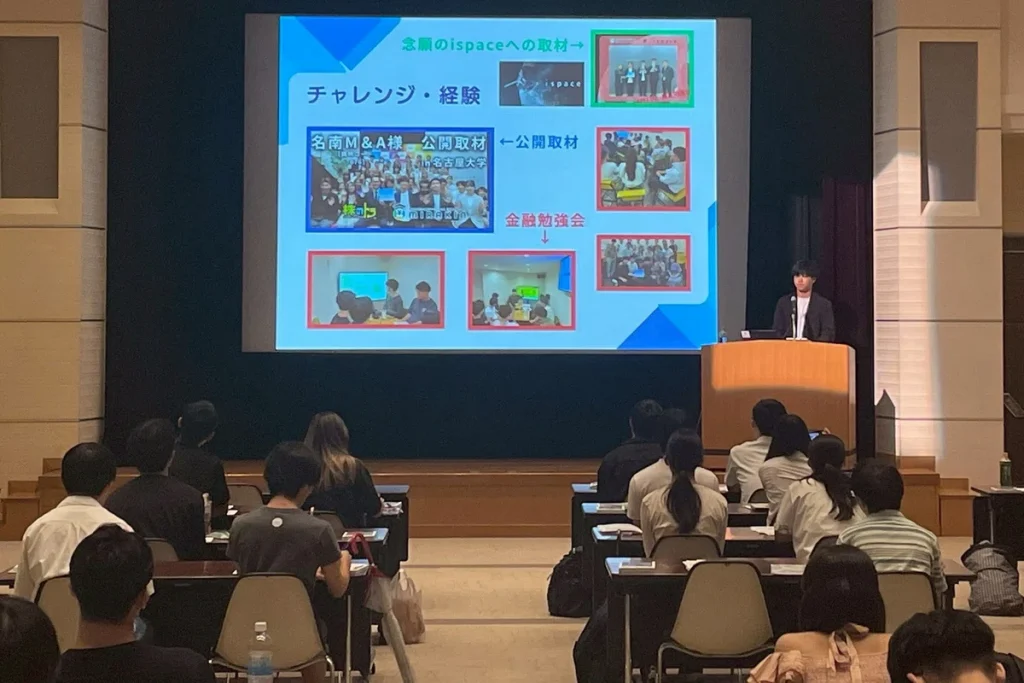
The club hosts a competition for students called the Kabutora Cup, in which participants compete to see who can generate the most profit on a stock trading simulator, providing a hands-on opportunity for students to learn about finance and economics. The competition is free to enter, and no funds are required to purchase stocks. The four competitions held so far have met with good response, attracting a total of over 2,000 students from across the country. The competition is supported by the Ministry of Education, Culture, Sports, Science and Technology, the Financial Services Agency, Aichi Prefecture, and Nagoya City. The fifth tournament will be held in July 2026.
During the competitions, Inaba realized that most participants traded stocks in well-known BtoC companies, whereas BtoB companies were less popular. In response, Kabutora launched Mirakin, a subdivision of the club that serves to bring awareness to BtoB companies by interviewing them and sharing what they learn online. Mirakin started out by interviewing businesses in central Japan, which is home to a world-class manufacturing industry.
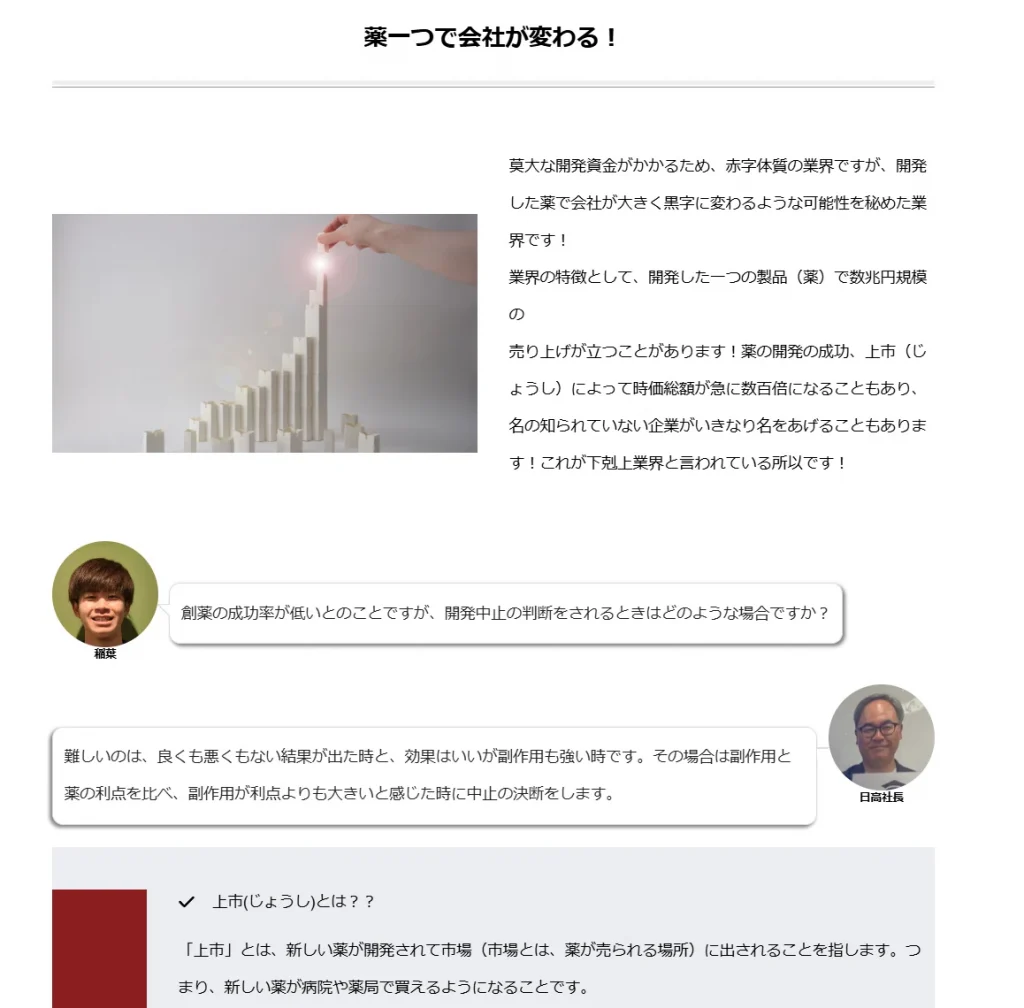
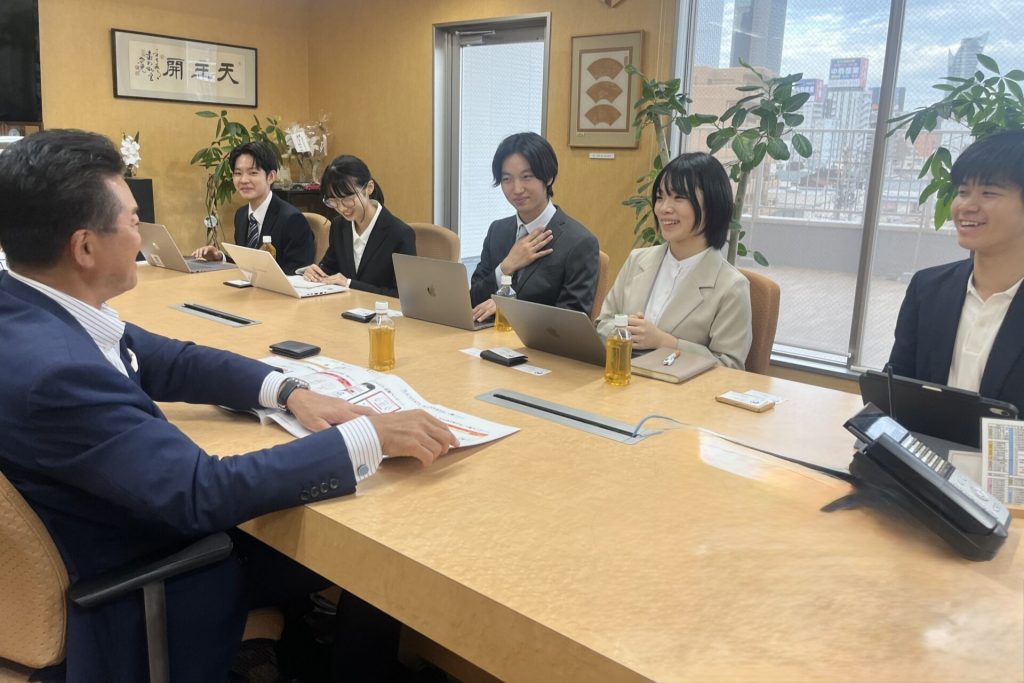
Valuable opportunities to speak with the executives of listed companies
Inaba tells us he has met executives and company directors from more than 80 companies, and that he sent handwritten thank-you letters after each visit. His new contacts introduced him to executives at other BtoB companies, creating opportunities for the club to interview even more listed companies. “By learning about the kind of work BtoB companies do and what kind of people work there, I learned not only about finance and economics but also about the importance of organizational strength. I even picked up some hints about how to approach my position as chair of Kabutora,” says Inaba.
Kabutora grew from university club into a nationwide organization
The year after he joined Kabutora, Inaba was struck by the club’s high member turnover. He asked around about other popular clubs and discovered that it was common for club members to be good friends, spending time with each other outside of club meetings. “I’d thought that members would become friendly through participating in club activities, but I realized that it is important for everyone to get to know each other first,” he says.
Inaba managed to get members to stay long-term by prioritizing member enjoyment. For example, he let members who were good at livening up the mood take the lead at weekly meetings. As a result, everyone became increasingly interested in stocks and finance, and the club activities began to pick up steam. Currently, the club has about 30 members from Nagoya University and a total of 100 members across 29 universities nationwide.
Inaba is considering expanding Kabutora’s operations overseas. “Eventually, we want to have factions in other countries interviewing local listed companies and hosting regional Kabutora Cup competitions,” he says.
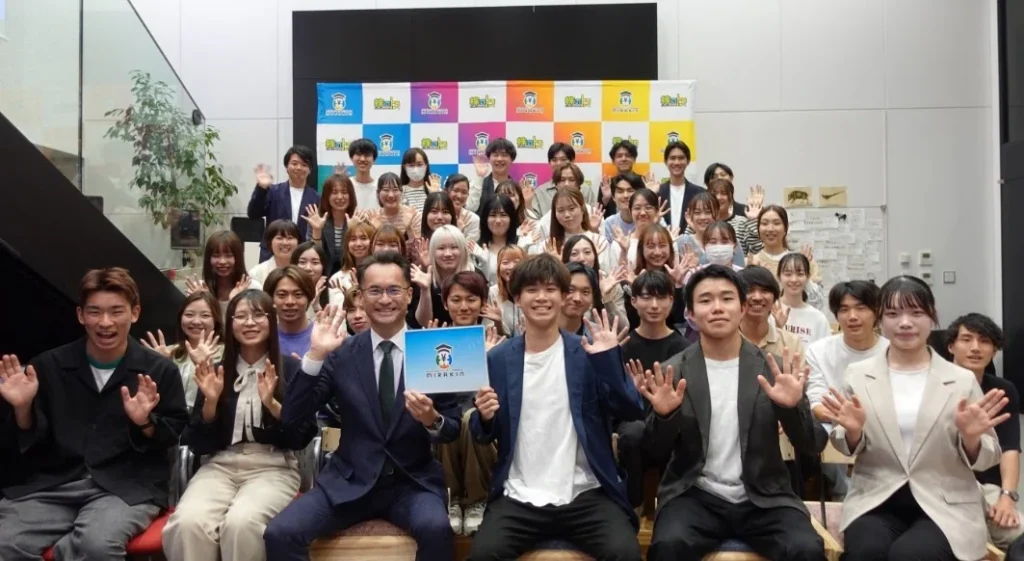
Teaching at a financial school
Inaba is an instructor at MIRADAS, a children’s financial school that opened last fall near Nagoya University’s Higashiyama Campus. In recent years, the Japanese government have put increasing emphasis on financial education, designating it a mandatory subject for high school students as of 2022. At MIRADAS, Inaba gives easy-to-understand lessons on the workings of the economy and the basics of investing. MIRADAS provides a unique curriculum, integrating stock simulators and corporate analysis based on interviews with listed companies.
Alongside his role as an instructor, Inaba is engaged in other activities relating to financial education, for example, he gives lectures at special events and provides high school teachers with stock simulators and data generated from corporate analysis.
Recommitting to aerospace studies
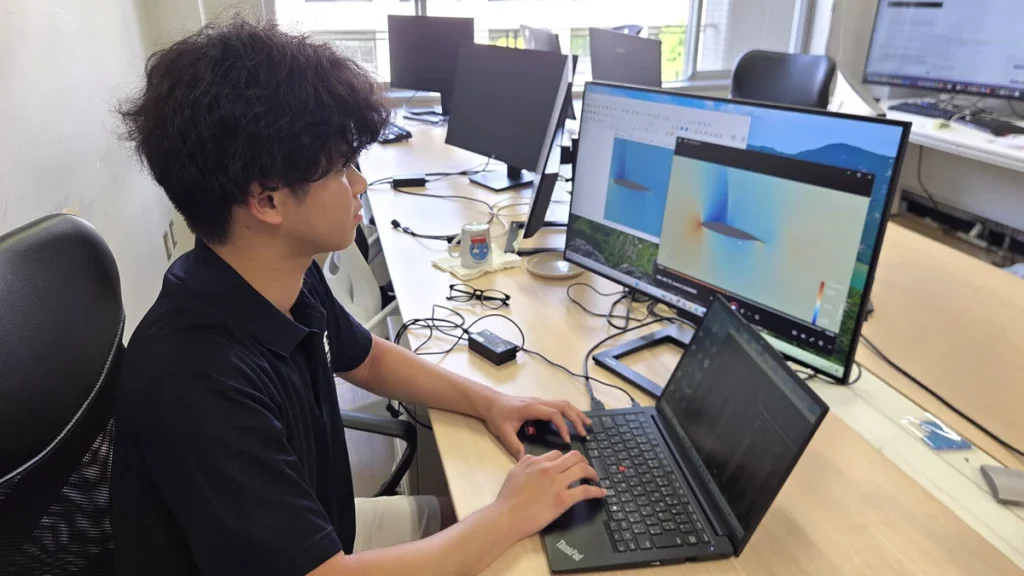
This spring, Inaba became a member of Professor Taku Nonomura’s laboratory, where he studies vibration phenomena that occur due to the laminar flow around airplane wings. “A lot of my time as a student has been centered around Kabutora, but I want to dedicate more time to my research, too. There is still much to be discovered in the world of aerospace; the sheer scale of the field excites me,” he says enthusiastically, eager to conduct research with direct societal impact.
Inaba describes himself as a “bundle of curiosity” — we are excited to see where all that curiosity takes him.
[Addendum] Recipient of the President’s Award
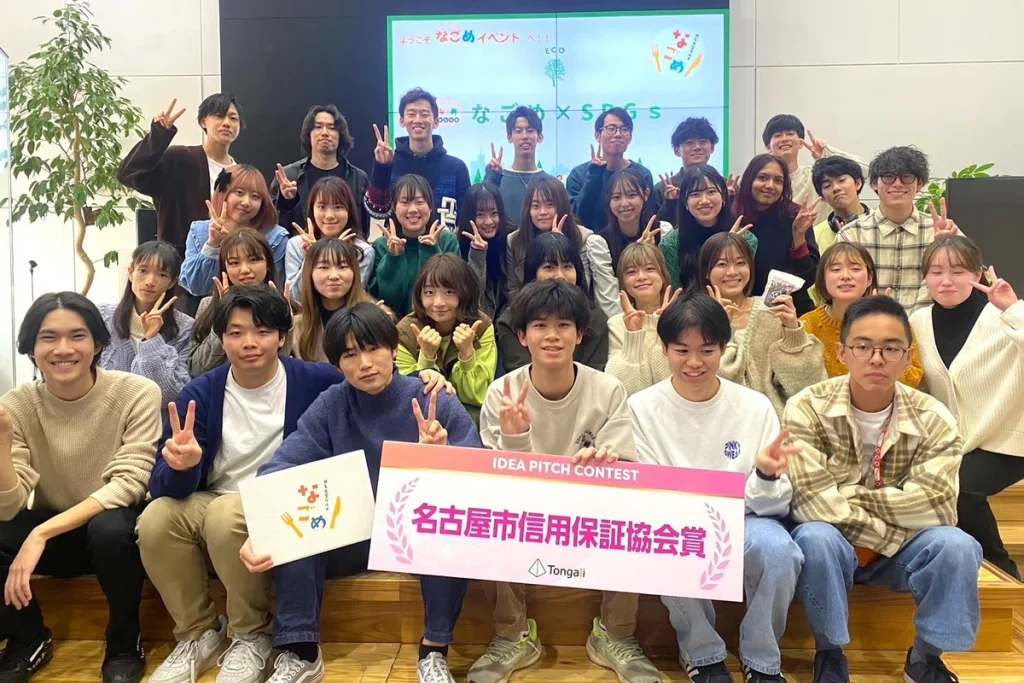
As a first-year student, Inaba took a class on entrepreneurship taught by Associate Professor Yukihiro Wakuta (Graduate School of Environmental Studies) about the process of finding solutions to social issues. He learned that entrepreneurship can be one method for finding such solutions. At Associate Professor Wakuta’s suggestion, Inaba took part in the Tongali idea pitch contest.
At the competition, Inaba proposed an event aimed at reducing food waste. Inaba came up with the idea after he learned how much cake gets discarded the day after Christmas. Inaba, who has a sweet tooth, was shocked by the wastefulness. He planned an event at which students could eat unsold day-old bread and pastries that were still safe to eat. The event received the support of eight bakeries, who provided a total of 80 items. 30 students gathered to feast on the provisions. “It was hard work sourcing the bread and pastries, but the students ate their fill, and it was good promotion for the bakeries, too.”
At the Tongali contest, Inaba was awarded the Nagoya Credit Guarantee Corporation Award for his event. This victory, alongside his other achievements, resulted in him receiving the President’s Award in 2026.
Originally published in Japanese on June 26, 2026.