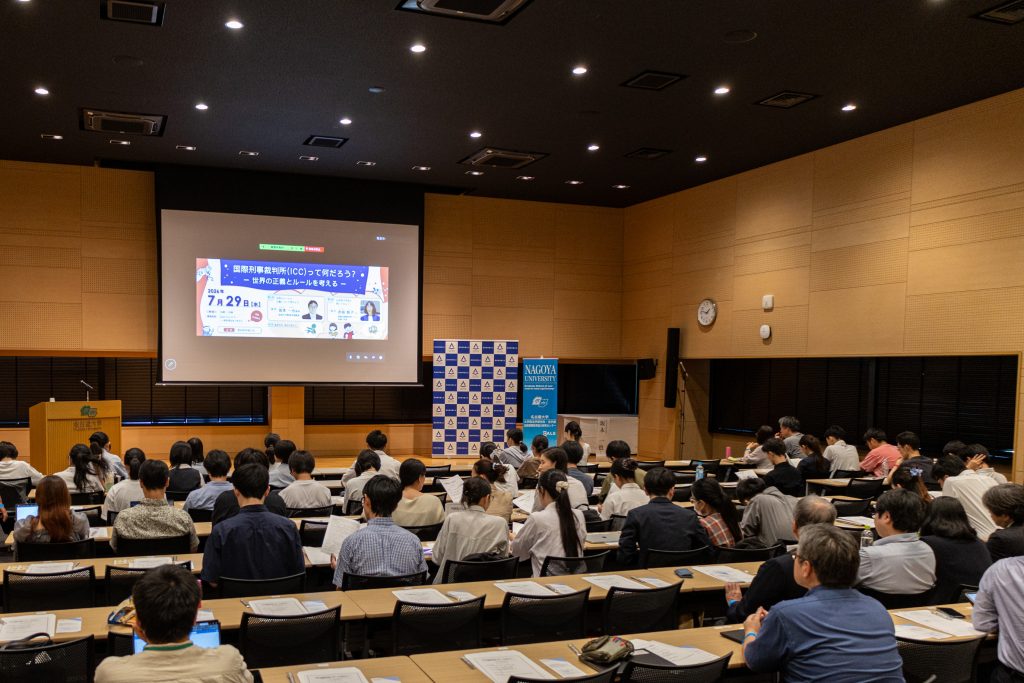
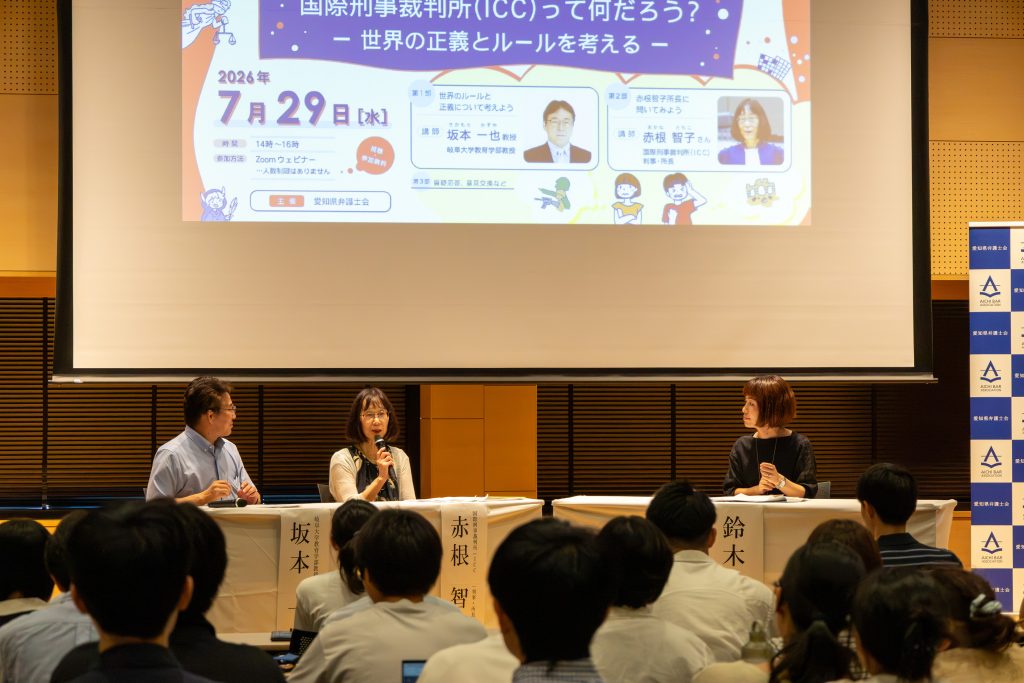
About 120 junior high school, high school, and university students attended a public lecture at Nagoya University on July 29, 2026, featuring the president of the International Criminal Court (ICC). The event, “What Is the International Criminal Court? Thinking About Justice and Rules in the World,” was organized by the Aichi Bar Association and co-hosted by Nagoya University’s Center for Asian Legal Exchange (CALE).
Tomoko Akane became the first Japanese national to lead the ICC as its president in March 2024. Born in Nagoya, she worked for years as a prosecutor and later taught at Nagoya University’s Graduate School of Law before joining the ICC as a judge in 2018.
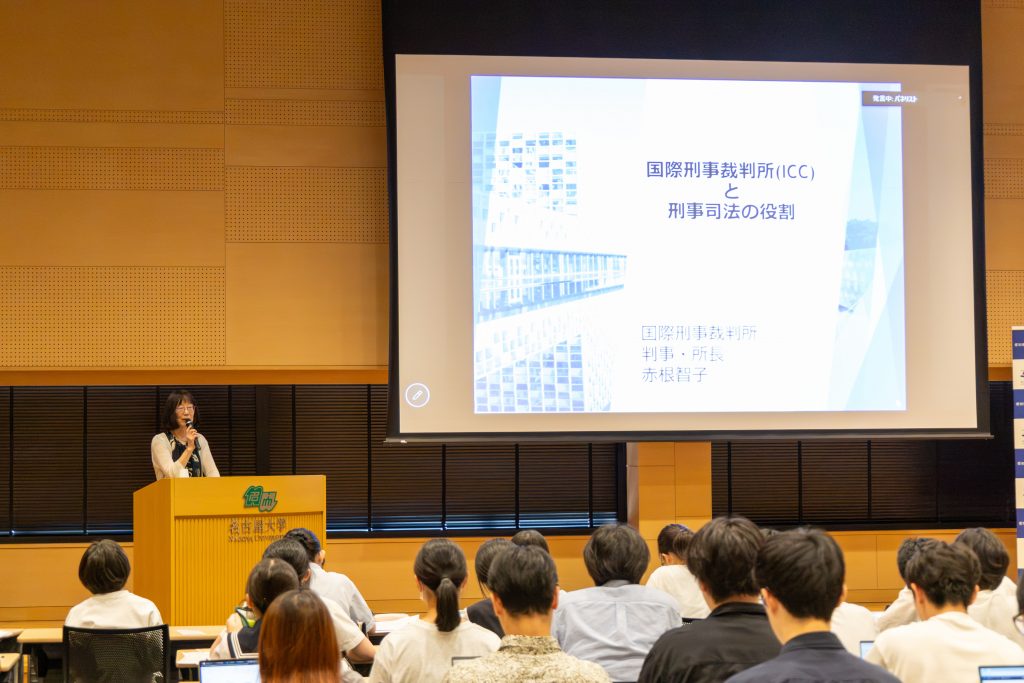
Akane explained that the court prosecutes individuals, not states, for genocide, crimes against humanity, and war crimes, and that it operates under a treaty rather than as a United Nations body. She described pressure the ICC faces from non-member states including the United States, Russia, and China, noting that Russian courts have convicted ICC judges in absentia, complicating travel for her colleagues to countries with extradition treaties with Russia. Still, she said the ICC is increasingly serving as one of the last remaining safeguards of the rule of law.
Asked why she pursued the career, Akane said she had wanted to work for justice since junior high school and became a prosecutor because it was one of the more accessible public-service paths open to women at the time. She encouraged students to keep trying rather than hold back for fear of failure, and told them the ICC is not a distant institution, since events unfolding overseas could just as easily happen at home.
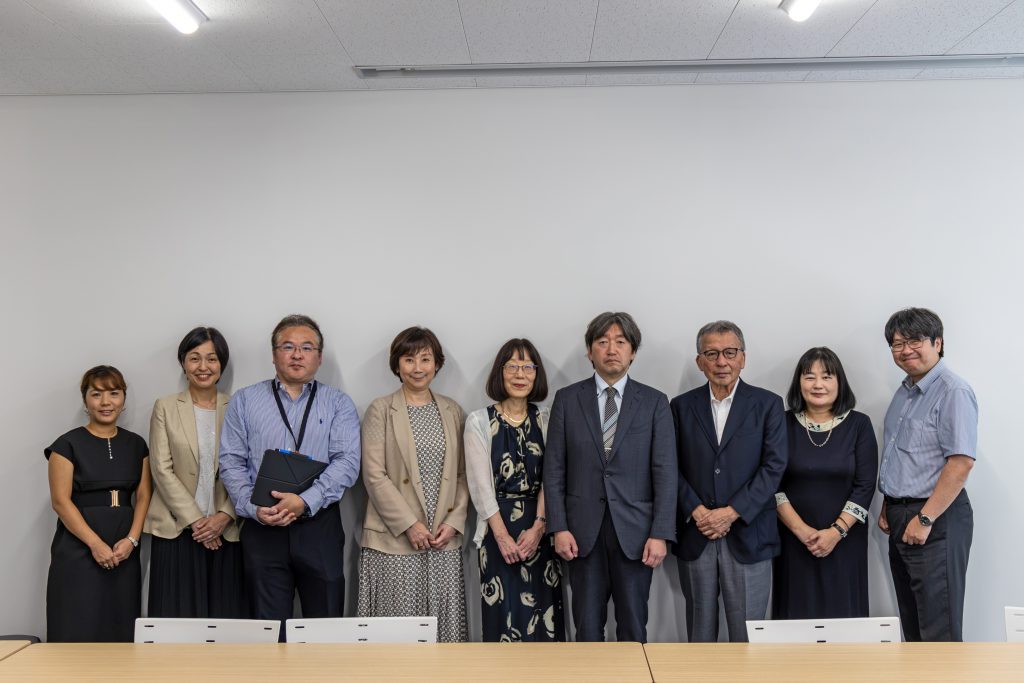
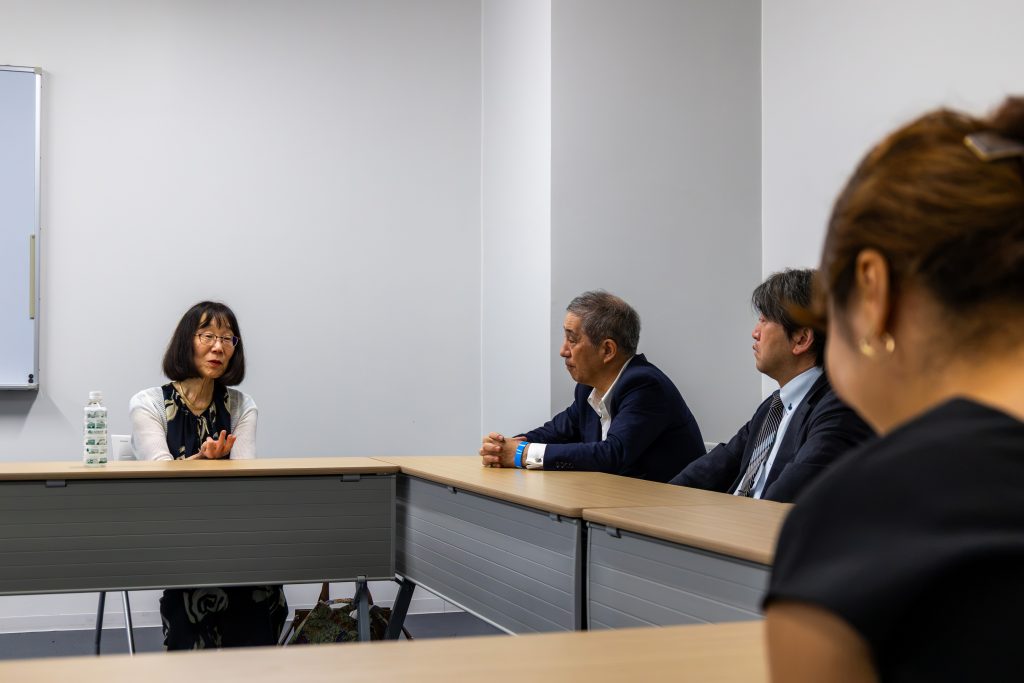
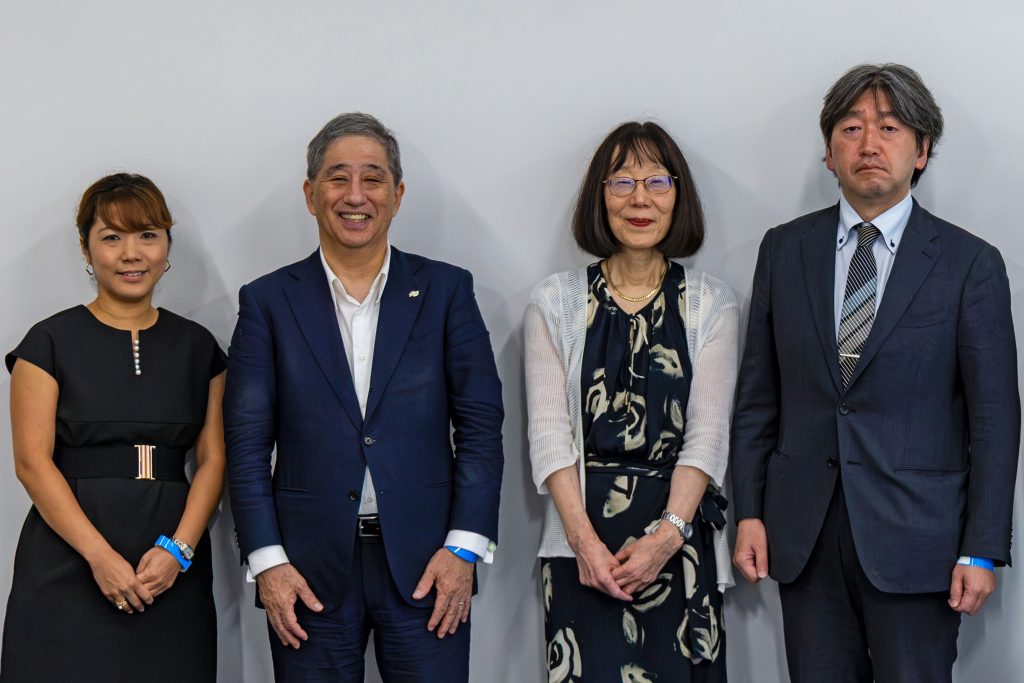
The visit included two informal gatherings around the lecture. Beforehand, Akane met with Dai Yokomizo, dean of Nagoya University’s Graduate School of Law, and several faculty members. Afterward, she held a separate meeting with Nagoya University President Naoshi Sugiyama. Gifu University professor Kazuya Sakamoto also spoke at the event and joined Akane for a discussion on international law’s role in daily life.