Interview and text: Megumi Maruyama (URA, Planning and Project Development Division, Academic Research & Industry-Academia-Government Collaboration)

Filing a patent isn’t enough to bring research to society. What matters is how you grow that patent — and how you connect it to the world.
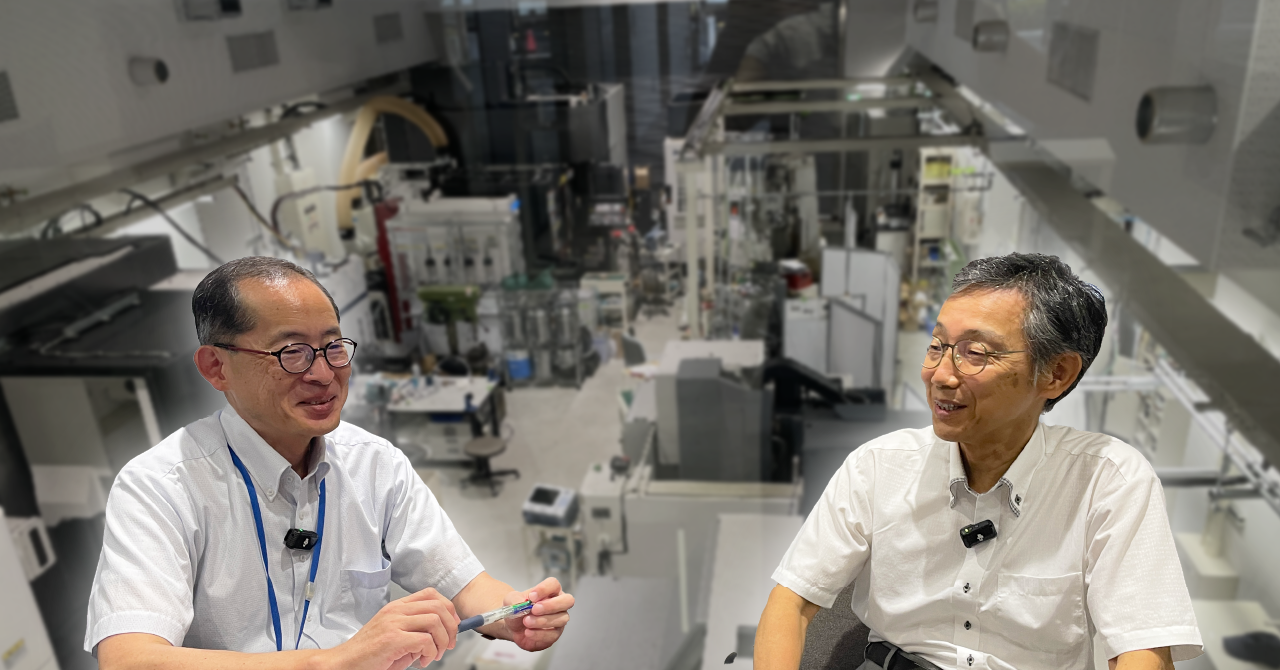
In this issue, we spoke with Atsushi Noro, a polymer materials researcher, and Takako Ito, Supervising Research Administrator in charge of intellectual property support, about the process of patent filing and what comes after. What do they mean by a “delicious” patent?
Lecturer, Graduate School of Engineering
Institutes of Innovation for Future Society (Institute of Material Innovation / Research Center for Net-Zero Carbon Society)
A researcher in polymer materials chemistry, Noro’s research spans from rubber-based materials to electrolyte materials for fuel cells. He firmly believes that engineering should connect to society. When the conversation turns to research, his enthusiasm is infectious.
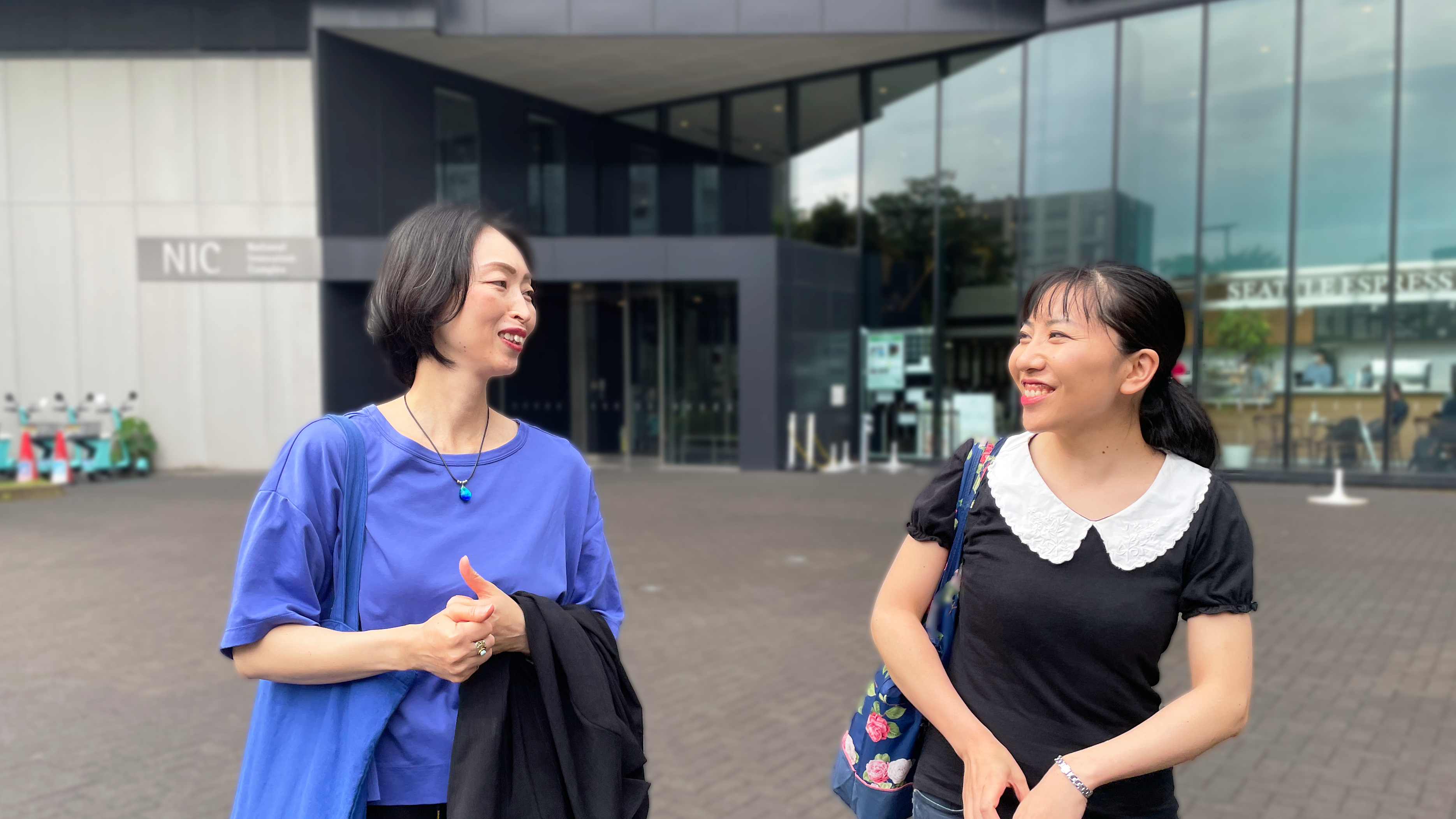
Takako Ito (Right)
Supervising research administrator
Intellectual Property & Technology Transfer Division, Academic Research & Industry–Academia–Government Collaboration
With a background in chemistry, Ito spent her career in industry working in R&D, chemical analysis, and intellectual property before joining Nagoya University in 2019. A devoted manual transmission driver — though with the options dwindling, she finally made the switch to automatic.
⸻ How did you two first start working together?
Noro: It was in 2020, just before COVID hit. I was introduced to Ito as the successor to my previous IP support research administrator (URA).
Ito: I was happy to hear about the assignment — polymer materials chemistry was a field I had worked in at my previous company. Though I’ll admit I felt some pressure following such a capable predecessor.
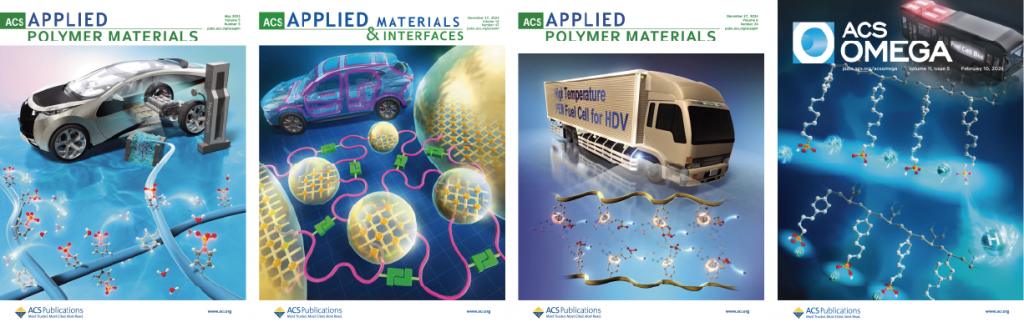
Noro: I’ve been receiving support from the IP division since around 2010, when I filed my first patent. Ito is the third URA to support my IP activities. She has helped me see things I couldn’t see as a researcher on my own.
⸻ What do researchers tend to overlook?
Noro: When thinking about patents, I naturally focus on what I’ve created — a compound, a membrane, something tangible. I don’t always think about how it might be used beyond that.
Ito: How a patent is framed can change everything that comes after. Beyond the compound itself, we might include the systems it’s part of, or other applications entirely. I talk through the technical details with Noro and we think together about how to make it a “delicious” patent.
⸻ A “delicious” patent?
Ito: I sometimes use that phrase to describe patents with broad potential — ones that can be applied across multiple fields or lead to collaborations with many companies. If the university holds a patent independently, licensing opportunities can expand much more easily.
Noro: A strong university-owned patent provides a solid foundation when you later move into joint development with a company. Ideally, we first secure a university-owned patent and then build joint patents through subsequent collaborations.
Ito: Joint patents with companies can sometimes limit future licensing options. But if we first secure a broadly applicable patent on our own, it can become a catalyst for collaborations across many different industries. That’s why our division is now actively encouraging solo filings.
⸻ “Now” — does that mean things were different before?
Ito: Yes, I understand that joint filings with companies were much more common before I joined — not as a formal policy, but just as the norm. Now the strategy has shifted: build the university’s own IP first, then use it to bring in licensing revenue and joint research partners. It’s a longer-term approach.
⸻ With that approach in place, what’s actually happening in Noro’s research?
Noro: We have a technology that has attracted interest from multiple companies in different sectors. Some of those have led to option agreements. It all came from solo patents we filed early on.
What is an option agreement?
A time-limited contract giving a company the right to evaluate whether a technology can be used commercially — through prototyping and testing — before committing to a formal licensing agreement.
Ito: The same material can have completely different value depending on what field it’s used in. That’s what made it possible to approach multiple companies in different fields. It only works because we secured broad rights through a solo filing from the start.
⸻ How long did it take to get here?
Ito: Two to three years, easily. It starts with building a relationship with the company, which takes time. Every case is different — the technology, the company’s situation, all of it. It’s not the kind of work you can put in a manual. But that’s exactly what makes it interesting.
⸻ That’s exactly where intellectual property support shows its value. Noro, are there aspects that are challenging on the research side?
Noro: Balancing patent filings with publishing papers is genuinely hard. On one hand, researchers naturally want to publish papers as quickly as possible. On the other hand, filing patent requires keeping information confidential for a certain period. Coordinating that with conference presentations can be quite challenging.
⸻ What keeps you going with both?
Noro: As an engineering researcher, I’ve always felt strongly that research should connect to society. My mentor gave me a deep grounding in basic research — that foundation is everything. But I also want to respond to what industry and society actually need. I suppose you could call it a dual approach: pursuing both fundamental research and industry collaboration.
⸻ Looking ahead, what are you both hoping for?
Ito: The next step is moving from option agreements to formal licensing — on favorable terms for us. That means building relationships with each company over time and working out terms that make sense for both sides.
Noro: A single invention is rarely enough to bring a technology into real-world use. It takes layers of technologies and know-how to create something that others can’t easily replicate. When that happens, you end up with patents that many companies want to use — perhaps that’s what makes a patent truly “delicious” for a university.