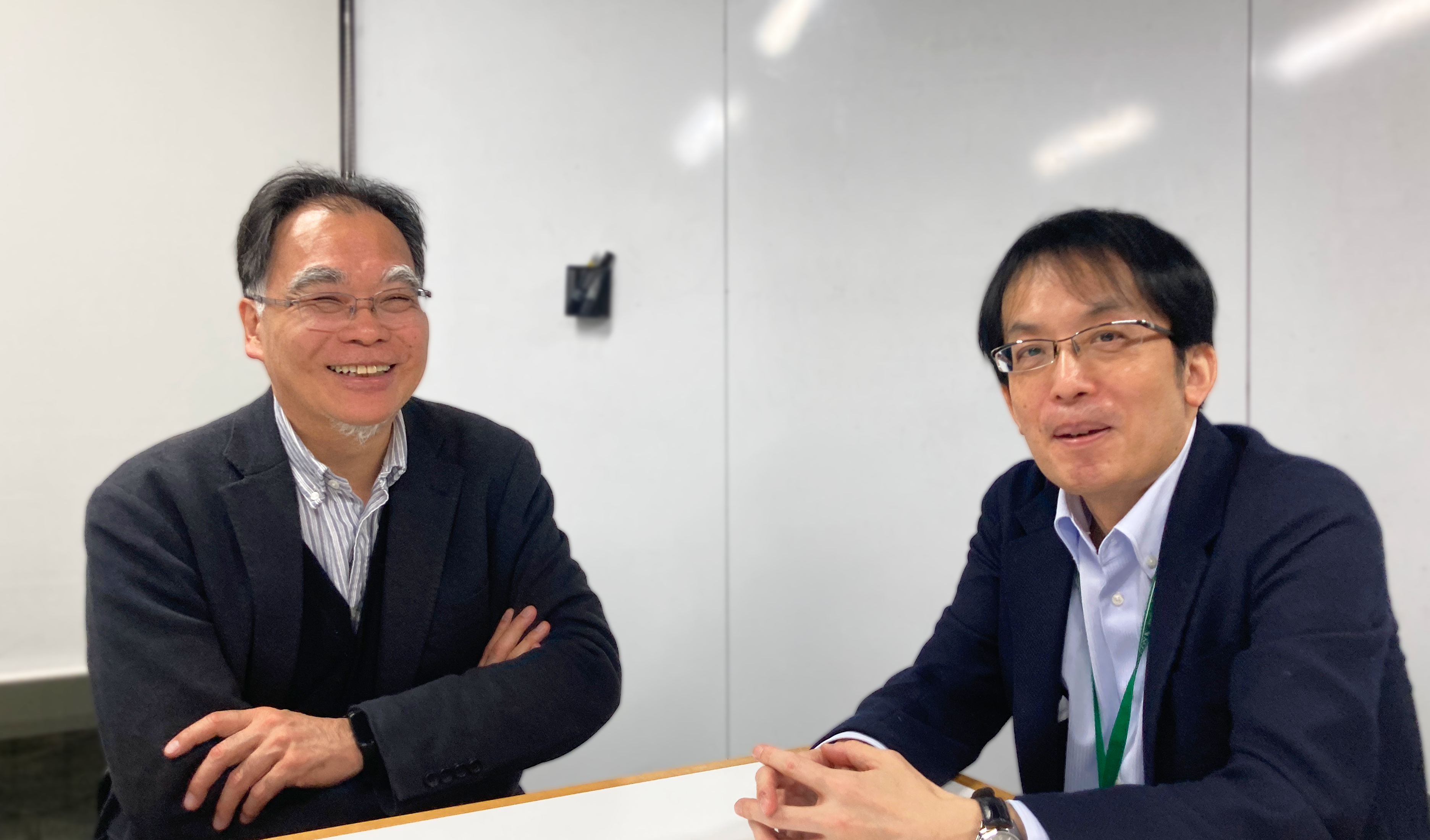
Interview and text: Megumi Maruyama (URA, Planning and Project Development Division, Academic Research & Industry-Academia-Government Collaboration)
New collaborative hubs keep opening on the Nagoya University’s Higashiyama Campus, including Idea Stoa, TOIC, and Common Nexus. These are spaces where people meet, connect, and make things happen. Those who bridge individuals and activities across these spaces are the communicators. At Idea Stoa, the communicators are students.
Why students? What does that actually look like? Aya Sueyoshi, a university research administrator (URA) who supports the student communicators shares what she has learned from practice.
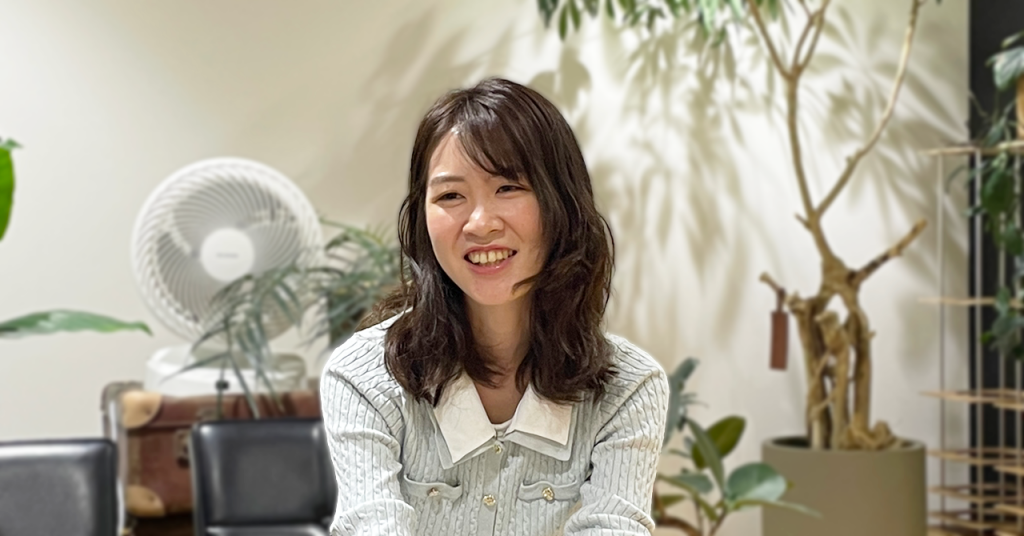
Aya Sueyoshi
URA, Innovation and Entrepreneurship Office, Academic Research & Industry–Academia–Government Collaboration
A commerce graduate specializing in consumer behavior, she joined Nagoya University in 2024 after working on human resource development at Niigata Prefectural Government. At Idea Stoa, she handles planning and operations. Her motto: “Let the other person do the talking first.”
⸻ Idea Stoa always seems lively and welcoming, with someone always there.
Sueyoshi: Yes, the student communicators really bring the energy. Right now, five or six students are active as communicators. They work on a rotating schedule, prioritizing coursework and research.
⸻ What kind of work do the student communicators do?
Sueyoshi: They handle a wide range of things — venue management, event planning, and more. Among these, what I value most is supporting students who have something they’d like to try.
⸻ What do you mean by that?
Sueyoshi: We have a program called “Jikken” (“Experiment”). It’s Idea Stoa’s own initiative to help students turn their ideas into projects. Student communicators join these projects as supporters.
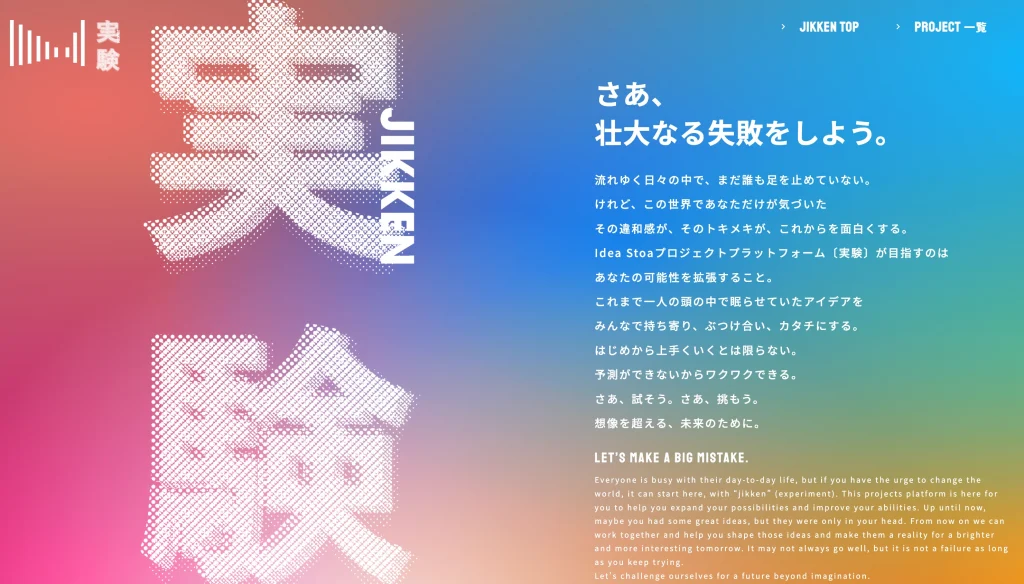
⸻ “Jikken” — I like how “Experiments” sets such a low bar for entry. How many projects have there been?
Sueyoshi: The program started in 2023. Since then, we’ve launched 32 projects, and eight are currently active. One example is a board game called Wild Bird Map, a project from last year. The team developed it into a product and even sold it at the Nagoya University Co-op!

⸻ Wild Bird Map got us URAs talking, too! How do student communicators get involved in projects like this?
Sueyoshi: It varies from project to project. Every student communicator has different strengths, so rather than giving everyone the same role, I think carefully about where each person can contribute most. For the Wild Bird Map project, I asked Machiyo Sato to join as a supporter.
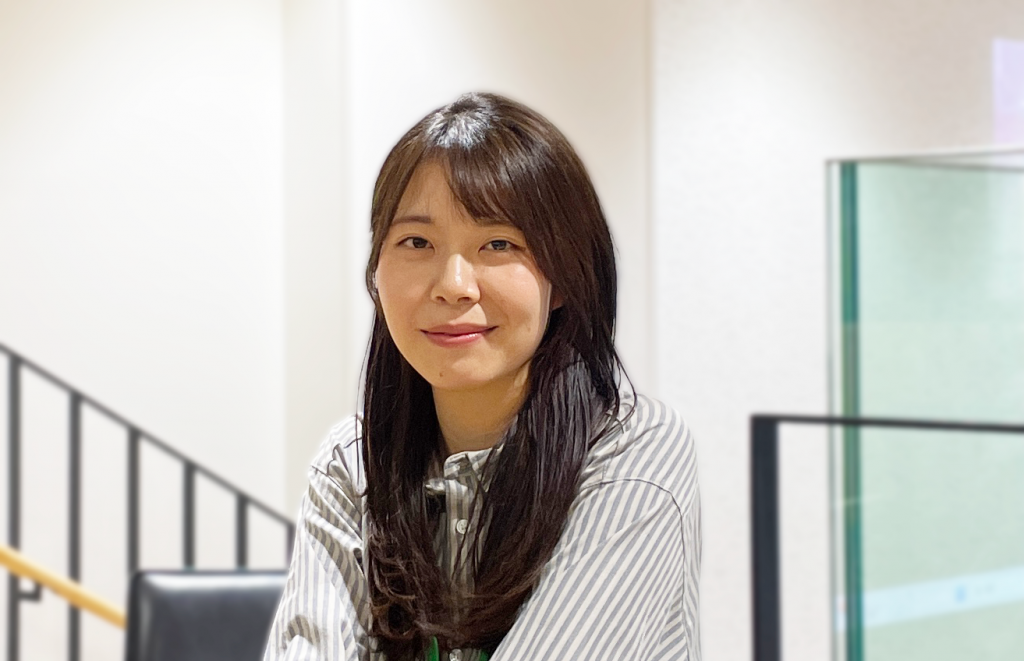
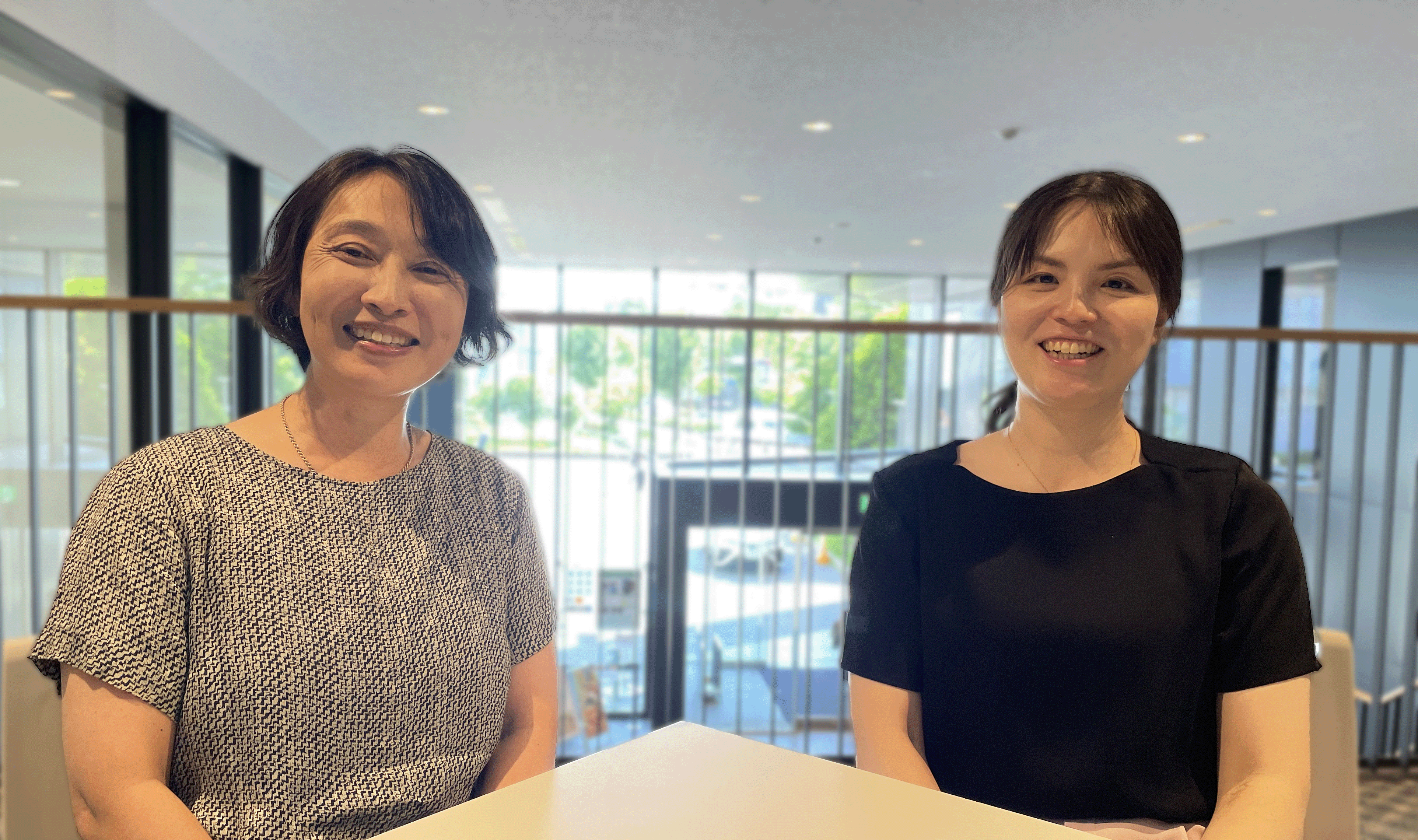
Machiyo Sato, 2nd-year master’s student, Graduate School of Environmental Studies (Architecture)
Originally drawn to Idea Stoa’s space, she joined as a communicator in 2025 after being encouraged by a senior student. At Idea Stoa, she goes by “Machiyo.”
Sato: In architecture, we often think about spaces and information from the user’s perspective. Drawing on that experience, I suggested things like, “The board would be easier to see this way,” or “The rules would be clearer if presented like this.” Since I’m not a bird expert myself, I also offered the perspective of someone new to birdwatching.
⸻ So you were genuinely co-creating within the project.
Sato: Yes, and I feel like I’m growing through it too.
Sueyoshi: Machiyo also joined the team as a presenter at the Tongali Idea Pitch Contest. With the prize money from placing, and using Idea Stoa’s fabrication equipment, she supported the team all the way through commercialization and sales.
Sato: It sold out right away! (laughs) Since I’d already used a laser cutter in my architecture classes, I was comfortable using Idea Stoa’s fab equipment. More recently, I also made the exterior signage for Idea Stoa.
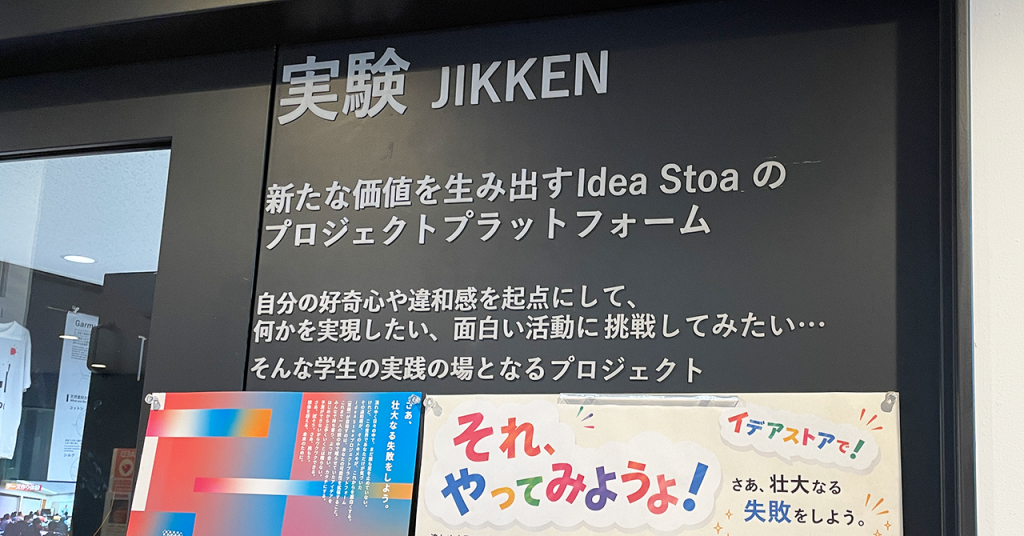
⸻ That’s where her unique skills and perspectives really shine.
Sueyoshi: Exactly. We also have students who become communicators after participating in a Jikken project. One example is Natsumi Haba. She was originally a member of the “15-Second Hair Dryer” project, and I personally scouted her. I sensed communicator qualities in her ability to genuinely listen to others while also clearly expressing her own thoughts.
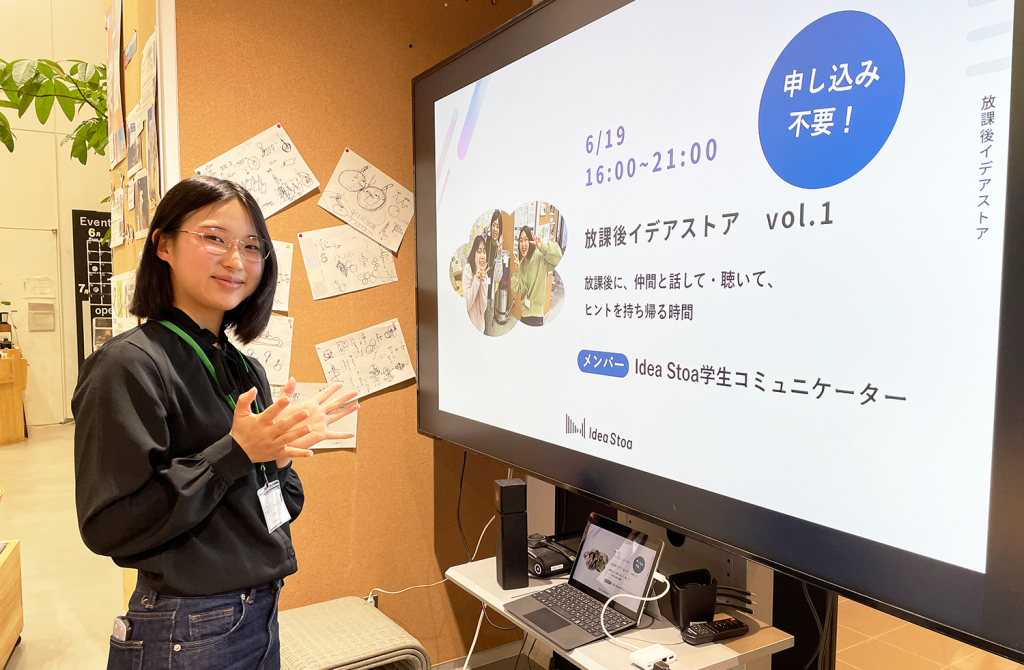
Natsumi Haba, 2nd-year undergraduate, School of Informatics
Drawing on her experience as a Jikken member, she joined as a communicator in 2026. Involved in the programming project “Rakugaki Code,” she also handles event planning and digital signage. She goes by “Na-chan.”
Haba: The student communicators I met through the project were so genuinely friendly. Just being around them lifted my spirits. I thought, “I want to become someone like that.” So when Sueyoshi reached out, I immediately said, “I’d absolutely love to!”
⸻ Having someone with first-hand experience must be reassuring. What kinds of activities are you working on now?
Haba: Lately, I’ve been focusing on planning events for students. During a lunch event organized by student communicators, I heard student participants say things like, “I want to sort through what’s in my head,” or “I want more time to really face myself.” So I decided to organize a “Journaling Workshop” — a space for students to write and reflect. After several rounds of planning with Sueyoshi and the team, we were finally made it happen!

⸻ You’re supporting others, and growing along the way.
Haba: Talking with the students who come here, I keep encountering perspectives I never would have come up with on my own. It’s changed the way I think. Even when planning an event, I now find myself asking, “How would this land for someone else?”
Sato: Right! Everyone here has something they’re genuinely passionate about. It really opens up whole new worlds for me. Ever since I joined the Wild Bird Map project, I started noticing birdsong around me.

⸻ You’re all doing an amazing job. Sueyoshi-san, where do you see the unique value that student communicators bring?
Sueyoshi: There are things students can say to each other that they can’t say to staff, and a peer perspective that makes consultation feel easier. I think a communicator isn’t someone who teaches — they’re someone who connects people. Rather than fixing who challenges and who supports, I want to create a cycle where someone who has taken on a challenge becomes the one who supports others next time. That’s the kind of space I want Idea Stoa to be.