Interview and text: Megumi Maruyama (URA, Planning and Project Development Division, Academic Research & Industry-Academia-Government Collaboration)
The relationship between universities and society is shifting from collaboration to fusion. That’s how Professor Makoto Kobashi, who took over the Academic Research and Industry-Academia-Government Collaboration Promotion in April 2026, describes the future of university-society relations.
Having worked across multiple fronts as a materials scientist, Dean of the Graduate School of Engineering, and a practitioner of industry–academia collaboration, Professor Kobashi reflects on his experiences and shares his perspective on the future of universities and the “University Research Administrator” (URA) position.
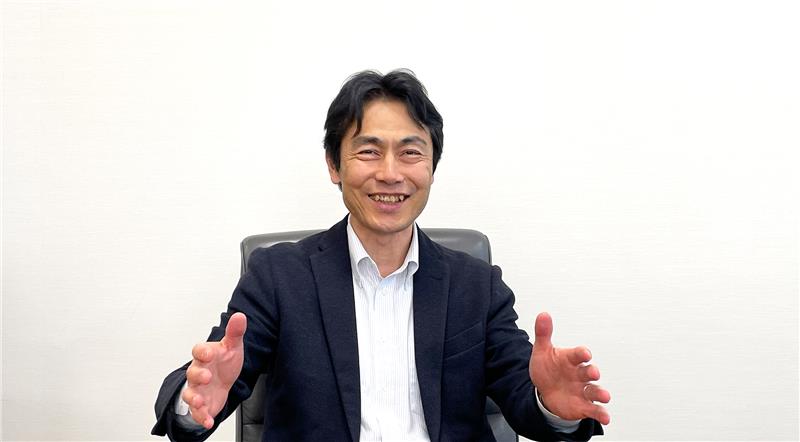
Professor Makoto Kobashi
Director, Academic Research and Industry-Academia-Government Collaboration
A Nagoya University graduate and material scientist specializing in metal 3D printing and porous and composite metal materials. He had little interest in materials as a high schooler, but found his way into the field by chance. His animated way of speaking—often accompanied by gestures—when describing how metal 3D printing “dramatically advanced his research” leaves a strong impression.
⸻ To start, how did you first encounter research?
When I enrolled at Nagoya University, there was a department focused on metallurgy and steel engineering, and that’s where I ended up. Actually, it wasn’t my first choice, and at first I wasn’t particularly interested… But once I joined a lab, I was hooked. It was a newly established lab, so I became its first graduate student, and building everything from scratch alongside the professor was genuinely exciting.
⸻ What kinds of research themes have you worked on?
When I started out, it was the height of the new materials boom, and all I thought about was how to produce the best data on material strength and hardness. But when that era wound down, people started asking, “Where is this material actually useful?” My own interests shifted too — from chasing champion data to giving materials new functions, like storing heat or absorbing impact.
⸻ Was there a turning point along the way?
Yes, around 2010 when I encountered metal 3D printing. At the time, I was trying to create materials that absorbed impact by introducing large numbers of air pockets into metal, but it was a constant struggle to control the shape, number, and distribution of those pores. Then I tried a metal 3D printer, and it just… worked. It added a whole new dimension to my perspective: from how to create structures to how to design them.

⸻ You established your own lab in 2014. What principles have guided it?
“Everyone does something different.”
Even when working on similar materials, each member takes a different approach. When these come together, they create synergy. Though I’ll admit, it sounds more impressive than it is. The truth is, I’m not great at telling people exactly what they should be doing [laughs]. When everyone just pursues the approach they’re best at, the diversity emerges naturally.
⸻ You also have extensive experience in industry collaboration. Any memorable examples?
The Aichi Prefecture “Knowledge Hub Aichi Priority Research Project” stands out. We proposed a project where university seeds would respond to industry needs using metal 3D printing, and it was selected. For instance, work on cooling design for metal molds and the fabrication of complex-shaped coils went really well. It was rewarding not just for our research, but to see the participating companies grow too.
⸻ Sounds like a win-win. Were there experiences that didn’t go as well?
There was a time when I was really hit by how complicated intellectual property can be. I can’t go into details, but looking back, I think the outcome might have been different if I’d consulted the IP department earlier.
⸻ Nagoya University introduced URAs in 2013. Have you had opportunities to work with them directly?
Yes, when we formed a partnership with Sumitomo Riko in 2017 as the university’s first designated joint research (an organization-to-organization collaboration), with me as the principal investigator. I still remember clearly how the URAs stayed right alongside us through all the negotiations and coordination. After that, they gave us long-running support on a collaboration with JFE Steel as well.
⸻ Having also served as Dean of the Graduate School of Engineering, did your perspective on the university change?
My focus expanded from my own research to what university research means for society. Both education and research need to connect to societal value, and I believe that ultimately enhances the value of the university itself.
⸻ “The value of the university” is a lively topic of debate within the institution. Do you have a concrete sense of what action looks like?
Universities have long aimed to be “open to society.” Going forward, I think we need to fuse with society. Friction tends to arise between parties in different positions. But if everyone shares even a small piece of common ground, I think we can move together without that friction. Cross-appointments between industry, government, and academia — where the university and society partially merge — might be one way forward.
⸻ “Fusion” feels different from simply sharing challenges.
The typical image of collaboration is a handshake. But if that handshake itself becomes partially fused, it may naturally foster a mindset on both sides: “Let’s move forward together and improve together.”
⸻ How can URAs and the Academic Research & Industry–Academia–Government Collaboration contribute to this vision?
I think it comes down to how we turn the capabilities of URAs into real value. URAs and the university create value together and that value comes back as recognition of the URAs themselves. Value generating further value. There’s a lot I’m still figuring out, and I know this puts a heavy weight on the URAs’ shoulders, but I’d like us to think through it together, moving in that direction.
———————————————
Nagoya University has more than 50 URAs, each with different experience and expertise, which, in some ways, echoes the spirit of Professor Kobashi’s lab. How we recognize and articulate that diversity as value—this may be something we ourselves must continue to explore, as we look beyond the “handshake.”