Researchers at Nagoya University present six advances in gallium oxide thin-film growth, including a world-first result growing the material on low-cost silicon substrates
Researchers at Nagoya University in Japan, in collaboration with university spinout NU-Rei Co., Ltd., are presenting six advances in the growth of gallium oxide (Ga₂O₃), a semiconductor material with strong potential for next-generation power devices used in electric vehicles, power conversion systems, and space applications. Gallium oxide is attracting growing interest in the power semiconductor industry because it can in principle produce higher voltage devices with relatively abundant, lower-cost raw materials.
The results are being presented at the spring meeting of the Japan Society of Applied Physics (March 15-18, 2026) by a research group from Nagoya University’s Center for Low-temperature Plasma Sciences. Together, the six results advance the full process stack needed to bring gallium oxide devices closer to manufacturing, and include a world-first heteroepitaxial growth—growing a crystalline layer of gallium oxide on a structurally different substrate—on silicon wafers, a step that could significantly reduce device cost and improve heat dissipation.
Toward commercialization
These results build on a related advance in gallium oxide p-type control reported by Nagoya University in September 2025, and are being commercialized through NU-Rei Co., Ltd., with the goal of supporting industrial adoption of gallium oxide growth processes for high-voltage, high-frequency, and silicon-integrated device applications.
A new oxygen source at the core
Central to the work is a newly developed High-Density Oxygen Radical Source (HD-ORS), which doubles the density of atomic oxygen available during thin-film growth compared to conventional sources. The higher oxygen density strongly promotes the chemical reaction needed to convert gallium suboxide into the desired Ga₂O₃, while suppressing the volatile byproduct that would otherwise escape the surface and limit how fast the film can grow. The source is compatible with both molecular beam epitaxy (MBE) and physical vapor deposition (PVD). MBE is a precise vacuum-based crystal growth technique, while PVD is a related but higher-throughput method better suited to industrial production.
Advances across the full process stack
- HD-ORS development. The new oxygen source uses an ozone-oxygen mixed gas to double atomic oxygen density, making it compatible with both MBE and PVD and establishing a high-efficiency foundation for all subsequent growth work.
- High-speed MBE homoepitaxial growth. Using HD-ORS, the team achieves homoepitaxial growth of β-Ga₂O₃ on tin-doped Ga₂O₃ substrates at 300°C and a rate of 1 µm per hour. Growth on the (001) plane was confirmed using X-ray diffraction (XRD) and reflection high energy diffraction (RHEED). The low growth temperature reduces thermal stress and broadens compatibility with other device components.
- High-speed PVD homoepitaxial growth. Applying HD-ORS to PVD achieves stable (001)-oriented homoepitaxial films at rates exceeding 1 µm per hour, approaching ten times the rate of conventional MBE and pointing toward industrial-scale production.
- Silicon substrate pretreatment. For growth on silicon, the team establishes a pretreatment combining wet chemical cleaning with controlled adsorption of a single atomic layer of gallium onto the silicon surface. This prevents re-oxidation during heating and proves essential for subsequent heteroepitaxial growth.
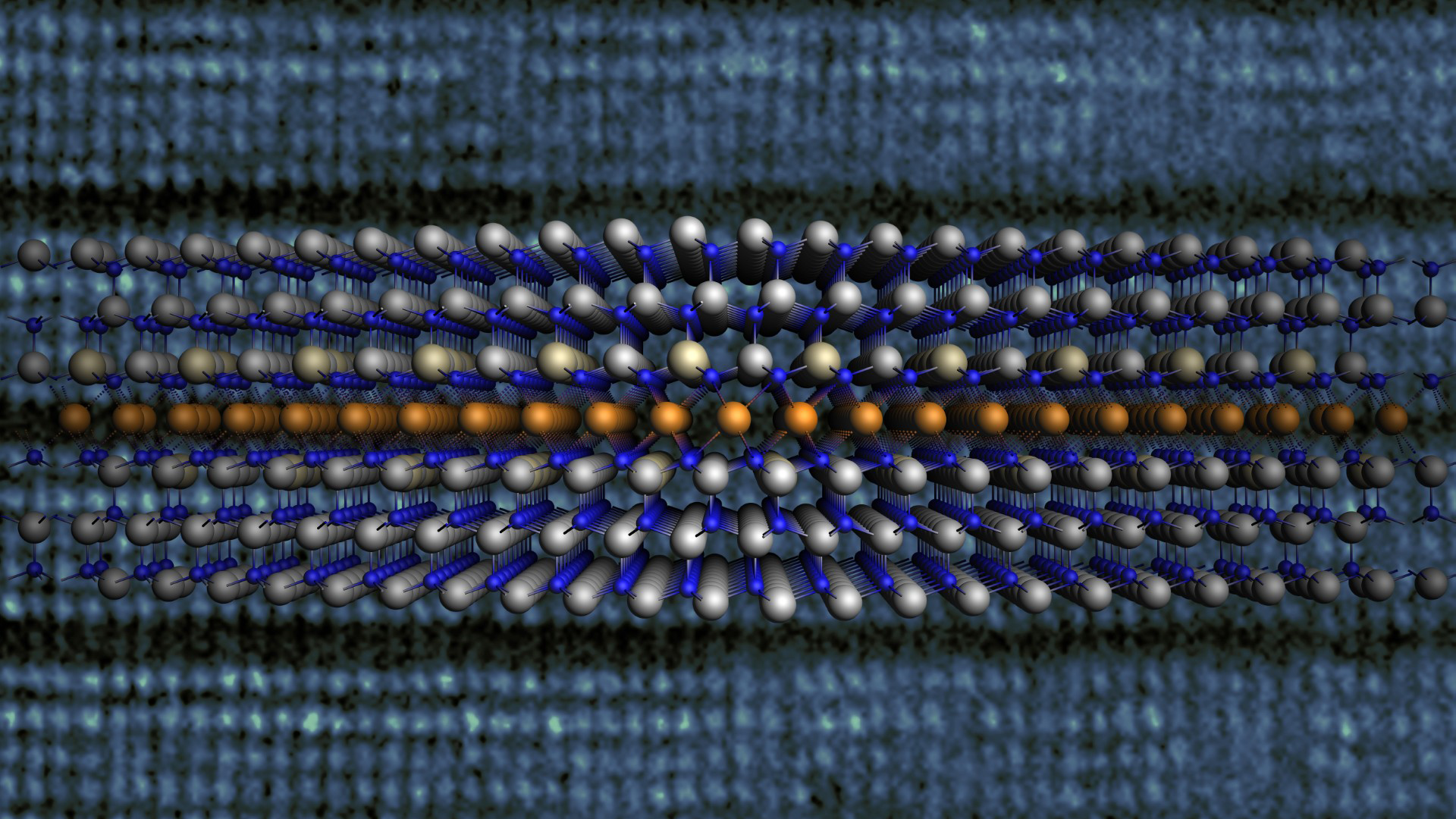
- World-first heteroepitaxial growth on silicon. The team achieves heteroepitaxial growth of Ga₂O₃ on two-inch Si(100) wafers, with heat treatment confirming single-crystal formation. Silicon substrates are far less expensive than native Ga₂O₃ substrates, and silicon’s superior thermal conductivity addresses one of gallium oxide’s known material limitations.
- p-type formation via NiO diffusion layers. Gallium-based semiconductors are difficult to dope into p-type form, which is required to build the pn junctions at the heart of power devices. Using nickel ion implantation followed by annealing, the team forms a graded nickel oxide (NiO) diffusion layer with p-type characteristics, confirming pn junction behavior on both Ga₂O₃ and GaN substrates, with twice the current density of a standard nickel Schottky diode.
Media contact
Alexander Evans, Nagoya University
icomm_research@t.mail.nagoya-u.ac.jp
Expert contact
Masaru Hori, Nagoya University
hori.masaru.g1@f.mail.nagoya-u.ac.jp
Naofumi Kato, NU-Rei Co., Ltd.
na.kato@nu-rei.co.jp