Say Hello to Flow 2.0
Time-lapse video of the Flow 2.0 supercomputer being installed. Credit: Information Technology Center of Nagoya University.
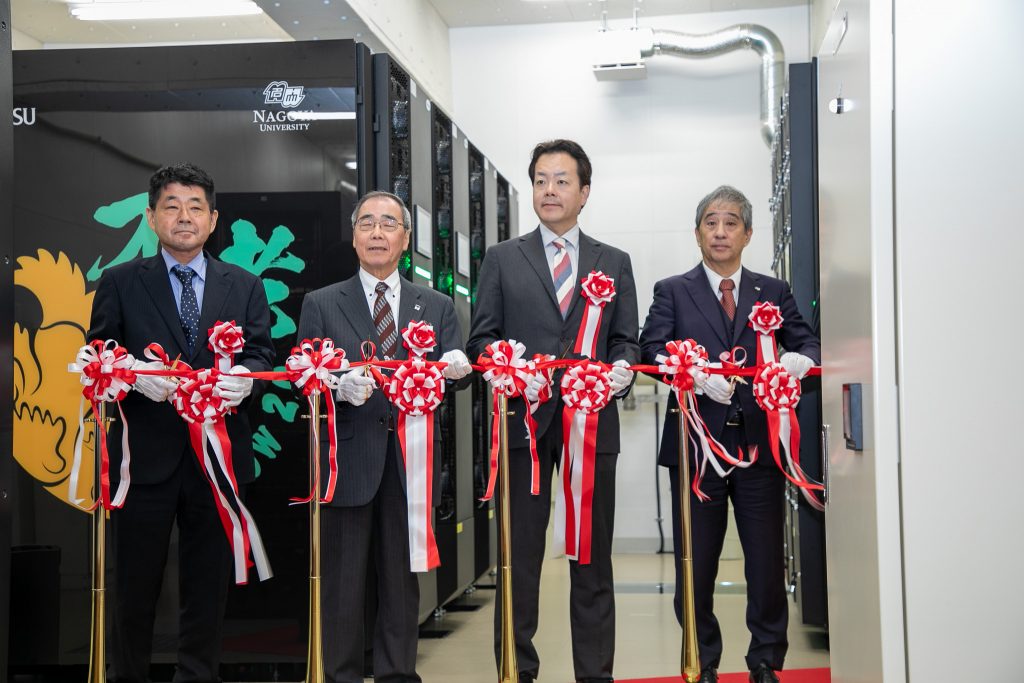
On Monday, November 2, Nagoya University inaugurated its new high-performance computing and artificial intelligence supercomputer named Flow 2.0. A successor to the previous “Flow” supercomputer, it is designed for large-scale simulation and AI workloads across a wide range of research fields.
The supercomputer, which is the most powerful system in the Tokai region of Japan, is available not only to members of Nagoya University but also to researchers at other universities, research institutes, and companies.
Flow 2.0’s ribbon-cutting ceremony was presided by Tokai Higher Education and Research System (THERS) Chancellor Seiichi Matsuo, Nagoya University President Naoshi Sugiyama, Director of the Nagoya University Information Technology Center Kensaku Mori, and Director of the MEXT Office for Computational Science and Technology Kiyoshi Kurihara.
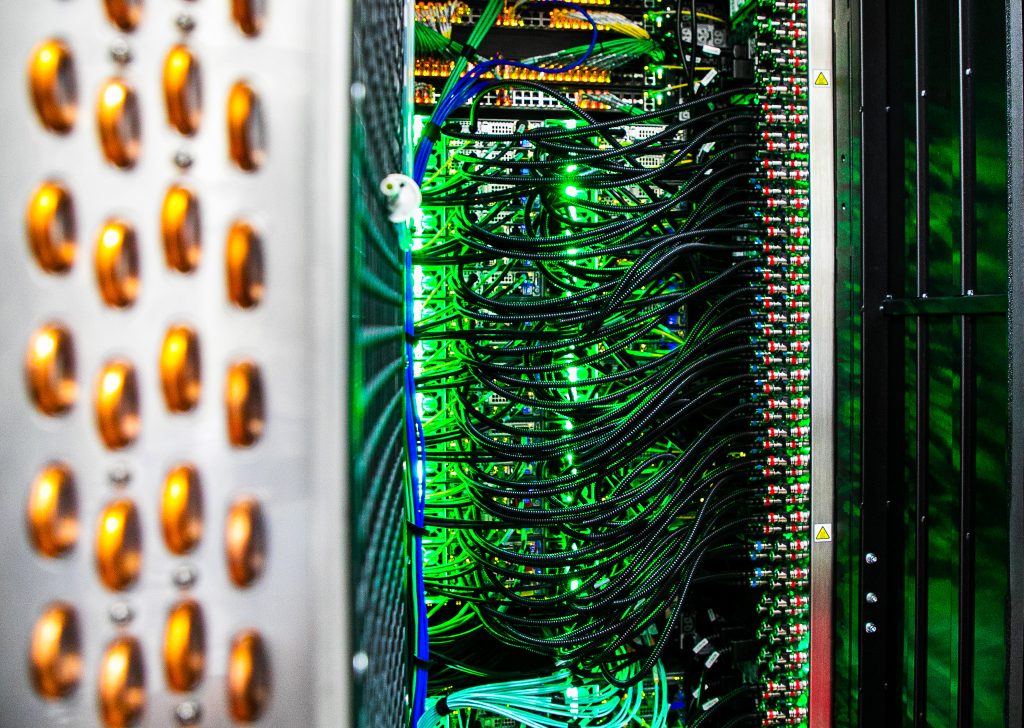
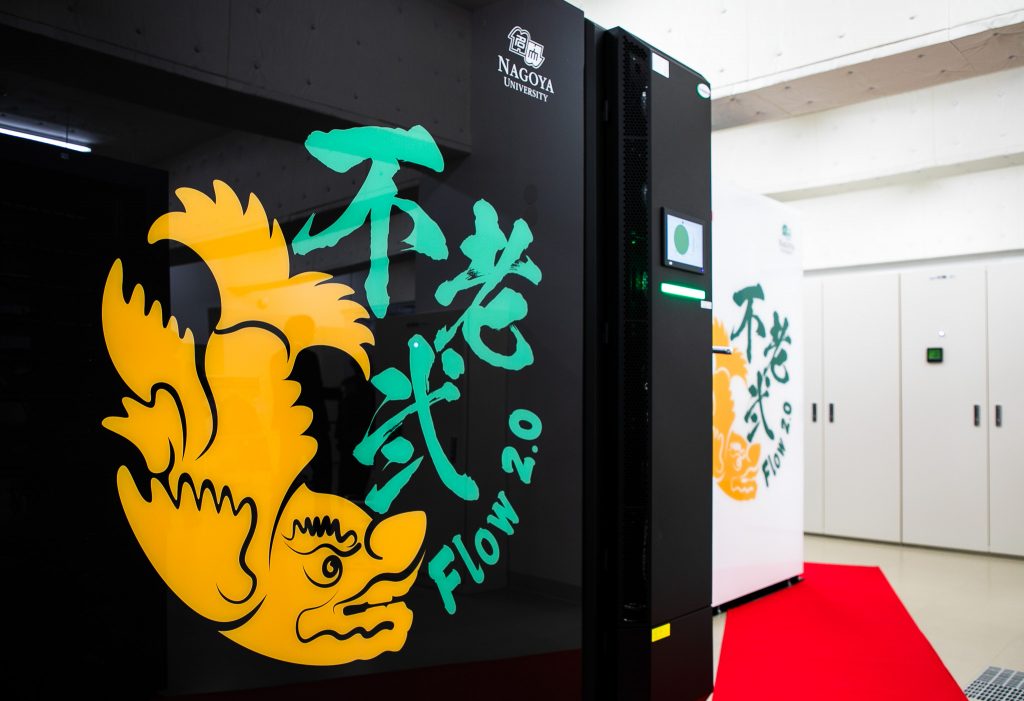
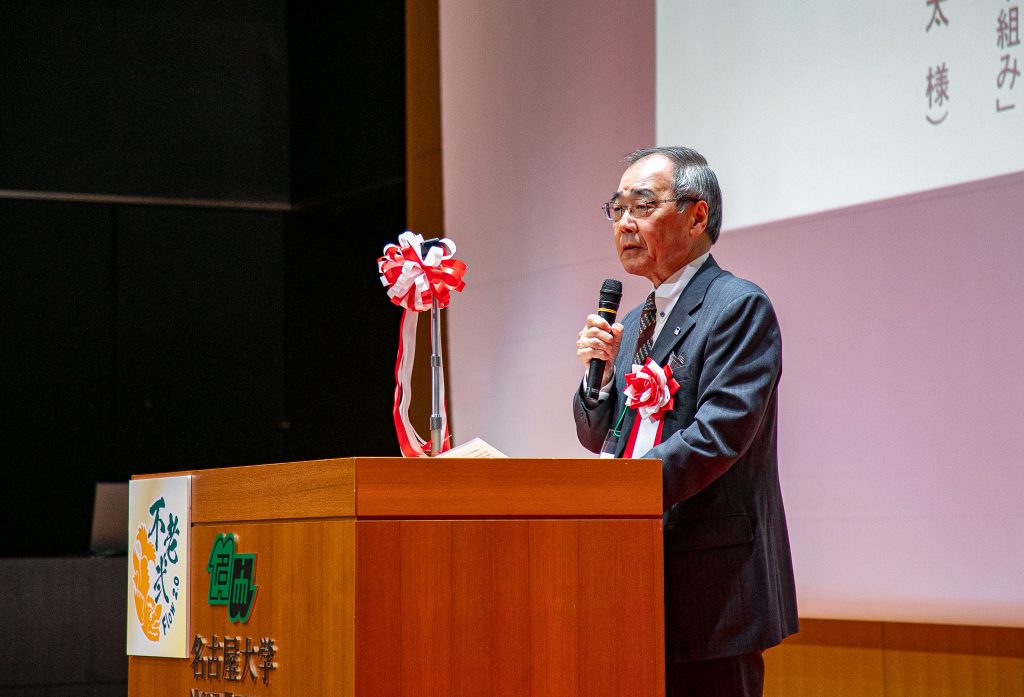
At an inauguration event held at Nagoya University’s Engineering and Science building auditorium in the Higashiyama campus, President Naoshi Sugiyama said supercomputers are akin to telescopes for theoretical research, expanding horizons for new discoveries. He also commended Flow 2.0 as a model case for energy efficient computing, given that its cooling system utilizes water from a naturally flowing underground spring beneath the National Innovation Complex building.
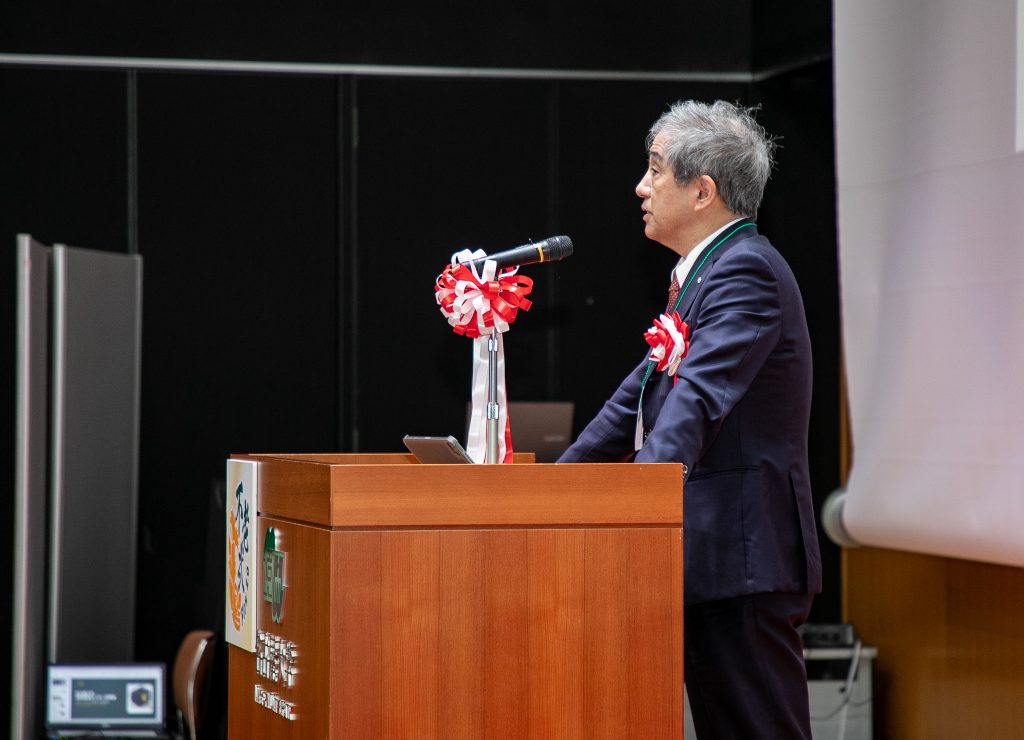
In a series of short lectures, Professor Takahiro Katagiri from the Information Technology Center, and Koya Nakajima, director of the AI Research Laboratory at Fujitsu Research introduced the capabilities of Flow 2.0 and talked about the breadth of research applications that the supercomputer will be instrumental for in the coming years. These include research on glycans, computational chemistry, AI, medical imaging, plasma physics, protein folding, and semiconductor materials to name a few.
Click through more pictures of the event below:
Researchers
-
MATSUO SeiichiTokai National Higher Education and Research System
-
 SUGIYAMA NaoshiTokai National Higher Education and Research System
-
 MORI KensakuGraduate School of Informatics, Department of Intelligent Systems, 2
-
KATAGIRI TakahiroInformation Technology Center
-
 ODA MasahiroInformation Technology Center