Protein known for circulating in the blood to fight infection, plays a very different role when produced by cells inside tumors. Scientists link higher levels in tumor tissue to better treatment outcomes and survival in patients.
An ancient molecule that existed long before the blood circulation system evolved, has been found to support cancer immunotherapy. Researchers at Nagoya University in Japan found that complement C3 protein acts inside tumors to prevent the accumulation of immunosuppressive cells, but only when produced inside the tumor. C3 circulating in the blood did not affect treatment outcomes. Published in Nature Communications, the findings suggest that artificially recreating this effect can help patients with tumors that do not naturally produce enough of this protein.
C3 protein is extremely old in evolutionary terms and present in simple organisms such as sponges and jellyfish. It is produced mainly in the liver and plays a vital role in the body’s immune system, travelling through the blood to protect against infections. However, its role when produced locally in tissues and organs is largely unknown.
“Cancer tumors are surrounded by normal cells called fibroblasts. Until now, the role of complement C3 produced by these cancer-associated fibroblasts within tumor tissue was not known” said lead author Yuki Miyai, assistant professor at the Graduate School of Medicine, Nagoya University.
The researchers discovered that C3 produced in tumor tissue prevents immunosuppressive myeloid cells from infiltrating the tumor microenvironment. The body’s immune defenses then have a better chance of fighting cancer. The results identify C3 as a new factor that regulates the efficacy of cancer immunotherapy — cancer treatment that helps the immune system recognize and attack cancer cells.
To test whether C3 in the blood was also responsible for immunotherapy effectiveness, the research team used mice to separate the roles of C3 according to its sources. When C3 produced by the liver was decreased by 90%, a drug that helps the immune system attack tumors (anti-PD-1 antibody) worked just as well as it did in mice with normal C3 levels.
However, when C3 production by fibroblasts within the tumor was stopped, the same drug became less effective, even though circulating C3 in the blood changed very little (a 9% decrease).
“What determined the efficacy of the immunotherapy treatment was not the C3 in the blood, but the local C3 produced at the tumor site. When this C3 breaks down, it forms a fragment called iC3b that stops harmful myeloid cells from entering the tumor. As a result, immunotherapy is more likely to work,” Miyai explained.
To test if recreating the effect of C3 could help in cancers that do not respond to immunotherapy, the researchers tested a drug that mimics the blocking effect of C3 on myeloid cells. This allowed immunotherapy to work in tumors that had previously resisted treatment and significantly extended survival in mice. The results may help doctors predict which patients immunotherapy can help and offer new options for cancers that do not initially respond to it.
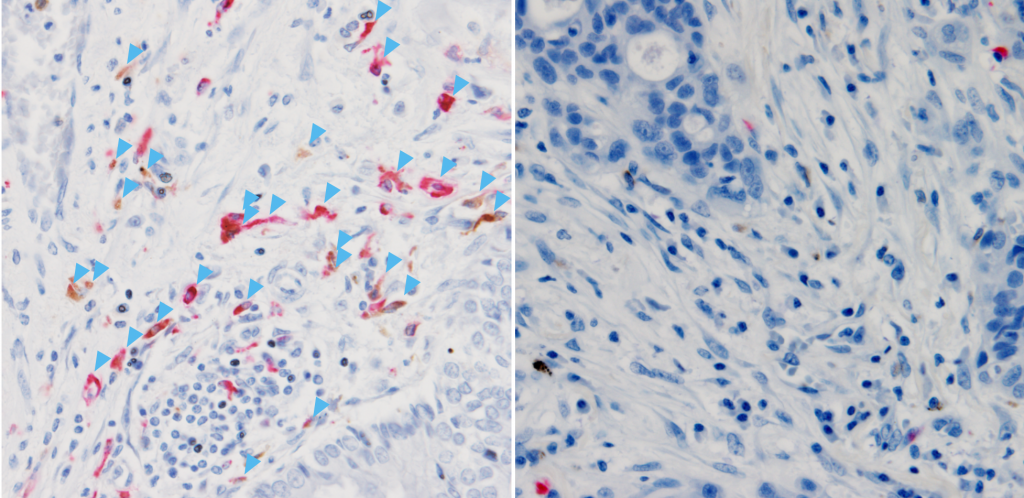
Tumor samples from lung cancer patients were also analyzed. Patients with higher C3 levels in the tissue surrounding cancer cells had better treatment outcomes and survival rates. About half responded, compared to none of the patients with lower C3 levels. Again, C3 levels in the blood made no difference.
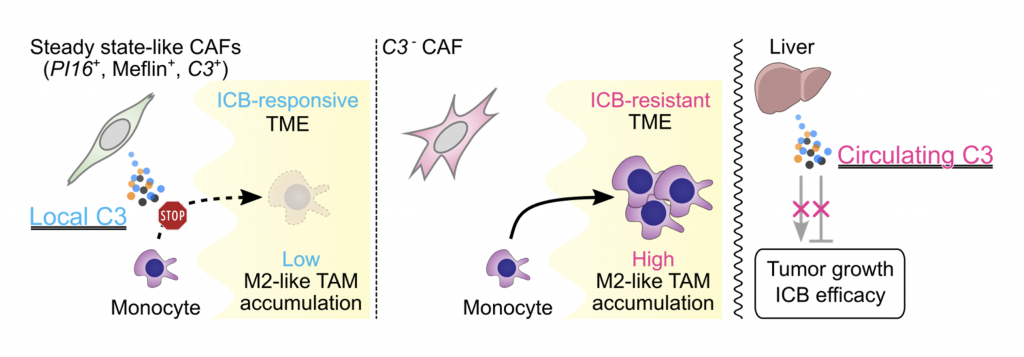
Credit: Miyai et al., Nature Communications, 2026
Next, the research team will conduct experiments to boost local C3 levels and identify the best timing for treatment. The authors believe that understanding how this protein works could shed light on other biological processes, such as how the body heals wounds and manages inflammation.
Paper information:
Yuki Miyai, Yukihiro Shiraki, Ryota Ando, Daisuke Sugiyama, Yoshitaka Sato, Katsuhiro Kato, Naoya Asai, Fuyang Cao, Nobuyoshi Nagao, Kana Tanabe, Masahiro Nakatochi, Tetsunari Hase, Toyofumi Fengshi Chen-Yoshikawa, Tomoko Kobayashi, Shintaro Iwama, Nobutoshi Esaki, Shinji Mii, Hiroshi Arima, Hiroshi Kimura, Masahide Takahashi, Yuichi Ando, and Atsushi Enomoto, 2026. Local, but not circulating, complement C3 shapes immune checkpoint blockade efficacy by controlling myeloid cell infiltration, Nature Communications. DOI: https://doi.org/10.1038/s41467-026-75542-3
Funding information:
This study was supported by funds from the Ministry of Education, Culture, Sports, Science, and Technology of Japan (23K14591, 25K18851, 22H03350, 22H04923, 20H03528, 22H02848, 22K18390), JSMO/KFCR Young Investigator Research Grant, Aichi Cancer Research Foundation, Japan Agency for Medical Research and Development (JP24gm1210009, JP24ama221333), Naito Foundation, Princess Takamatsu Cancer Research Fund, DAIKO Foundation, and Toyoaki Foundation.
Expert contact:
Yuki Miyai
Graduate School of Medicine
Nagoya University
E-mail: miyai.yuki.i3@f.mail.nagoya-u.ac.jp
Media contact:
Merle Naidoo
International Communications Office
Nagoya University
Email: icomm_research@t.mail.nagoya-u.ac.jp
Top image:
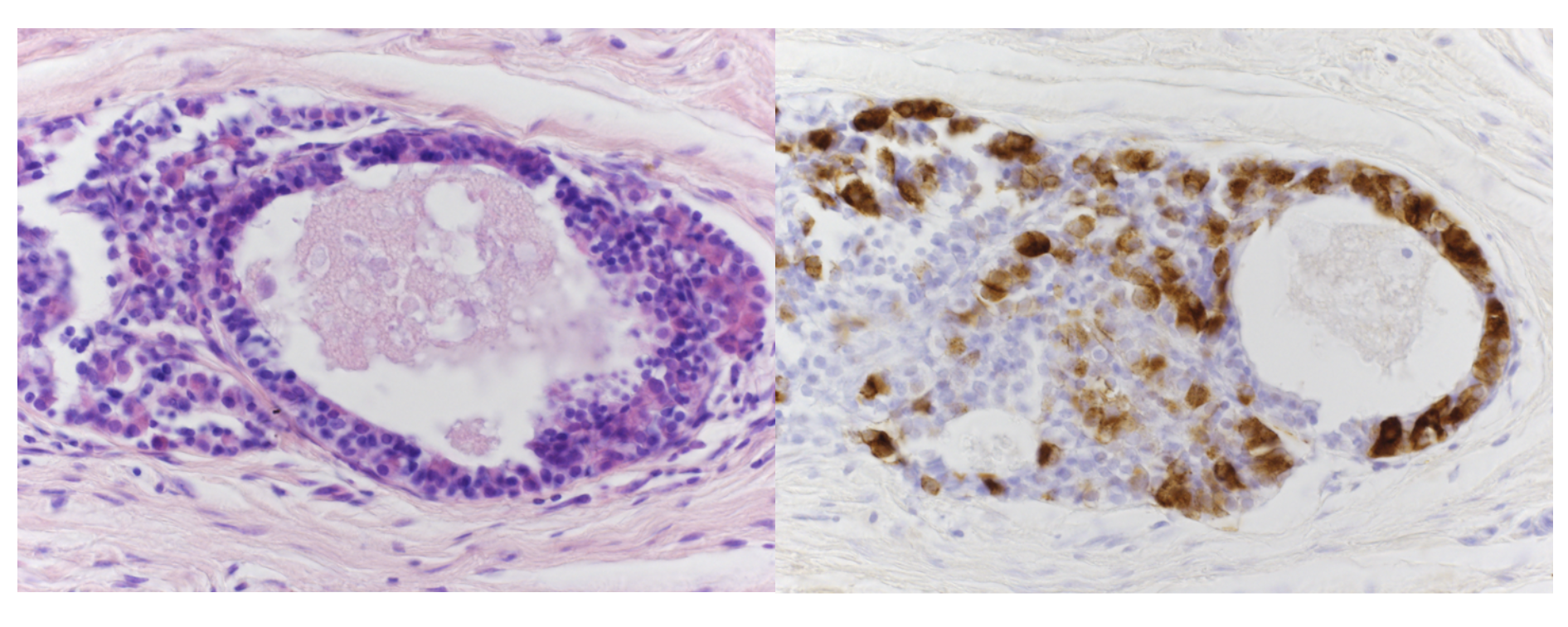
Tumors with fibroblasts that produce more C3 (right) contain fewer immune-suppressing macrophages (blue arrows) than tumors that produce less C3 (left). Higher C3 was linked to better outcomes with cancer immunotherapy. Credit: Miyai et al., Nature Communications 2026
Researchers
-
MIYAI YukiNagoya University Hospital, Clinical Oncology and Chemotherapy
-
SHIRAKI YukihiroGraduate School of Medicine, Center for Neurological Diseases and Cance, Division
-
ESAKI NobutoshiGraduate School of Medicine, Program in Integrated Medicine, Pathology
-
 ENOMOTO AtsushiGraduate School of Medicine, Center for Neurological Diseases and Cance, Division
 -
 ANDO YuichiNagoya University Hospital, Clinical Oncology and Chemotherapy
 -
SATO YoshitakaGraduate School of Medicine, Program in Integrated Medicine, Microbiology and Immunology
-
KIMURA HiroshiGraduate School of Medicine, Program in Integrated Medicine, Microbiology and Immunology
-
KATO KatsuhiroNagoya University Hospital, Cardiology
-
 NAKATOCHI MasahiroGraduate School of Medicine
 -
HASE TetsunariGraduate School of Medicine
-
KOBAYASHI TomokoNagoya University Hospital, Endocrinology and Diabetes
-
IWAMA ShintaroNagoya University Hospital, Endocrinology and Diabetes
-
ARIMA HiroshiGraduate School of Medicine, Program in Integrated Medicine, Internal Medicine
Related organizations
Related tags
- Cancer
- Cancer-associated fibroblast
- Cancerous tumors
- Immunity
- Immunotherapy
- Medicine, Dentistry, and Pharmacy
- Tumor microenvironment