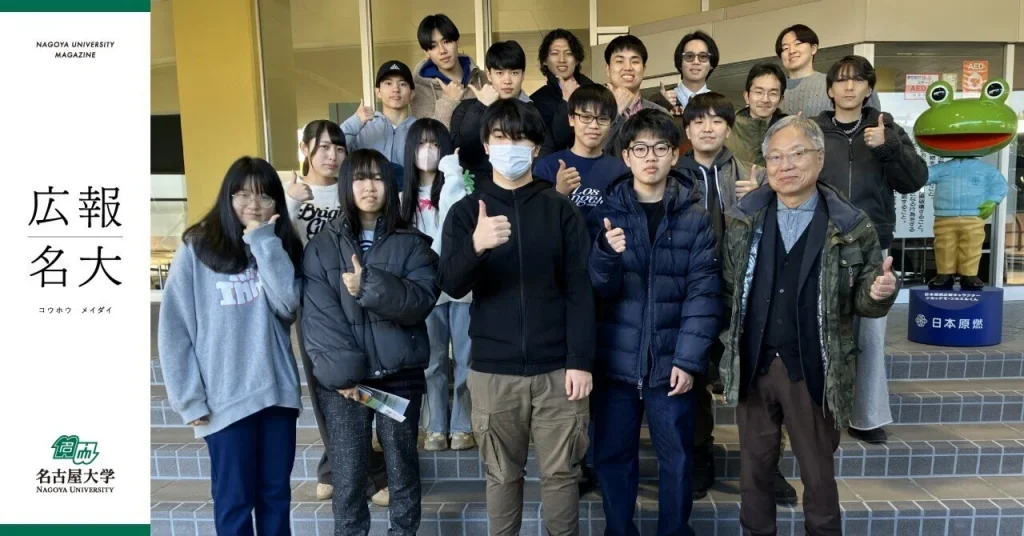
From November 2025 through January 2026, the Meidai Inter Club — a group of science graduate students at Nagoya University — ran a collaborative learning project with students from nearby Ichimura High School. The aim of the project was to encourage high school students to engage with a broad range of perspectives when learning about real-world issues, while also providing them with an opportunity to learn about the world of graduate study. The project topic was nuclear power and radioactive waste. Participants visited the nuclear fuel cycle facilities in Rokkasho (Aomori Prefecture) in December and held a presentation session at Ichimura High School in January.
The idea for the project emerged when Takeshi Ohtsu (a doctoral student in the Graduate School of Engineering) helped out at an advanced science workshop for junior high and high school students taught by Hirotaka Hayashi, a visiting researcher at Nagoya University’s Fundamental Particle Physics Laboratory. At the workshop, Takeshi spoke with Koichi Otsu — a teacher at Ichimura High School — about a cloud chamber used to observe radiation. Before long, plans for the collaborative learning project were afoot.
The project was implemented as part of Ichimura High School’s inquiry-based learning program. The high school students were studying issues related to waste, and radioactive waste was one of the key topics on the curriculum. Koichi Otsu felt encouraged by the outcomes of the collaborative learning project: “It was a stimulating experience for my pupils to study alongside graduate students, and I have noticed a marked improvement in their motivation and level of understanding.”
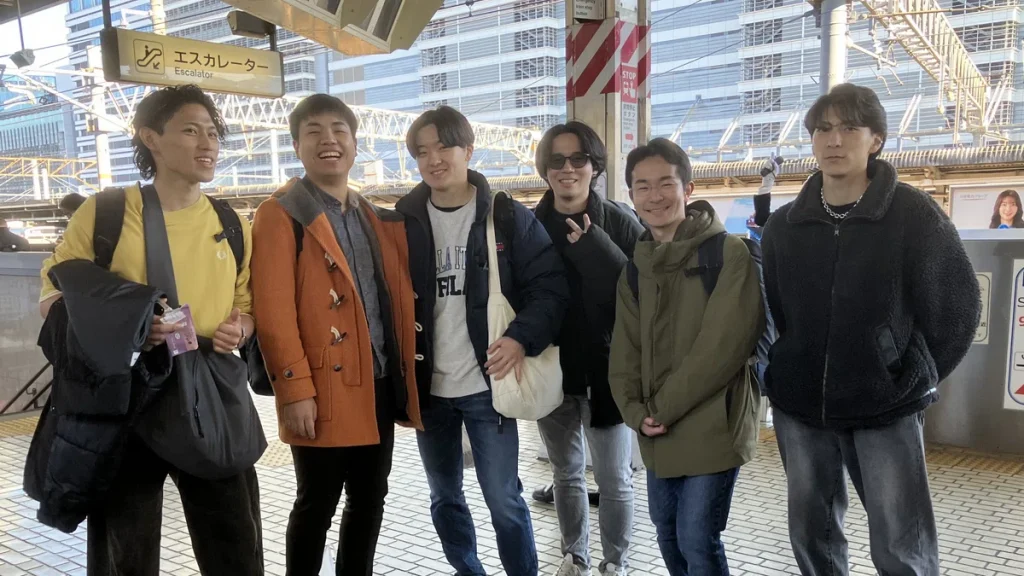
The six members of the Meidai Inter Club are scholars on the Graduate Program of Transformative Chem-Bio Research (GTR), one of Nagoya University’s degrees under the WISE Program. The members all specialize in chemistry or life sciences, their research topics ranging from the study of molecular-sized substances and microorganisms to the development of mRNA pharmaceuticals.
One of the members — Iori Kobayashi (a master’s student in the Graduate School of Engineering) — says he decided to take part in the project to deepen his understanding about radiation as it is pertinent to his research. But more importantly, he says, it was an opportunity to work on something with his friends.
WISE Program: A program introduced by the Ministry of Education, Culture, Sports, Science and Technology in AY2018 to foster and support outstanding doctoral human resources. Nagoya University runs four programs, including GTR.
https://dec.nagoya-u.ac.jp/wise_programGTR: Graduate Program of Transformative Chem-Bio Research
https://www.itbm.nagoya-u.ac.jp/gtr/en/
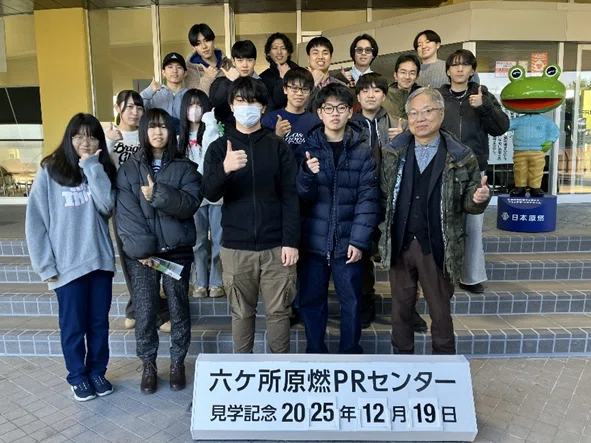
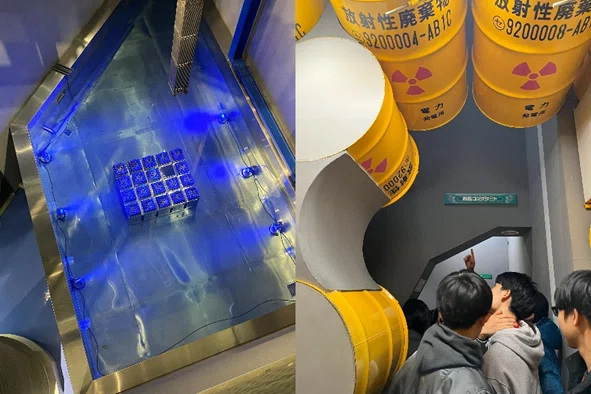
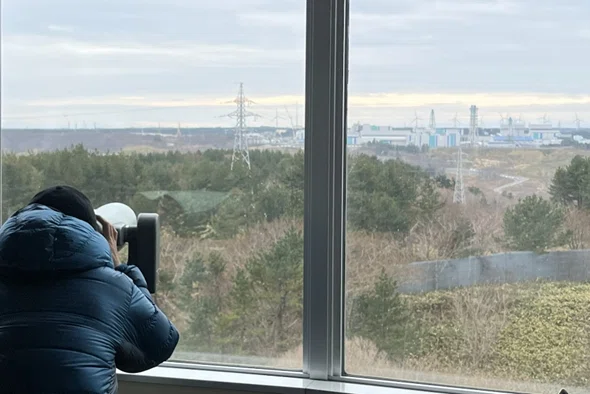
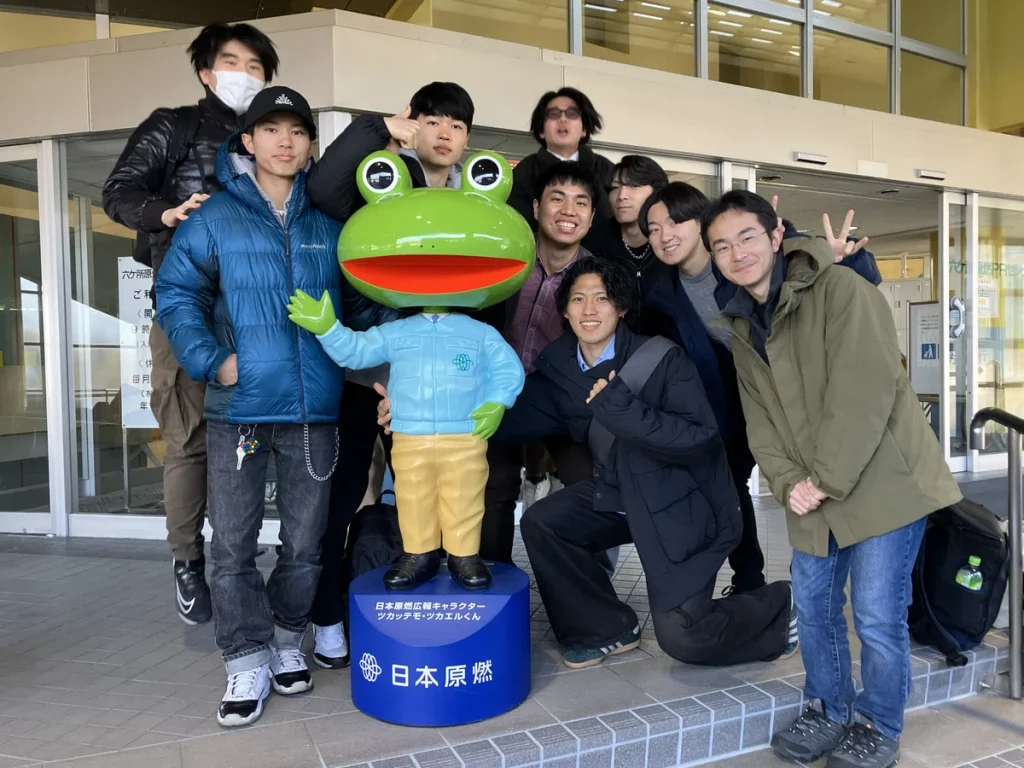
Educational activities relating to radiation and nuclear energy were at the core of the collaborative learning project. The project was selected for the Nuclear Waste Management Organization of Japan (NUMO)’s support program in the 2025 fiscal year and it was with this funding that participants were able to visit the Rokkasho Village nuclear fuel cycle facility in Rokkasho Village in December last year.
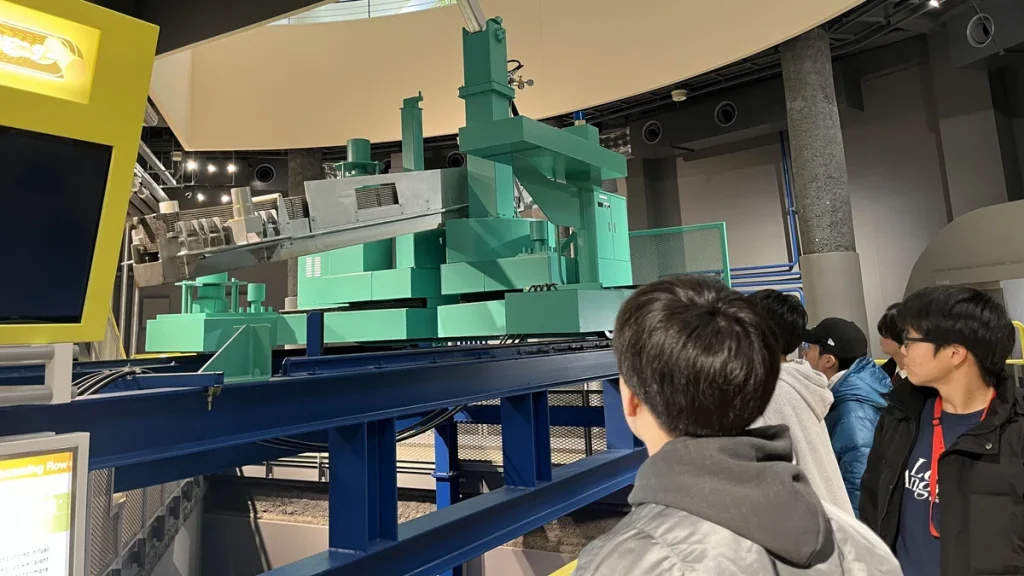
At the Rokkasho Visitors Center, the group received explanations about various aspects of nuclear energy: enriched uranium (the raw material for nuclear power generation), the temporary storage of radioactive waste produced during power generation, the burial of low-level radioactive waste, the reprocessing system for spent nuclear fuel (set to begin operation in 2026), and the future of geological disposal. The group were given plenty to think about regarding the current status and challenges of radioactive waste treatment.
Takaharu Morino (a doctoral student in the Graduate School of Engineering) was stunned by the scale of it all. He says, “The entire region seemed like a nuclear facility, with more people living and working in the area than I would have ever imagined. More than the physical size, I was struck by the human and social scale: it was an eye-opening experience to see what a national-level project looks like on the ground.”
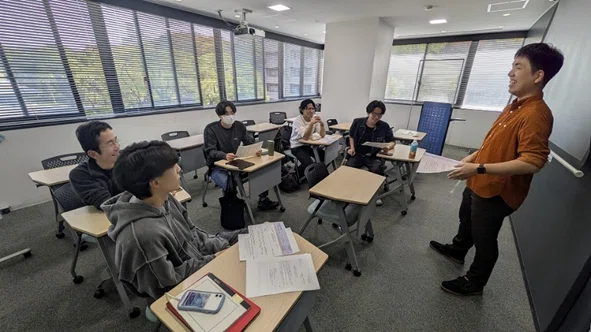
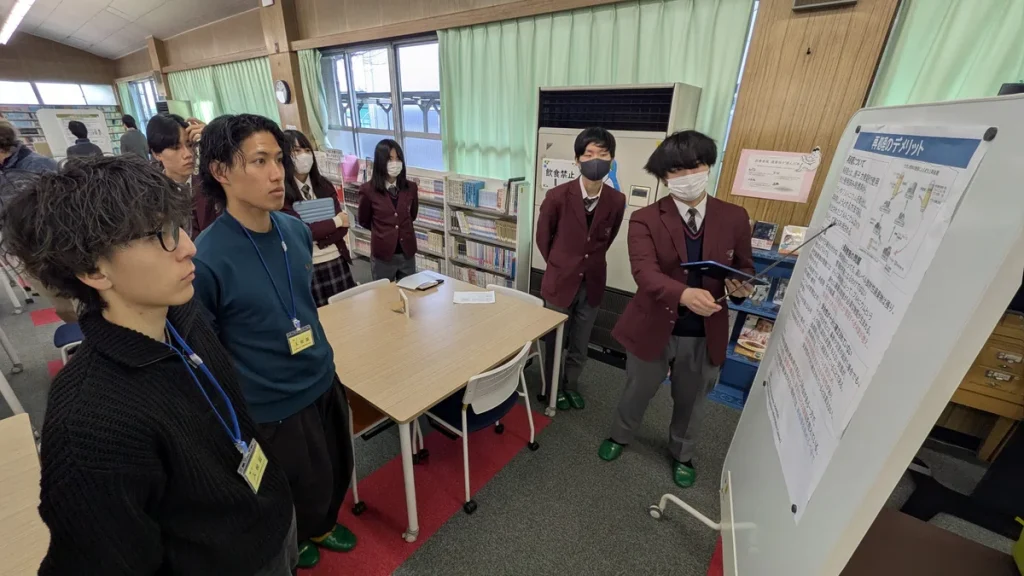
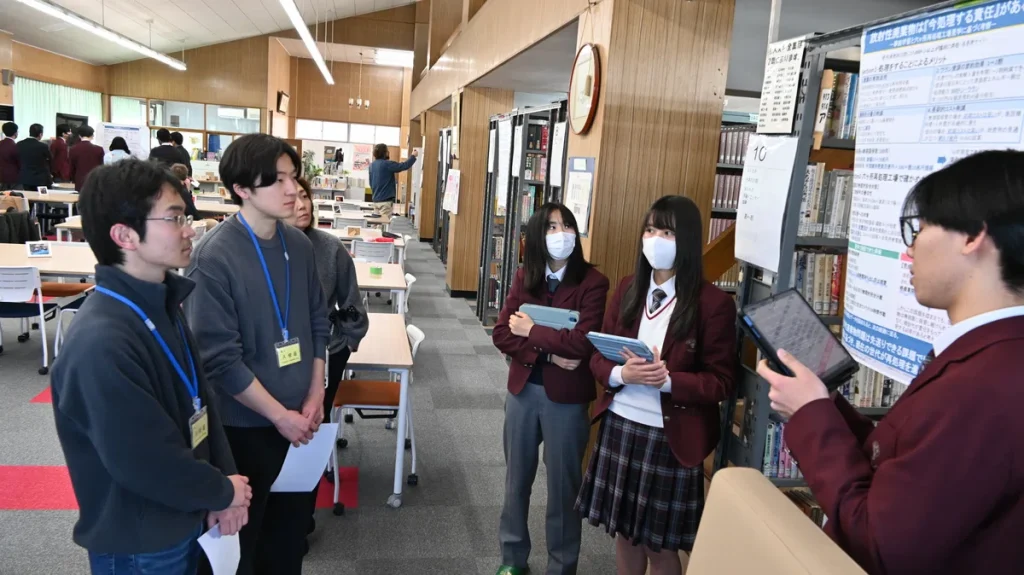
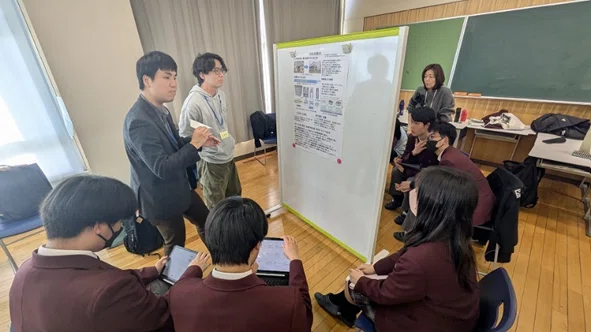
On January 16, a month after the visit, the members of Meidai Inter Club visited Ichimura High School and the high school students delivered poster presentations about the reprocessing of radioactive waste, collating and commenting on what they had learned from the project and making an argument for or against nuclear reprocessing. The Meidai Inter Club served as judges and provided feedback to the students.
Of the five student groups, four groups were in favor of nuclear reprocessing and one group were against it. One of the groups in favor of reprocessing highlighted that the safety of the process had been confirmed via inspections. In response, a student from Nagoya University encouraged the group to consider how they would explain their points in order to better convince the opposition. Another group discussed the importance of terrorism prevention measures in ensuring the safety of the process, and the graduate students concurred that discussions at the national level would be essential.
Kojin Kitadani (a master’s student in the Graduate School of Pharmaceutical Sciences) took interest in the group who opposed nuclear reprocessing, stating the value of dissenting opinions. In his feedback, Kitadani told the group that they had singled out some important issues, but that they needed to clarify their key points.
Afterwards, Shori Inoue (a doctoral student in the Graduate School of Engineering) gave a mini-lecture about day-to-day life as a graduate student, talking about traveling to attend conferences and having fun with friends. Inoue explained that when he was a high school student, he did not know anything about graduate school, and so he was keen to share his own experiences with the students at Ichimura High School.
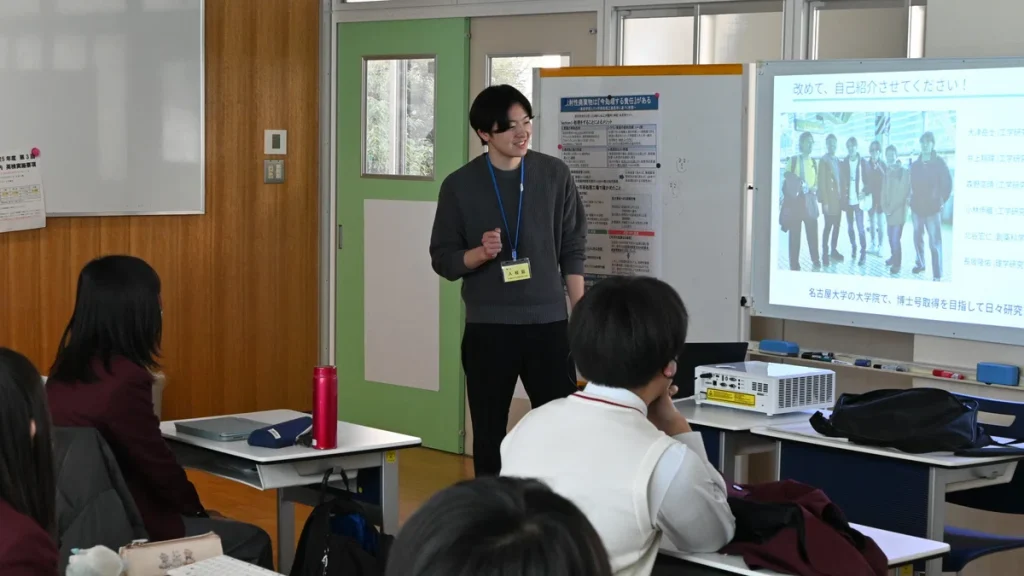
Reflecting on the school visit, Ryusuke Nagasaka (a master’s student in the Graduate School of Science) says he found the objectiveness of the students’ perspectives to be refreshing. “Since entering graduate school, research has been the center of my life; before I knew it, I was looking at everything through the lens of my own research, so in that regard, participating in the project was an eye-opening experience for me,” he says.
Ohtsu explains that, through the collaborative learning project, he was eager to connect with a broad range of people outside his lab and share information about his work and about life as a graduate student. He says that the collaborative learning project was a great success, and that he is keen to build on the experience going forward.
Originally published in Japanese on February 2, 2026.