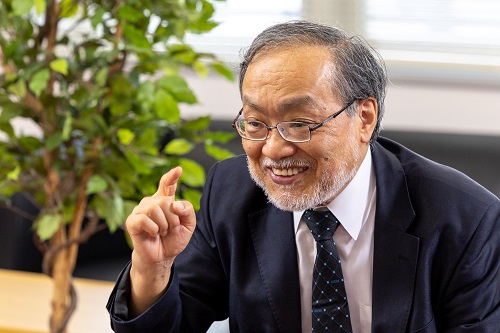
“I want to develop new drugs to help fight disease.” This has been Shun Umemoto’s dream ever since a member of his family fell ill. Umemoto, a recent graduate of the doctoral program in the Graduate School of Engineering, researches proteins for drug development. This April, he embarked on his long-held dream of becoming a researcher at a major pharmaceutical company. He reflects on a student life full of remarkable achievements, such as receiving Nagoya University’s Outstanding Graduate Student Award and the Akasaki Students’ Incentive Prize.
An abiding interest in drug discovery: A field that makes the impossible possible
Umemoto was in high school when he first thought about becoming a drug discovery researcher. He became interested in medical care after a family member fell ill. He was drawn to drug discovery in particular because it creates new options for conditions that do not yet have effective treatments, whereas doctors can only use treatments that are already available. Umemoto also considered studying pharmaceutical science but decided to enter the School of Engineering to keep his options open. Nagoya University became his top choice after he came for a campus visit; he was attracted by the university’s open atmosphere without any boundaries separating the campus from the city.
Taking on a challenging research topic
After entering the Department of Chemistry and Biotechnology in the School of Engineering, Umemoto learned that you need a doctoral degree to apply for research posts at pharmaceutical companies, and so he made his decision to pursue graduate studies early on. When he reached his final year as an undergraduate, he was still resolute about researching pharmaceuticals, and so he chose to join Professor Hiroshi Murakami’s lab in the Graduate School of Engineering, which has a research focus on antibodies and biopharmaceuticals.
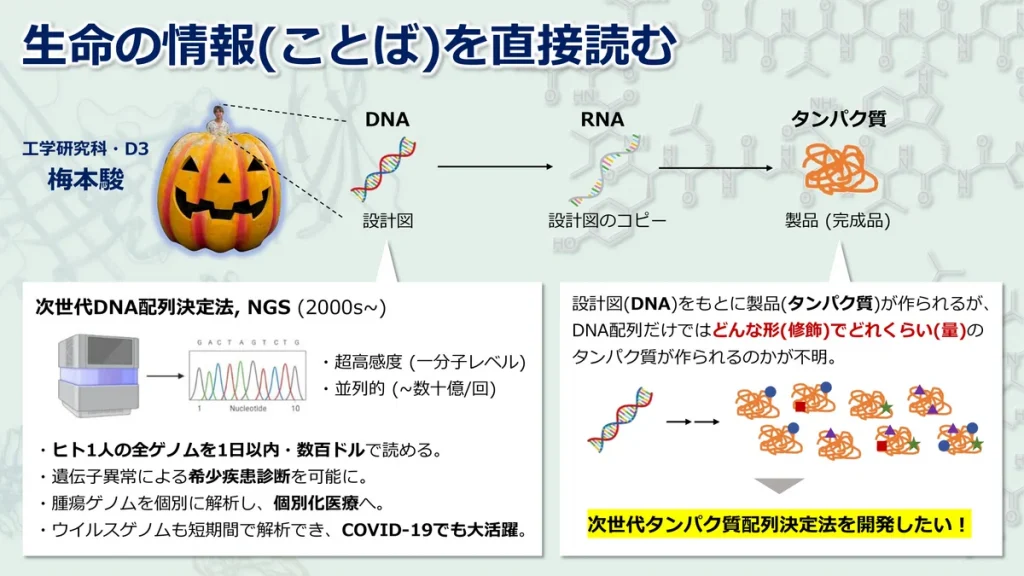
Murakami’s lab specializes in the creation of artificial antibodies, however, the aim of Umemoto’s research was to develop a protein sequencing method at the single-molecule level, a feat that had yet to be achieved. Umemoto explains his rationale for selecting this topic, stating that if he was going to pursue a doctoral degree, he wanted to choose a challenging topic with high-impact results. It was an ambitious topic indeed: if successful, his research would not only contribute to early cancer detection and the development of treatments for rare diseases but would also serve to elucidate biological phenomena.
A doctoral degree is a marathon – you have to go at your own pace
When thinking about the life of a doctoral student, you might imagine days holed up in a lab, every spare moment spent conducting experiments and writing papers, but Umemoto maintained a healthy routine, coming to the lab at 9 a.m. and leaving by 7 p.m. “The five years of graduate school are like a marathon. I was mindful about living a balanced lifestyle so I could keep pushing forward without wearing myself out,” he says.
Reflecting on his nine years at university, Umemoto encourages younger students aiming to become industry researchers to obtain their doctoral degree, explaining that “pursuing an additional three years of graduate research after receiving a master’s degree, rather than doing research at a company, better equips you with foundational research skills such as critical thinking and the ability to read and write academic papers.”
The GTR program and the “NU3MT” award
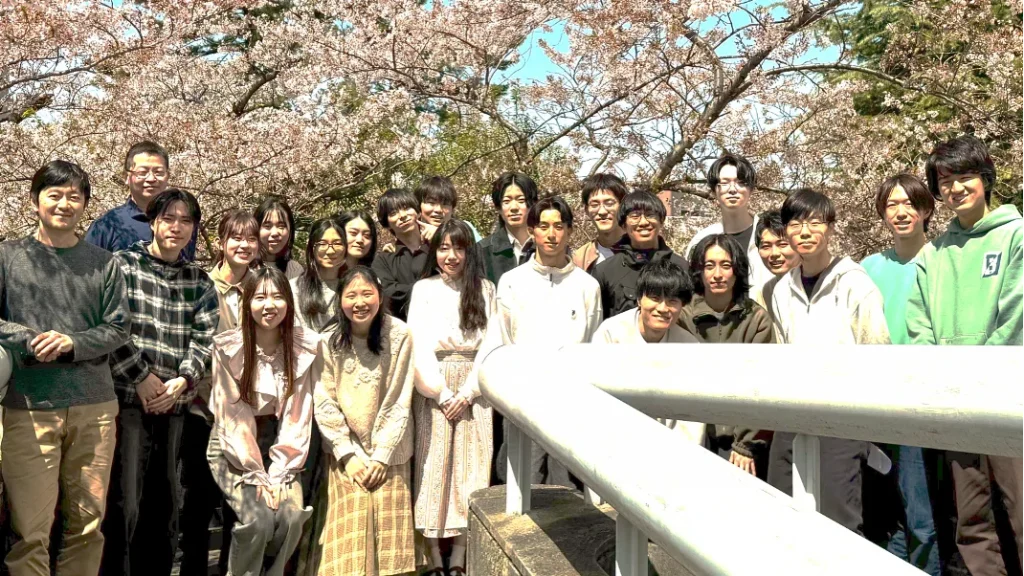
When he entered graduate school, Umemoto was selected for one of the WISE (World-leading Innovative & Smart Education) Programs, the “Graduate Program of Transformative Chem-Bio Research (GTR).” Umemoto says that in addition to the funding, the program activities were highly beneficial. For example, engaging in interdisciplinary research broadened his perspective and meant that he got to know other doctoral students outside of his field.
One of the assignments on the GTR program was to write a research proposal. Umemoto says this was great practice for when he came to write his application for the Japan Society for the Promotion of Science (JSPS) research fellowship. He polished his proposal with the help of his supervisor and was successful in his application for the prestigious DC1 fellowship.
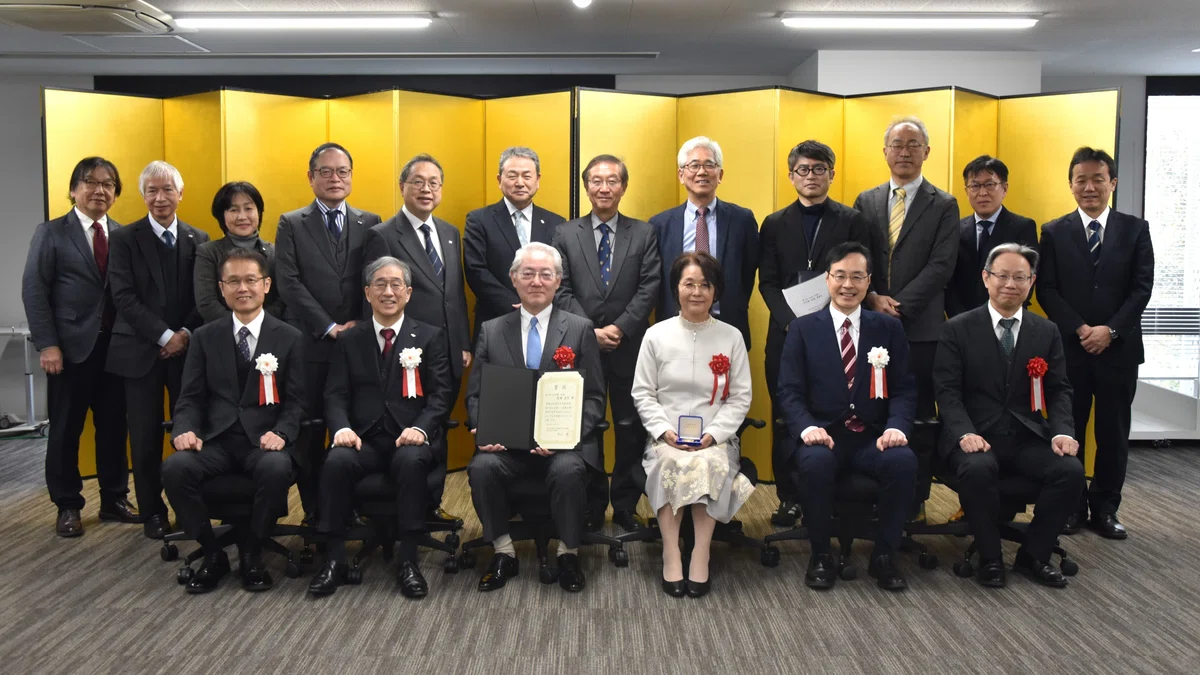
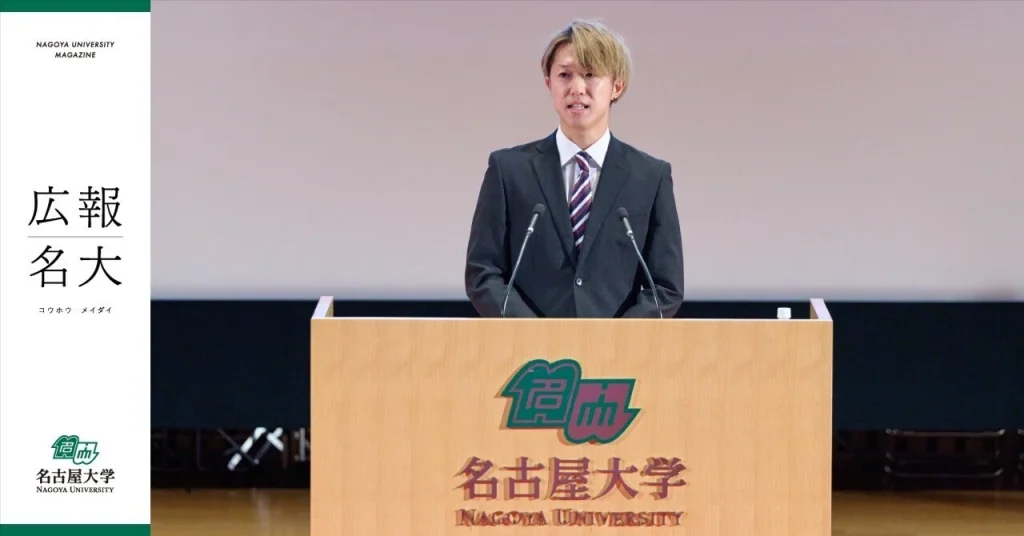
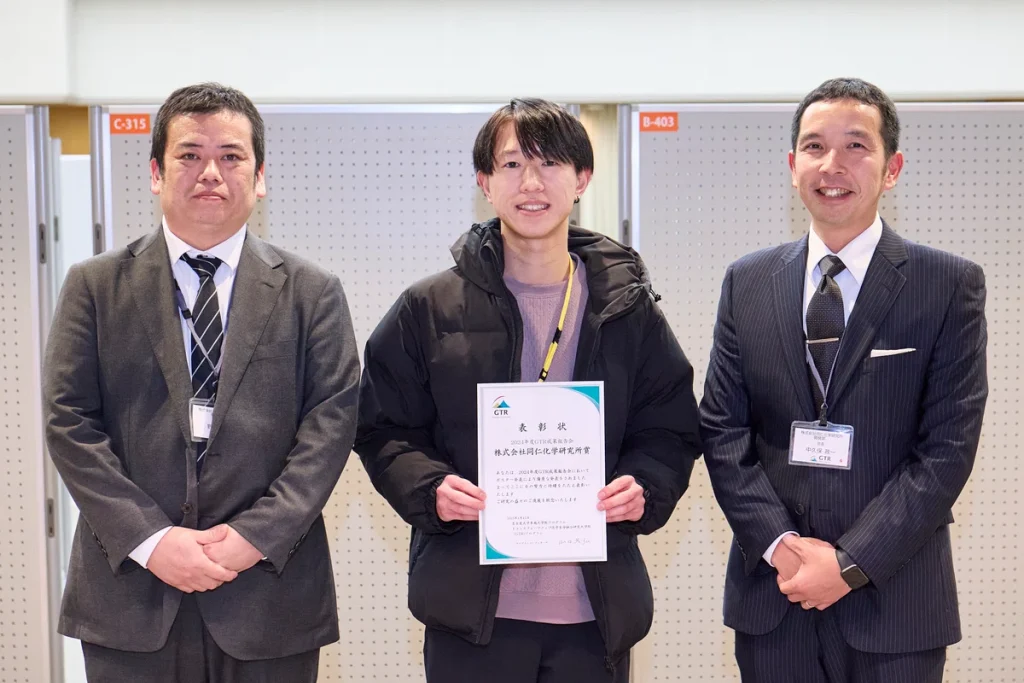
Umemoto also received the Akasaki Students’ Incentive Prize in 2023 and the Outstanding Graduate Student Award in 2025. Recipients of the Outstanding Graduate Student Award partake in a speech competition titled “NU3MT” in which students present on their research. At the competition, Umemoto received the President’s Special Award. He expresses his gratitude for all the generous support he has received, and the GTR program which gave him many opportunities to present on his research.
Becoming a researcher at a pharmaceutical company
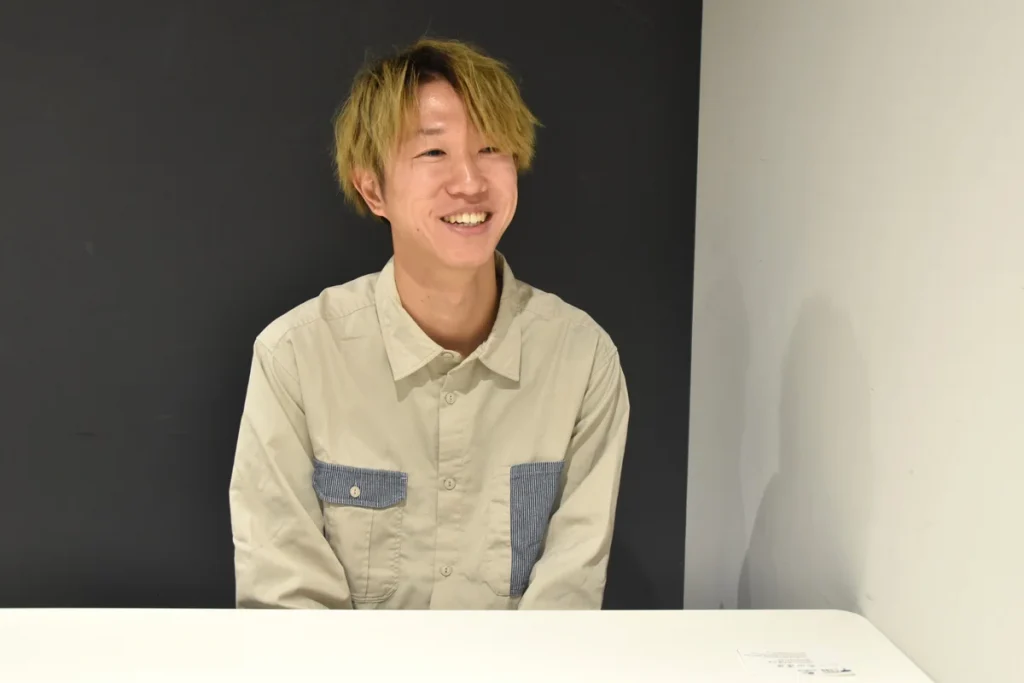
This spring marks the end of Umemoto’s nine years at Nagoya University and the beginning of his dream career as a drug discovery researcher. He started job hunting in the spring of his second year in the doctoral program, spending three to four months focused on finding a job at a major pharmaceutical company. At the interviews, he explained his research and demonstrated his strengths, successfully landing a role at his first choice. He has a clear vision for his future, his biggest aspiration being for the medicine he develops to help real patients. He also hopes to work in a leadership position someday.
Addendum:
Developing presentation and leadership skills in his role as student representative of the university cooperative
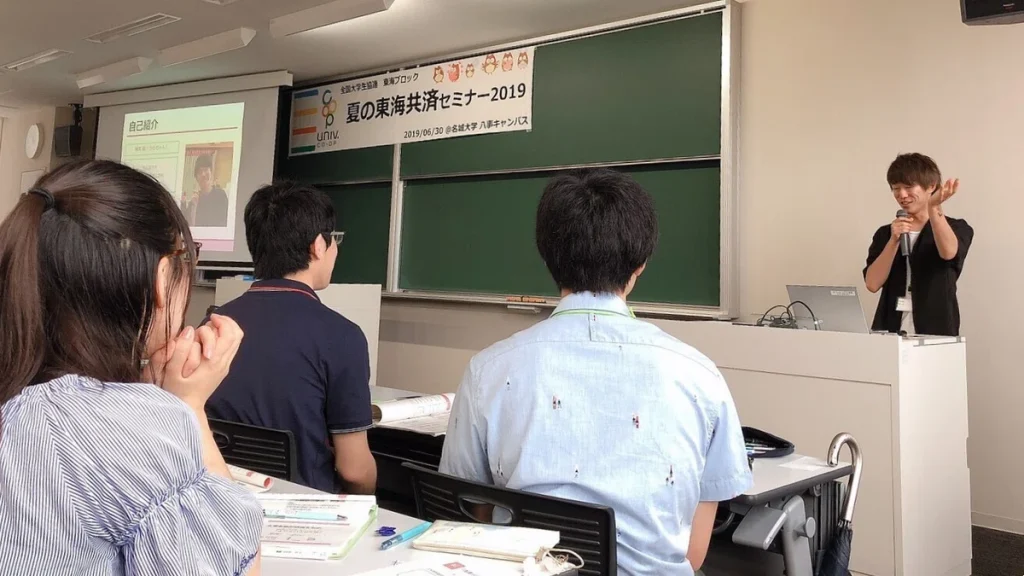
Umemoto was a member of the student committee at the Nagoya University Cooperative during his undergraduate years. He was active in planning events for new students and conducting campus tours on university open days. When there were disagreements between members, Umemoto often acted as a mediator. He says, “I liked communicating with people and was more interested in bringing the whole organization together than specializing in a single activity.” He took on the role of student representative in his third year. After becoming the representative, he had more opportunities to speak in front of people, which helped him get used to giving presentations. From this experience, he came to enjoy presenting on his research, and so his role as student representative has also been beneficial to his career as a researcher.
Originally published in Japanese on January 20, 2026.