
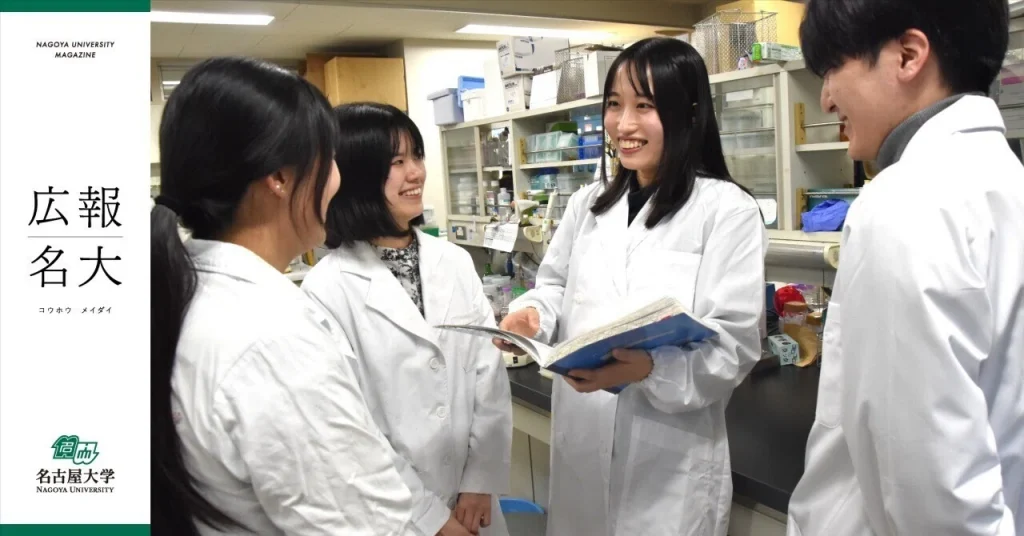
“How can Sawayaka — a restaurant chain in Shizuoka Prefecture that is popular for its hamburg steaks — boost their sales?”
Haruka Sei, a third-year doctoral student in the Graduate School of Bioagricultural Sciences, discovered the appeal of academic inquiry in a class at junior high school. Sei is keen to make new discoveries in the world of food and health: her research involves developing markers for the early detection of diabetic complications. We interviewed Sei about her story, asking her how she first became interested in food, why she chose to enter Nagoya University’s School of Agriculture, and about her decision to become a researcher.
A first taste of the quest for knowledge at junior high
Sei traces her decision to become a researcher back to a class she took at junior high, a class that taught her the fun of the quest for knowledge. Sei’s school offered a rare class — an “Inquiry Class” — in which students each came up with project ideas that they discussed in small groups and then debated as a class.
The students decided to work on a project about how to boost sales in the food service industry. Their case study was Sawayaka, a well-known hamburg steak restaurant chain. Sei recalls the satisfaction she felt when she thought hard about the project, coming up with her own original proposals, and how this taught her the fun of arriving at new discoveries through methodical inquiry.
In the final session of the “Inquiry Class”, the students actually presented their ideas to restaurant employees at Sawayaka. Sei says that thinking back on it, the experience was similar to giving a research presentation at a conference. She says that it taught her the fun of sharing her ideas.
Developing an interest in food’s molecular mechanisms in high school
Growing up with a love of food, Sei has always been fascinated by what we eat and why. In high school, an interest in the relationship between diet and health drew her towards nutrition science. She wanted to understand which foods, eaten when, could support a long and healthy life. However, she wasn’t content to take popular theories at face value and sought to evaluate them for herself using scientific evidence. This ambition led her to enroll in the Department of Applied Biosciences at Nagoya University’s School of Agriculture, where she could pursue fundamental research on food.
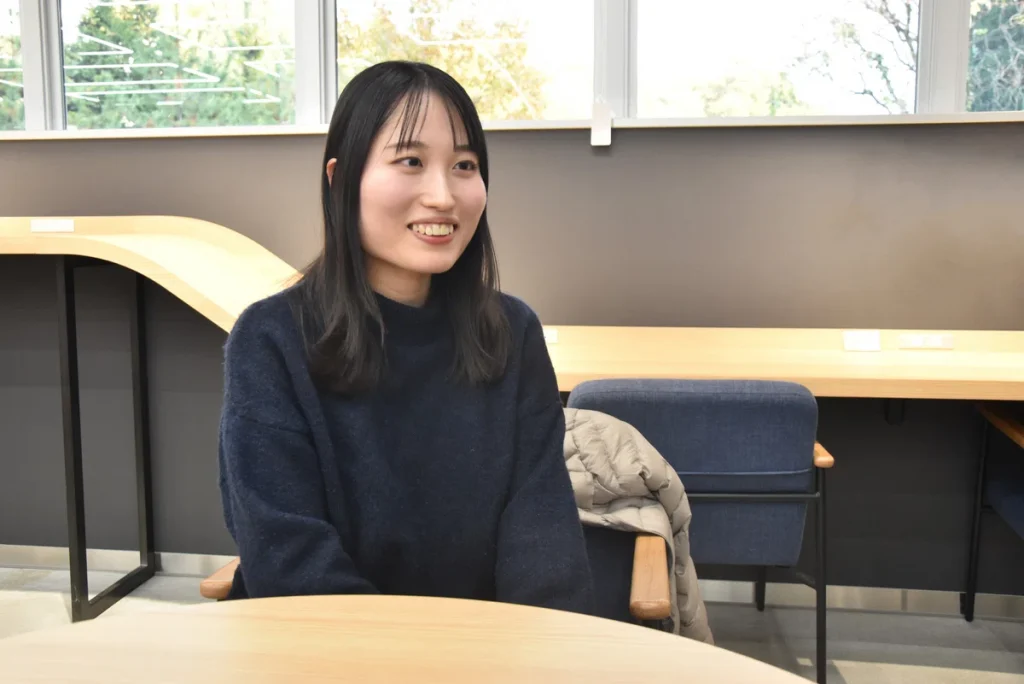
Feelings of excitement and accomplishment are the highlights of conducting research
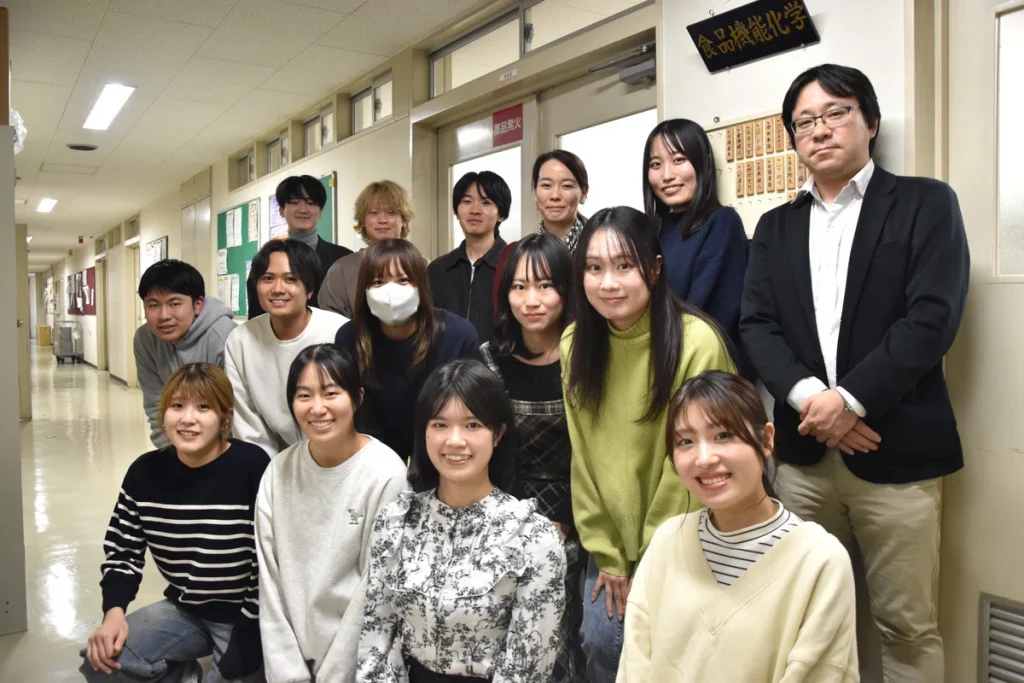
When she was a fourth-year student in the School of Agriculture, Sei elected to join the laboratory of Professor Takahiro Shibata (Graduate School of Bioagricultural Sciences), who conducts research on health and the functionality of foods. Professor Shibata proposed a number of research topics that Sei might pursue, among them, early diagnostic markers for diabetes complications. Sei has family with diabetes, and so she decided to take this project on the spot.
Sei knew when she first entered university that she wanted to be a researcher and had always planned on completing a master’s program, but when she actually entered graduate school, she realized that it was impossible to become a competent researcher in just two years, and so she made the decision to proceed to doctoral studies. Sei says that she struggles when her experiments don’t go to plan, but that research has a certain addictiveness, for example, when you discover something that nobody else knows, or when you are excited because the research is going so well.
Sei’s discovery of a marker that could lead to early diagnosis of diabetic complications
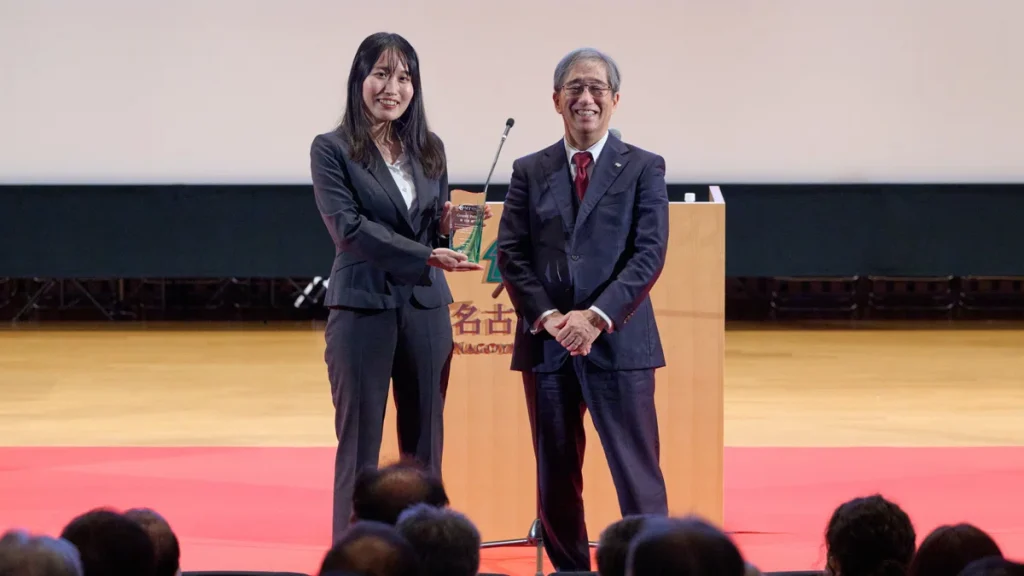
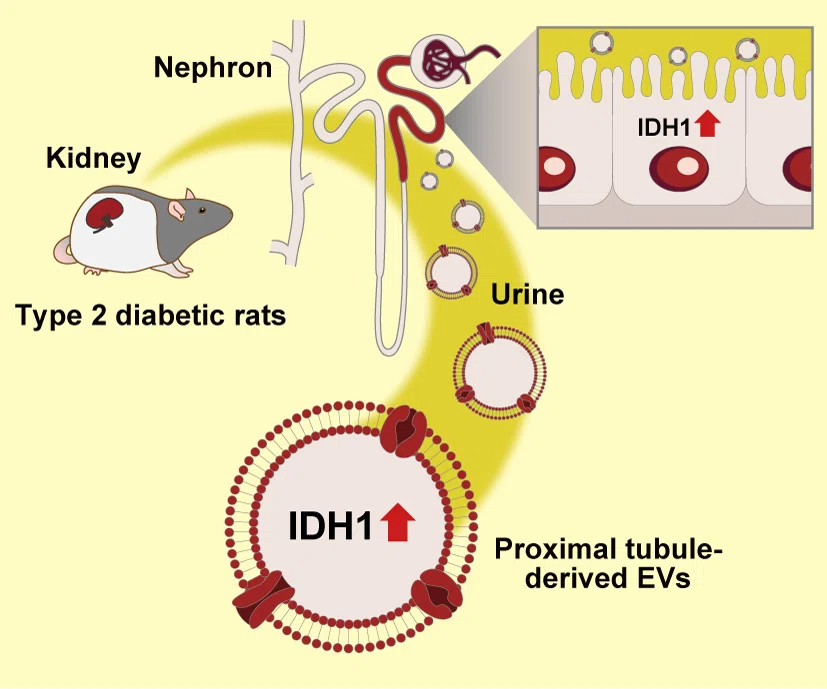
While conducting her research, Sei discovered an increase in the body’s production of a specific protein that occurs shortly before the onset of diabetic nephropathy (a complication of diabetes). Compared with the markers currently in use, the monitoring of this protein is expected to provide higher sensitivity and accuracy. For this achievement, Sei was awarded the Nagoya University Outstanding Graduate Student Award, and she also won the grand prize at the NU3MT speech contest in which awardees of the Outstanding Graduate Student Award describe their research in three minutes or less. Sei continues to make great strides with her research: she is currently attempting to clarify the mechanism of ferroptosis, a type of cell death that plays a major role in the onset and progression of diabetic nephropathy.
Aiming to be a good researcher and a good educator
Regarding her plans for after graduation, Sei says she was torn between taking a research position at a company and staying in academia. When she entered the doctoral program, she had the opportunity to talk with people in industry, and during those conversations she felt a mismatch between corporate research positions and the kind of researcher she wanted to be. She felt renewed passion for her academic interests, explaining her realization that it wasn’t enough just to do any old research; she wanted to pursue projects in which she felt a personal investment.
Sei joined Professor Shibata’s laboratory when she was a fourth-year undergraduate and was a student there for a total of six years. She explains that she feels immense gratitude toward her professors and for the funding she received, providing an environment in which she could conduct her research freely without worrying about finances. Sei wants to become a researcher and educator like her supervisor, Professor Shibata. She says that while of course she wants to be successful in her own research, she also wants to be a teacher who can provide an environment for her students to commit fully to their studies. This spring, she takes her first step on that path.
Editor’s note: Sei was a mandolin guitar player in her undergraduate years
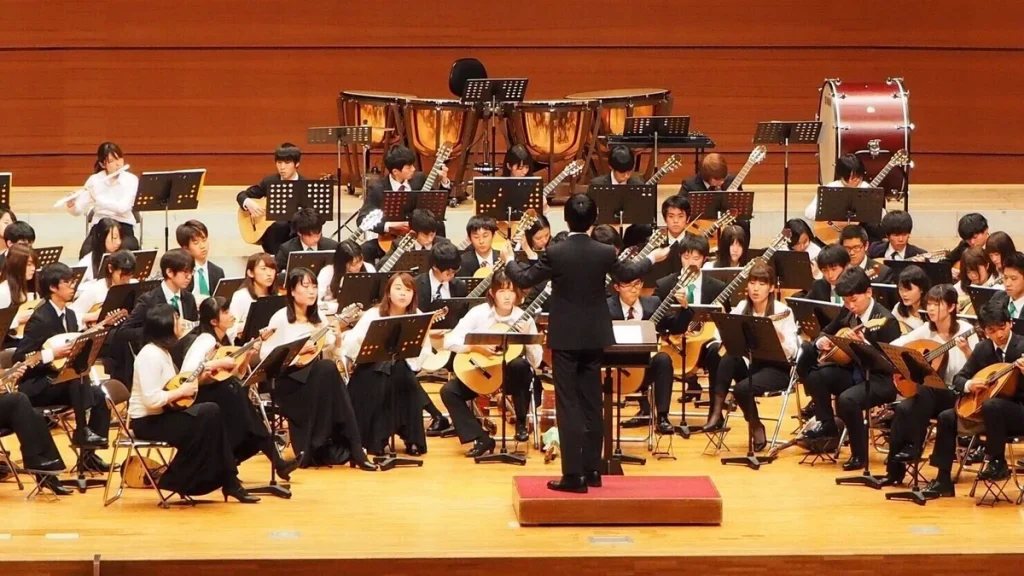
After entering university, Sei became obsessed with the mandolin guitar. Sei had been interested in learning the mandolin guitar since high school, and decided that if she got into Nagoya University she would join its Guitar Mandolin Club, the largest club of its kind in central Japan.The club was the center of her life until she left in her third year. She says she liked the sense of accomplishment she felt when the group performed well together, and the feeling of working with her friends towards a common goal.
Originally published in Japanese on March 13, 2026.
