Study finds that multisensory museum experiences help shift public perception of endangered cultural heritage
What does it take to make people genuinely care about endangered cultural heritage? According to a new study from researchers at Nagoya University and Gifu University in Japan, the answer might begin with something unexpected: the smell of horse manure. Their research, published in the Journal of Museum Education, found that structured multisensory experiences can shift public perception of heritage from something distant and extraordinary to something personally relevant.
Museums have long struggled to translate public recognition of cultural heritage into genuine engagement. Visitors may appreciate that something is historically significant, yet still feel little personal connection to it. Using Japan’s native Kiso horse as a case study, the researchers found that this gap is real and measurable. Survey analysis showed that visitors widely recognized the horse as a valuable cultural resource, but tended to perceive it as part of an “extraordinary” world, separate from their everyday lives.
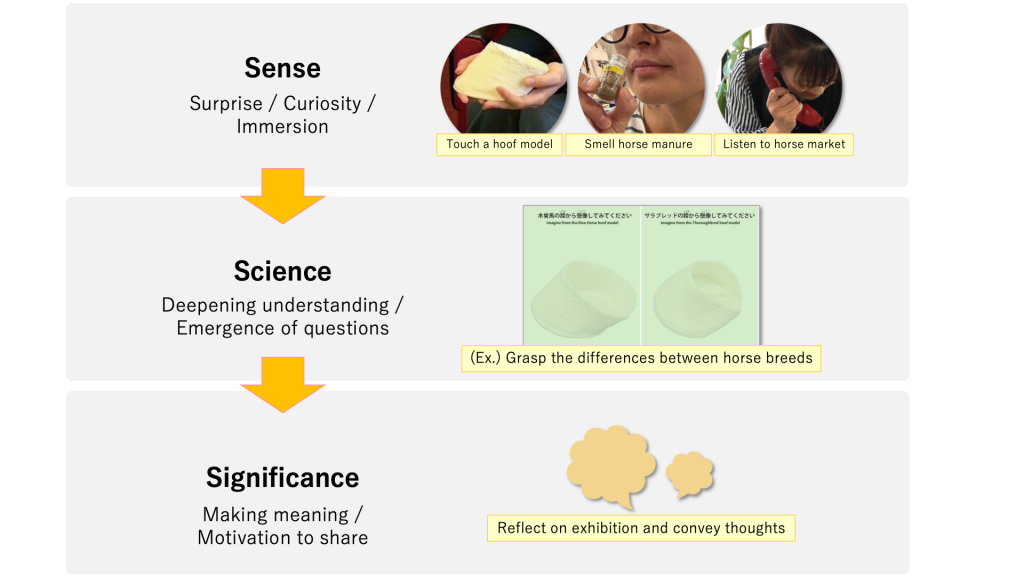
To address this, they developed the Sense-Science-Significance (S-S-S) model, an educational framework that guides visitors from direct sensory experience through analytical understanding to reflection on cultural and ecological value. “We want visitors to feel that heritage belongs to their world, not just to an exhibition case,” said lead author Ayako Umemura, a designated assistant professor at Nagoya University Museum.
The Kiso horse: a breed nearly lost
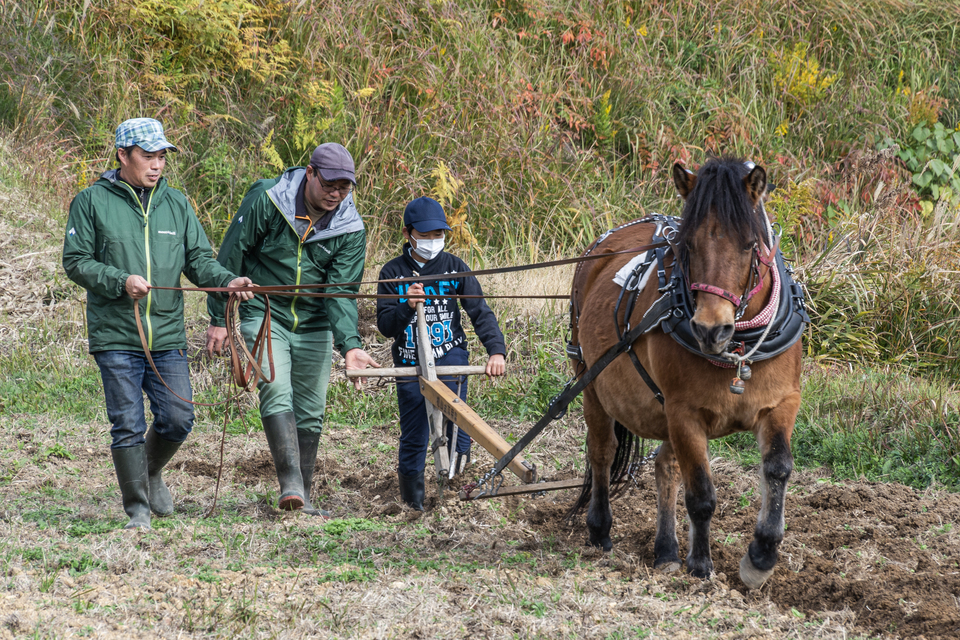
The Kiso horse is one of Japan’s eight surviving native horse breeds, originating from the mountainous Kiso region of present-day Nagano and Gifu Prefectures. Compact and sure-footed, it was historically used for agricultural work and transport. In the twentieth century, the breed came close to extinction following a government policy to castrate native stallions in favor of larger horses suited for military use. The breed survived through Dai-san Haruyama, a purebred stallion who sired around 700 foals and whose skeleton is now preserved at Nagoya University Museum.
A problem of perception
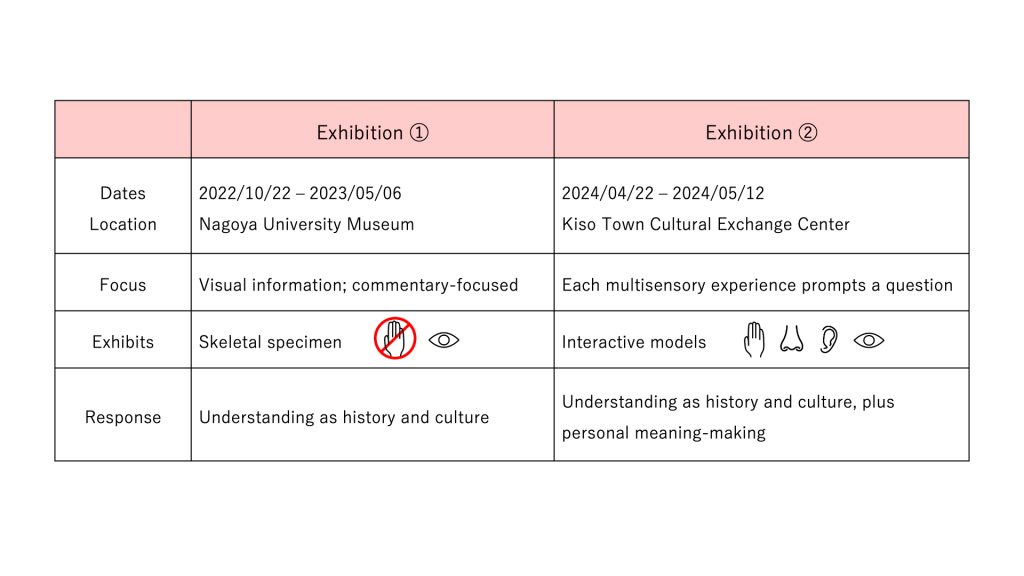
The research began with a 2022-2023 special exhibition at Nagoya University Museum built around the skeletal specimen of Dai-san Haruyama. Text analysis of 88 visitor survey responses confirmed the core problem: despite recognizing the Kiso horse as culturally important, visitors rarely connected that recognition to their own lives or to a sense of personal responsibility for conservation. Visitors’ impressions of the horse remained largely surface-level and did not readily translate into deeper engagement. The researchers used these findings to design a second, more deliberately structured exhibition and to formalize the S-S-S model as a replicable framework.
Engaging the senses
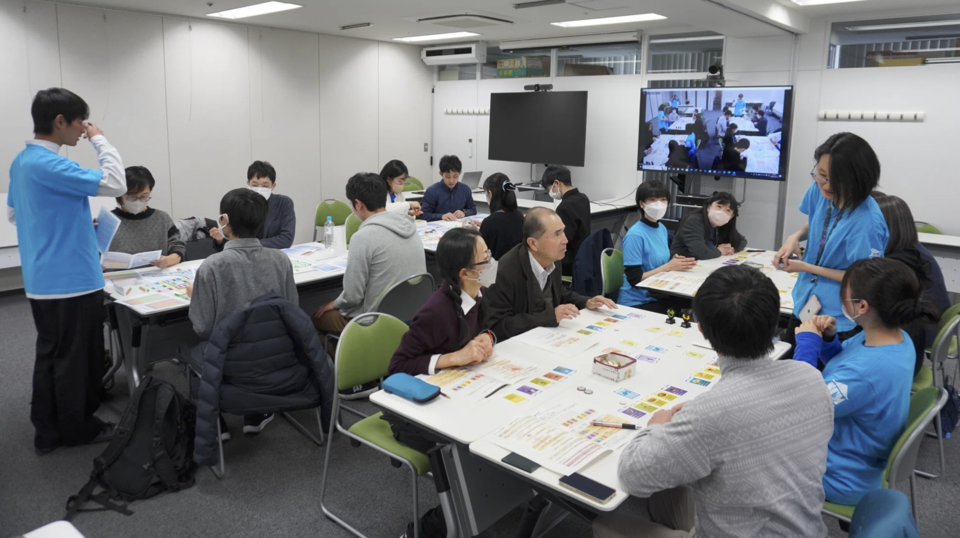
In a second exhibition held in 2024 at Kiso Town Cultural Exchange Center, the researchers put the S-S-S model into practice. Rather than relying on panels and displays alone, the exhibition asked visitors to engage their senses directly. They could handle and compare hoof models from a Kiso horse and a Thoroughbred, with one visitor remarking that the Kiso horse hoof felt “plump and endearing”—a small detail that opened into a larger conversation about how the breed’s compact build made it so well suited to mountain terrain. They smelled horse manure at two stages of fermentation, gaining a tangible sense of the realities of horse husbandry. They could also listen to archival recordings from a traditional Kiso horse market, capturing the atmosphere of a practice that has since disappeared.
Each experience was paired with scientific context designed to prompt comparative and analytical thinking about the horse’s biology, ecology, and history. Survey analysis of 75 participants showed that the approach worked. Visitors frequently reflected on functional and ecological aspects of horse care they had not previously considered, and when asked what they would like to convey to others about the Kiso horse, 72% provided concrete, expressive answers.
A framework for broader application
The S-S-S model has since been applied in over 30 museum education events annually at Nagoya University Museum, covering topics from physical specimens to broader environmental challenges and reaching audiences ranging from children to older adults.
The researchers argue that the challenges it addresses, including raising awareness, sustaining engagement, and linking conservation with education, are shared by museums around the world and across many types of cultural heritage. “The framework is not intended as a prescriptive solution, but as a flexible guide that educators can adapt to their own context,” said Umemura.
Publication
Ayako Umemura and Masaki Takasu. (2026). Sense-Science-Significance Model: A Museum Education Framework for Engaging Visitors with Cultural Heritage. Journal of Museum Education, 1–13. https://doi.org/10.1080/10598650.2026.2619268
Funding
This work was supported by a Grant-in-Aid for Scientific Research (JSPS KAKENHI) under JP23K02763.
Media contact
Alexander Evans
International Communications Office, Nagoya University
icomm_research@t.mail.nagoya-u.ac.jp
Expert contact
Ayako Umemura
Nagoya University Museum
umemura.ayako.v4@f.mail.nagoya-u.ac.jp
Top image
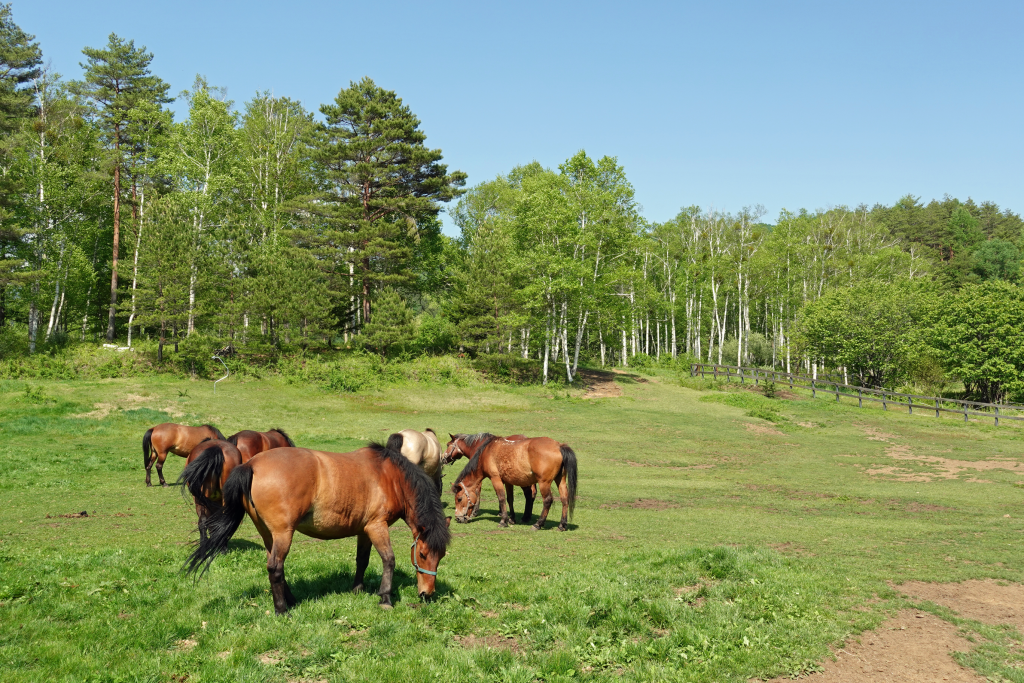
A group of Kiso horses graze in an open field on a clear day. Researchers found that museum visitors recognized the Kiso horse as culturally valuable, but rarely felt it had anything to do with their own lives. A new study from Nagoya University and Gifu University set out to change that. Credit: Ayako Umemura, Nagoya University Museum