Researchers in Japan identified the neural mechanism behind chills and the instinct to increase body temperature during infection.
When running a fever during infection, we often feel chills, which prompt us to take action to warm ourselves, such as turning on a heater or adding layers of clothing. Increased body temperature helps inhibit pathogen growth and boosts immune cell activity.
A recent rat study by a Nagoya University team identified the neural mechanism underlying chills, a cold sensation that supports the body’s response to infection. The findings were published in The Journal of Physiology.
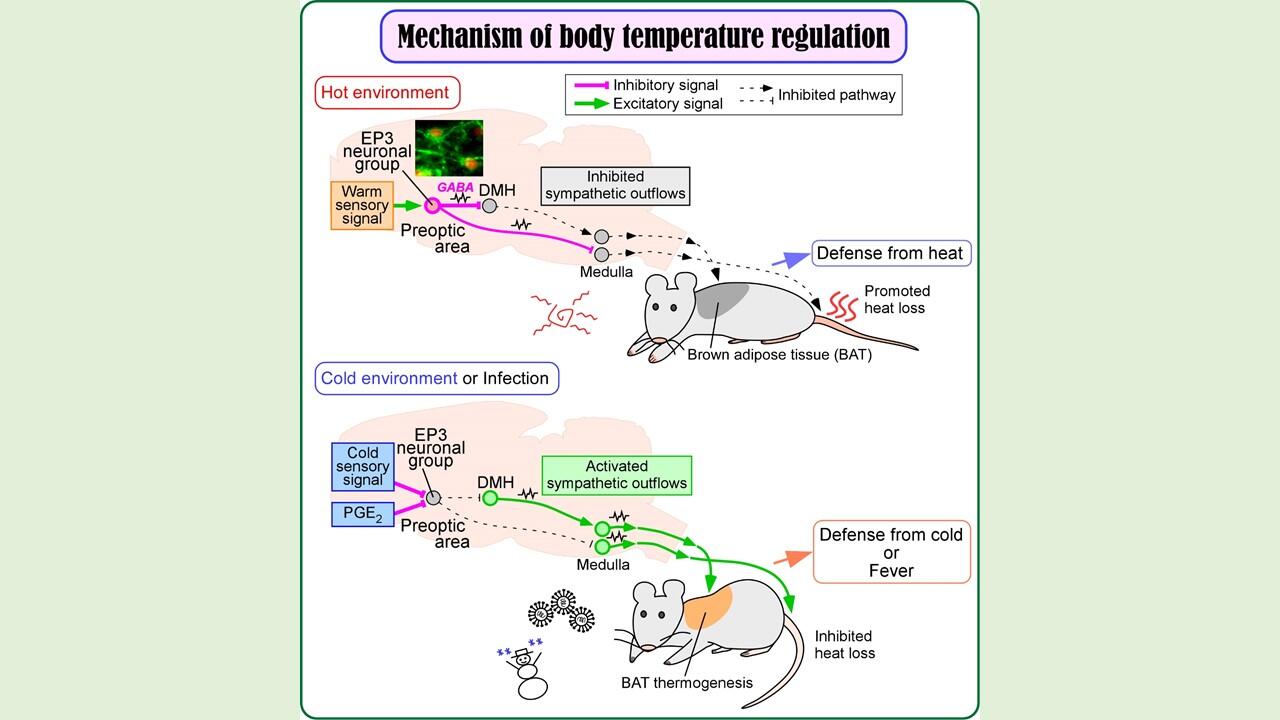
When mammals are infected, their immune system produces a pyrogenic mediator, prostaglandin E₂ (PGE₂), in the brain’s vascular cells. PGE₂ acts on the preoptic area, the brain’s thermoregulatory center, and triggers autonomic fever responses, such as shivering, increased heat production in brown adipose tissue, and constriction of skin blood vessels.
PGE₂ is known to trigger not only autonomic fever responses but also behavioral fever responses including warming behaviors with chills, but the mechanism remains unclear.
To investigate this mechanism, Professor Kazuhiro Nakamura, Dr. Takaki Yahiro (now at Oregon Health and Science University), and Dr. Yoshiko Nakamura at Nagoya University Graduate School of Medicine conducted a study.
The team hypothesized that PGE₂ acts on the lateral parabrachial nucleus (LPB) in the brain, which relays sensory signals, to trigger chills and warmth-seeking behaviors during infection. This was based on their 2023 study showing that LPB neurons transmit skin-temperature sensations to the forebrain and influence body temperature regulation. To test this hypothesis, the team conducted experiments on rats.
Investigating the action of PGE₂ in LPB in rats
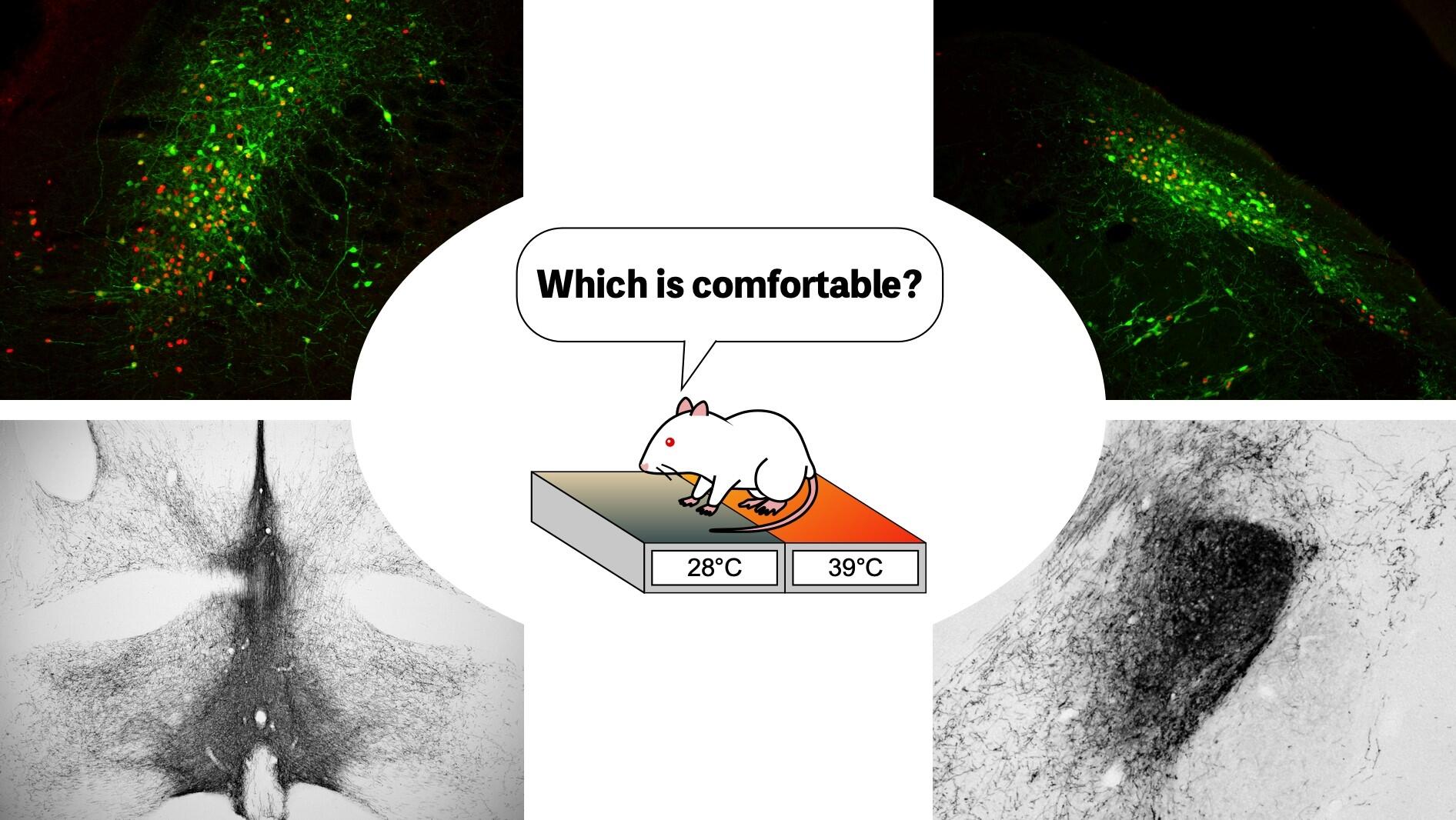
The team conducted thermal plate preference tests (TPPTs) by placing rats on two metal plates set at 28°C (neutral) and 39°C (warm). This allowed the rats to choose their preferred temperature.
Normal rats preferred the neutral plate, while rats injected with PGE₂ into the LPB chose the warmer plate, which increased their core temperature. Notably, PGE₂-treated rats did not show autonomous thermogenic responses such as shivering, indicating that PGE₂ in the LPB specifically modulates behavioral responses.
The researchers then investigated which of the four PGE₂ receptor subtypes (EP1-EP4) trigger warmth-seeking behavior. They administered receptor-specific agonists into the LPB and conducted TPPTs. The results showed that the EP3 receptor mediates this behavior.
They further analyzed the projections of EP3-expressing neurons in the LPB and found that their axons primarily target the central nucleus of the amygdala, which regulates emotions such as discomfort and fear, with minimal projections to the preoptic area.
The team also found that the pathway from EP3-expressing neurons to the amygdala is activated in cold environments and transmits cold sensations.
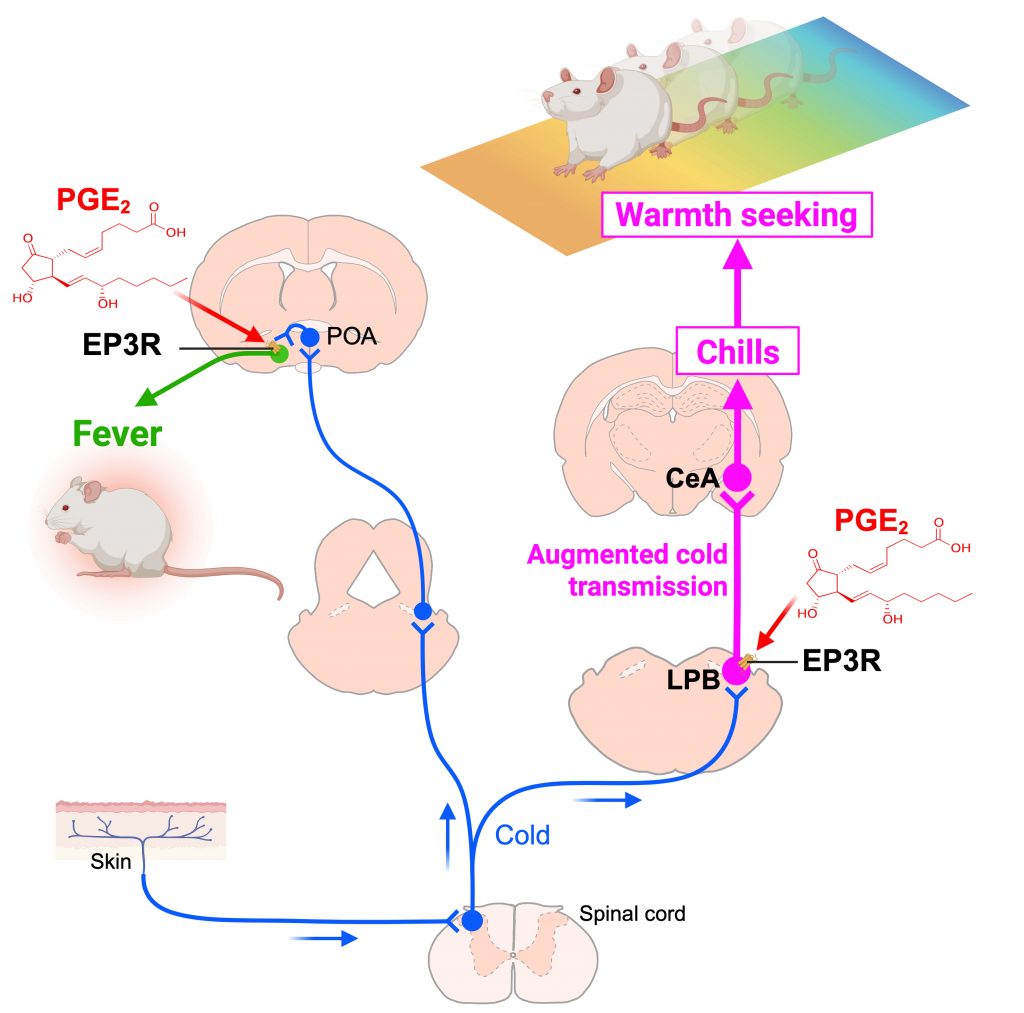
These findings suggest that during infection, PGE₂ boosts cold signals from the LPB to the central nucleus of the amygdala via EP3 receptors, triggering chills and promoting warmth-seeking behavior.
Significance and future perspective
This study demonstrates that PGE₂ increases body temperature by acting on two brain regions: the preoptic area, which drives autonomous thermogenic responses, and the lateral parabrachial nucleus (LPB), which mediates behavioral responses.
“We have identified part of the neural basis for emotional symptoms during infection,” said Nakamura. “This discovery provides new insight into the causes of chills and warmth-seeking by clarifying the role of the brain’s emotional circuitry.”
He added, “From an evolutionary physiological perspective, our findings suggest that behavioral changes linked to fever are adaptive survival strategies rather than merely symptoms of infection.”
Future research should determine whether this circuit is conserved in humans and clarify its role in chronic inflammation and thermoregulatory disorders as well as infectious diseases.
Paper information:
Takaki Yahiro, Yoshiko Nakamura, and Kazuhiro Nakamura. (2026) The pyrogenic mediator prostaglandin E2 elicits warmth seeking via EP3 receptor-expressing parabrachial neurons: a potential mechanism of chills. The Journal of Physiology. DOI: 10.1113/JP289466
Funding information:
This study was supported by Moonshot R&D (JPMJMS2023) of the Japan Science and Technology Agency; Grants-in-Aid for Scientific Research (JP25K10154, JP21K06767, JP23H00398, JP20H03418) from the Ministry of Education, Culture, Sports, Science and Technology of Japan; Japan Agency for Medical Research and Development (JP25gm1910003); and the Takeda Science Foundation scholarship.
Expert contact:
Kazuhiro Nakamura
Nagoya University Graduate School of Medicine
E-mail: nakamura.kazuhiro.s8@f.mail.nagoya-u.ac.jp
Media contact:
Naomi Inoue
Nagoya University International Communications Office
Email: icomm_research@t.mail.nagoya-u.ac.jp
Top image:
How PGE₂ elicits warmth seeking and fever during infection
Cold signals from skin sensory neurons are delivered to the CeA via the spinal cord and the LPB. PGE₂ acting on EP3R in the LPB amplifies these cold signals (pink pathway), enhancing cold sensitivity (chills) and promoting warmth-seeking behavior.
In parallel, a separate neuronal pathway relays cold signals to the POA, triggering autonomic cold defenses via temperature-regulating neurons. PGE₂ acts on POA neurons to induce fever.
Created with BioRender.com.
Credit: Kazuhiro Nakamura