New study shows how a major space storm dramatically shrank Earth’s protective plasma layer and slowed its recovery, helping improve solar storm forecasts and protect space infrastructure we rely on.
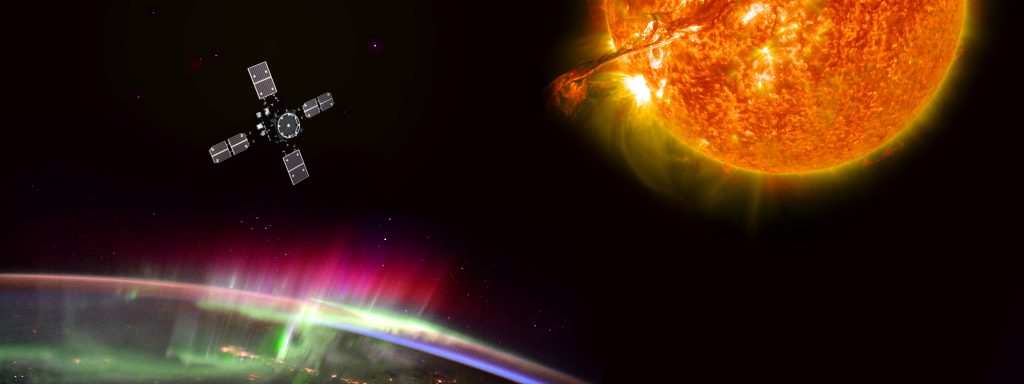
A geomagnetic superstorm is an extreme space weather event that occurs when the Sun releases massive amounts of energy and charged particles toward Earth. These storms are rare, occurring about once every 20-25 years. On May 10-11, 2024, the strongest superstorm in over 20 years, known as the Gannon storm or Mother’s Day storm, struck Earth.
A study led by Dr. Atsuki Shinbori from Nagoya University’s Institute for Space-Earth Environmental Research has captured direct measurements of this extreme event and provided the first detailed observations of how a superstorm compresses Earth’s plasmasphere—a protective layer of charged particles that encircles our planet. Published in Earth, Planets and Space, the findings show how the plasmasphere and ionosphere react during the most violent solar storms and help forecast disruptions to satellites, GPS systems, and communication networks during extreme space weather events.
Right place, right time: How Arase captured historic data
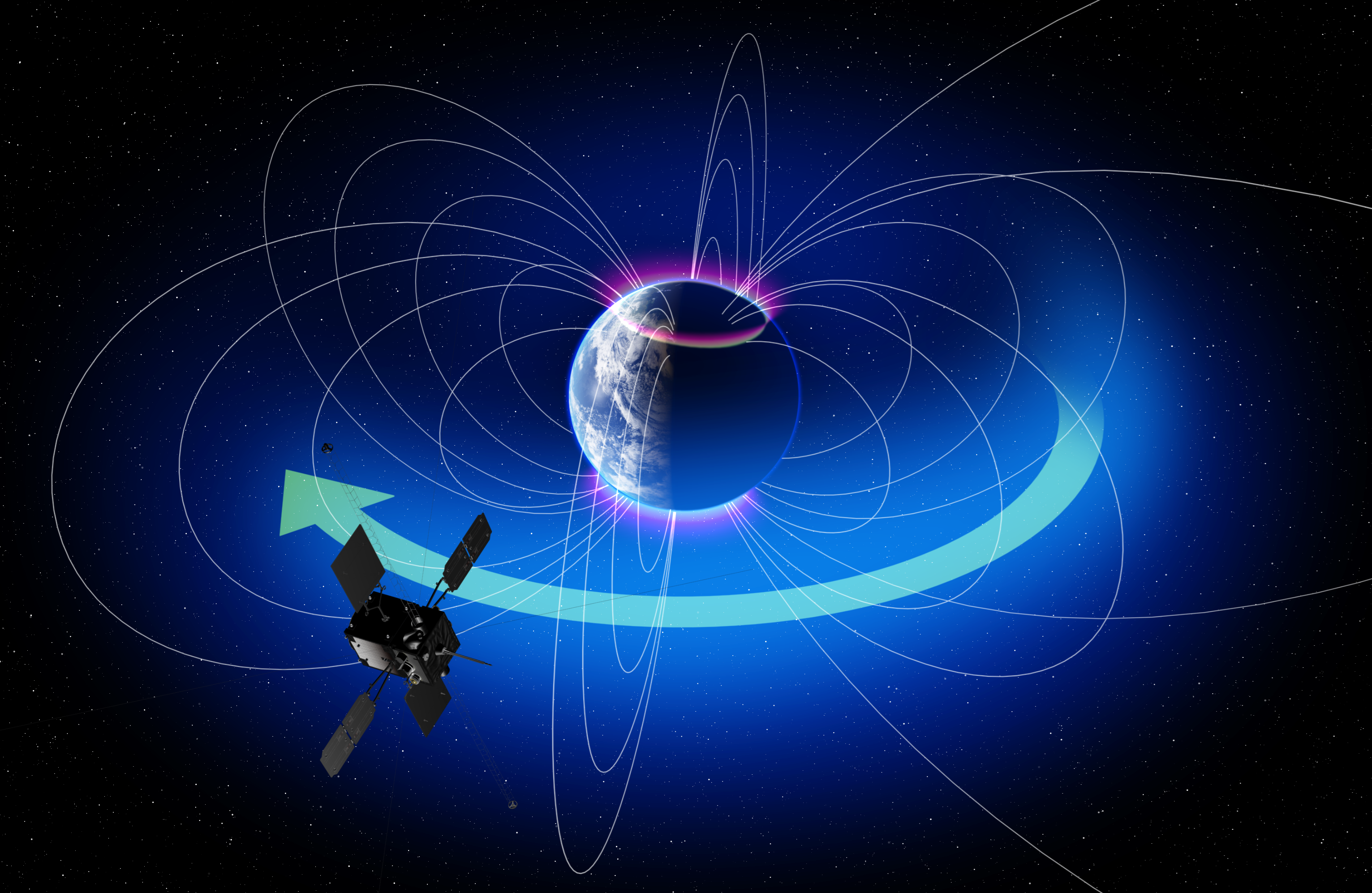
Launched by the Japan Aerospace Exploration Agency (JAXA) in 2016, the Arase satellite orbits through Earth’s plasmasphere measuring plasma waves and magnetic fields. During the May 2024 superstorm, it was positioned perfectly to observe the extreme compression and slow recovery of the plasmasphere in unprecedented detail. This was the first time scientists obtained continuous, direct measurements of the plasmasphere shrinking to such a low altitude during a superstorm.
“We tracked changes in the plasmasphere using the Arase satellite and used ground-based GPS receivers to monitor the ionosphere—the source of charged particles that refill the plasmasphere. Monitoring both layers showed us how dramatically the plasmasphere contracted and why recovery took so long,” Dr. Shinbori explained.
The plasmasphere works with Earth’s magnetic field to help limit harmful charged particles from the Sun and space, protecting satellites and supporting Earth’s natural shielding system against intense radiation. It normally extends far from Earth, but during the superstorm the outer boundary moved from approximately 44,000 km above Earth’s surface to just 9,600 km.
The superstorm was triggered by many massive eruptions from the Sun that hurled billions of tons of charged particles toward Earth. Within nine hours, the storm squeezed the plasmasphere to about one-fifth of its normal size. Recovery was very slow and took more than four days to refill, the longest recovery scientists have seen since they started monitoring the plasmasphere with the Arase satellite in 2017.
“We found that the storm first caused intense heating near the poles, but later this led to a big drop in charged particles across the ionosphere, which slowed recovery. This prolonged disruption can affect GPS accuracy, interfere with satellite operations, and complicate space weather forecasting,” Dr. Shinbori noted.
Visual evidence: Storm pushes auroras further to the equator
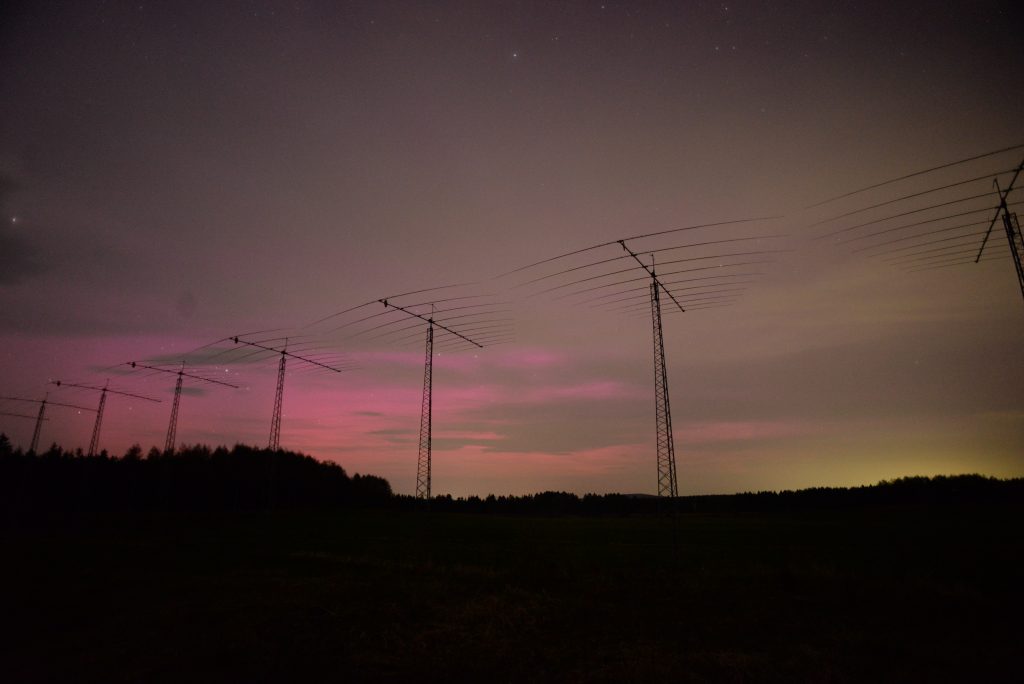
During the most intense phase of the superstorm, extreme solar activity compressed Earth’s magnetic field, allowing charged particles to travel much farther along magnetic field lines toward the equator. This produced impressive auroras at unusually low latitudes.
Auroras typically occur near the polar regions because Earth’s magnetic field guides solar particles into the atmosphere there, but the strength of this storm shifted the auroral zone from its usual position near the Arctic and Antarctic circles down to mid-latitude regions such as Japan, Mexico, and southern Europe—places where auroras are rarely seen. The stronger the geomagnetic storm, the farther toward the equator auroras can appear.
Impact of negative storms on plasmasphere recovery
About an hour after the storm struck, charged particles in Earth’s upper atmosphere surged at high latitudes near the poles and streamed toward the polar cap. When the storm began to subside the plasmasphere started to refill with particles from the ionosphere.
Normally, this process takes a day or two, but in this case recovery stretched over four days because of a phenomenon called a negative storm. During a negative storm, particle levels in the ionosphere drop sharply across wide areas when intense heating changes the atmosphere’s chemistry. This decreases oxygen ions that help produce hydrogen particles needed to refill the plasmasphere. These storms are invisible and detected only by satellites.
“The negative storm slowed recovery by altering atmospheric chemistry and cutting off the supply of particles to the plasmasphere. This link between negative storms and delayed recovery had never been clearly observed before,” Dr. Shinbori said.
The findings give us a clearer picture of how the plasmasphere changes and how energy moves through it. During the storm, several satellites experienced electrical issues or stopped transmitting data, GPS signals were disrupted, and radio communications were affected. Knowing how long Earth’s plasma layer takes to recover after such events is key for forecasting space weather and safeguarding space technology.
Paper information:
Atsuki Shinbori, Naritoshi Kitamura, Kazuhiro Yamamoto, Atsushi Kumamoto, Fuminori Tsuchiya, Shoya Matsuda, Yoshiya Kasahara, Mariko Teramoto, Ayako Matsuoka, Takuya Sori, Yuichi Otsuka, Michi Nishioka, Septi Perwitasari, Yoshizumi Miyoshi, and Iku Shinohara (2025). Characteristics of temporal and spatial variation of the electron density in the plasmasphere and ionosphere during the May 2024 super geomagnetic storm. Earth, Planets and Space, 77(181). DOI: 10.1186/s40623-025-02317-3.
Funding information:
This study has been supported by Grants-in-Aid for Scientific Research from the Japan Society for the Promotion of Science (JSPS KAKENHI Grant Nos. 18KK0099, 23K22555, 24K07112, and 24K00898).
Expert contact:
Atsuki Shinbori
Institute for Space-Earth Environmental Research (ISEE)
Nagoya University
Email: shinbori@isee.nagoya-u.ac.jp
Media contact:
Merle Naidoo
International Communications Office
Nagoya University
Email: icomm_research@t.mail.nagoya-u.ac.jp
Researchers
-
SHINBORI AtsukiInstitute for Space-Earth Environmental Research, Center for Integrated Data Science
-
KITAMURA NaritoshiInstitute for Space-Earth Environmental Research, Center for Integrated Data Science
-
 OTSUKA YuichiInstitute for Space-Earth Environmental Research, Division for Ionospheric and Magnetospheric Research
 -
MIYOSHI YoshizumiInstitute for Space-Earth Environmental Research, Center for Integrated Data Science
-
YAMAMOTO KazuhiroInstitute for Space-Earth Environmental Research, Center for Integrated Data Science