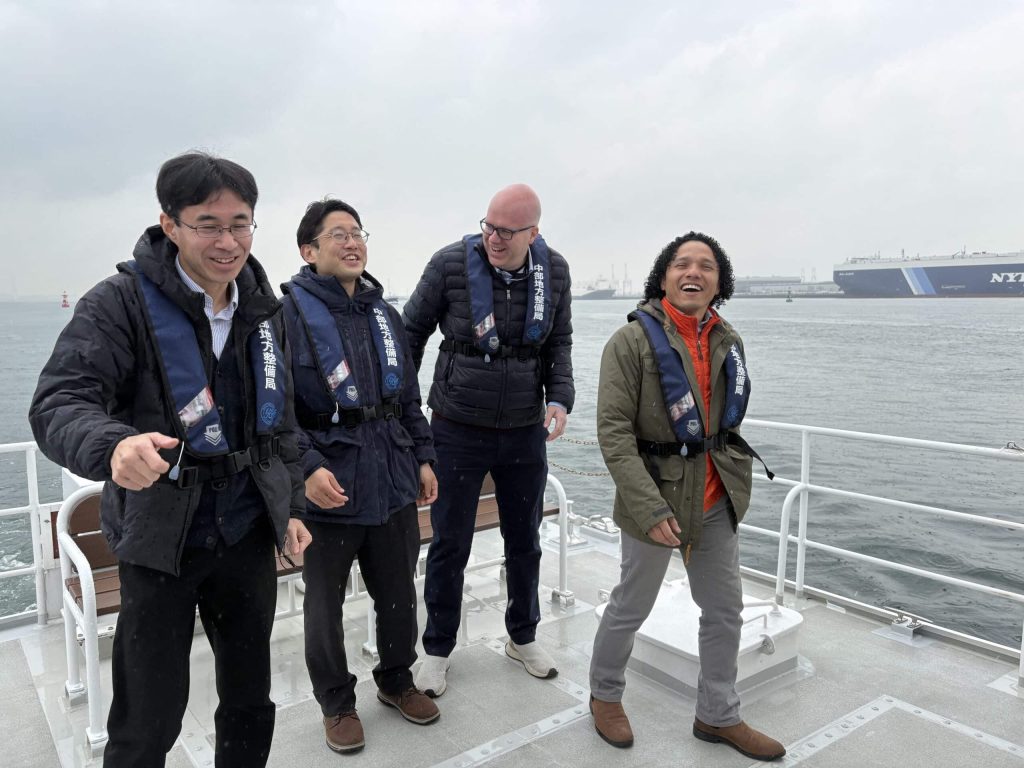
A seed grant brought together coastal engineers from Nagoya University and North Carolina State University to provide new insights into the aftermath of the 2024 Baltimore Key Bridge collapse.
On a warm summer night, a container ship departing Baltimore lost power and drifted in the lower Patapsco River, with the crew unable to control it. Shortly afterward, it struck a pier on Baltimore harbor’s famous Francis Scott Key Bridge at a speed of around 6 knots, or 11 kilometers per hour.
The ship’s name? Blue Nagoya.
But that year was 1980. Container ships of that time were nowhere close to the gargantuan vessels that sail our seas today. So, the bridge suffered a few knocks on its protective concrete, nothing more.
Fast-forward 44 years, and the story repeated itself. Unfortunately, this time it met with a disastrous end. On March 26, 2024, a container ship named Dali, which was as long as the Eiffel Tower is tall and weighed 95,000 metric tons, struck the Key Bridge’s south pier at a speed of 7 knots — only slightly faster than Blue Nagoya, except the Dali was roughly 10 times heavier.
The impact of this “allision” — the maritime term used in place of “collision” for when a ship hits a stationary object — brought down the bridge, causing six fatalities and halting traffic across both a vital highway and a shipping lane for several weeks.
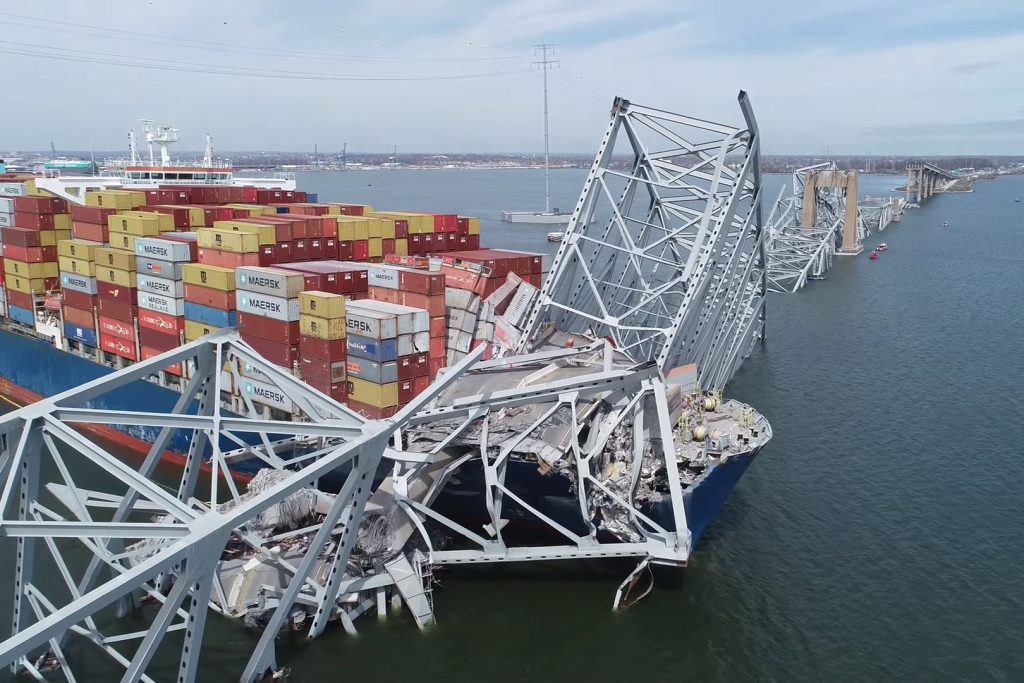
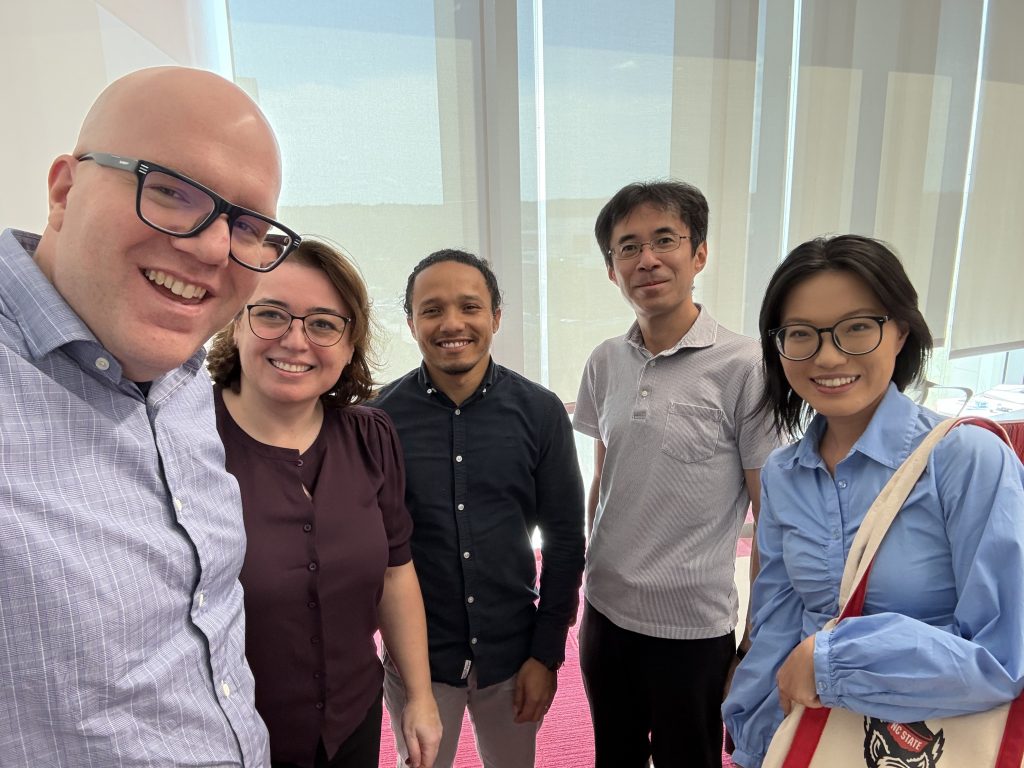
“I was just amazed that one event like that could knock out an entire bridge,” says Casey Dietrich, a coastal engineer and professor at North Carolina (NC) State University’s Department of Civil, Construction and Environmental Engineering. He writes computational code that simulates flooding on coasts due to storm surges and hurricanes.
Dietrich was interested in the event because it happened in a coastal setting, but he considered it outside his expertise in coastal hazards such as storm surges and erosion — until he received an email a few months later, in June 2024.
That email was from Tomoaki Nakamura, a professor at Nagoya University’s Department of Environmental Engineering and Architecture. Also a coastal engineer, Nakamura researches the impact of ocean waves on human-made coastal structures.
In his email, Nakamura proposed working together towards a NC State-Nagoya University Collaborative Seed Grant, a program designed to catalyze new research collaborations, with the expectation that funded projects would lead to more substantive engagement beyond the initial funding period.
“When Tomoaki reached out to me in June, it had been a couple of months, but the bridge collapse was still fresh in our minds,” Dietrich says. “It seemed like a really important problem that spanned our complementary research expertise.”
A handshake between computational models
Nakamura and Dietrich’s seed grant proposal was successful, and both received a grant of 1 million yen to establish their collaboration. One of their first challenges, Dietrich recalls, was to figure out how to make their computational models compatible. This had parallels with developing their own working relationship.
“We live thousands of miles away. We speak different languages. We come from different cultures. So just on a human level, there’s this need to find common ground and a way to pass information together,” Dietrich says. “But also in our numerical models, there was a need to stretch models to a different regime.”
So to study an event sandwiched between their regimes: involving a 300 meter-long ship allision with a 2.57 kilometer-long bridge, they had to figure out the correct handshake between their individual codes’ inputs, outputs, parameters, and variables.
“Casey’s models provided the perfect boundary conditions to help scale up my own simulations,” Nakamura says.
Piecing the puzzle together
When Nakamura and Dietrich combined their codes and ran it with approximate conditions on the Baltimore Harbor on that fateful night, their simulated ship followed the same path as the real one, and its strike on the south pier came within 70 seconds of the actual time.
The researchers’ model pointed to a surprisingly small cause: About 500 meters upstream of the bridge, water on the north side of the ship moved slightly faster than on the south side, by just 0.22 centimeters per second. The gap arises where a smaller channel joins the main one from the south, making the south side deeper. That small difference was enough to start the ship rotating clockwise toward the south pier.
No current measurements were available from near the channel that night, so this finding is due to the initial conditions of the simulation. The team reran the event with slightly different conditions: the ship’s starting position, how deep it sat in the water, when control was lost, channel depth, current speed and sea level.
The ship’s path was sensitive to every one of them. A deeper draft removed the ship’s tendency to drift south. Some simulations showed that if the Dali had lost power only one minute later, it would have veered away from the pier and avoided the allision.
Previous studies often modelled only a few tens of meters near a pier, or left out the strike itself. But combining Dietrich’s large-scale boundary conditions and Nakamura’s smaller-scale interactions allowed the researchers to simulate the ship’s whole approach and impact across the channel.
The authors say the findings could inform the management of navigation channels around the world, including those in Nagoya.
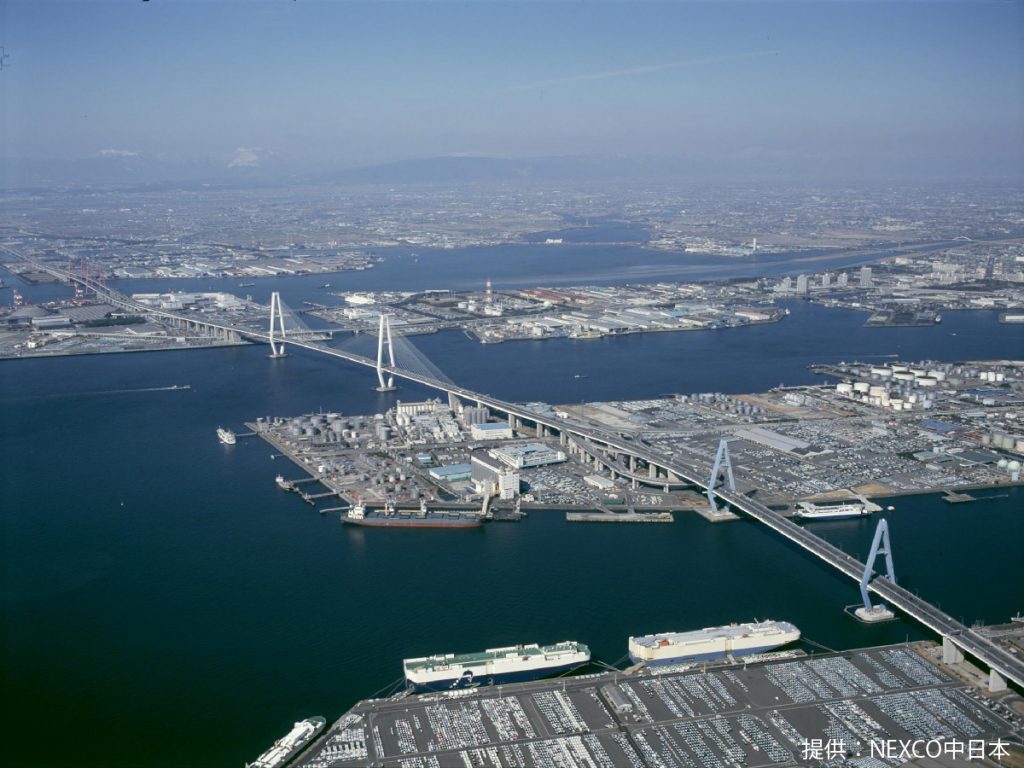
Nagoya is home to Japan’s busiest port and to a major bridge, the Meiko Triton, which carries critical road traffic across three channels of Ise Bay. “This model can compute storm surges expected in Nagoya Port as well,” Nakamura says, and he hopes to apply it to study the motion of ships under surges there.
Looking over the horizon
For the researchers, the seed grant marks just the beginning. It enabled Dietrich to visit Nagoya in March 2025, including a tour of Nagoya Port and its channels. Nakamura visited Dietrich’s lab at NC State in Raleigh, North Carolina, USA on three occasions with the seed grant and then follow-on funding.
“It’s pretty rare to have a funding opportunity where people in Japan and the United States can work together on the same project,” Nakamura adds. Since the publication of their first research paper, both he and Dietrich are seeking further grants to carry their research forward. Nakamura has secured two grants from the Kajima Foundation to study large vessel drifts and bridge allisions amidst changing water currents due to global warming.
The partnership between NC State and Nagoya University dates back to 1985, and the two institutions celebrated its 40th anniversary in 2025. Since 2023, 10 seed grants have been awarded to collaborative projects between these two universities.
In addition to NC State, the seed grant program has helped Nagoya University researchers establish valuable collaborations with our partner institutions such as the University of Edinburgh in Scotland, the University of Freiburg in Germany, and the National University of Singapore across disciplines in science and the humanities.
Publication information:
The following joint publication has been produced through this seed grant collaboration:
Nakamura, T., Dietrich, J. C., Cho, Y., San Juan, J. E., Haikal, G., & Tomita, T, 2026. Influence of local hydrodynamics on ship drift leading to ship-bridge allisions. Ocean Engineering, Vol. 351, No. 2. DOI: 10.1016/j.oceaneng.2026.124459