Researchers have identified the neural circuit through which the brain’s circadian clock controls the timing of torpor, a natural state of reduced body temperature and metabolism. The discovery provides new insights into how mammals regulate energy use and may inform future approaches in medicine and long-duration spaceflight.
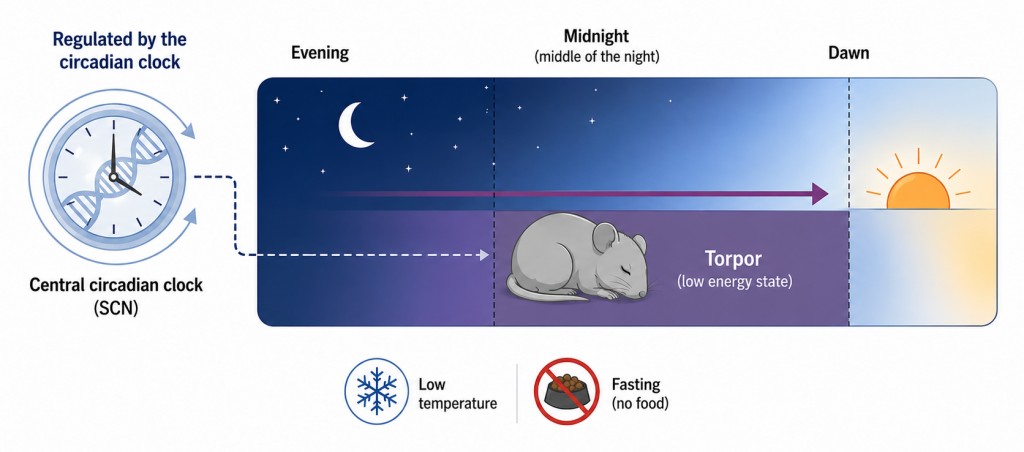
You have gone without food for days, and the temperature drops to near freezing. What do you do? For some animals, the answer is influenced by the brain’s circadian clock. Hummingbirds, bats, and mice are among the animals that can enter torpor, which reduces body temperature and metabolism. Scientists suspected that the brain’s circadian clock controls the timing of torpor, but until now the exact mechanism was not known.
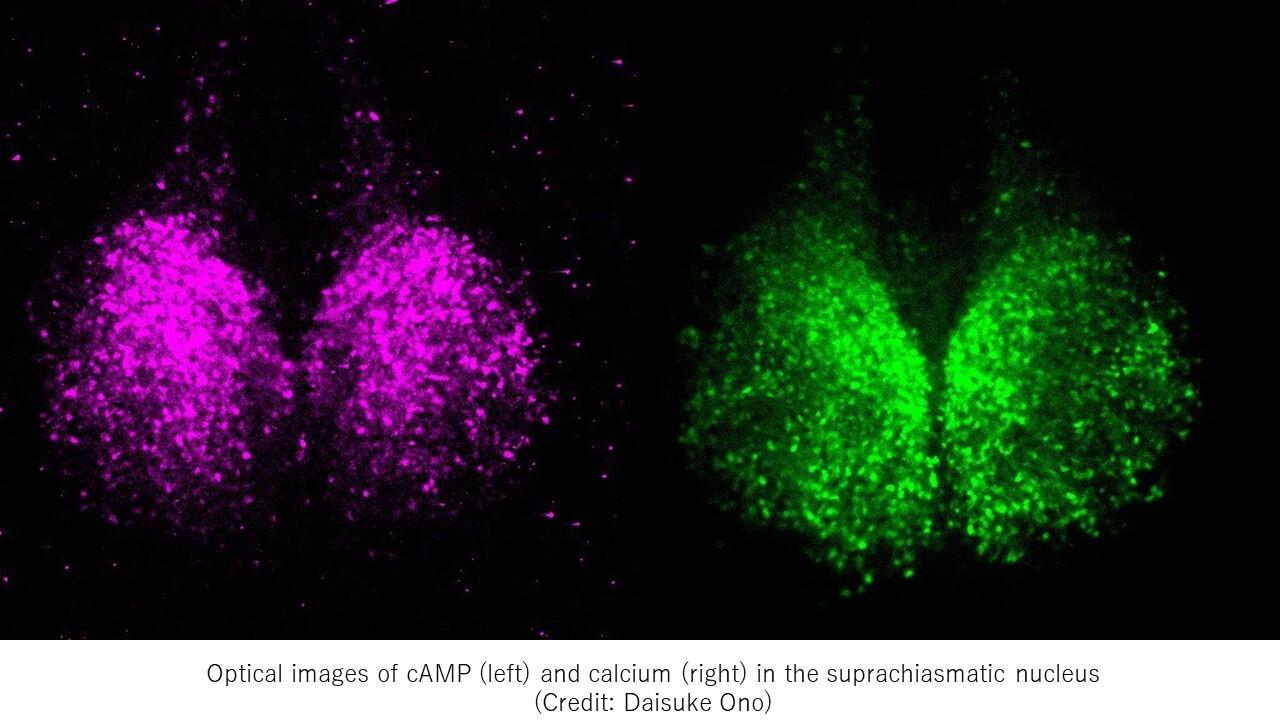
Researchers at Nagoya University in Japan have identified the specific neural circuit responsible for this survival strategy. They have shown that the brain’s circadian clock, a small cluster of neurons located in the hypothalamus at the base of the brain, sends silencing signals through this circuit to a nearby temperature-regulating region, suppressing torpor during the day. The findings were published in Nature Communications.
Torpor from midnight to dawn
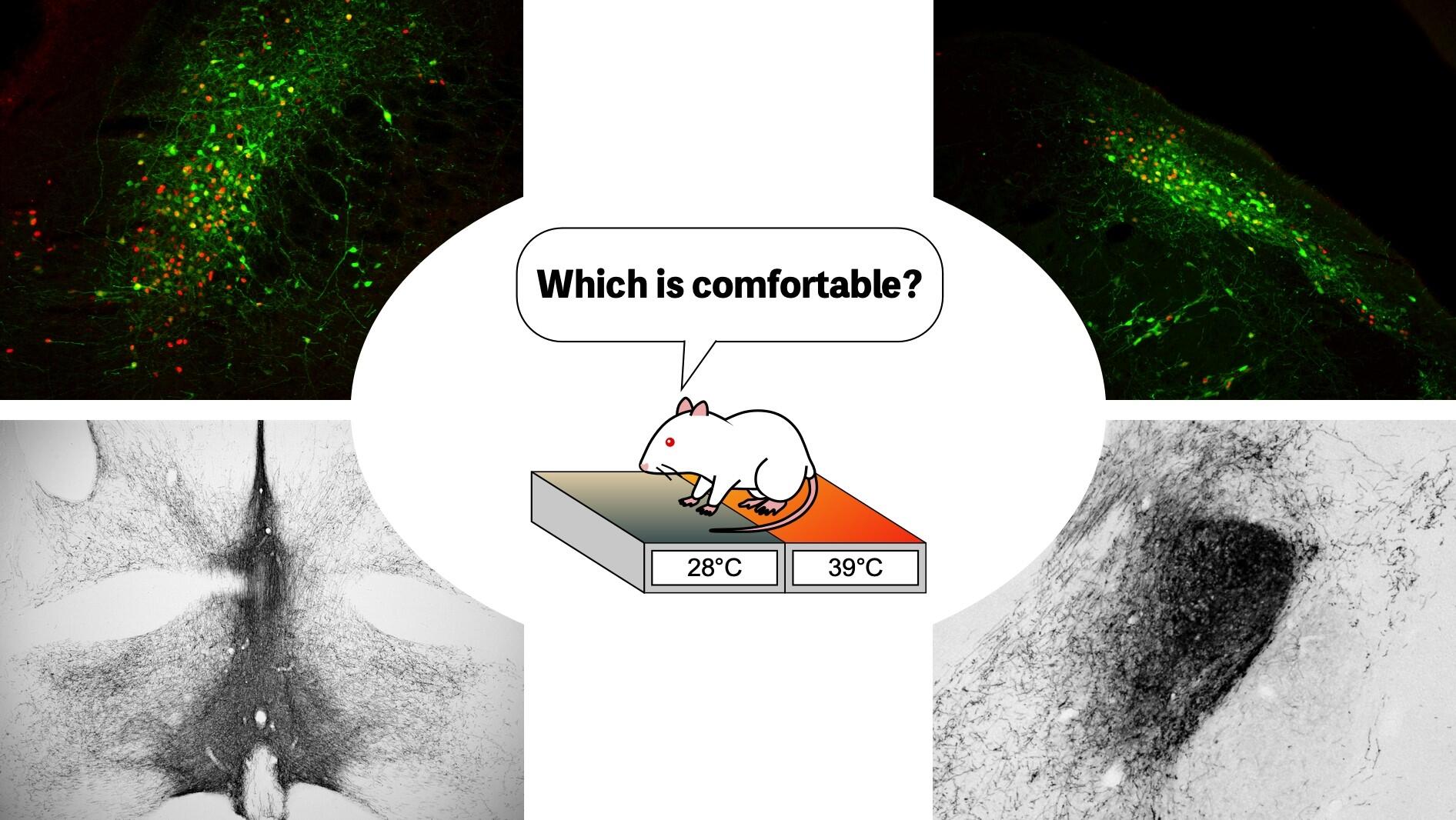
“The brain’s preoptic area (POA) controls body temperature and has an important role in initiating torpor,” said senior author and lecturer Daisuke Ono from the Research Institute of Environmental Medicine at Nagoya University. “During the day, the brain’s circadian clock suppresses torpor, which occurs between midnight and dawn in mice.”
Using light-based tools (optogenetics) to switch specific neurons on or off, the researchers showed that activating the circadian clock-POA pathway suppressed torpor. When the circadian clock was disrupted, mice either entered torpor at irregular, unpredictable times or showed a marked reduction in torpor.
Additionally, the specific clock cell type responsible for sending these signals was identified. Neurons that produce a protein called arginine vasopressin (AVP neurons) in the circadian clock inhibit neurons in the POA. Mice with impaired inhibitory signaling from AVP neurons to the POA showed abnormal torpor timing, demonstrating that this pathway plays a key role in determining when torpor occurs.
The research team also discovered that the POA becomes more active at night. “The clock does not actively trigger torpor. Instead, it reduces its inhibitory influence at night, allowing neural circuits involved in thermoregulation and energy balance to promote torpor when environmental conditions are favorable. The three systems work in tandem to create the right conditions,” Ono explained.
Implications for medicine and space travel
A clearer understanding of how the brain times metabolic shutdown may inform a technique that uses controlled cooling to limit tissue damage after injury or surgery (induced hypothermia). The findings may also be relevant to extended spaceflight, where controlled reduction of metabolism could protect the body.
Although humans do not naturally enter torpor, understanding the neural mechanisms that regulate metabolic suppression in mammals could provide clues for developing controlled hypometabolic states in the future.
Rare accounts of people surviving extreme cold exposure with dangerously low body temperatures hint at this possibility. Understanding the brain circuits that control these states in mammals may one day bring researchers closer to inducing suspended animation in humans, a state long imagined for deep space travel.
Paper information
Sheikh Mizanur Rahaman, Shota Miyazaki, Chang-Ting Tsai, Akihiro Yamanaka, Chi Jung Hung, Michihiro Mieda, Takahiro J. Nakamura, Hiroshi Yamaguchi, and Daisuke Ono. 2026. GABAergic projections from the suprachiasmatic nucleus to the preoptic area regulate the timing of torpor in mice, Nature Communications. DOI: https://doi.org/10.1038/s41467-026-73374-9
Funding information:
This work was supported by the HIROSE foundation, LOTTE Foundation, Foundation of Kinoshita Memorial Enterprise, Astellas Foundation for Research on Metabolic Disorders, UBE Foundation, JST FOREST Program (JPMJFR211A), and JSPS KAKENHI (25H02445, 24K02060, 24H02006, 23H04939, 21H02526, 25KF0138, 21H00422, 24KJ0102 and 25K18507).
Expert contact:
Daisuke Ono
Research Institute of Environmental Medicine
Nagoya University
dai-ono@riem.nagoya-u.ac.jp
Media contact:
Merle Naidoo
International Communications Office
Nagoya University
Email: icomm_research@t.mail.nagoya-u.ac.jp
Top image:
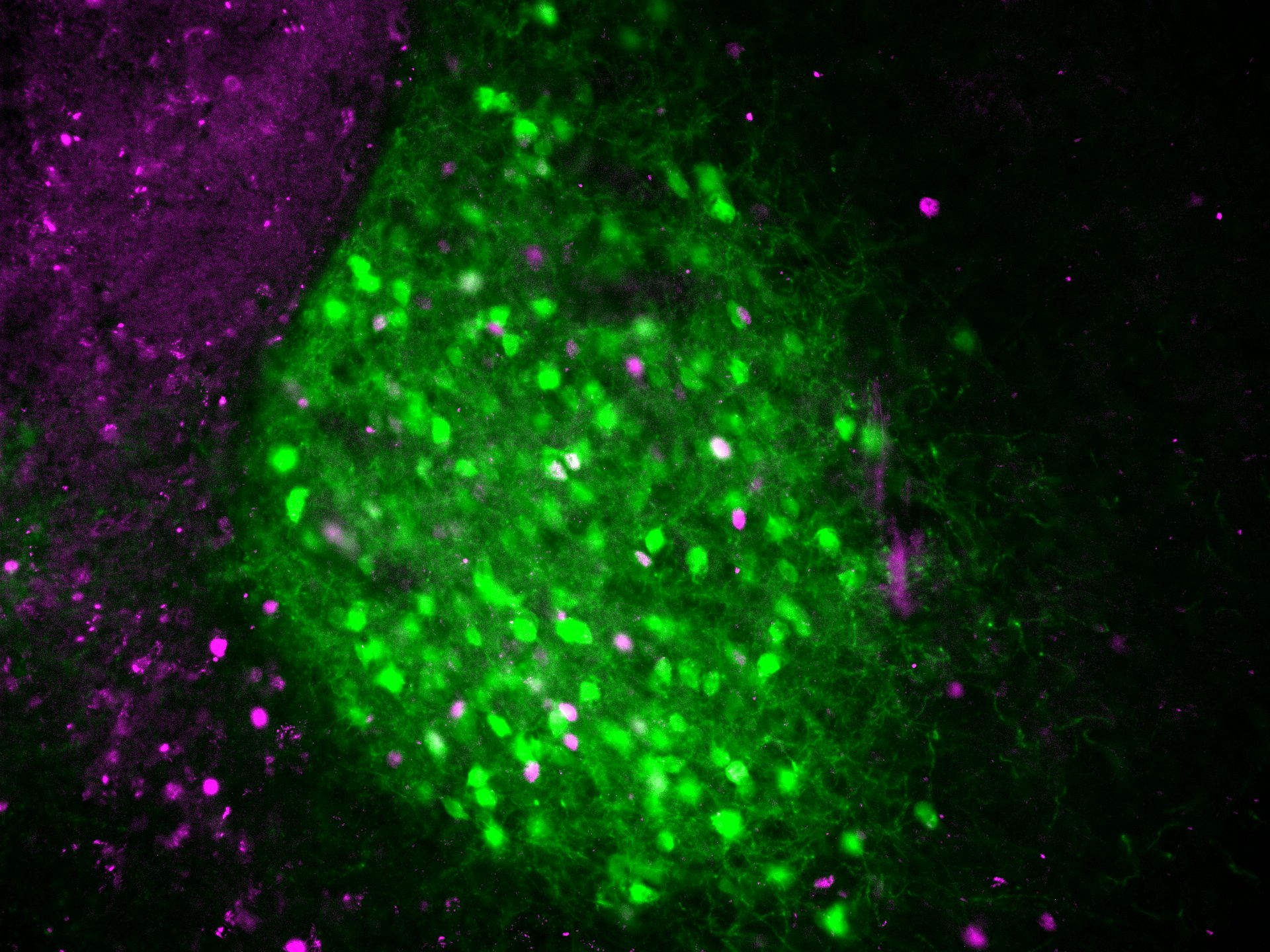
When facing freezing temperatures and food deprivation, mice enter a state of low metabolism known as “torpor” from midnight until dawn. Researchers at Nagoya University have now identified the specific brain circuit that controls this timing, running from the brain’s biological clock to its temperature-regulating region. Credit: Daisuke Ono, Nagoya University
Researchers
Related organizations
Related tags
- Circadian rhythm
- Hypothalamus
- Medicine, Dentistry, and Pharmacy
- Metabolism
- Neural circuit
- Preoptic area
- Survival strategy
- Torpor