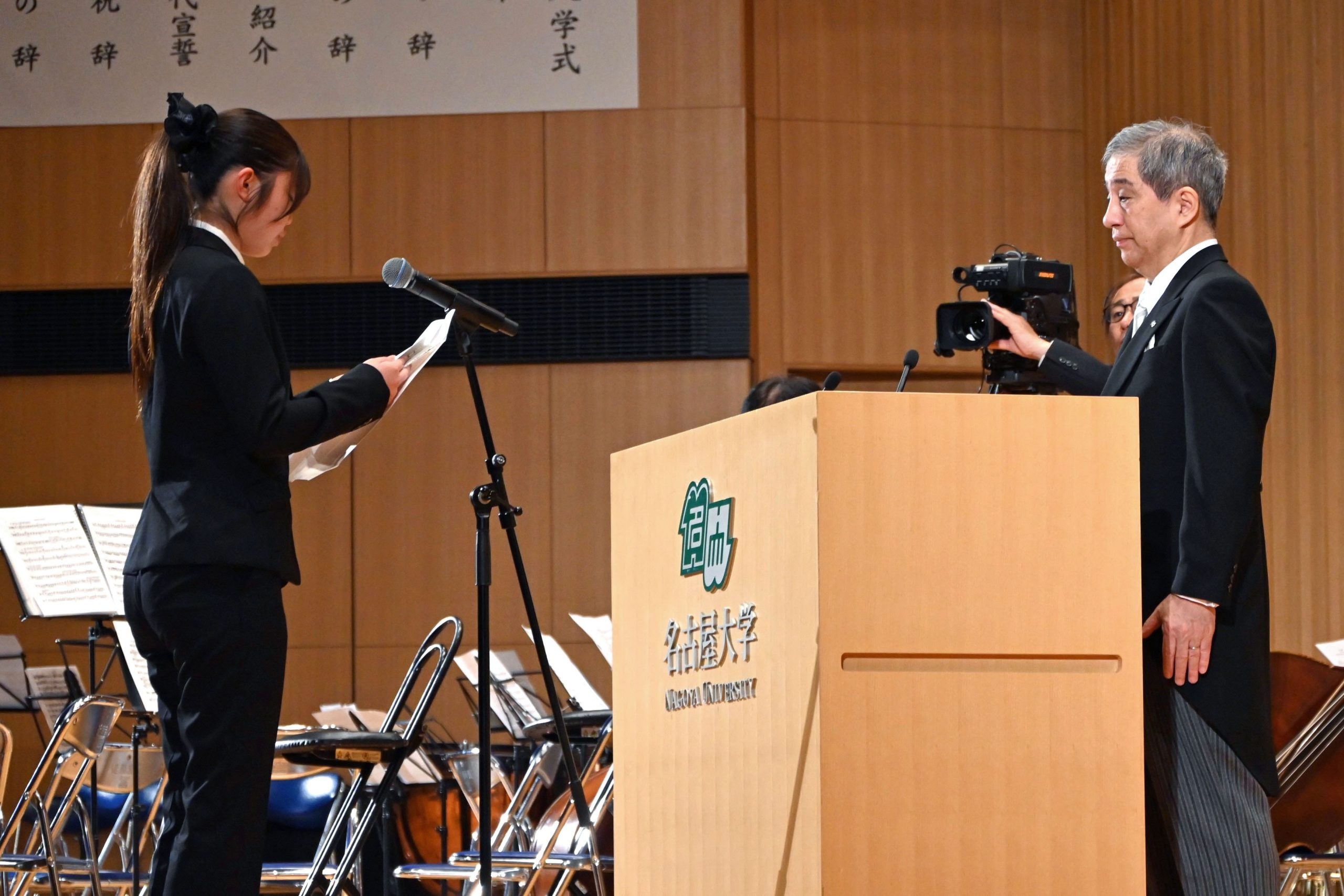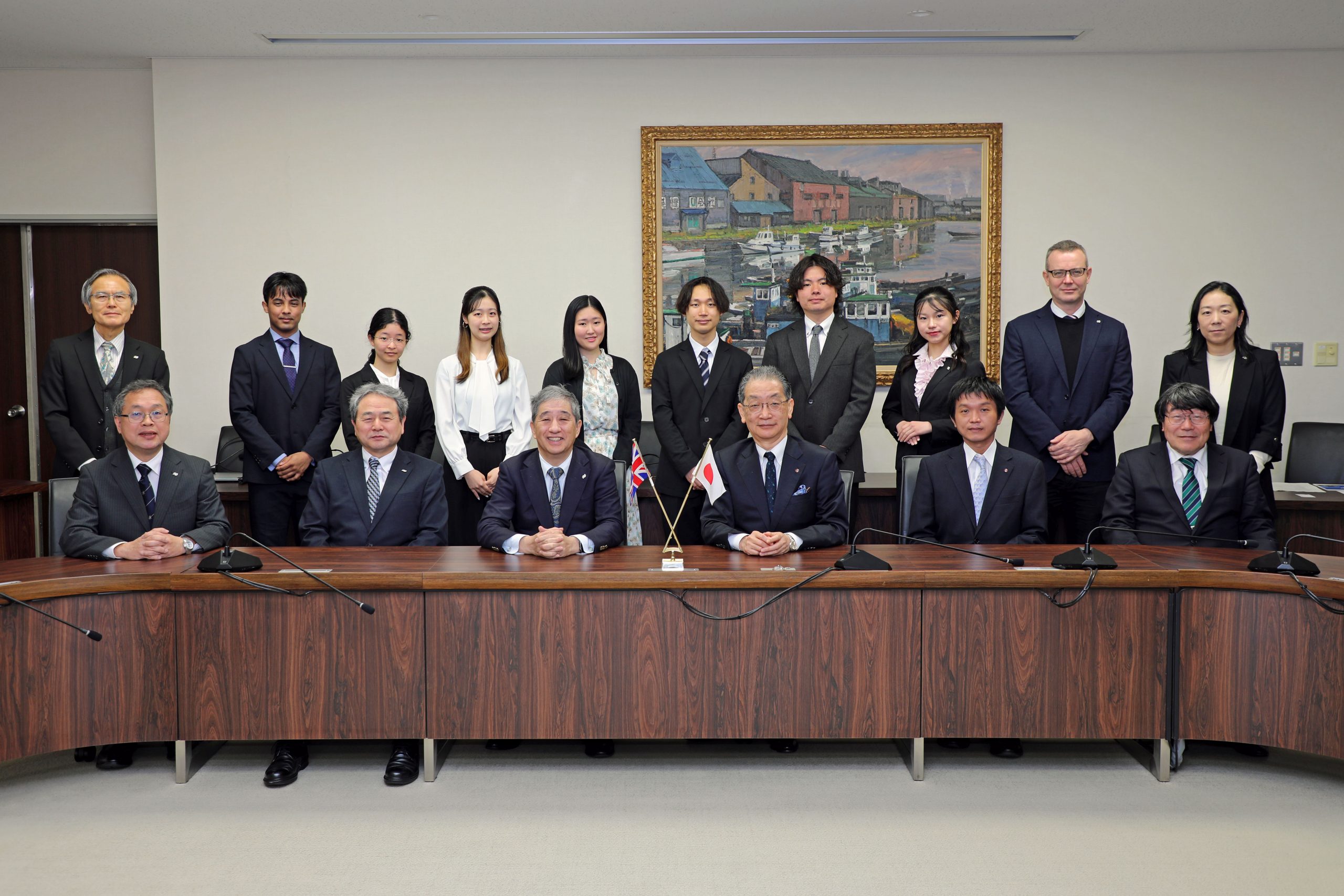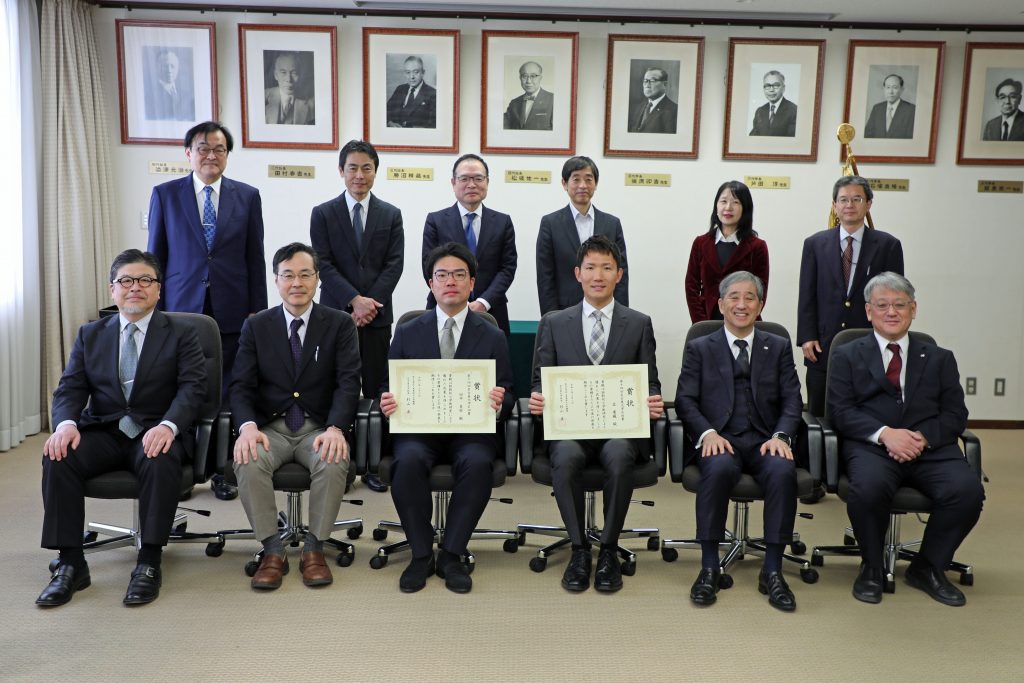
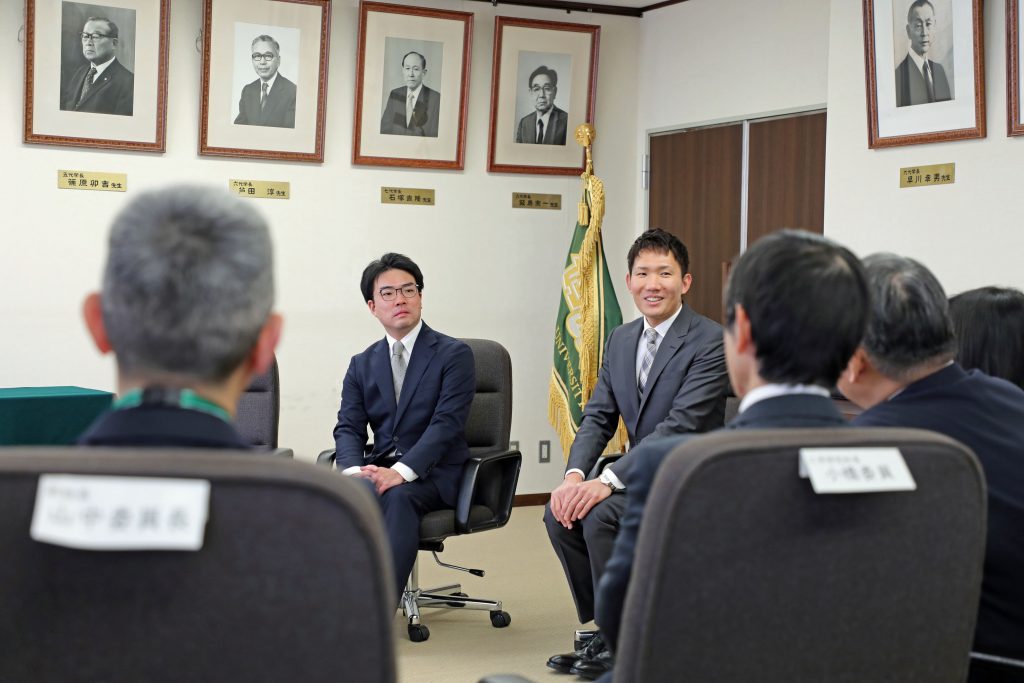
On February 2, 2026, the 14th Nagoya University Ishida Award ceremony was held at the Higashiyama Campus. Nagoya University President Naoshi Sugiyama, selection committee members, this year’s recipients, and guests attended the event. The ceremony included remarks from President Sugiyama, acceptance speeches from both recipients, and an informal discussion about their ongoing research and future plans.
This year’s recipients are as follows:
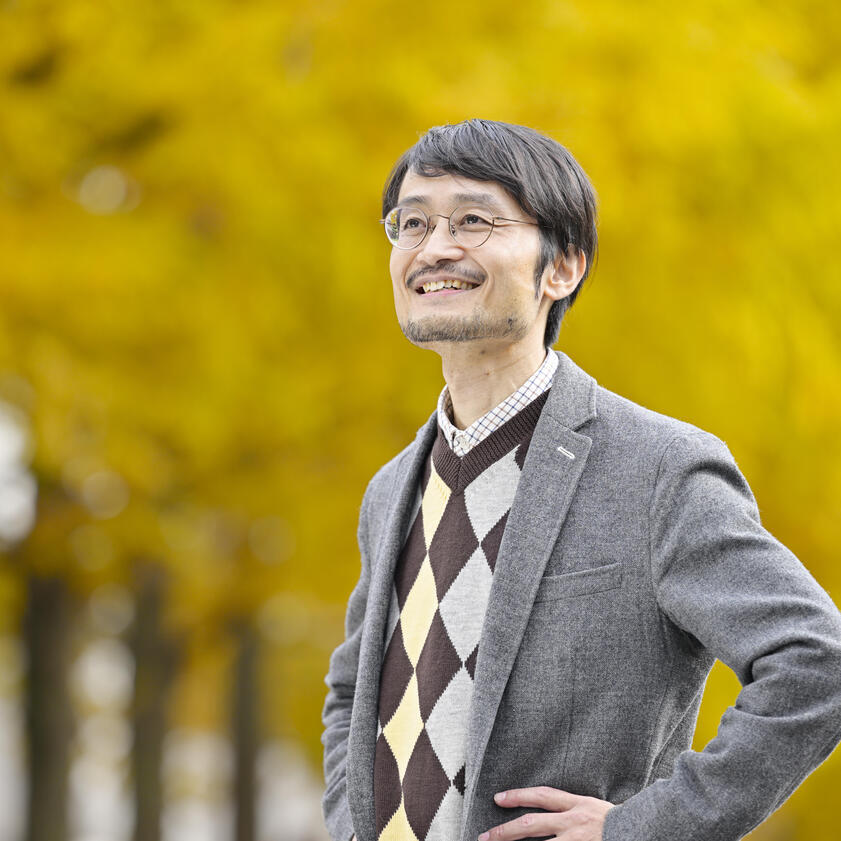
- Humanities and Social Sciences: Xianwei Meng, Associate Professor, Graduate School of Informatics (“Research on the developmental origins of human sociality”)
- Natural Sciences: Ryoya Tanaka, Lecturer, Graduate School of Science (“Research on the neural mechanisms underlying the evolution of insect courtship behavior”)
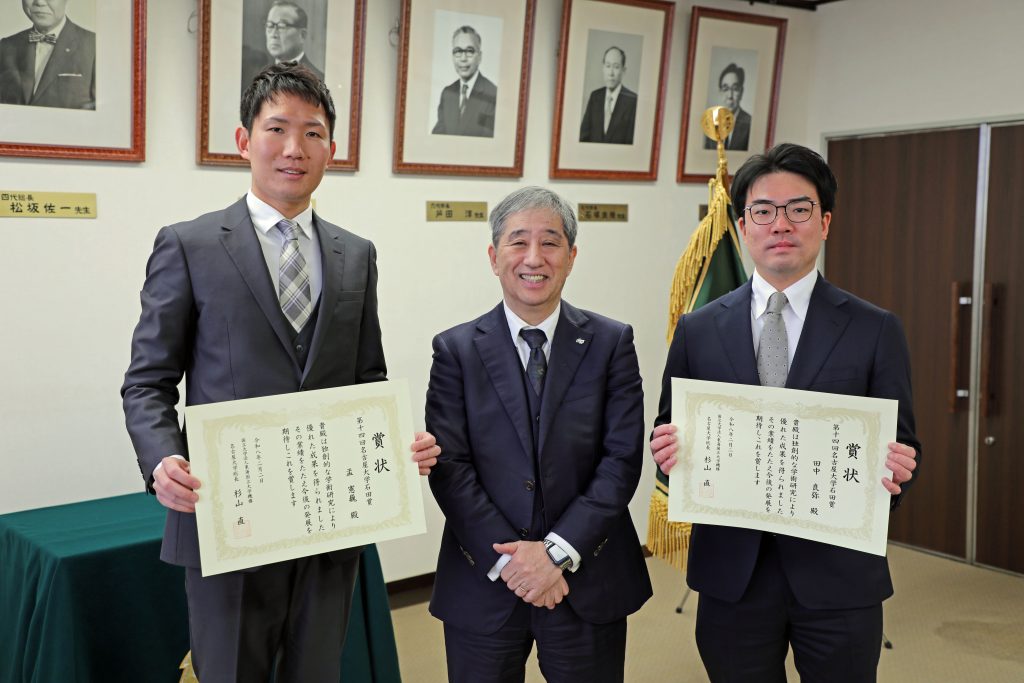
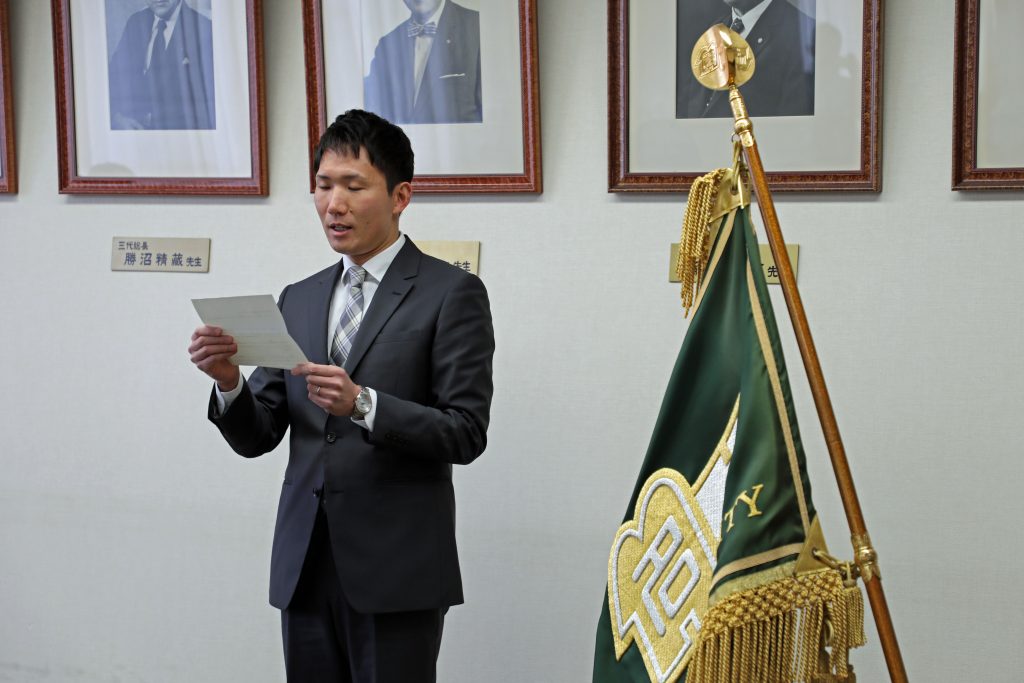

Meng’s research focuses on the developmental origins of human sociality, a trait that underpins the uniquely complex cultures humans have built but one that remains insufficiently understood in the scientific literature. Drawing on decades of progress in developmental science, which has shed light on early cognition through experimental studies of infants, Meng’s work examines the cognitive capacities and motivations that make social life possible. His research approaches sociality through three lenses: the ability to share experiences with others, the capacity to form and retain memories of other people, and the development of an awareness of social relationships. Taken together, these lines of inquiry offer a comprehensive account of how these fundamentally human traits first emerge.
Tanaka’s work investigates the neural underpinnings of how new behaviors evolve in insects, using fruit flies as a model organism. His most notable finding involves the successful transfer of a courtship behavior from one fruit fly species to another through the manipulation of a single gene. Specifically, by activating the fru gene in insulin-producing neurons, the team induced these cells to grow new neural projections and connect to the brain’s courtship control center, thereby producing the gift-giving behavior in a species that had never exhibited it. Published in Science, the study was the first to demonstrate that behavioral evolution can result from small-scale genetic changes in existing neurons, rather than requiring the emergence of entirely new ones.
Established in 2012 based on a donation from the Ishida Foundation, the Nagoya University Ishida Award was created to recognize and support early-career researchers. The award is open to young researchers who meet the following criteria: they must be aged 40 or under in the humanities and social sciences, or 35 or under in the natural sciences, and affiliated with research institutions in Aichi, Gifu, or Mie prefectures. Recipients are selected on the basis of demonstrated research output and significant promise for continued scholarly growth. Its aim is to encourage research ambition and foster the development of scholarship across these fields.