
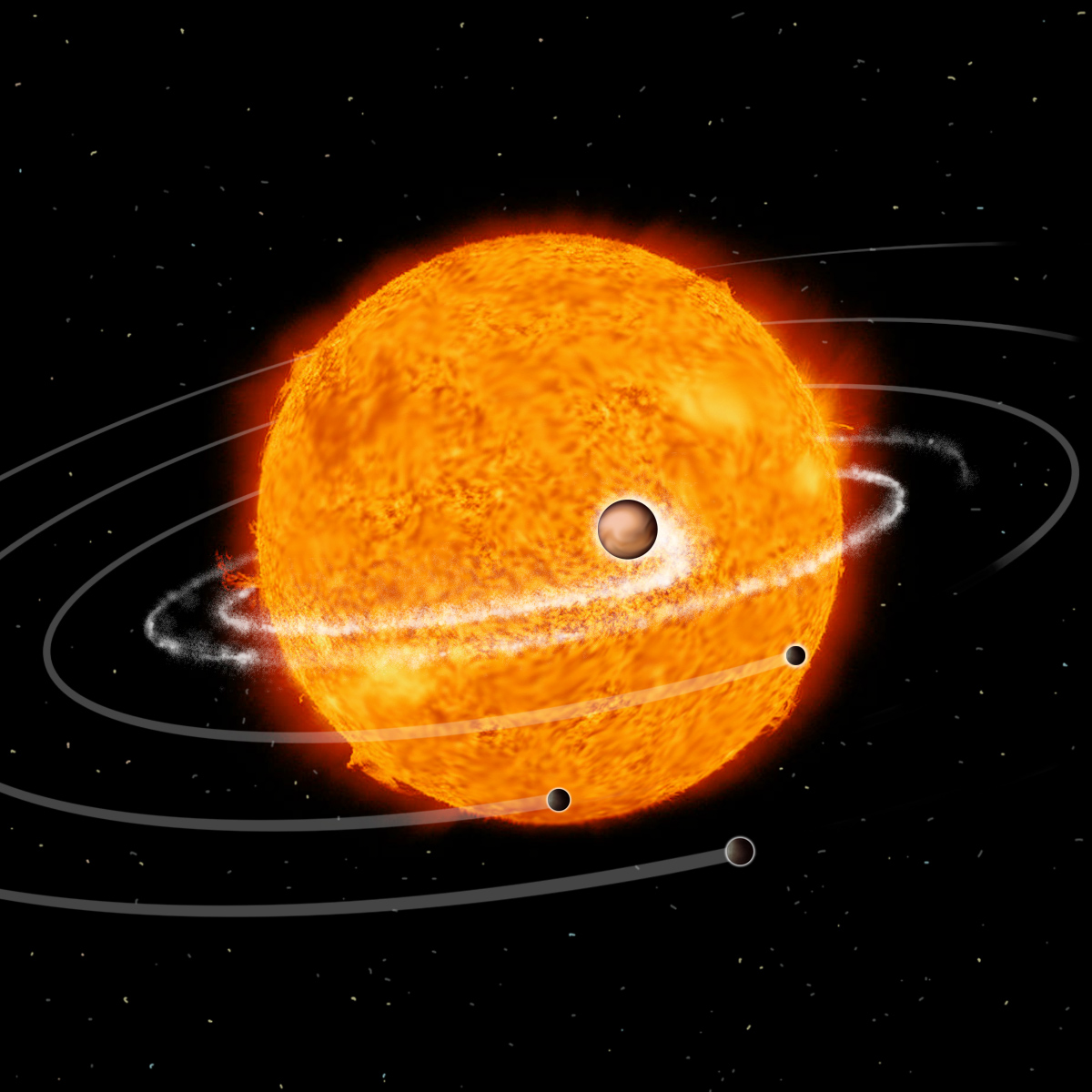
Dr. Masahiro Ogihara and coworkers at Nagoya University have discovered the mechanism of hot Jupiter (HJ) being pushed inward by terrestrial planets, and named the mechanism "crowding-out." Their paper was published online in The Astrophysical Journal Letterson November 6, 2013.
Many exoplanets have been discovered owing to developments in observation technology, and these observations have advanced the study of planet formation. However, the predominant planetary formation theories cannot answer many questions regarding multiplanetary systems, such as why we cannot simultaneously observe HJ and terrestrial planets. Therefore, a new theory to answer these questions is required.
Dr. Ogihara’s research group has previously called for a new model, the "hybrid scenario", and has been significantly contributing to planetary formation theories. This time, they used computer simulations to determine why HJ and planets have not been simultaneously observed. They showed that HJ promotes the formation of terrestrial planets, however, as these planets grow, they push HJ inward and end up eliminating HJ by causing it to collapse into a fixed star. Dr. Ogihara named this mechanism "crowding-out." When the terrestrial planets fail to reach a certain size, this mechanism does not work and HJ survives. In this case, the planets are too small to be observed by current observation technologies, and only HJ and a star can be observed.
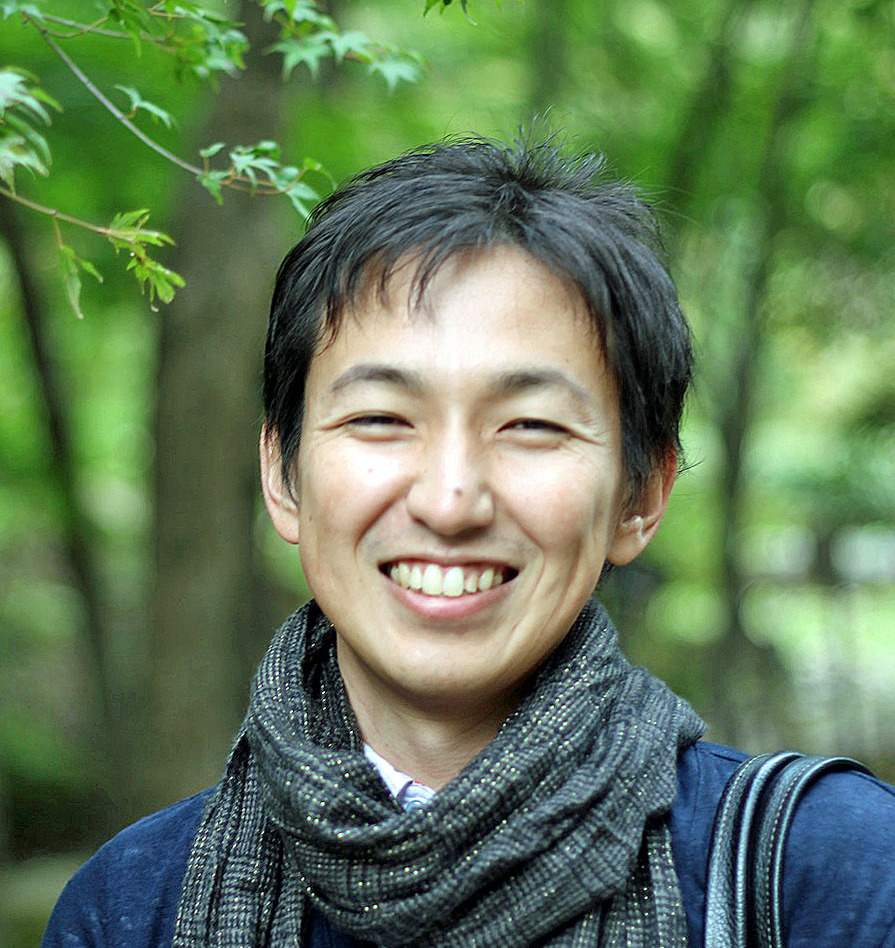
Dr. Masahiro Ogihara
Dr. Ogihara has challenged the accepted theories for the formation and origin of terrestrial planets and satellites around gas giants inside and outside the solar system. He believes that for conducting scientific research, it is necessary to push the boundaries of knowledge and be far ahead of the rest of world. He chose to become a research scientist because he was fascinated by the prospect of being the first to discover the mechanisms of unknown phenomena. The area of research he has devoted himself to has seen remarkably rapid progress with many new discoveries. He is excited about his work and enjoys witnessing historic discoveries as well as making history himself.
Outlook for the Future
"In the future, I would like to construct a theory that can give a consistent explanation for the origin and formation of planets inside and outside the solar system, including satellites and other celestial bodies. I will start a new life as a research scientist in France in April 2014. Therefore, presently, I would like to learn new research methods and familiarize myself with different points of view, and grow as a person as well as a scientist."
Message to Young Students
"To be a prominent leader in society and science, you need to have broad knowledge and experience. I recommend learning and experiencing various things that would contribute to your future while you are young and relatively carefree. You can never tell what would benefit you in the future; therefore, be adventurous and do not limit the scope of your experience. At the same time, it is important to know that your time is limited; please acquire skills that will allow you to intensively conduct your activities within a short time."