Now researchers can pinpoint which brain circuits drive social behaviors by manipulating specific individuals in real time, even when multiple animals closely interact
A male fruit fly in a laboratory chamber extends his wings and vibrates them to produce his species’ version of a love song. A female fly stays nearby listening. Suddenly, a green light flashes across the chamber for a fraction of a second. The male’s song cuts off mid-note and his wings fold. The female, not impressed by the interrupted serenade, walks away. The culprit? An AI system that watched the male begin his courtship dance and shut down his song-producing brain cells.
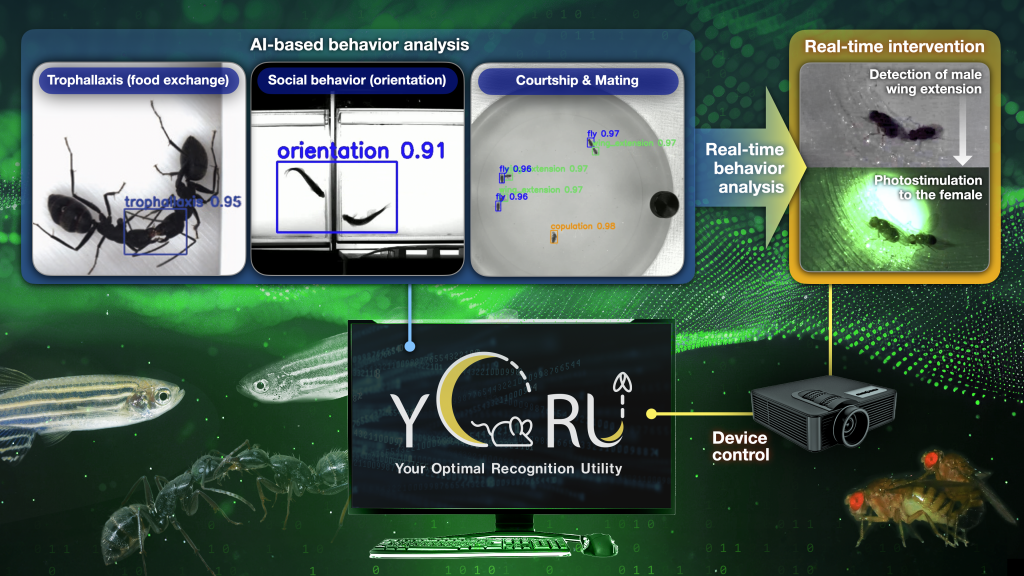
Developed by scientists at Nagoya University and their collaborators from Osaka University and Tohoku University, the AI can watch and recognize animal behaviors and control the specific brain circuits that drive them. Published in Science Advances, the study presents an advanced AI system that can identify which animal performs a behavior in a group and selectively target only that animal’s brain cells during social interactions.
YORU (Your Optimal Recognition Utility) recognizes different behaviors across species with over 90% accuracy, including food-sharing between ants, social orientation in zebrafish, and grooming in mice. However, the real breakthrough came with fruit flies, when the research team combined YORU with brain control technology to shut off song-producing neurons during courtship, which reduced male mating success.
Traditional behavior analysis tracks individual body parts frame by frame, similar to motion capture technology in video games. This method is challenging when multiple animals interact or overlap. Additionally, scientists needed faster tools for real-time experiments where split-second timing is critical.
“Instead of tracking body points over time, YORU recognizes entire behaviors from their appearance in a single video frame. It spotted behaviors in flies, ants, and zebrafish with 90-98% accuracy and ran 30% faster than competing tools,” Hayato Yamanouchi, co-first author from Nagoya University’s Graduate School of Science said.
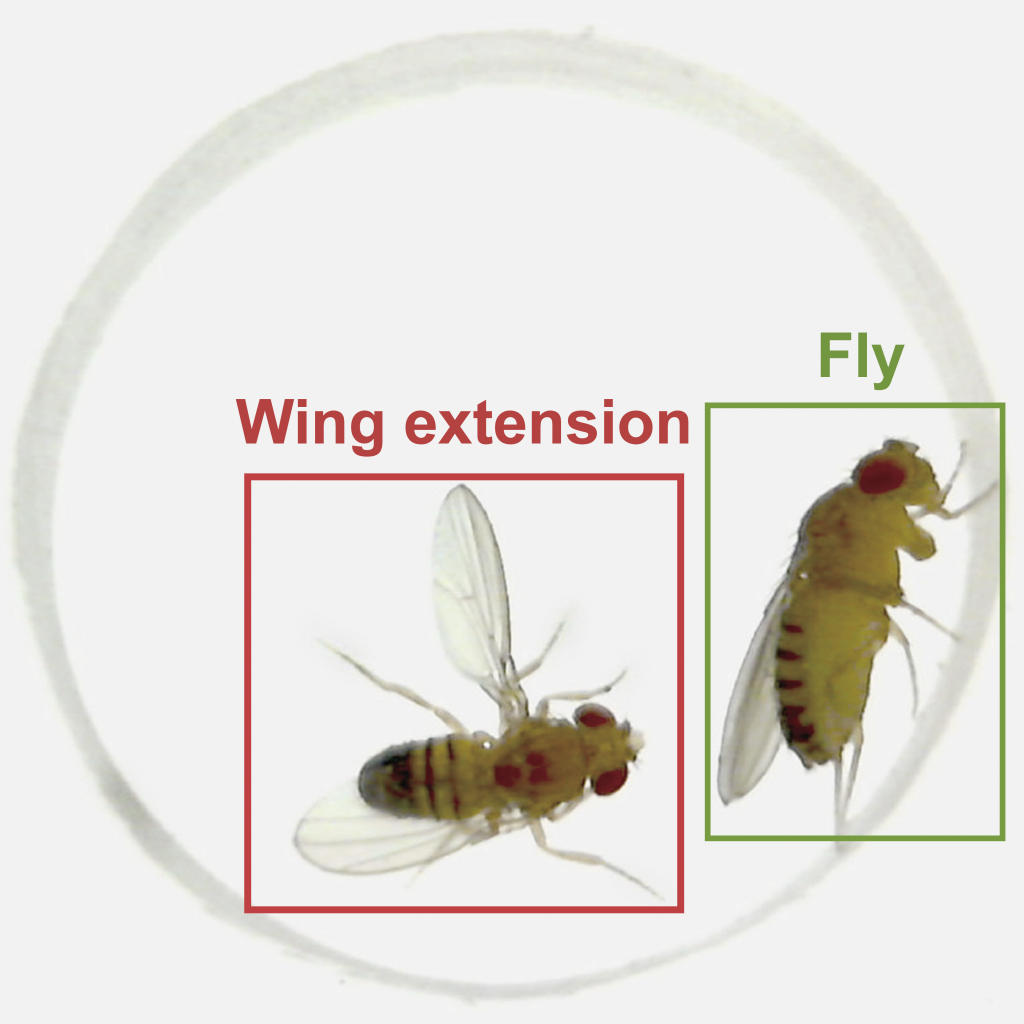
Senior author Azusa Kamikouchi explained that the real breakthrough combines YORU with optogenetics, using light to control genetically engineered neurons. “We can silence fly courtship neurons the instant YORU detects wing extension. In a separate experiment, we used targeted light that followed individual flies and blocked just one fly’s hearing neurons while others moved freely nearby.”
Watch how YORU works: YORU identifies the exact moment a male fruit fly extends his wing to court a female—detecting courtship behavior in real time. Credit: Yamanouchi et al., 2026
This individual-focused control solves a major challenge: previous methods could only illuminate entire chambers, which affected all animals at the same time and made it impossible to study an individual’s role during social interactions.
How the brain control technology works
Step 1: Genetic engineering
The scientists genetically modify the animals to have special light-sensitive proteins (called “opsins”) expressed in specific neurons in their brains. These proteins can turn neurons on or off, depending on the type.
Step 2: Detection and response
• YORU captures the animal’s behavior in real-time with a camera
• When YORU’s AI detects the target behavior, it instantly sends an electrical signal to a light source
• The light automatically turns on and shines on the target animal
Step 3: Light controls the brain
• The light hits the target animal and reaches those genetically modified neurons
• The light-sensitive proteins respond to the light by opening an ion channel on the membrane of target neurons
• This blocks or activates those specific neurons, changing the animal’s brain activity
• The behavior is affected as a result
YORU works across species, can be trained to recognize new behaviors with minimal training data, and requires no programming skills to use. The Nagoya team made YORU available online for scientists worldwide studying how brains control social interactions.
Paper Information:
Hayato M. Yamanouchi, Ryosuke F. Takeuchi, Naoya Chiba, Koichi Hashimoto, Takashi Shimizu, Fumitaka Osakada, Ryoya Tanaka, and Azusa Kamikouchi (2026). YORU: animal behavior detection with object-based approach for real-time closed-loop feedback, Science Advances., 12(7). https://doi.org/10.1126/sciadv.adw2109
Expert Contact:
Azusa Kamikouchi
Graduate School of Science
Nagoya University
Email: kamikouchi.azusa.r4@f.mail.nagoya-u.ac.jp
Media contact:
Merle Naidoo
International Communications Office
Nagoya University
Email: icomm_research@t.mail.nagoya-u.ac.jp
Top image:
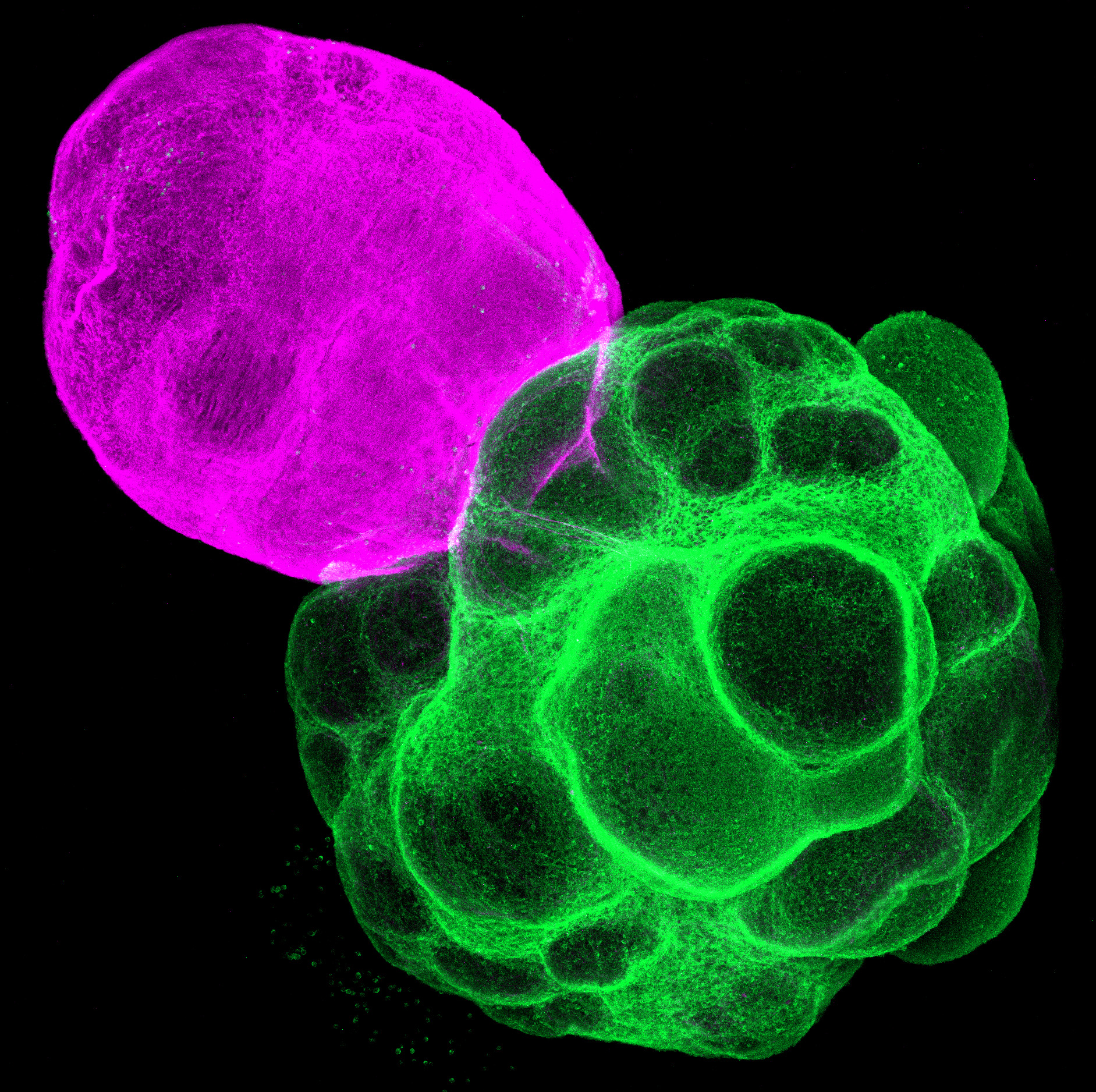
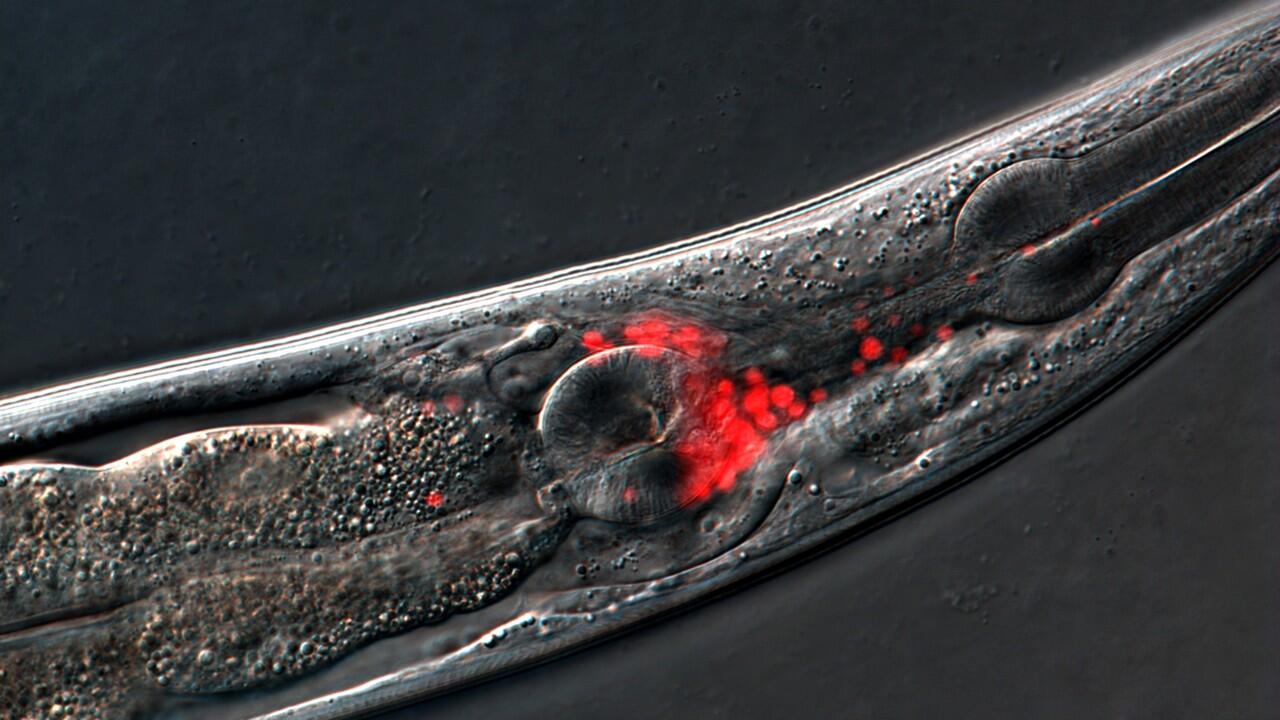
Nagoya University scientists develop an AI system to automatically identify behavior types and control individual animals’ brain cells during group interactions. Credit: Yamanouchi et al., 2026
Researchers
-
KAMIKOUCHI AzusaGraduate School of Science
-
TAKEUCHI RyosukeGraduate School of Pharmaceutical Sciences, Department of Basic Medicinal Sciences, Bioscience
-
SHIMIZU TakashiGraduate School of Science
-
OSAKADA FumitakaGraduate School of Pharmaceutical Sciences, Department of Basic Medicinal Sciences, Bioscience
-
TANAKA RyoyaGraduate School of Science
Related organizations
Related tags
- Animal behavior
- Artificial intelligence
- Biology
- Brain
- Brain function
- Neural circuit
- Optogenetics
- Social behavior