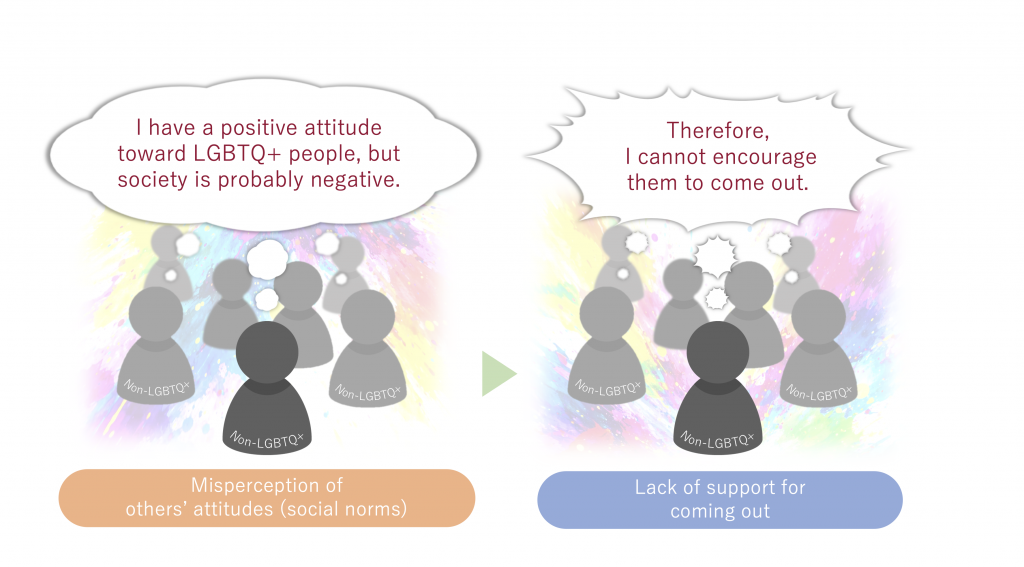
Nearly two thirds of participants held positive attitudes toward sexual and gender minorities, but most assumed others were less accepting
Coming out is known to have clear benefits for mental health and wellbeing, yet for many LGBTQ+ individuals in Japan, doing so remains a significant challenge. Researchers at Nagoya University surveyed cisgender, heterosexual Japanese adults on their attitudes toward sexual and gender minorities and coming out. Their findings, published in Psychology of Sexual Orientation and Gender Diversity, show that while most participants had positive attitudes toward LGBTQ+ people, they assumed the public was more negative than themselves—a misperception that may be stopping people from showing their support.
“For sexual and gender minority individuals, concealing their gender identity or sexual orientation can have a serious impact on their mental health, while being accepted after coming out is associated with improved quality of life,” Xianwei Meng, associate professor at Nagoya University’s Graduate School of Informatics, said.
“In Japan, many sexual and gender minority individuals report feeling unable to come out. Much of the existing research has focused on the fear of discrimination and stigma, while the role of support from others has been overlooked, even though it’s critical to whether someone feels safe enough to openly share their identity.”
Measuring the gap between personal and estimated societal attitudes
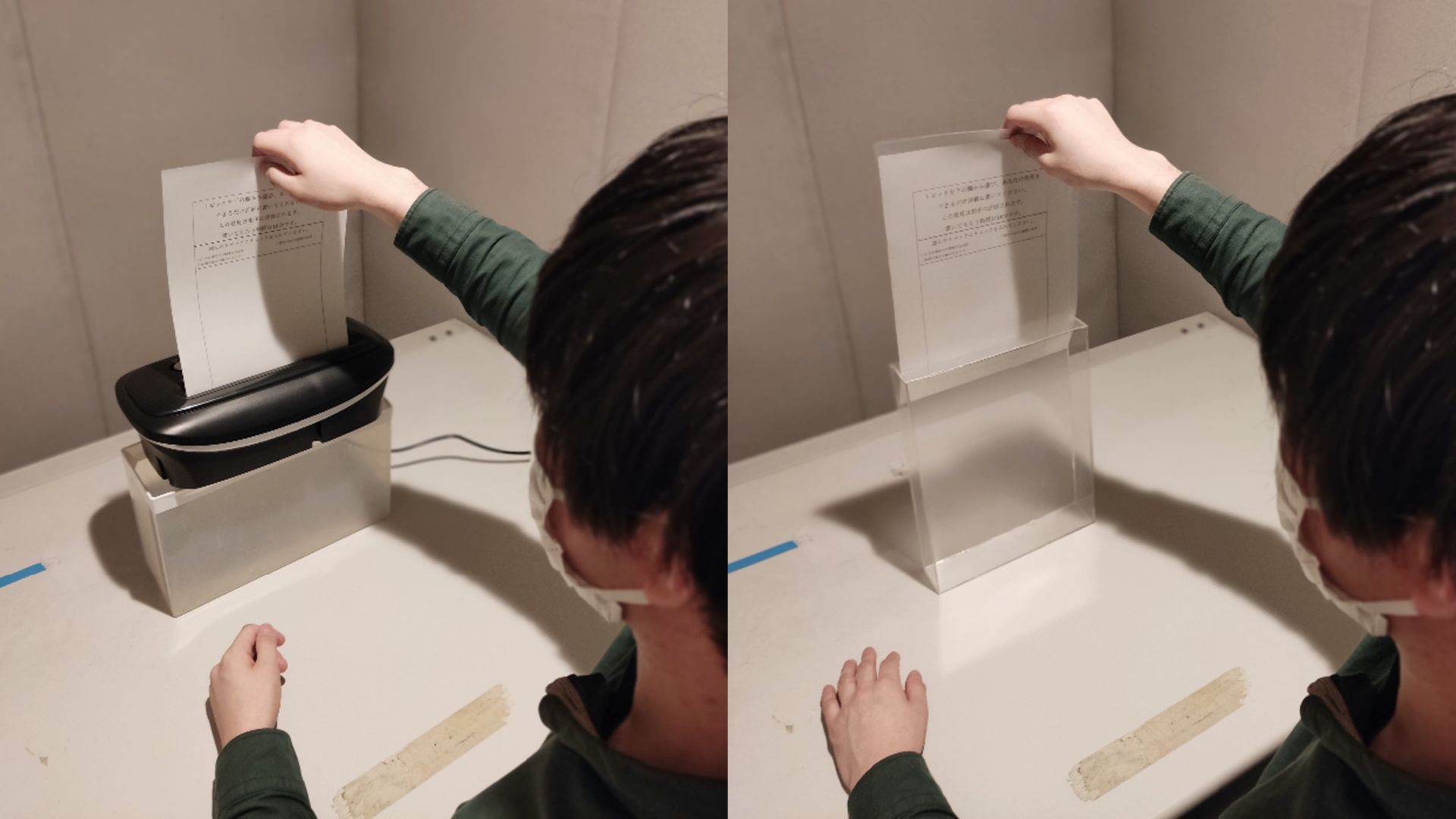
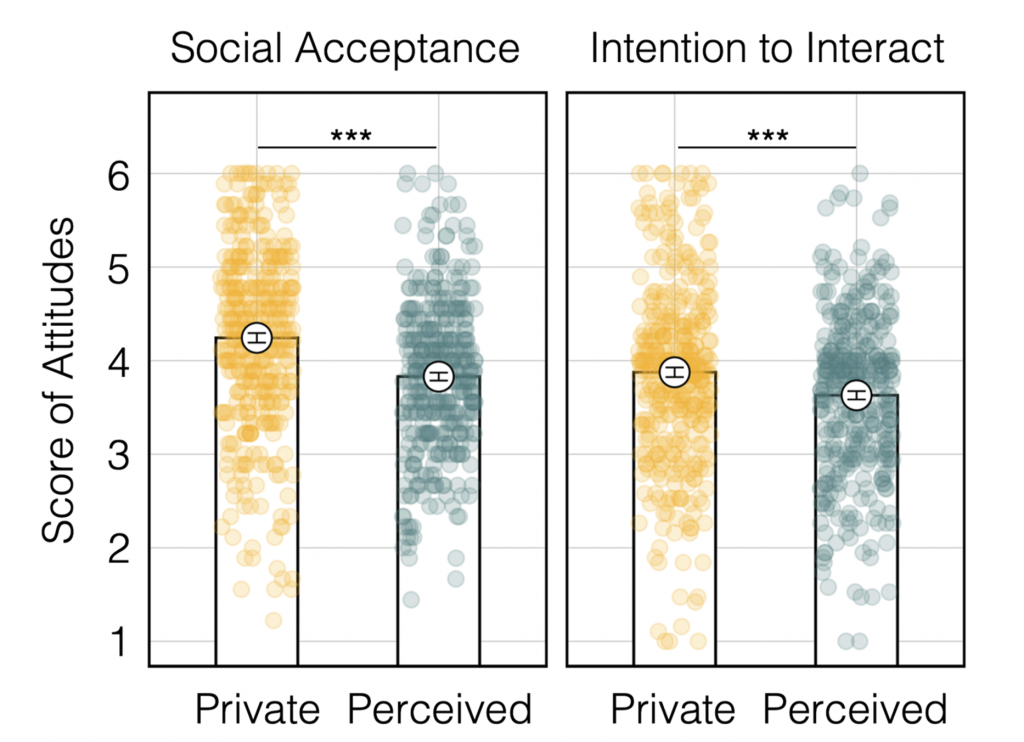
The online survey collected 370 responses and measured three things: participants’ own attitudes toward sexual and gender minorities, their estimates of how accepting the Japanese public is toward them, and their willingness to support a friend who wished to come out. These were measured using numerical rating scales.
The average personal attitude score toward sexual and gender minorities was 4.24 (on a 6-point scale), while the average estimated public attitude score was 3.83. This statistically significant gap shows that participants underestimated how accepting others were.
Based on their responses, participants were divided into three main groups: those who were positive toward sexual and gender minorities and estimated others as positive (62%), those who were positive but estimated others as negative (17%), and those who held negative attitudes and estimated others as also negative (16%).
These group differences had a notable impact on participants’ willingness to support coming out. The study found that participants who held positive attitudes but assumed others were negative scored significantly lower on willingness to support a friend coming out than those who held positive attitudes and believed others shared their views (3.93 vs. 4.43 out of 7). Their support level was closer to neutral, neither actively helping nor refusing.
Impact on support for those who want to come out
“Our findings suggest that attitudes toward sexual and gender minorities in Japan are more positive than commonly assumed. However, the misperception that others hold more negative views may discourage people from expressing support, making society appear less accepting than it actually is. Sharing the reality that many people are accepting could help create a more inclusive society,” said coauthor Yuka Mizuno, a master’s student at Nagoya University who specializes in social psychology.
The findings carry important implications beyond individual attitudes. In workplaces and schools, raising awareness that acceptance is more widespread than people assume could help build more supportive environments. Media coverage also has a role to play, as reporting that focuses heavily on discrimination and exclusion may inadvertently reinforce a misperception that negative attitudes are the norm.
Paper information:
Yuka Mizuno and Xianwei Meng (2026). Misperceived Public Attitudes Undermine Support for Sexual and Gender Identity Disclosure in Japan, Psychology of Sexual Orientation and Gender Diversity. DOI: https://doi.org/10.1037/sgd0000911.
Expert contact:
Xianwei Meng
Graduate School of Informatics
Nagoya University
E-mail: meng@i.nagoya-u.ac.jp
Media contact:
Merle Naidoo
International Communications Office
Nagoya University
Email: icomm_research@t.mail.nagoya-u.ac.jp
Top image:
How mistaken beliefs about society can silence support for coming out: A person who personally holds positive attitudes toward LGBTQ+ individuals but assumes society is negative may hesitate to encourage a friend to come out. Yuka Mizuno, Nagoya University