
India, Italy, the United Kingdom, Portugal, Canada, Brazil…
Researchers with diverse backgrounds gather to talk over coffee on the Nagoya University Higashiyama Campus. This monthly meetup is held as part of a community called NODES.
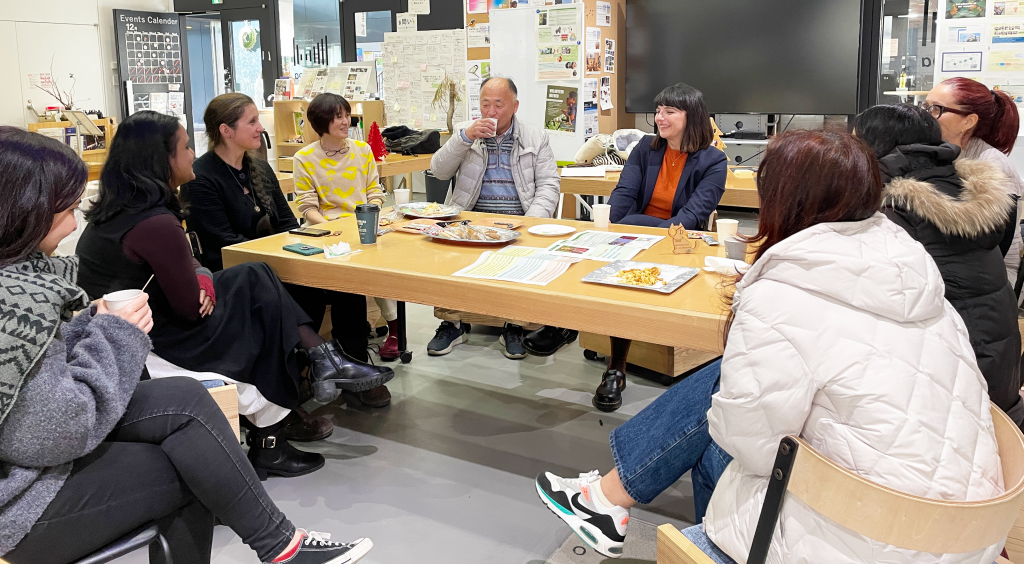
Behind this relaxed atmosphere lie the often invisible challenges faced by international researchers working at Japanese universities—and the University Research Administrators (URAs) who work alongside them.
In this article, we speak with Naoko Ishigaki, a URA who runs NODES, about her efforts to improve research environments for international researchers and why this work matters to her.
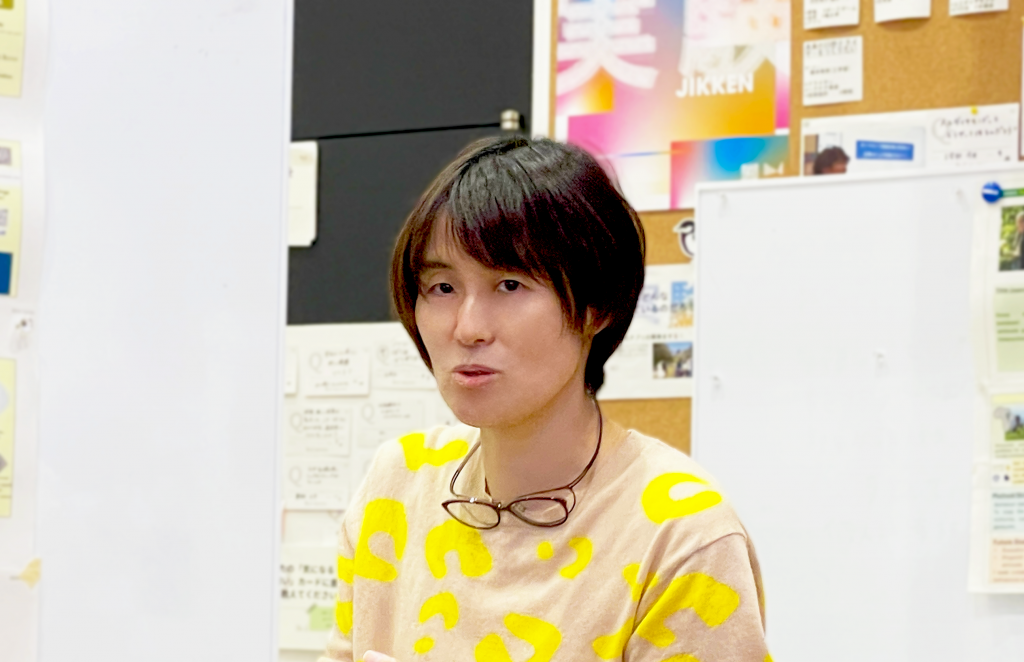
Naoko Ishigaki, Research Administrator
Research Support & Personnel Development Division,
Academic Research & Industry-Academia-Government CollaborationAfter working in neuroscience research and taking time for childcare, Ishigaki became a URA in 2023 with encouragement from her husband, who is also a researcher. Drawing on her own research experience and her attentive approach to listening, she supports international collaborative research, English-language grant applications, and the operation of a community for international researchers. On a more personal note, she dreams of one day creating a small, informal gathering place based in her traditional house in Shikoku.
── NODES feels very warm and welcoming.
Ishigaki: Thank you. I want it to be a place where international researchers can casually stop by and connect.
── How did this initiative begin?
Ishigaki: It started with a conversation with Swagatha Ghosh, an assistant professor in engineering, who is here today as well. She told me that when she first arrived at Nagoya University, she was very busy and focused on her work—but once things settled down, she began to feel lonely. At the same time, changes in her laboratory environment added to her emotional burden.
── Why did you choose to focus on “creating a place” like NODES, rather than handling issues one by one?
Ishigaki: The idea actually came from Swagatha herself. She has experience in startups and education and is very good at building networks. While it is important for URAs to respond to individual concerns, there are limits to what one person can do. If researchers facing similar challenges become familiar with one another and can talk openly, that becomes a kind of safety net.
── At today’s meetup, you weren’t just facilitating; you were speaking with everyone individually. How do these conversations connect to your daily work?
Ishigaki: In flat, informal settings like this, it becomes clear where people are getting stuck. Information and customs that pose no problem for Japanese researchers can become major barriers for those from different linguistic or cultural backgrounds. Things I had been concerned about when I first joined the university turned out to be happening in practice. One common issue is missing important deadlines because internal emails are distributed only in Japanese. That’s why I translate and share information that is directly relevant to research activities.
── Recently, more internal emails have started to be sent in both Japanese and English. I imagine there were various efforts behind that change. Are these issues common at other universities as well?
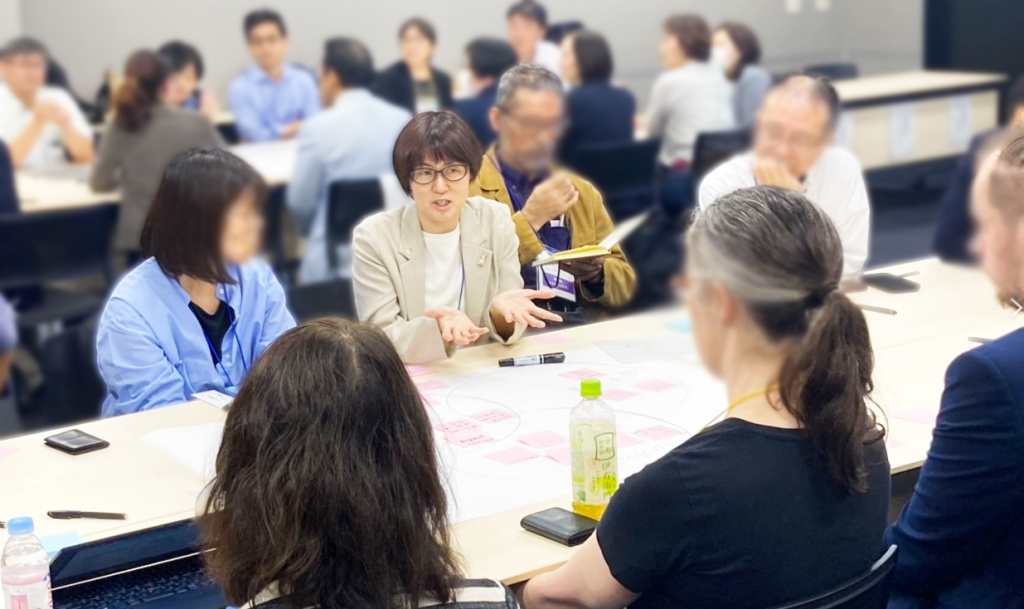
Ishigaki: I think so. Recently, I facilitated a session on supporting international researchers at the annual meeting of the RMAN-J (Research Manager and Administrator Network Japan). Discussions with URAs from other universities confirmed that isolation and access to information are shared challenges. Even when institutions welcome international researchers, many are still figuring out how best to support them.
── These don’t seem like problems one URA or one university can solve alone.
Ishigaki: Exactly. Applying for Grants-in-Aid for Scientific Research (KAKENSHI) is another unavoidable challenge for researchers working in Japan. We want to avoid situations where researchers applying in English are disadvantaged due to lack of information. This year, we invited an experienced URA from another university to lead the KAKENHI Writing Seminar 2025. While the number of applications increased—a visible outcome—what mattered more was that more researchers felt encouraged to apply. That, to me, is the essence of support.
── It sounds like collaboration across institutions is already underway. Are you also addressing these issues at a broader organizational level?
Ishigaki: I feel we’ve reached a stage where we shouldn’t treat voices from the field as isolated concerns. Within the university, I organize these insights and share them with university leadership. At a broader level, I hope to work with URAs at other universities through organizations like the Japan Association of National Universities to discuss how we can collectively improve research environments for international researchers.
──────────
Carefully listening to voices from the field and connecting them with stakeholders—this article has introduced current efforts to support international researchers by moving between individual assistance and institutional systems.
Although we did not explore this in depth, many discussions at NODES also touched on challenges related to daily life in Japan. Research and life are inseparable, yet the scope of what URAs can support is limited.
Ishigaki is also looking beyond the university, seeking ways to connect academia with the local community to help create environments where international researchers can genuinely feel, “I want to stay here.”
Interview and text: Megumi Maruyama (URA, Planning and Project Development Division, Academic Research & Industry-Academia-Government Collaboration)
Related links
- Instagram account for NODES
- Original source (January 6, 2026): This article was published on note as part of the “URA Column,” a series of articles created by the URAs of Nagoya University’s Academic Research & Industry-Academia-Government Collaboration.
