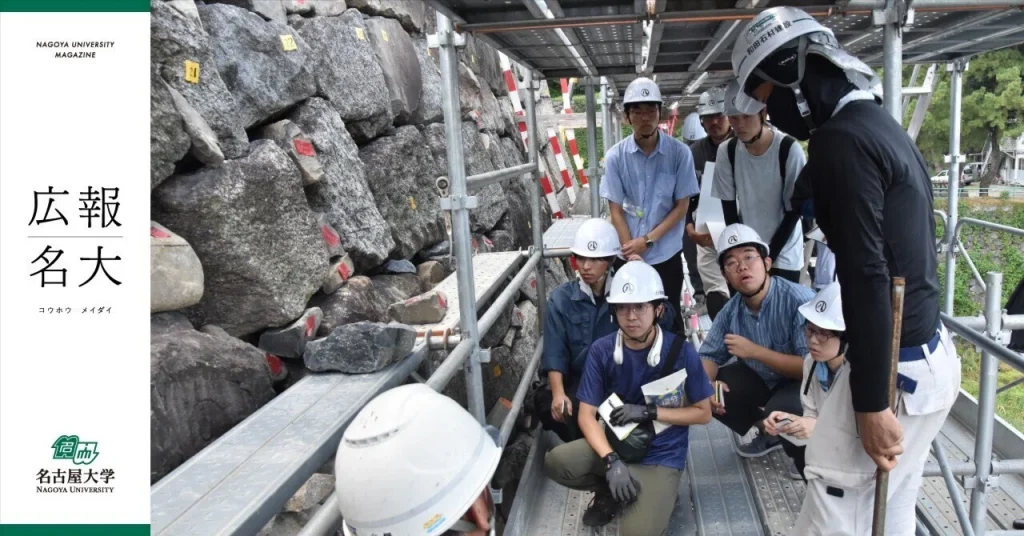
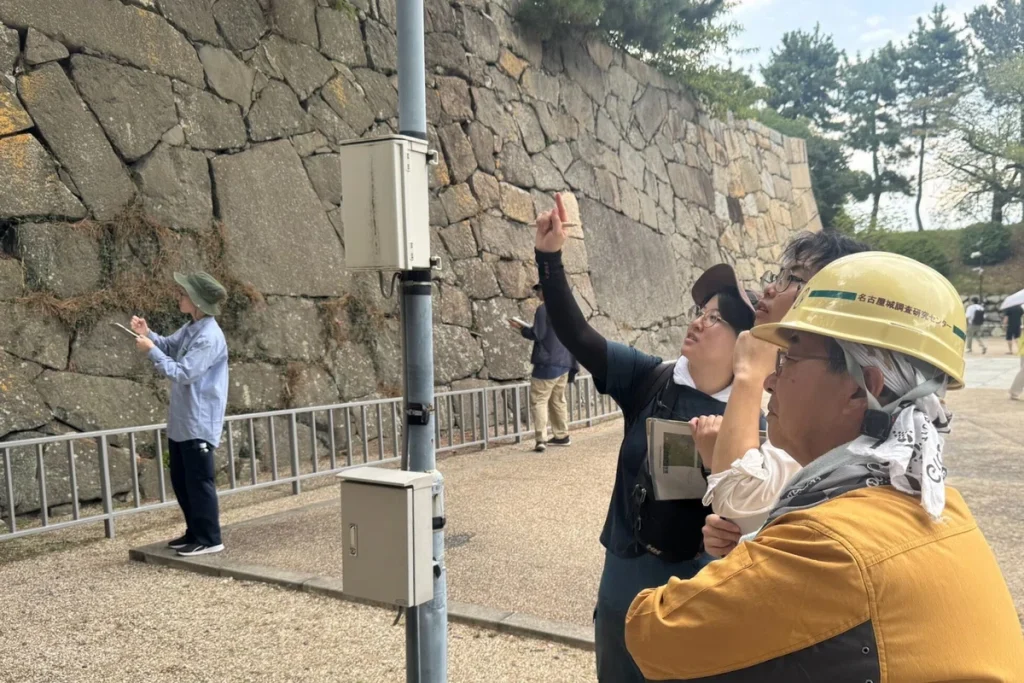
In early September 2025, the Archaeology Lab of the Nagoya University Graduate School of Humanities held a practical training session in which students experienced restoring the stone walls of Nagoya Castle. The aim of the training was to deepen the students’ understanding of the fundamental value of cultural heritage and the importance of preserving cultural assets. In addition to observing the restacking process, the students created “health charts” for the stone walls, which are essential for preservation and repair work, and experienced cultural property preservation firsthand with this iconic piece of Japanese architecture serving as their textbook.
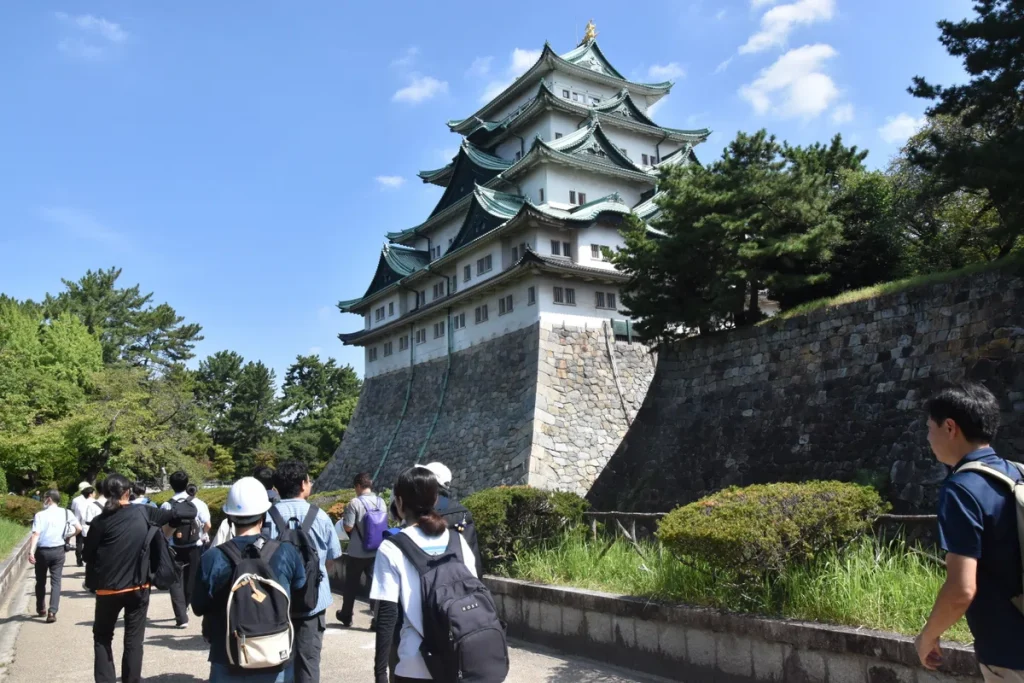
Nagoya Castle was built in the early 17th century. Nagoya City is committed to preserving the castle’s stone walls, of which a high proportion are original. The Honmaru Karamete-umadashi restoration project has been ongoing since 2002, and its first step involved dismantling more than 4,000 stones over a period of more than 15 years. The work to restack the stones in their original positions is currently underway, with a target completion date in 2027, making this a major project spanning more than 25 years.
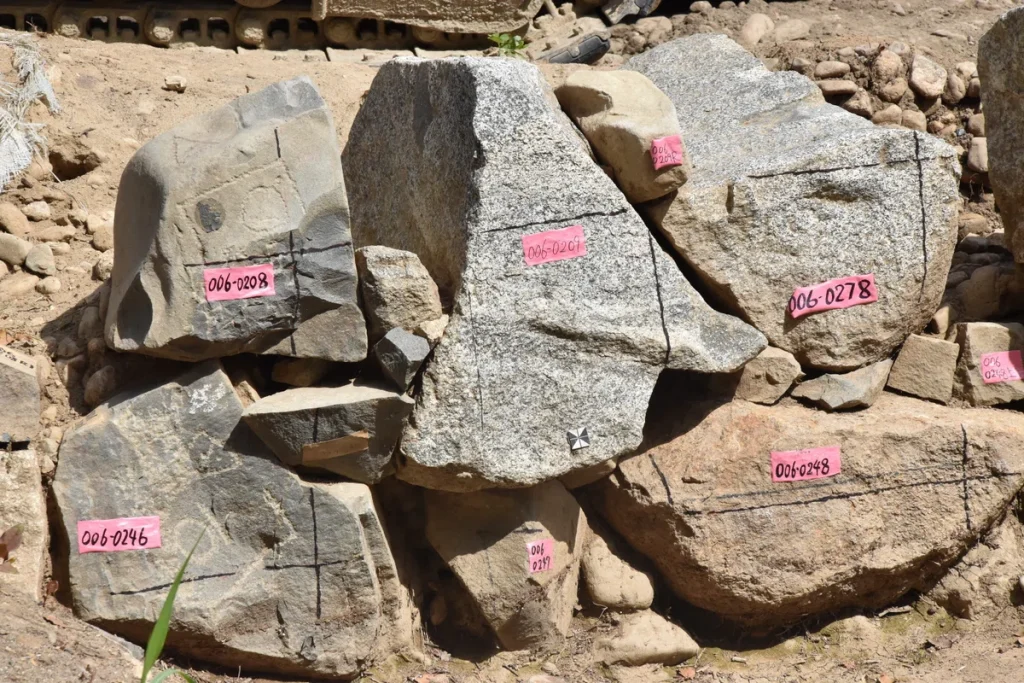
The practical training involved seeing and experiencing this major project site firsthand. The students observed workers using cranes to restack the stones, as well as the “gap filling” process whereby smaller stones are used to fill the spaces between the main stones. The students were in awe of the workers’ skills, such as how they expertly adjusted the position of each stone to the precision of a millimeter. One student said, “I feel a renewed sense of respect for the people who originally built these stone walls over 400 years ago.”
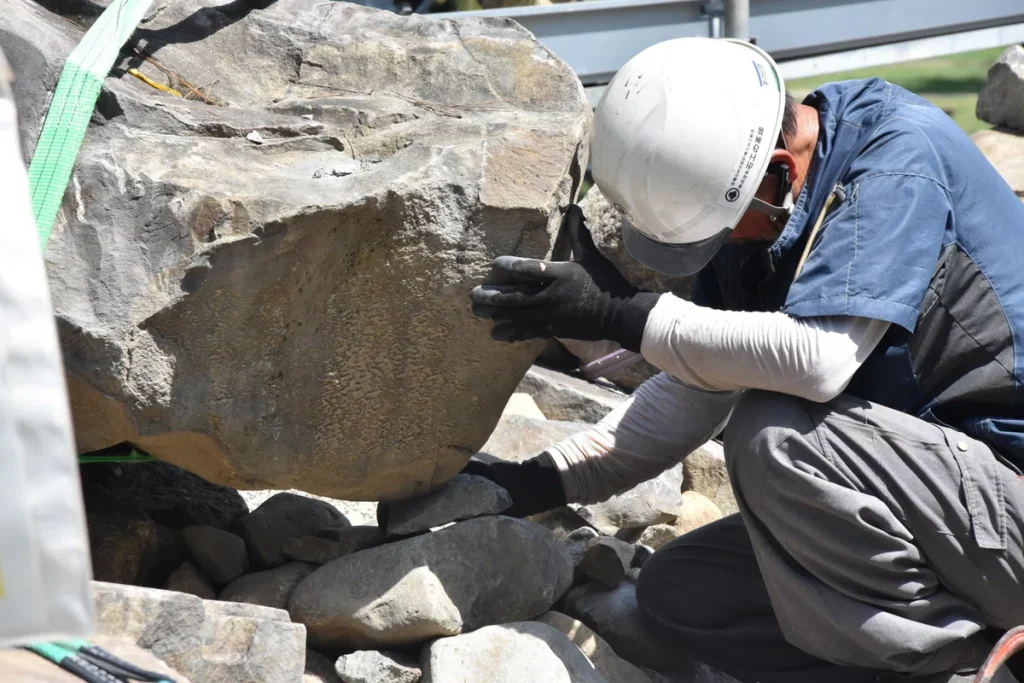
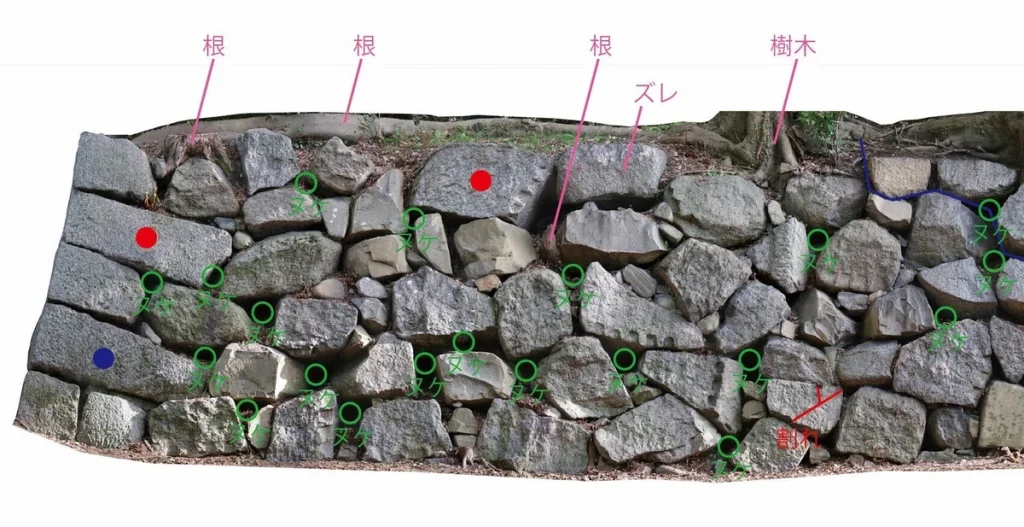
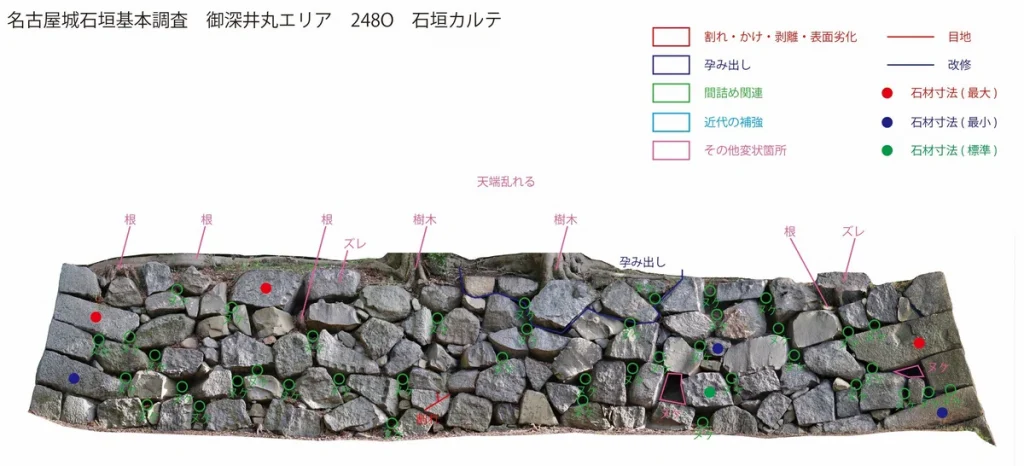
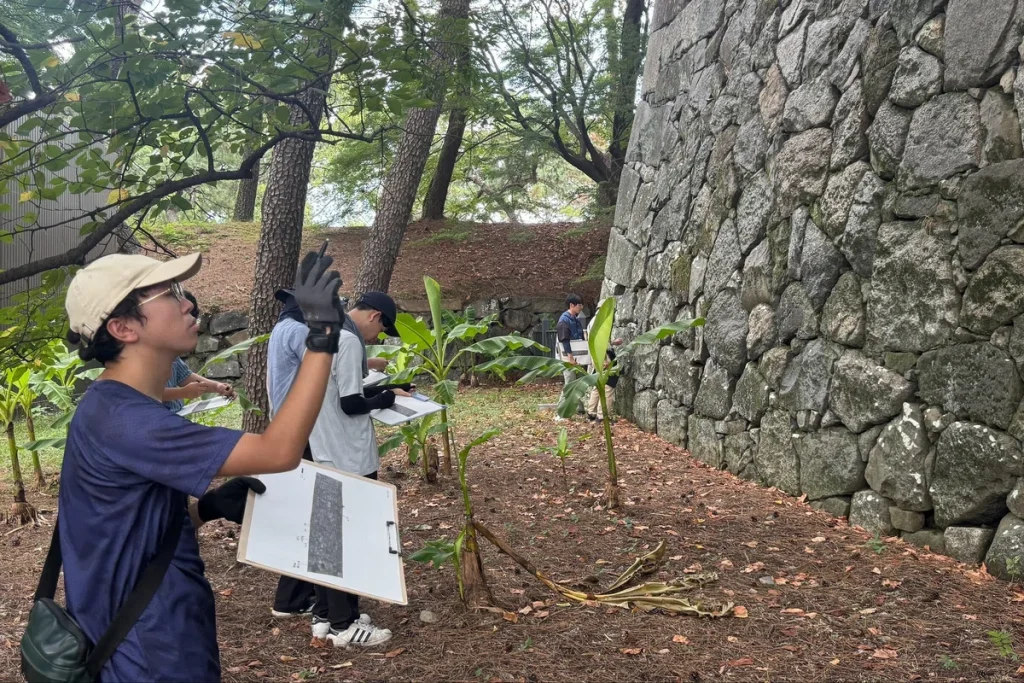
After the tour, the students tried making “health charts” for the stone walls. These records are used to track damage to walls over time and are critical for regular maintenance. Studying the stone walls around the Honmaru East and South gates, they recorded the way each stone was stacked, its tilt, and the nature of any damage. They compared their own records with those created by Nagoya City nine years ago to check whether any changes had occurred during that time, such as bulging and chipping. The students’ observations were actually incorporated into the city records. It was clear from the student responses that they felt the importance of cultural property conservation firsthand, with one student commenting, “After creating the stone wall record, I was surprised to learn how many parts of the wall are likely to need restoration in the future. I also learned that preservation work is highly collaborative, with experts coming together from various fields such as archaeology, civil engineering, and architecture.”
This training, held collaboratively between Nagoya City and the Association for the Conservation of Cultural Property Stone Walls, was made possible in part because Professor Yoshimitsu Kajiwara of the Archaeology Lab serves as a member of the Nagoya Castle Stone Wall and Buried Cultural Property Subcommittee.
Professor Kajiwara, who researches ancient temples, has recently been involved in excavation surveys at the Fuwanoseki checkpoint, said to have been located in Sekigahara, Gifu Prefecture. An expert in cultural property investigation and preservation, he commented about the significance of the training, “I want students to learn about the precision with which the restoration of the stone walls is undertaken. I also want students who will be involved in buried cultural properties to understand how in our work we are constantly borrowing the expertise of various specialists.”
Originally published in Japanese on September 19, 2025.