For the first time, real-time imaging tracks what happens to cancer cells arriving in the brain, identifying a new strategy to prevent brain tumors.
Metastasis occurs when cancer cells break away from the original tumor and travel through the bloodstream to form new tumors in other parts of the body. It is the leading cause of cancer-related death. Brain metastasis is particularly severe and affects 10-30% of patients with advanced lung, breast, and melanoma cancers. While therapies exist for established brain tumors, there are limited strategies that directly target the very first cancer “seed cells” that enter and lodge in the brain.
Our brains, however, are equipped with immune cells called microglia that rapidly respond to pathogens and cancer cells by engulfing and digesting them. Yet scientists could not explain why microglia sometimes fail to destroy incoming seed cells because they could not watch this critical interaction in real-time in the living brain.
Now, for the first time in this setting, the exact moment when microglia engulfed seed cells trying to spread to the brain has been captured and visualized. Published in Cancer Research, a journal of the American Association for Cancer Research, the study identifies two proteins that seed cells use to avoid being destroyed by microglia when they first arrive. By genetically removing these proteins, researchers showed that microglia play a key role in eliminating cancer cells during the early stage of their arrival in the brain.
Watching microglia and cancer cells interact in real-time—a first for brain metastasis
An international research team led by Dr. Takahiro Tsuji from the Nagoya University Graduate School of Medicine has studied seed cells that travel from the lung to the brain to understand how they behave when they enter the brain—a critical moment when microglia have a chance to destroy them. This window period lasts about 12 days, so by the time symptoms appear or imaging detects a problem, brain tumors have already formed.
“We recorded the interactions between microglia and cancer cells in live mice using an advanced imaging technique called two-photon microscopy,” Dr. Tsuji explained.
“While some microglia actively destroyed tumor cells, others instead supported cancer cell survival and growth. To investigate this difference, we applied a newly developed ‘opto-omics’ approach, in which only the microglia physically interacting with tumor cells were selectively tagged with light, isolated, and analyzed.”
A way to stop cancer seed cells from outsmarting the brain’s microglia
When cancer cells arrive in the brain, they evade being destroyed by microglia by using “don’t eat me” signals from two molecules, CD24 and CD47. When these molecules were removed, microglia digested the seed cells and brain tumors were significantly reduced. Furthermore, CD24 and CD47 were found in 50% of samples of human brain metastasis from lung cancer patients, indicating that the findings from this study have potential clinical relevance.

“Some microglia receive signals that reprogram them to help tumors by building blood vessels and creating a protective environment that shields cancer from immune attack,” senior author Professor Hiroaki Wake noted. “Understanding why some microglia destroy cancer while others support it at the very first encounter is key to developing better therapies.”
The researchers suggest a treatment strategy that removes CD24 and CD47 with antibodies or other therapies to eliminate cancer seed cells within the early stage when microglia can phagocytose cancer seeds.
“This approach focuses on harnessing our brain’s immune system to prevent metastasis at a very early stage, rather than treating tumors after they have already formed,” Dr. Tsuji said.
Looking ahead, the team is developing therapies to remove CD24 and CD47 that could work alone or alongside existing treatments. In parallel, they are creating biomarkers to identify patients most likely to benefit from early intervention. The researchers also plan to extend their imaging technology, which combines two-photon microscopy with opto-omics, to study metastasis in other cancers and organs.
Paper information:
Takahiro Tsuji, Haruka Hirose, Daisuke Sugiyama, Mariko Shindo, Rahadian Yudo Hartantyo, Yutaro Saito, Tsuyako Tatematsu, Shota Sugio, Makoto Sambo, Masumi Hirabayashi, Yasuhiro Kojima, Jun Koseki, Kazutaka Hosoya, Hiroshi Yoshida, Tatsuya Ogimoto, Yuto Yasuda, Kentaro Hashimoto, Hitomi Ajimizu, Yuichi Sakamori, Hironori Yoshida, Noritaka Sano, Masahiro Tanji, Hiroaki Ito, Kazuhiro Terada, Masatsugu Hamaji, Toshi Menju, Hiroyuki Konishi, Shogo Kumagai, Cyrus Ghajar, Daisuke Kato, Hiroshi Date, Akihiko Yoshizawa, Yoshiki Arakawa, Hiroaki Ozasa, Andrew J Moorhouse, Teppei Shimamura, Hiroyoshi Nishikawa, Toyohiro Hirai, Hiroaki Wake. (2025). Microglia display heterogeneous initial responses to disseminated tumor cells. Cancer research. DOI: https://doi.org/10.1158/0008-5472.CAN-25-3425
Expert Contact:
Dr. Takahiro Tsuji
Fred Hutchinson Cancer Center
Email: ttsuji@fredhutch.org
Professor Hiroaki Wake
Graduate School of Medicine
Nagoya University
E-mail: hirowake@med.nagoya-u.ac.jp
Media Contact:
Merle Naidoo
International Communications Office
Nagoya University
Email: icomm_research@t.mail.nagoya-u.ac.jp
Top image:
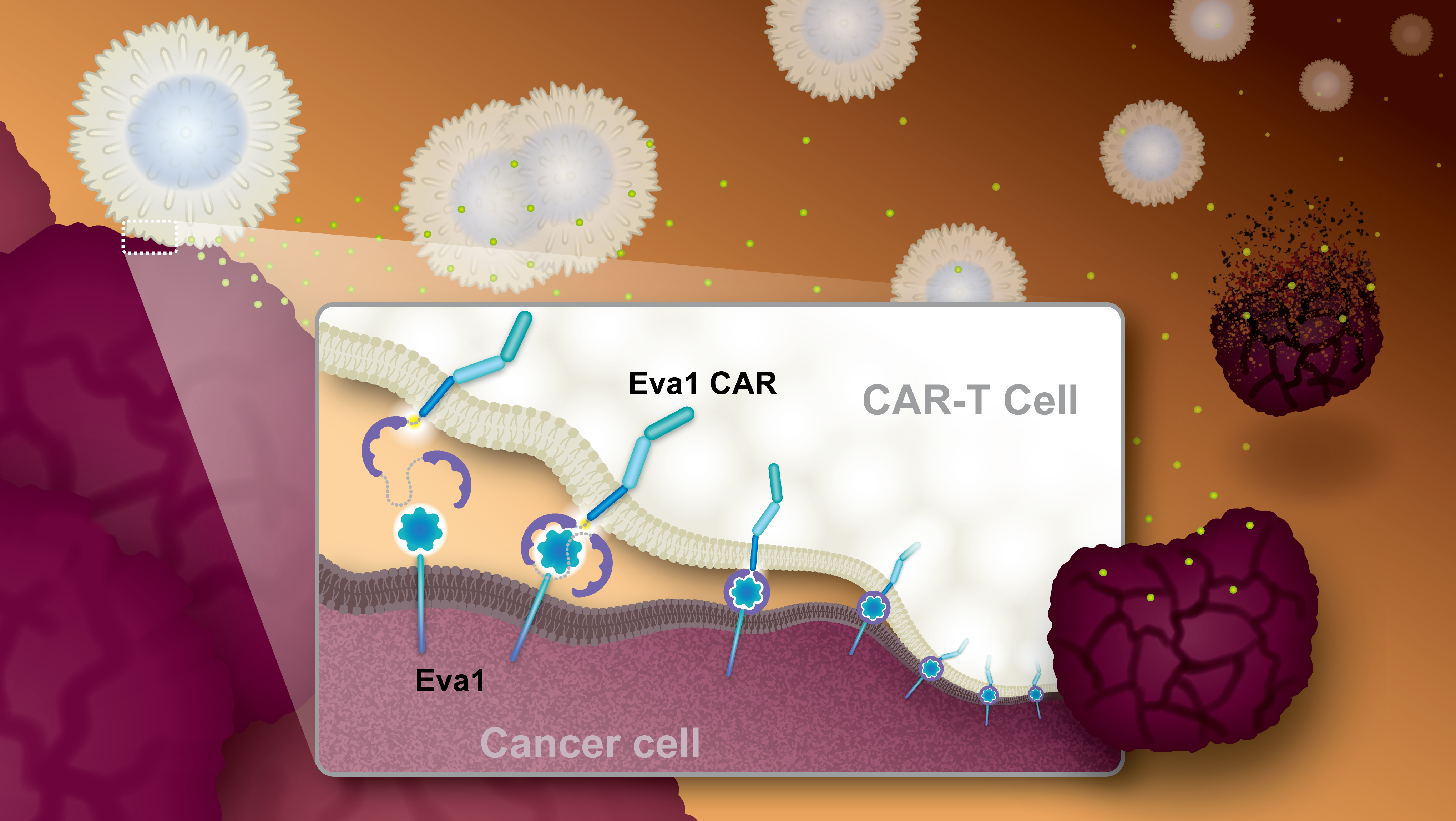
A new study identifies two proteins that cancer seed cells use to avoid destruction by microglia when first arriving in the brain. Genetically removing these proteins revealed microglia’s key role in eliminating cancer cells during early invasion. Credit: Kano Okada, Nagoya University