
Researchers at Nagoya University uncover the gene and protein involved in the determination of the hind legs in tetrapods.
press released on August 18, 2017
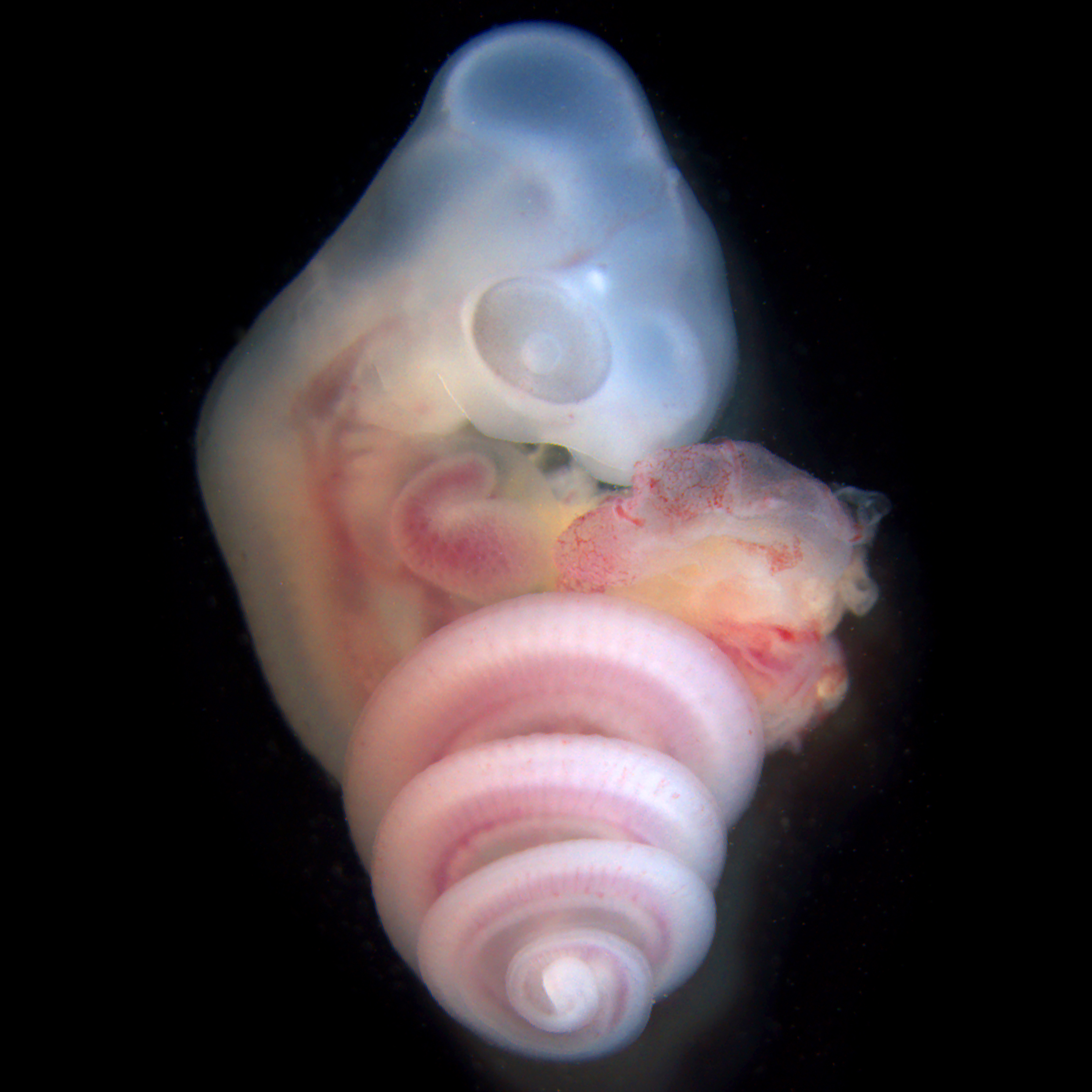
Nagoya, Japan – In the evolution of tetrapods, the position of the hindlimb has diversified along with the vertebral formula, which is the number of small bones forming the vertebra. Tetrapods, as the name implies, are species that have four feet. However, this group also includes many other animals without four or any feet, such as snakes and birds. This is because tetrapods include all the organisms, living and extinct, that descended from the last common ancestor of amphibians, reptiles and mammals, even if they have secondarily lost their "four feet".
Although researchers have long studied tetrapod anatomy, how the species-specific position of the body parts of these species–for example, the hindlimb position along the body–are formed in early development remains unclear. Elucidating this mystery will be a major step in evolution biology.
This crucial piece of the puzzle has finally been found by a team of researchers from Nagoya University in Japan. The researchers demonstrated that a protein called GDF11, which is involved in embryonic development, plays a vital role in the eventual position of the sacral vertebrae and the hindlimb. The study results were published in July 2017 in Nature Ecology & Evolution.
"In laboratory mice that do not produce the protein GDF11, we have noted that the sacral vertebrae and the hindlimbs are shifted more to the back," said Yoshiyuki Matsubara, researcher at the Division of Biological Science and first author of the study.
To arrive at that conclusion, the research team started by analyzing the expression pattern of the gene of interest and examining the relationship between the pattern and the prospective position of the spine and hindlimb at different development stages in chicken embryos. Next, they tested whether hindlimb positioning can be manipulated by changing the timing of GDF11 activity in the embryos. Lastly, to fully elucidate the role of GDF11 in diversification of the hindlimb position in tetrapods, the team examined the correlation between Gdf11 expression and hindlimb positioning in eight tetrapod species, including the African clawed frog, Chinese soft-shelled turtle, ocelot gecko, Japanese striped snake, chick, quail, emu and mouse.
"Our results also suggest that species-specific hindlimb positioning may have been an effect of the change in the timing or rate of events in the gene that expresses GDF11 during embryonic development," said Takayuki Suzuki, last author of the study.
According to their conclusion, snakes have a long trunk because initiation timing of Gdf11 expression in the developmental stage is much later than that in other tetrapod species.
Based on the present observations, the researchers will propose a model to explain the coupling of sacral-hindlimb positioning in tetrapod evolution. This will lead to a deeper understanding of the diversification of lineage-specific tetrapod hindlimb positions, a valuable piece of information in the field of evolution.
The article, "Anatomical integration of the sacral-hindlimb unit coordinated by GDF11 underlies variation in hindlimb positioning in tetrapods" was published in at Nature Ecology & Evolution at DOI: 10.1038/s41559-017-0247-y
Authors
Yoshiyuki Matsubara1, Tatsuya Hirasawa2, Shiro Egawa3, Ayumi Hattori4, Takaya Suganuma1, Yuhei Kohara1, Tatsuya Nagai1, Koji Tamura3, Shigeru Kuratani2, Atsushi Kuroiwa1 & Takayuki Suzuki1
1 Division of Biological Science, Graduate School of Science, Nagoya University
2 Evolutionary Morphology Laboratory, RIKEN
3 Department of Developmental Biology and Neurosciences, Graduate School of Life Sciences, Tohoku University
4 Institute of Development, Aging and Cancer, Tohoku University
Related Links
Lab. of Cell Regulation, Group of Developmental Morphogenesis, Division of Biological Science, Graduate School of Science, Nagoya University
Original website of Kuroiwa & Suzuki Lab. (Japanese)
Media Coverage
Funding
This work was supported by JST PRESTO, Grants-in-Aid for Scientific Research–KAKENHI grant numbers 2529150, 15KT0150, 16H01444 and 17H05764.
