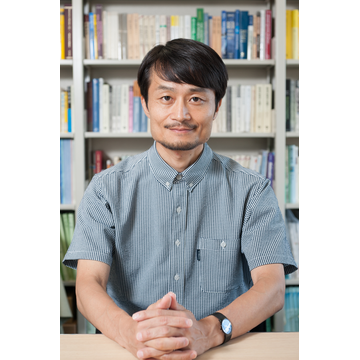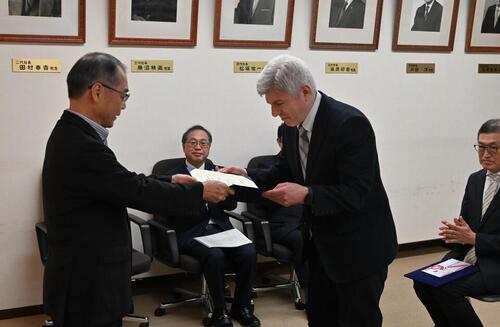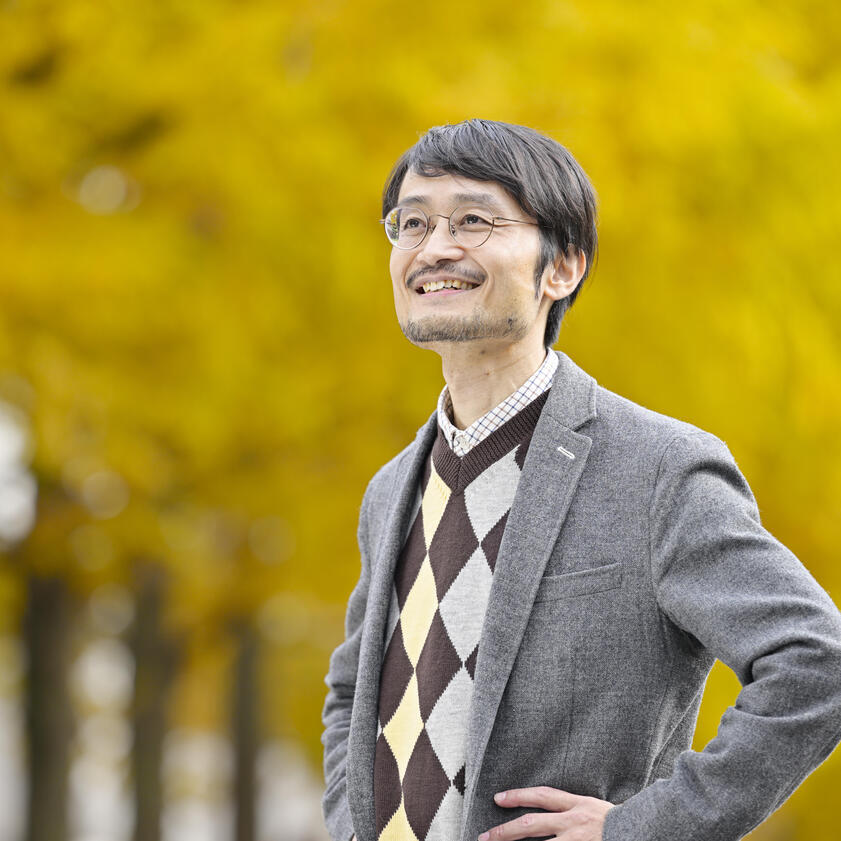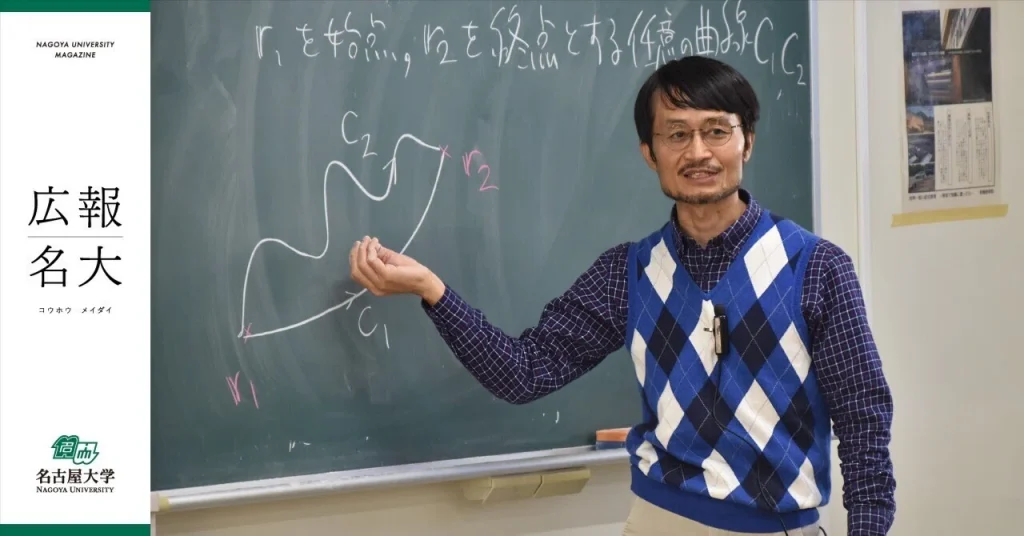
At the Tokai National Higher Education and Research System (THERS), the Chancellor’s Special Award for Educational Good Practice is awarded to commend classes at Nagoya University and Gifu University that had a particularly outstanding impact on students. In the 2025 academic year—the second year of the award—two classes from Nagoya University and one class from Gifu University received this accolade. This article is about one of those classes: Fundamentals of Physics II, taught by Shogo Tanimura, professor at Nagoya University’s Graduate School of Informatics.
A preference for handwritten materials
Fundamentals of Physics II is a course about electromagnetism and is aimed at first-year undergraduates in the School of Informatics. The word “informatics” is typically associated with computers, but since computers run on electricity, a knowledge of electromagnetism is required to understand how they work. This is why the School of Informatics holds a physics class on electromagnetism. As some of the students did not take physics in high school, the class begins with the basics so that students studying physics for the first time can follow along. The curriculum approaches the abstract concepts of electromagnetism from a mathematical perspective, covering everything from the basics to theory and applications, providing a systematic overview of the field.
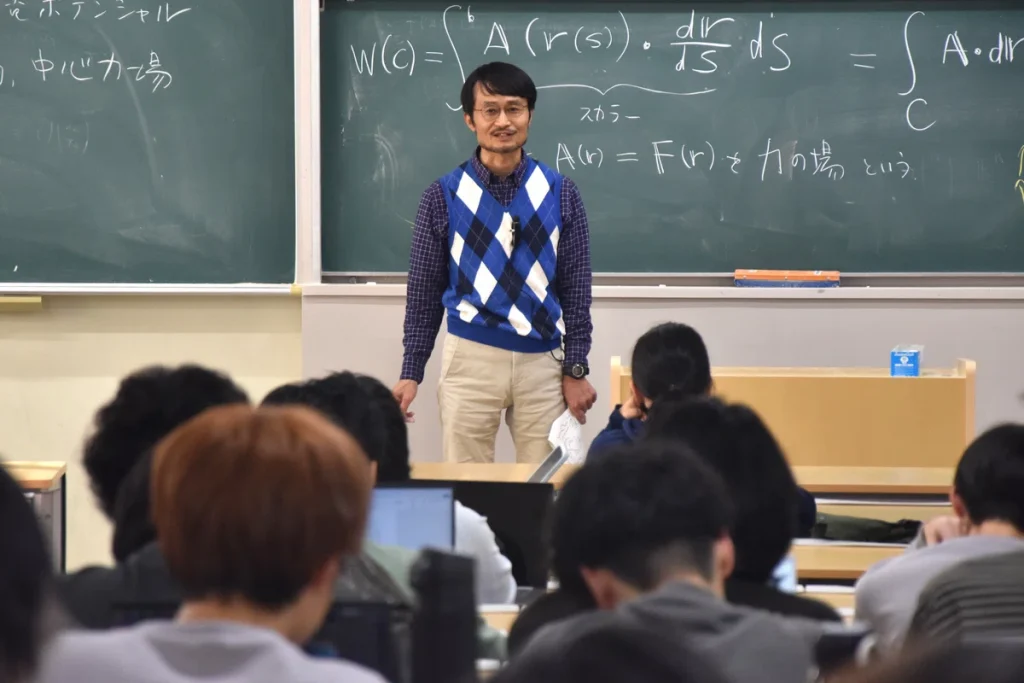
On a Monday afternoon in mid-November, around 100 students are listening attentively to Professor Tanimura’s lecture in a classroom in the Liberal Arts and Sciences building. The theme of today’s class is “electric potential” and “electrostatic potential.” Professor Tanimura carefully explains each equation and diagram he writes on the board. He says that “in order to understand electricity and magnetism, which are invisible to the eye, it is important to grasp the concepts through diagrams and illustrations. Watching the gradual process of a diagram being drawn helps to deepen one’s understanding.”
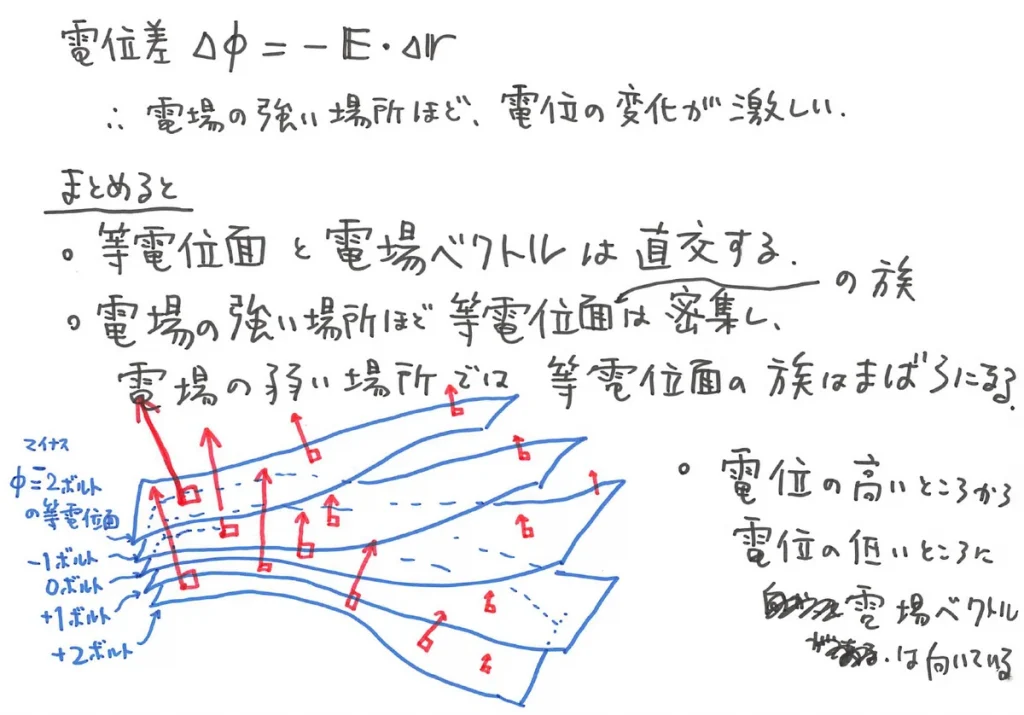
During the class, the students use their laptops and other devices to look at materials that had been shared ahead of the lecture; the majority of these materials were handwritten by Professor Tanimura. The detailed materials are highly popular among the students. One student commented that “when attending a lecture, it is easier to absorb handwritten material.” Another student said that the handwritten notes were “useful for preparing and reviewing class content” and that “it was beneficial to have such clear materials.”
Increasing visibility by publicizing lecture videos and handouts online
Professor Tanimura utilizes Nagoya University’s online system to post materials, respond to student questions on the bulletin board, and grade assignments due every other week; he says that he “is simply making the most of the tools provided by the university.” He uploads videos of his lectures and handouts online, emphasizing that he wants students to know beforehand what the class is like.
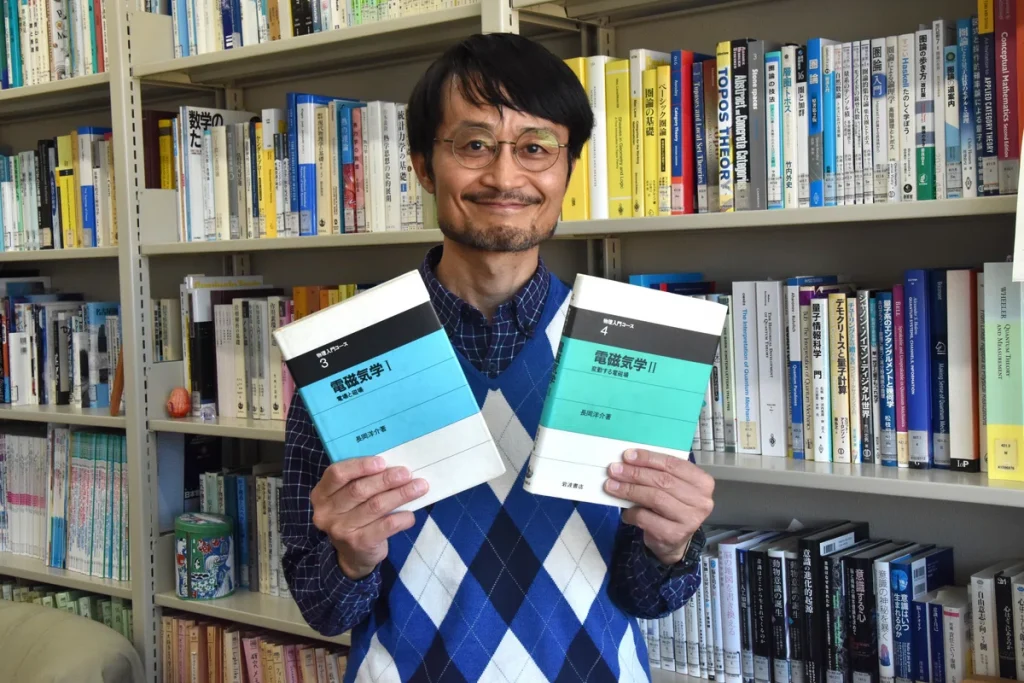
Professor Tanimura also posts various materials related to physics on his website, including his own articles, as well as a curated list of recommended books. He explains the reason for making these materials public: “I believe my lectures and materials are useful for learning physics, and I want all kinds of people to know about my research and classes.” Comments on his lecture videos demonstrate the impact of such outreach efforts: “Even as a high school student I found this easy to follow. It was interesting to watch!”
The appeal of physics: learning the workings of the world
Professor Tanimura has loved learning about science since he was a child. He says in high school he realized he had a particular interest in physics. “I was fascinated when I learned that the laws of physics are not dictated by people, but are inherent in the universe, impervious to human intervention. When you understand physics, you understand the fundamental workings of the world,” he says, explaining the appeal of his field.
Electromagnetism relates to everything around us, from home appliances to light, radio waves, atomic binding, and chemical reactions. Professor Tanimura says, “Electromagnetism also helps us understand human biological processes, such as how the brain sends and receives electrical signals. I want my students to understand that electromagnetism is a law that has relevance to almost all physical phenomena.”
The model behind Fundamentals of Physics II
Professor Tanimura is a graduate of Nagoya University. When he was a student, he used to sit at the very front of the class and constantly ask the teacher questions. When he was unsatisfied with the answer, he would sometimes fall asleep right then and there. “I was such an obnoxious student. Looking back, I regret being so rude to the teachers, but at the same time, perhaps it can be a good thing to have students who are so bold [laughs].”
The class that received the Special Award was modeled on a physics course focusing on electromagnetism that Professor Tanimura took as a student. It was taught by Professor Emeritus Motokazu Kogiso who was an associate professor at the time. “It was a plain, unassuming class, but you could tell it had a consistent logic running through it from beginning to end. It made me think, ‘so this is what physics is really about,'” he recalls. Professor Tanimura strives for a similar level of simplicity and clarity in his own classes.

Originally published in Japanese on December 25, 2025.