
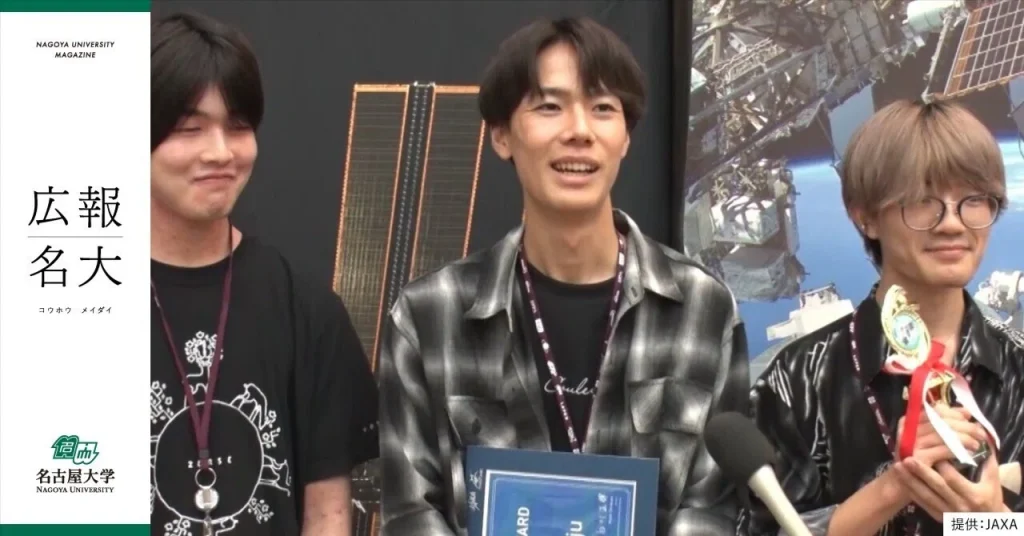
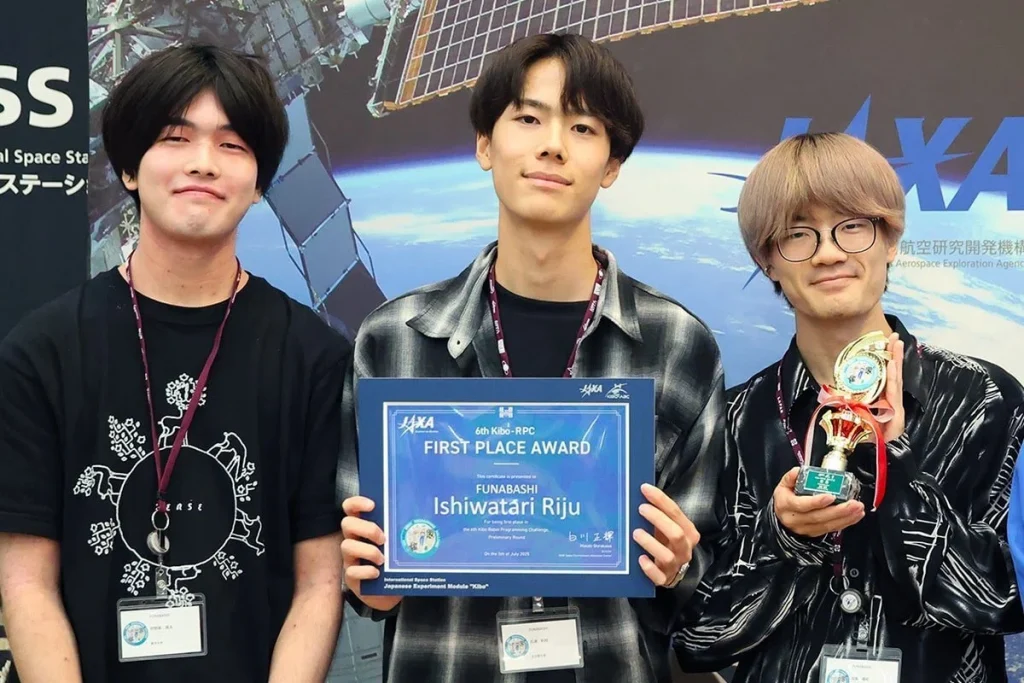
Riju Ishiwatari, a student at the Nagoya University School of Engineering, won first place in a preliminary contest hosted by the Japan Aerospace Exploration Agency (JAXA) in which participants programmed drones to fly inside the International Space Station (ISS). Ishiwatari enrolled in the Department of Mechanical and Aerospace Engineering to study space engineering. He has also made his mark in the world of programming. He began self-studying programming when he was in second year, and just eighteen months later, he ranked first place in the preliminary nationwide round of JAXA’s contest. What is the story behind his success?
First place in a programming competition hosted by JAXA
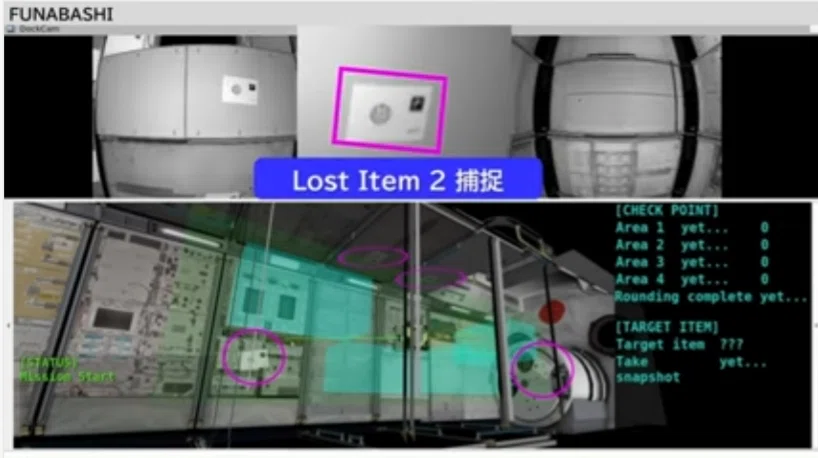
The preliminary nationwide round of the 6th Kibo Robot Programming Challenge was held in early July at the Tsukuba Space Center (Tsukuba, Ibaraki Prefecture). Ishiwatari’s team,”FUNABASHI,” placed first among the 24 participating teams, securing them a place in the world competition to be held in February 2026.
In the competition, participants programmed and operated drones inside the Japanese Experiment Module “Kibo” on the ISS. The theme of this year’s mission was “treasure hunting.” The drones were flown using a simulator that accurately replicates the experiment module, and participants had to photograph multiple pre-placed objects and find the treasure. Points were also awarded based on accurate image recognition, photograph quality, and time taken to complete the mission.
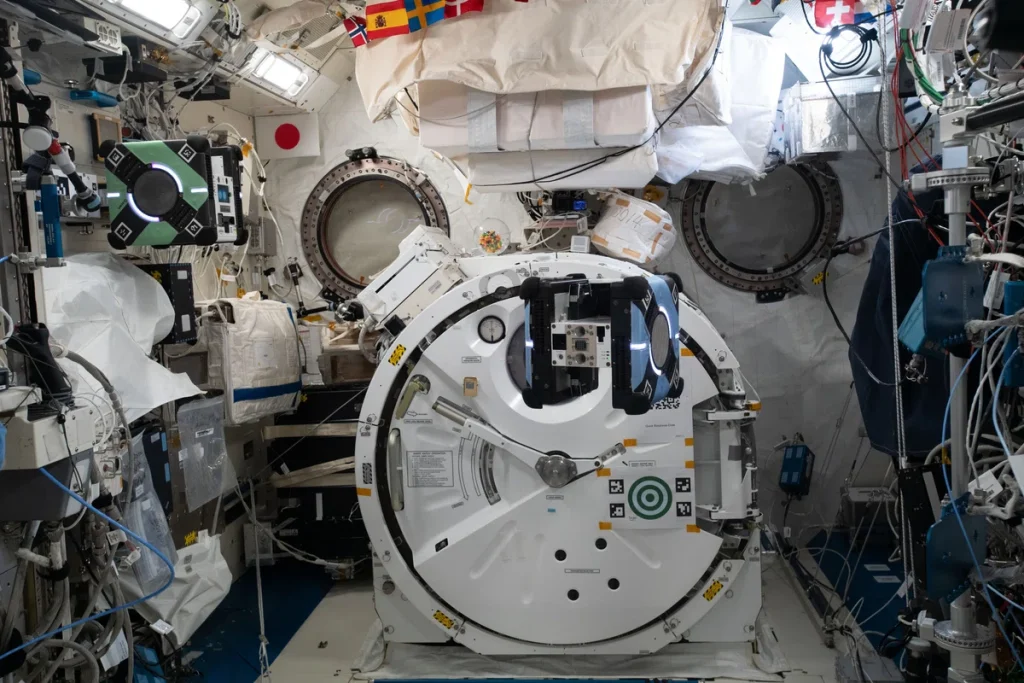
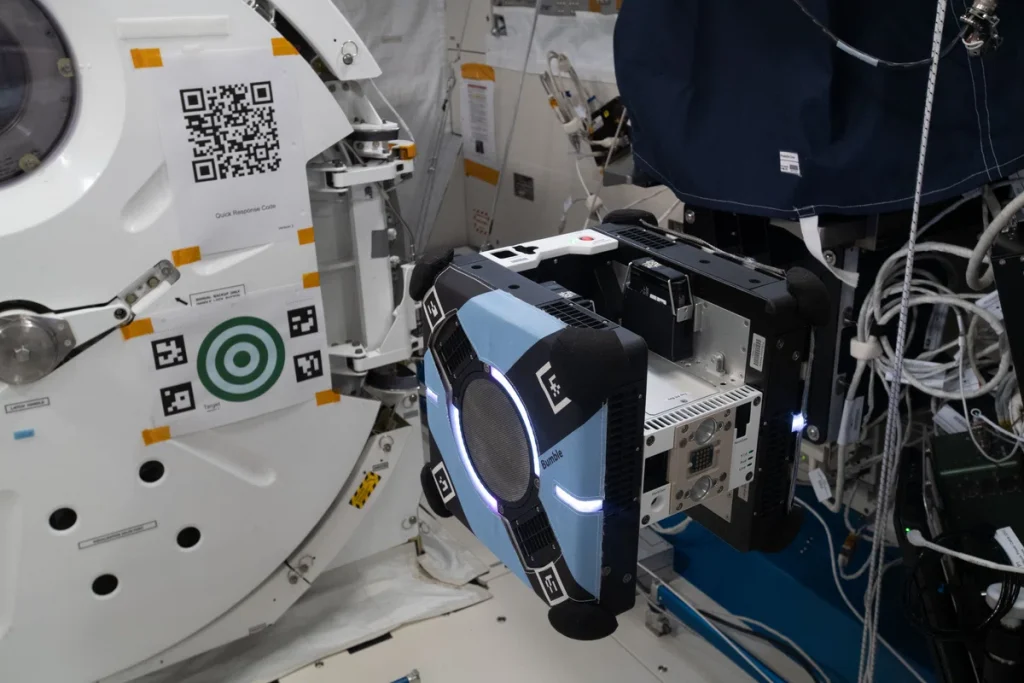
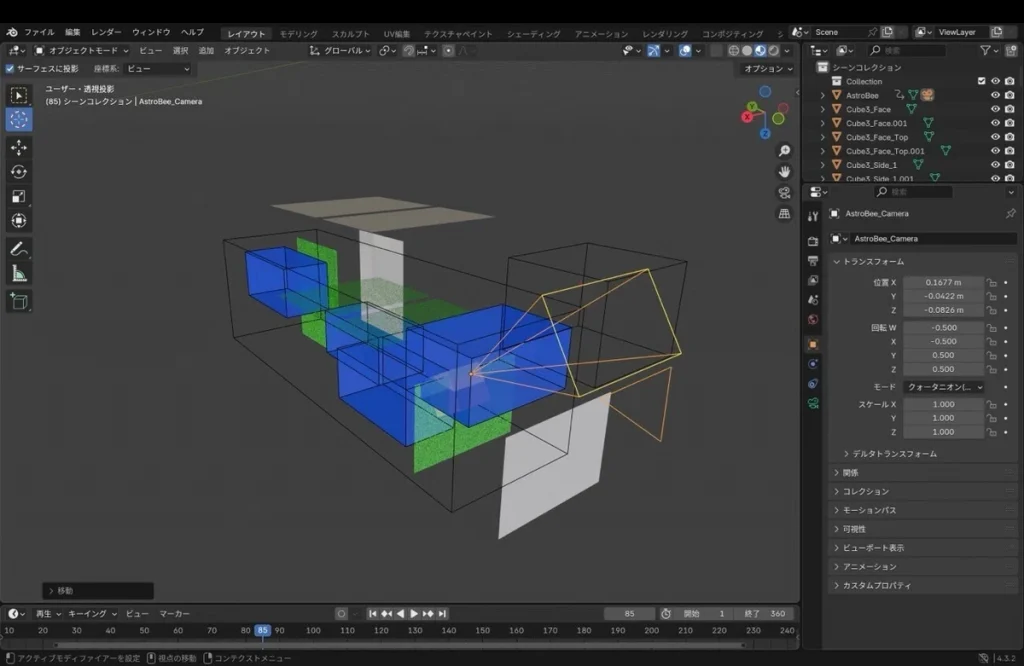
Ishiwatari’s team thoroughly studied the route designs of teams that scored highly in past competitions. In order to accumulate points efficiently, they analyzed past competition results and videos, trying to predict the undisclosed scoring criteria. One key factor in their victory was that they created their own simulator for the competition. Reflecting on their success, the team commented, “We were able to repeatedly fine-tune routes and drone orientations on the simulator and optimize the program specifically for the competition.”
Quitting extracurriculars to focus on programming
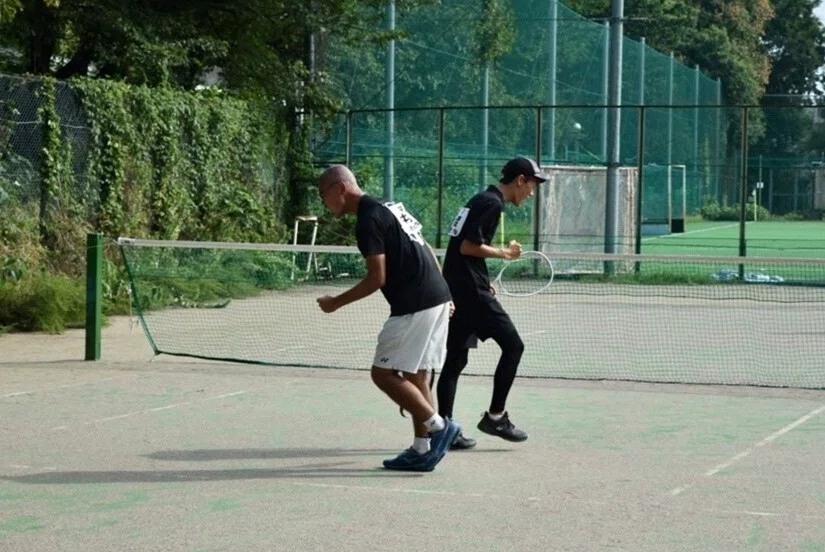
Ishiwatari began studying programming in the spring of his second year at university. The impetus behind his decision came when he noticed how many functions on existing iPad apps go unused; he wanted to create apps where users can customize the features themselves. When Ishiwatari became serious about studying programming, he decided to quit the soft tennis club at Nagoya University. “I really enjoyed soft tennis and didn’t want to give it up, but I realized that it would be difficult to balance it with my studies if I wanted to fully commit myself to programming.”
Ishiwatari taught himself to program using videos, blog posts, and AI. “I enjoy interacting with AI, using it to refine my ideas and think about what kind of things it would be interesting to create, and then actually making them. Sometimes I get so engrossed that I accidentally stay up all night,” he said, describing his programming-centric life.
A dream of working at JAXA
Ishiwatari has his sights set on graduate school and hopes one day to work at JAXA. He saw footage of the Apollo program in a class at high school and was struck by its overwhelming scale. This was the beginning of his fascination with space. “I owe my love of space to JAXA. I want to study aerospace engineering seriously to become the kind of person who can play an active role there,” he said with resolve.
Ishiwatari is especially interested in the field of control systems engineering, which is closely linked to programming, but his interests do not stop there. “In the School of Engineering lecture ‘Aerospace Vehicle Dynamics 1,’ I learned how airplanes fly and enjoyed being able to apply the maths I already knew. I’ve become interested not only in space but also in airplanes,” he said, his words reflecting his ever-expanding curiosity about his field.
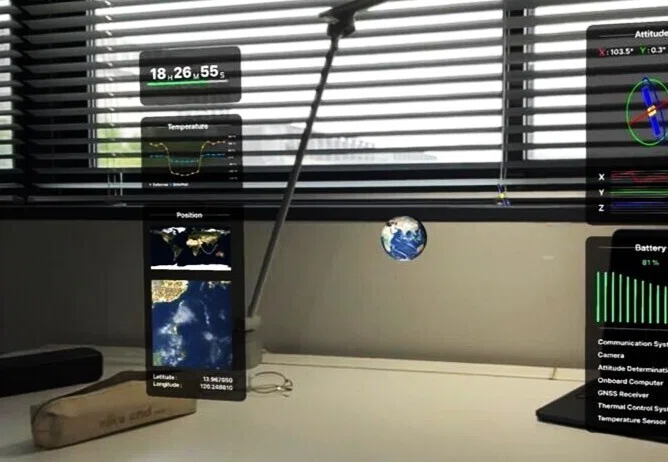
When Ishiwatari started learning programming in the spring of 2024, he set himself the challenge of winning an award at the “Swift Student Challenge,” an app development contest hosted by Apple. The “Swift Student Challenge” is a competition that attracts thousands of students from around the world every year, and in the February 2025 tournament, he won an award, achieving his goal.
Then, in July 2025, Ishiwatari placed first in the preliminary domestic round of the JAXA Kibo Robot Programming Challenge. After that, in October, he won the NASA Space Apps Challenge Tokyo organized by NASA which is one of the world’s largest hackathons.
This string of successes has been encouraging for Ishiwatari. However, he says that dedicating himself to programming for the past year and a half meant that his studies were put on the back burner. “From now on, I want to recommit myself to my academic study as I continue my self-education in programming,” he said, constantly setting new goals for himself as he follows his dreams.
Originally published in Japanese on December 12, 2025.