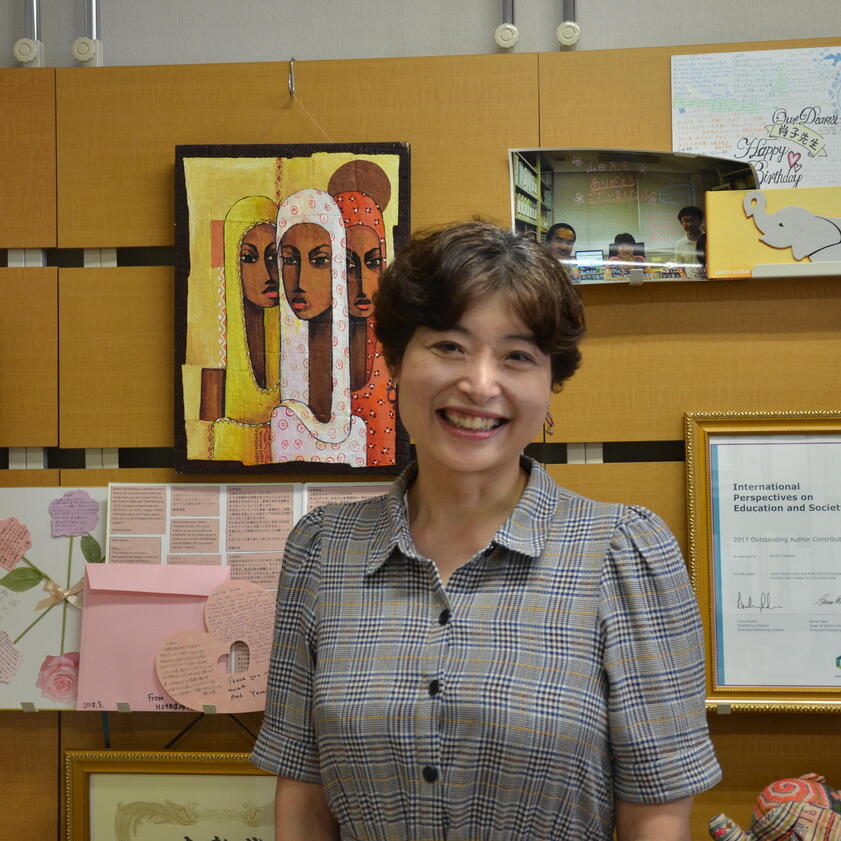
Associate Professor Akemi Ashida of the Graduate School of International Development has received the Committee Special Award from the Japan Society for International Development
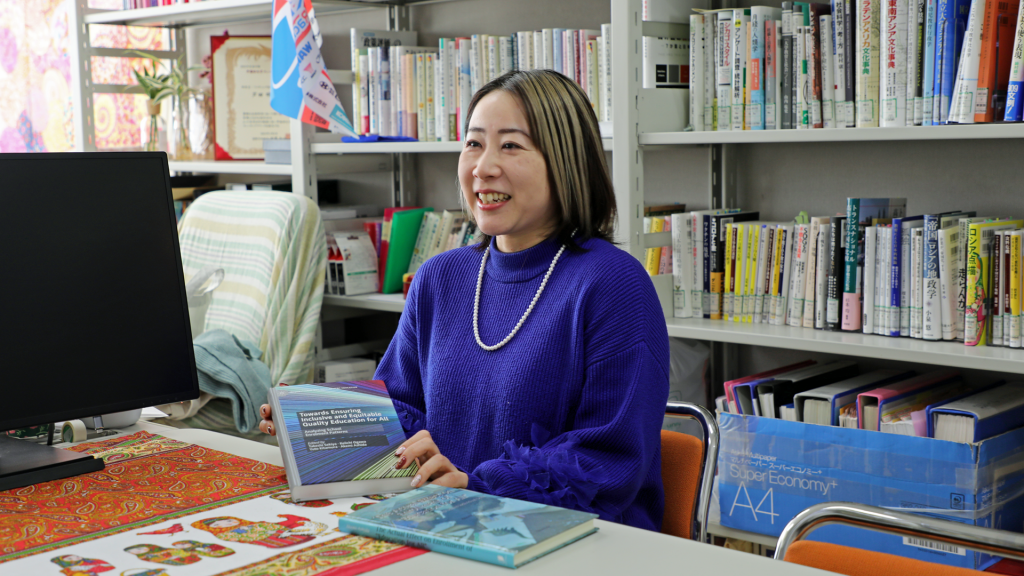
Associate Professor Akemi Ashida has received the Committee Special Award from the Japan Society for International Development (JASID) Award Selection Committee for her work as co-editor of “Towards Ensuring Inclusive and Equitable Quality Education for All: Analyzing School Enrolment Patterns” (Palgrave Macmillan, 2024).
The award was presented at the 36th Annual Conference of JASID, held at Hiroshima University from November 29-30, 2025. Professor Ashida shares the recognition with co-editors Professor Takeshi Sekiya (Kwansei Gakuin University), Professor Keiichi Ogawa (Kobe University), and Professor Yuto Kitamura (University of Tokyo).
About the book
The book presents case studies from 11 countries across Asia, Latin America, and Africa, examining patterns of school enrollment among children in developing countries. The research tracks students from enrollment through graduation or dropout, including processes such as grade repetition.
“This research is the only study to clarify the student’s actual environment at the school and individual level by tracking them longitudinally,” Ashida explained. “From the macro data we can only see the average situation of the student,” she noted, highlighting the limitations of conventional approaches.
The study uses longitudinal data collected through the true cohort method, which involves following the same individual students repeatedly over time from their initial enrollment until they either graduate or leave school. This approach differs from conventional cross-sectional data analysis commonly used in education policy at the macro level. The research combines quantitative and qualitative analysis through a mixed-methods design, incorporating semi-structured interviews alongside statistical data.
Long-term research and community engagement
Reflecting on receiving the award, Ashida said, “I worked on this research from my master’s thesis until now. It took more than 10 years, so it was a really long journey.”
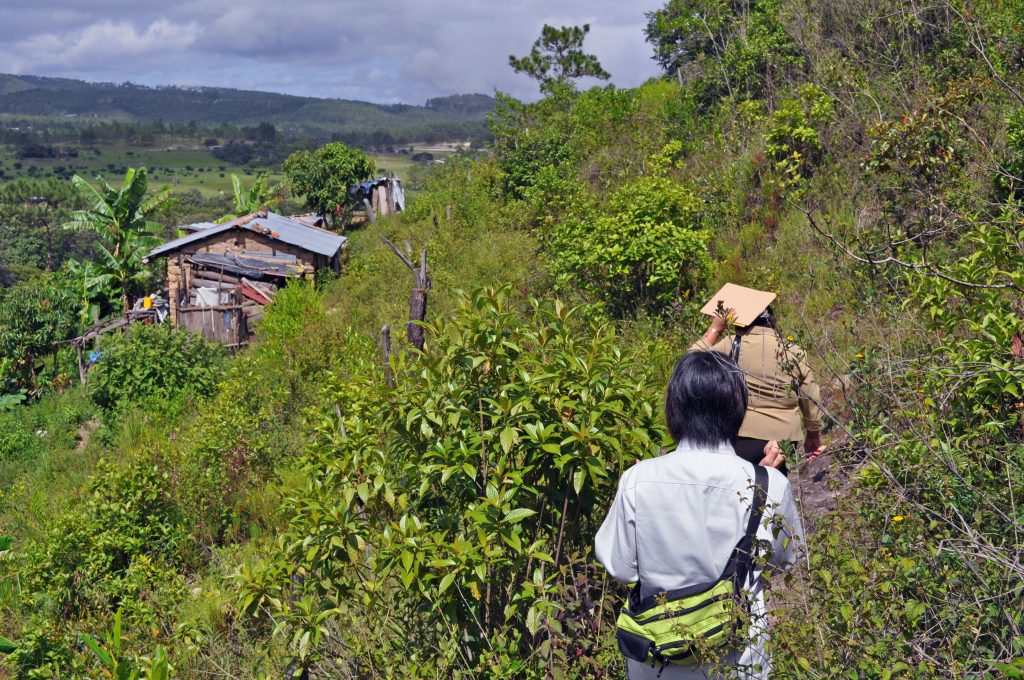
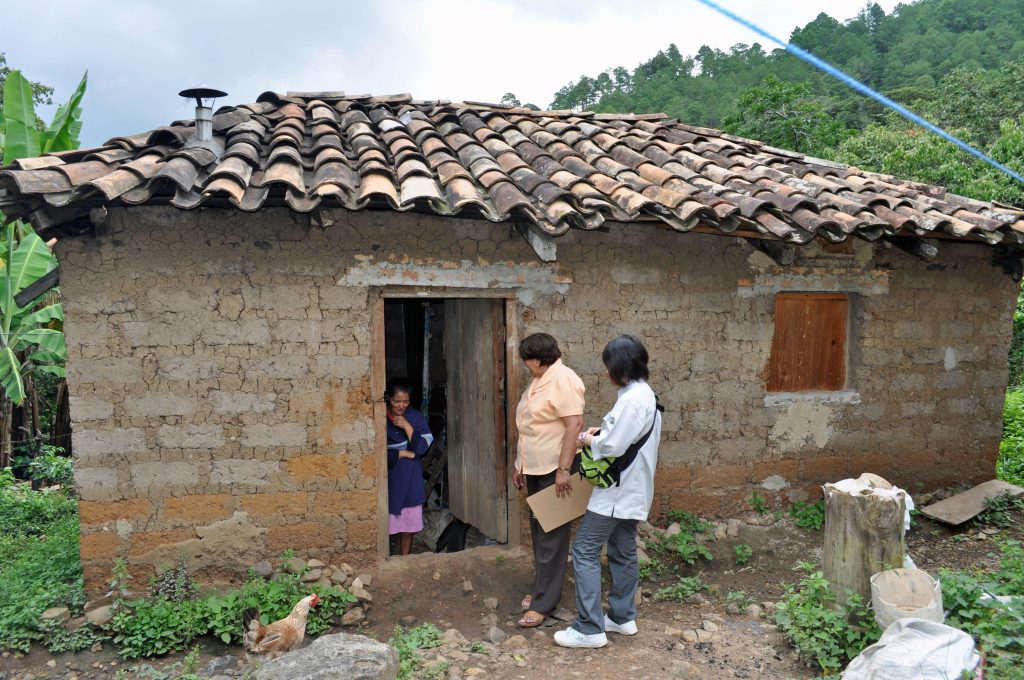
Throughout the research process, she maintained close ties with communities in the countries studied. “Every year when I went to Honduras, I shared the data analysis results to the teachers at the school level, educational offices at the district and provincial, and the Ministry of Education,” she said.
Ashida also emphasized the importance of returning research findings to participants. “They gave the data to us; it is like a treasure.” The publication of the book in a language accessible to people outside Japan was particularly meaningful in this regard. “It was important to publish this book in English so that researchers, teachers and government officials from other countries can also understand the findings,” Professor Ashida noted. She also felt “greatly relieved because we could share these results with our colleagues and friends in Honduras, Cambodia, and other countries.”
About Akemi Ashida
Ashida’s research focuses on comparative education and the sociology of education, with fieldwork in Latin America and Southeast Asia, particularly Honduras and Cambodia. She has previously worked as a Program Officer at UNESCO Bangkok, a postdoctoral fellow at the University of Tokyo, and assistant professor at Waseda University.
About the Japan Society for International Development
The Japan Society for International Development is an interdisciplinary academic society focused on international development and cooperation. Its membership includes university researchers and practitioners working across several fields including economics, education, and political science.
The publication is available through Springer Nature at: https://link.springer.com/book/10.1007/978-3-031-70266-2