
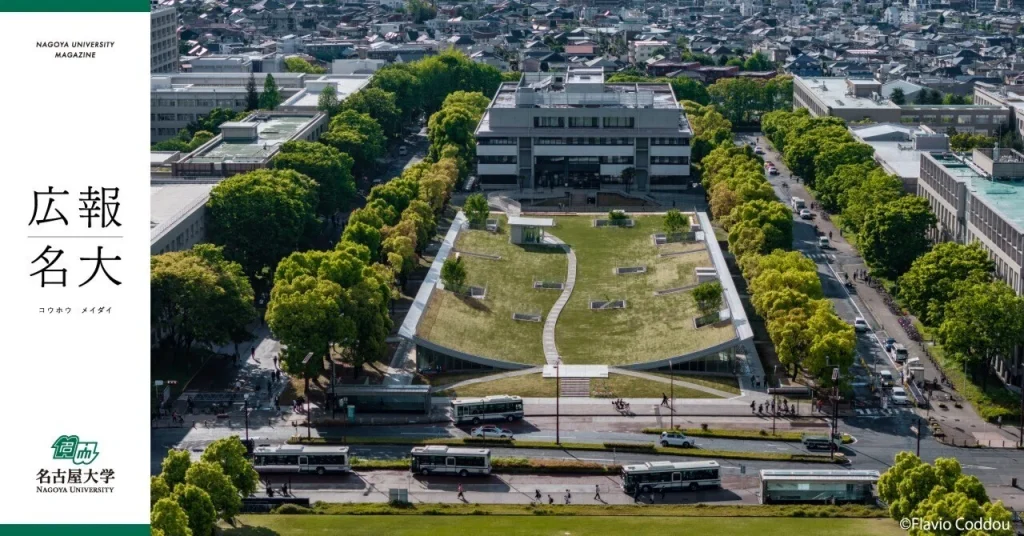
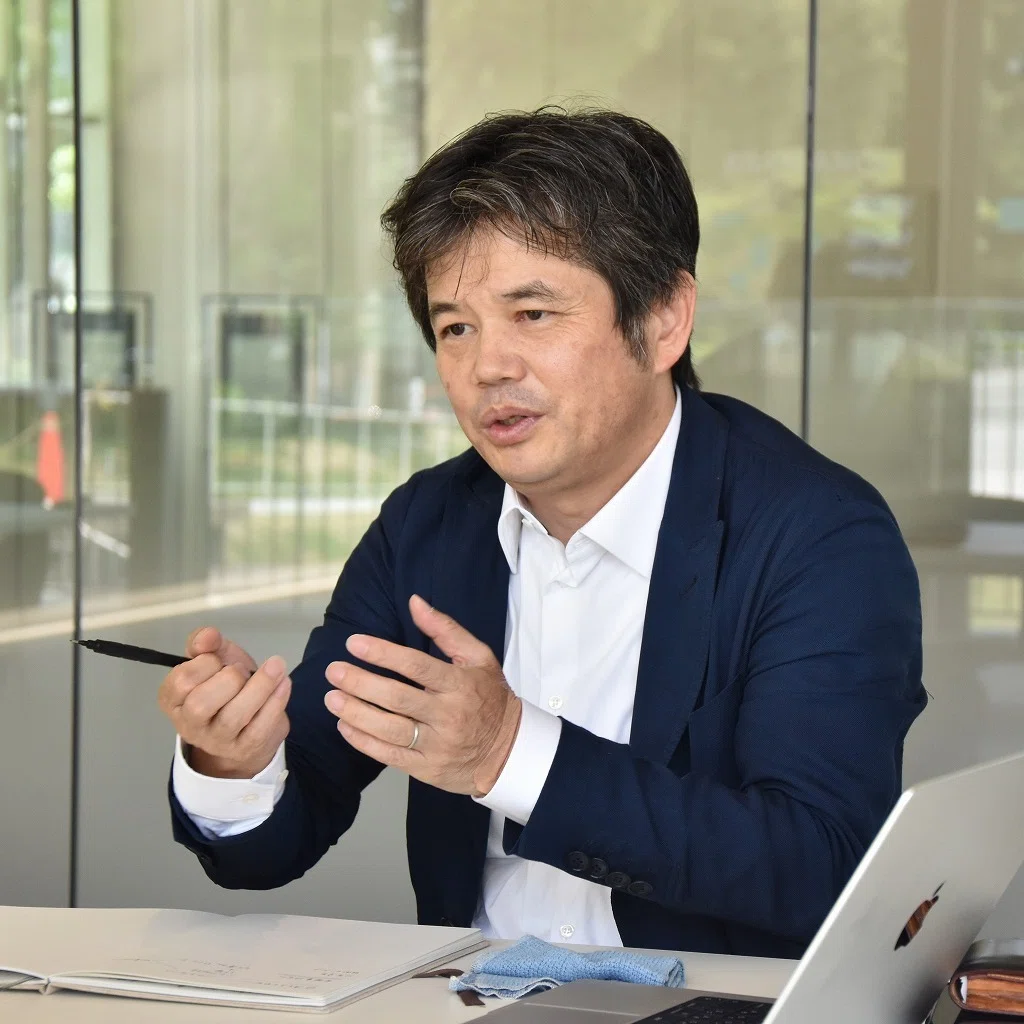
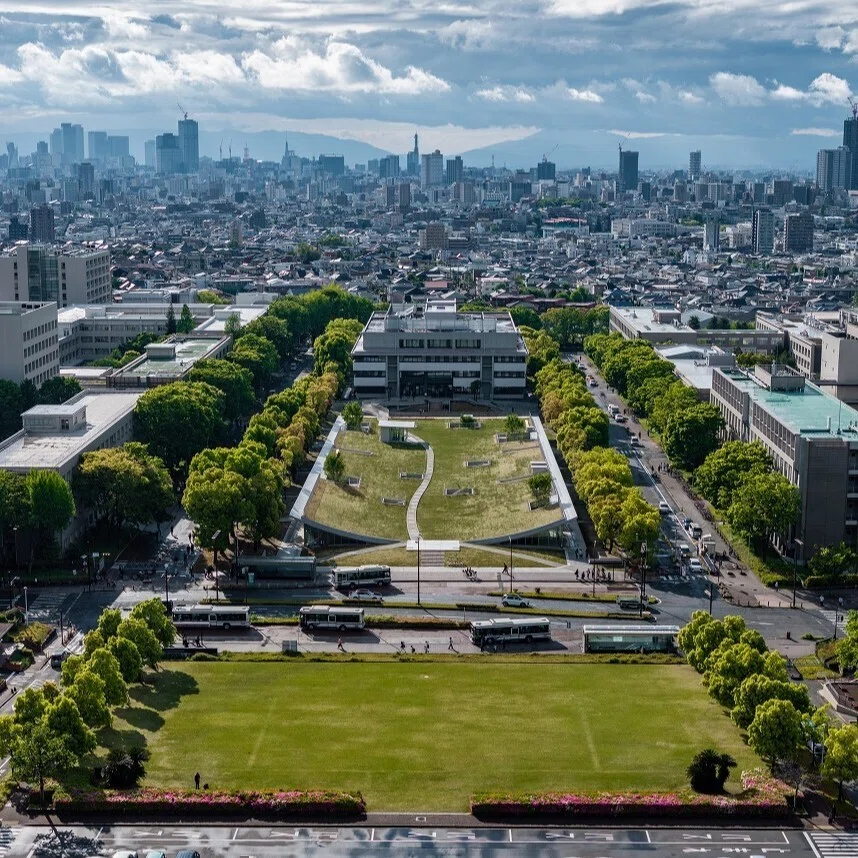
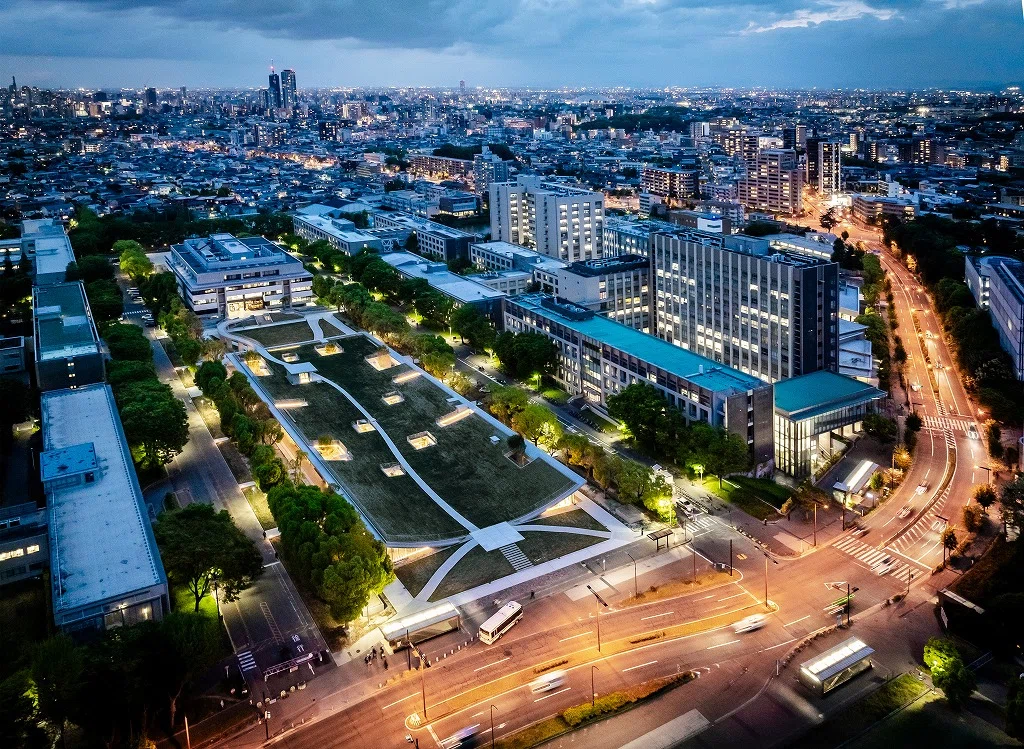
The co-creation hub Common Nexus (ComoNe) opened on July 1, 2025. The giant structure—with its gently-curved, grass-covered roof—presents a unique presence in the middle of Nagoya University’s Higashiyama Campus. Before construction, the area between the Central Library and the entrance to the subway station was designed like a park, but it attracted hardly any visitors. So how was the space transformed? Architect Tetsuo Kobori tells us all about the concept behind ComoNe, the building’s features, and the design process.
Two keywords: “sky” and “environment”
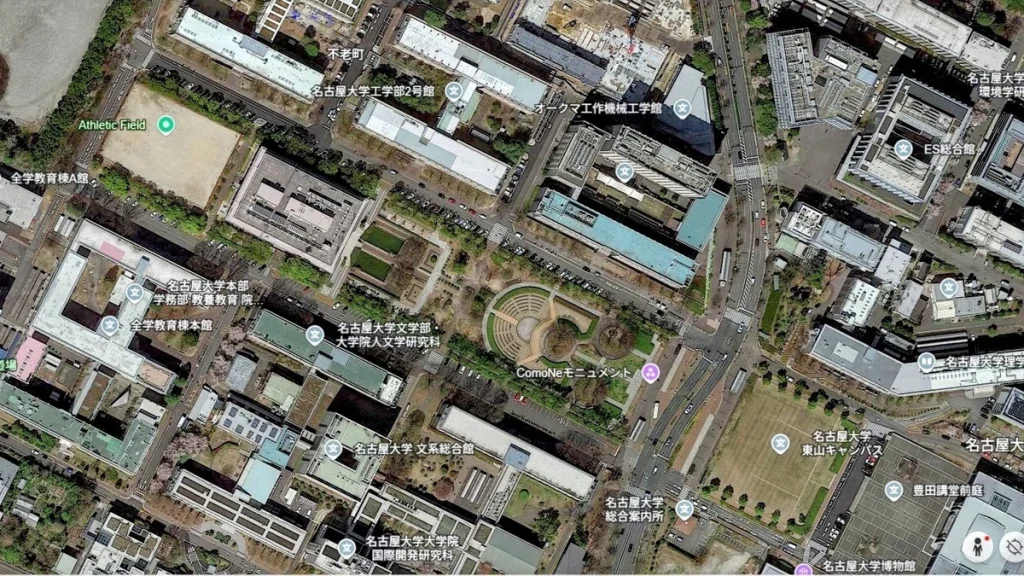
The construction plan presented by the Tokai Higher Education and Research System (THERS) called for a “co-creation hub” in the green space at the heart of the Higashiyama Campus. Nagoya University has a 30-year campus development project called the “Campus Master Plan,” under which this green belt was designated as a representative space of the university. The green belt has been a feature of the campus since Nagoya University was founded.
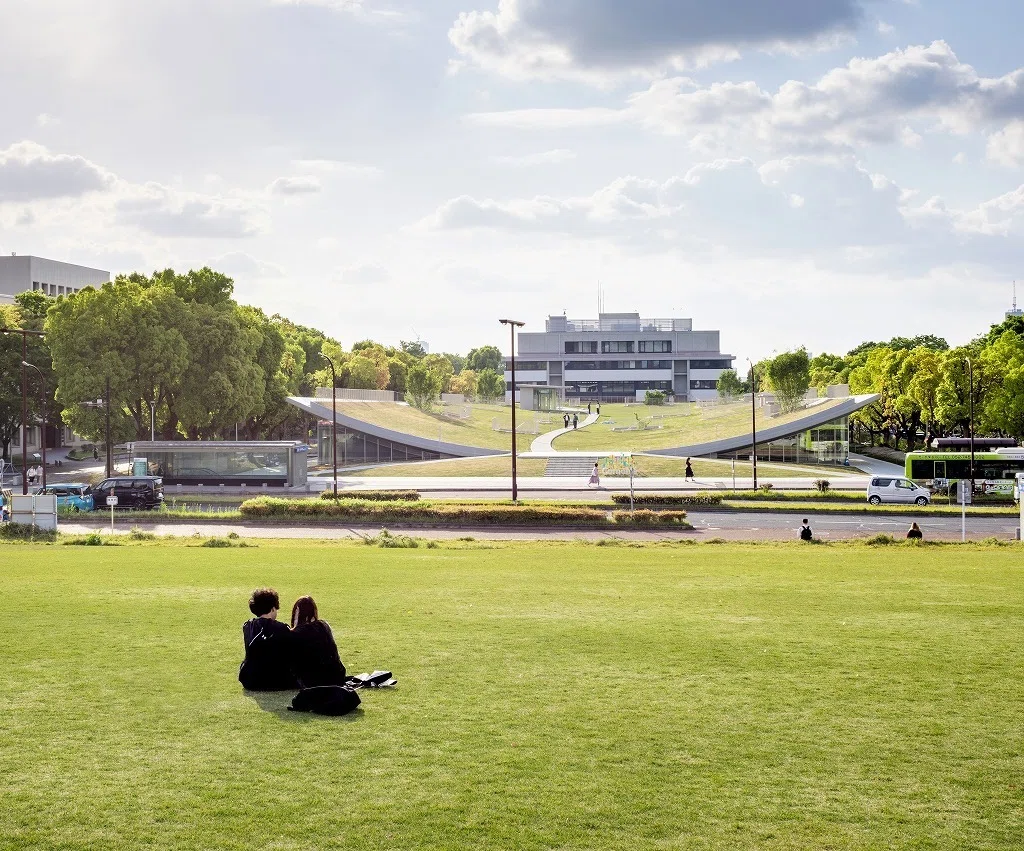
When I was brainstorming ideas, I looked at architecture magazines that came out after Toyoda Auditorium was completed. I found something interesting in a 1960 issue of “Shinkenchiku” (“New Architecture”). Masato Otaka, an architect who was a key player in postwar architecture and urban planning, wrote that “the true beauty of Toyoda Auditorium lies in the way its design integrates its setting against the expansive sky above and the gentle hill below.”
Reading this brought my attention to the sky, and I felt that “environment” would be a pivotal keyword for the project. Nagoya’s urban sprawl makes a vast green space like this a unique asset, and I wanted to exploit the full potential of the space.
A design that protects and generates vast green spaces
I was faced with the problem of how to protect this open green space while making the most of it from an architectural standpoint. The solution was to put the main floor underground. This also made it possible to connect the facility directly to the subway station, as Nagoya University had requested.
During the brainstorming stage, I walked around the campus and the surrounding neighborhoods, climbing the small hills in the Higashiyama area. Then I investigated the history of the construction site—the green belt—and I learned that it used to be a valley-like terrain.
This led to the idea of recreating that terrain, with a green open space hovering on top. In creating such a structure, the roof is key. I thought it should look like the ground was peeled back or lifting like a thin sheet. Here is the first sketch I made.
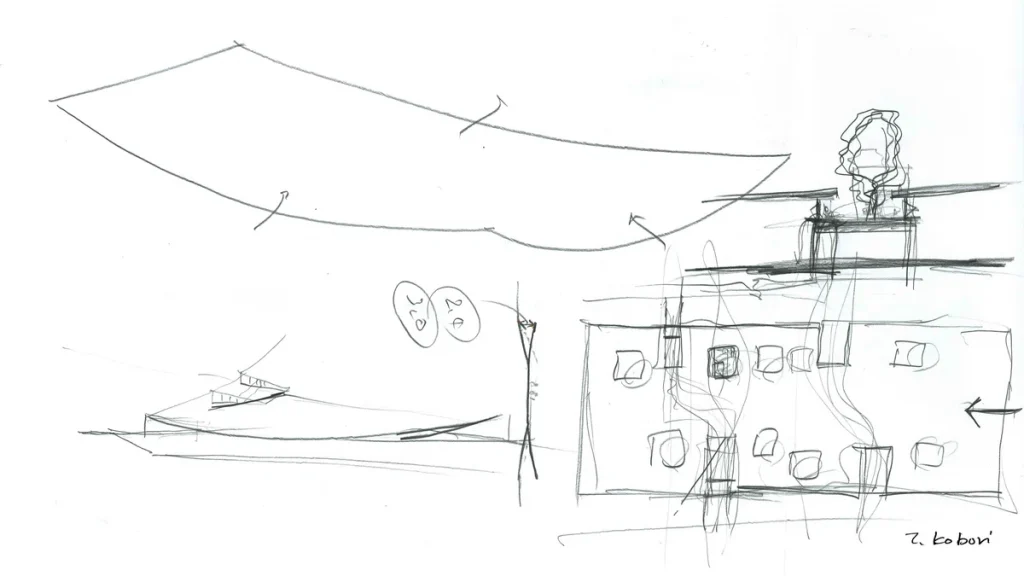
I thought it would be interesting to create a dual structure where, above ground, you have an open area connected to the world and sky, but when you go inside, you plunge into a darker space. I envisioned a space that felt consistent with the underground setting, where you are free to explore and dig deep into your thoughts.
Not just design, but functionality too
Other than “sky,” another key theme was the environment. Before construction began, the green space in front of the Central Library was an unwelcoming space: it was covered by overgrown foliage, with paths resembling animal trails in a forest. I proposed overhauling the space using green infrastructure.
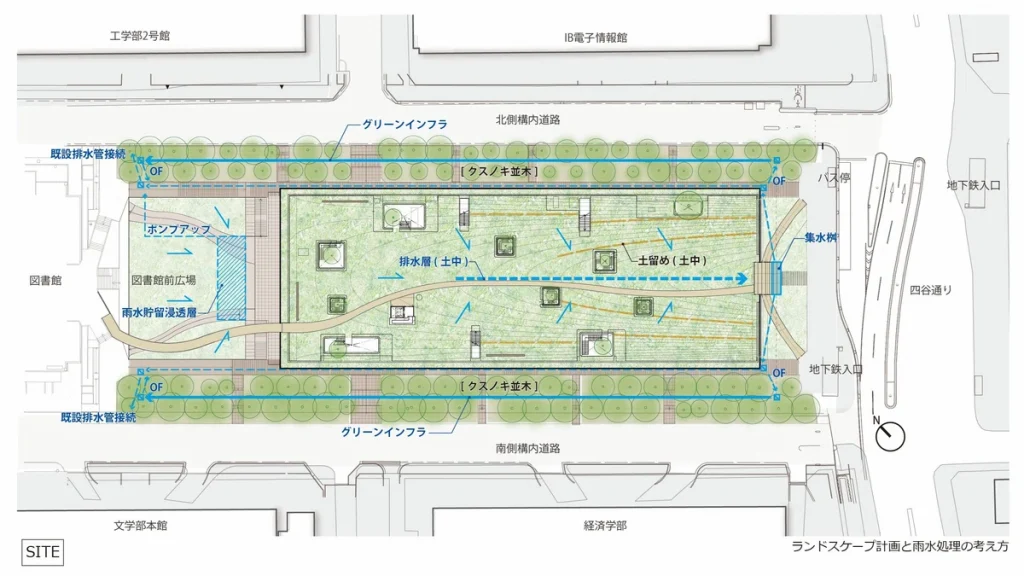
Originally, this area was a valley within the hilly Higashiyama area. Leveling it out disrupted the water flow paths, making the area vulnerable to flooding. Accordingly, we developed an architectural design that catches rainwater on the roof and aids groundwater recharge.
We actually built a large reservoir under the main stairs next to the subway station. Water from the ComoNe roof collects in the reservoir and then flows to the rows of trees and plants on either side. This improves the environment by altering the flow of water to enhance groundwater recharge, making effective use of the collected water.
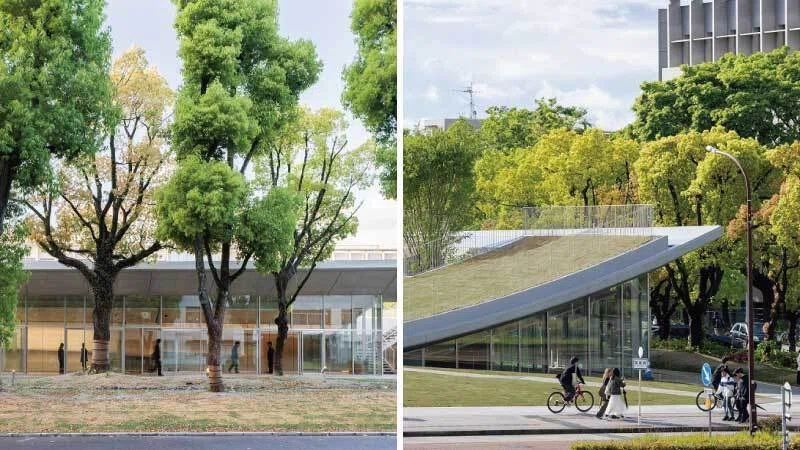
Since the roof curves upwards on each side, the underground floor gets sufficient light, the trees are visible from the basement, and the space can be ventilated. People outside the building can take shelter from the sun and rain by walking under the roofs and rows of trees, and they can peer inside ComoNe as they walk along the tree-lined roads.
Furthermore, this space used to represent a boundary, separating the humanities buildings from the science buildings, whereas ComoNe, in addition to functioning as a path that connects the subway station to the Central Library and other buildings, also serves to create a link between the sciences and humanities.
Set your mind free under the sky; dive into your thoughts underground
When I first visited the campus and saw the green area in front of Toyoda Auditorium, I was surprised to encounter such a vast space with people scattered here and there, everyone doing their own thing. There were people gathered under the trees, people exercising, people staring off into space, and there were children, too. There were people cycling past and people walking their dogs. This openness left a big impression on me.
It is valuable to have spaces on campus where you can spend time alone, look up at the vast sky, and daydream. Sitting on ComoNe’s curved roof, the surrounding buildings disappear from view; it should feel as if you are in the great outdoors. You will not be able to use the ComoNe rooftop for another year as the lawn needs time to mature, but I hope you will come and make use of the space once it opens.
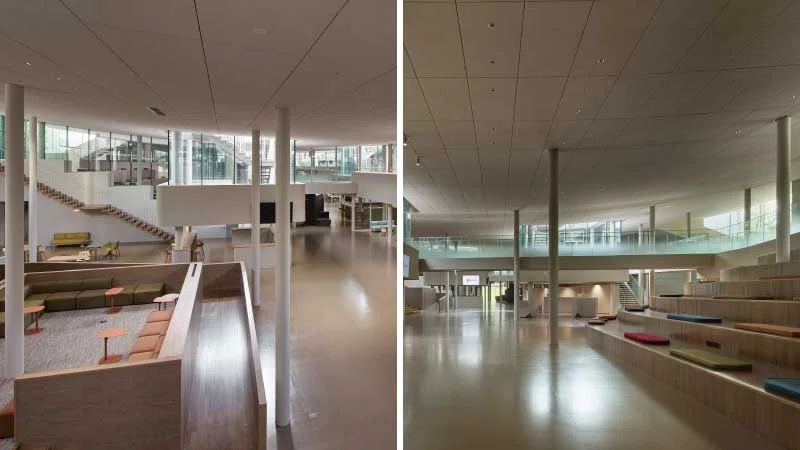
Underneath the vast roof is an underground space. We made the entrance from the subway station dark on purpose. When you first enter ComoNe it feels poorly lit, but as your eyes adjust, you begin to notice various things going on around you. The inside resembles a city with lots of alleyways, and as you go deeper, you find dark spaces where you can hide. I want visitors to feel that they are experiencing a new urban space that lies dormant underground.
ComoNe is the first public facility of its scale created by a national university that serves the public as well as members of the university. I hope you will use this space to build the future.
Originally published in Japanese on August 1, 2025.